Who designed the Statue of Liberty?
Short answer
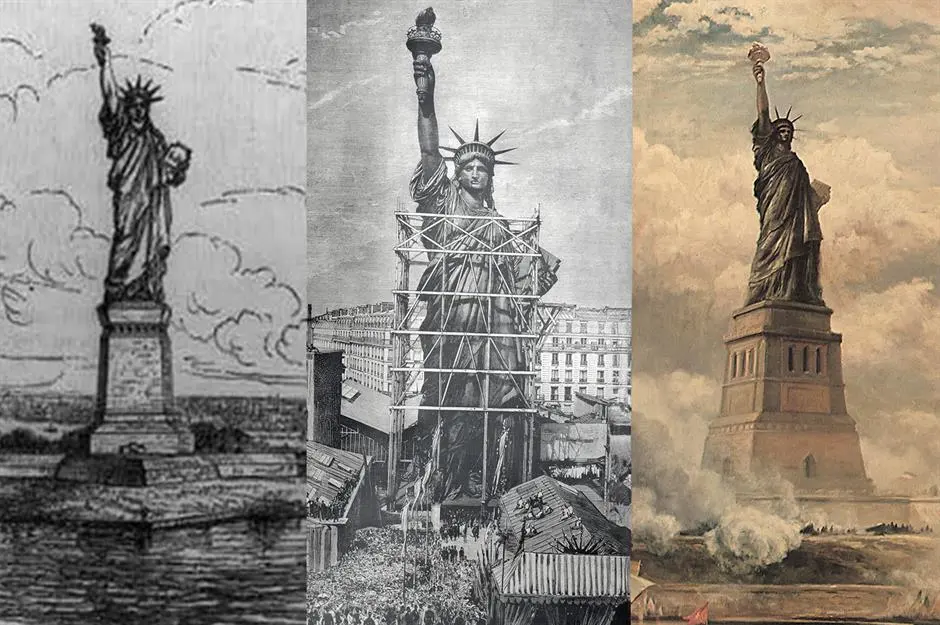
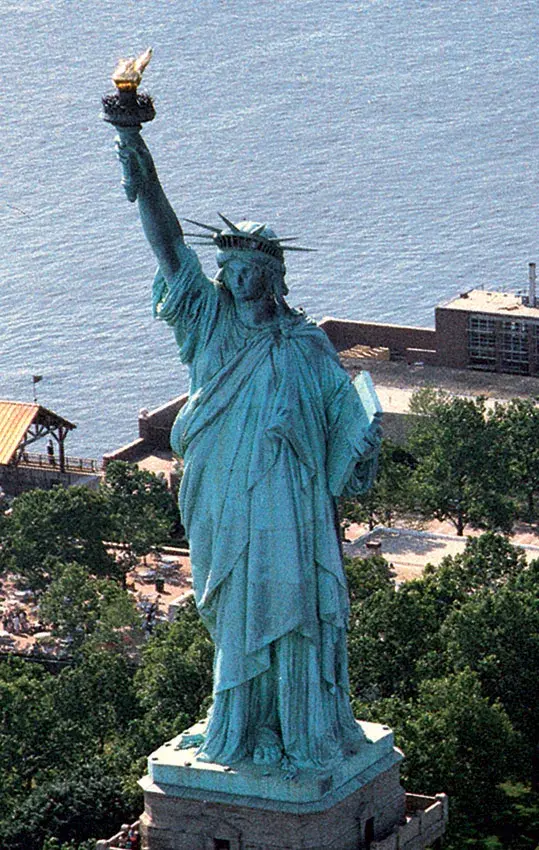
The Statue of Liberty was designed by French sculptor Frédéric Auguste Bartholdi. While Bartholdi conceived the statue’s exterior form, he collaborated with engineer Gustave Eiffel, who designed the internal iron framework. Additionally, architect Richard Morris Hunt designed the statue’s massive granite pedestal, completing the monument’s structural and aesthetic requirements for its 1886 dedication.
On this page
Who was the primary designer of the Statue of Liberty?
Frédéric Auguste Bartholdi is the primary designer credited with the statue’s iconic appearance. A French sculptor, Bartholdi was commissioned in the 1870s to create a monument commemorating the centennial of the Declaration of Independence and the enduring friendship between France and the United States. He drew inspiration from classical antiquity, specifically the Colossus of Rhodes and the Roman goddess Libertas, to create the robed figure holding a torch.
Bartholdi’s vision was not merely artistic but also technical. He spent years experimenting with copper repoussé, a technique involving the hammering of thin copper sheets into wooden molds. This method allowed the statue to be lightweight yet durable enough to withstand the coastal winds of New York Harbor. His dedication to the project spanned over a decade, involving extensive fundraising efforts and the coordination of international teams to bring the massive copper lady to life.
How did Gustave Eiffel contribute to the statue?
While Bartholdi focused on the aesthetic form, the statue required a revolutionary structural system to remain stable. He turned to Gustave Eiffel, who later gained fame for the Eiffel Tower, to engineer the interior. Eiffel replaced Bartholdi’s initial concept of a masonry-filled interior with a flexible, pylon-based iron framework. This skeleton allowed the copper skin to expand and contract with temperature changes without cracking the statue’s exterior.
Eiffel’s engineering was a masterpiece of 19th-century innovation. He designed a system where the copper skin was attached to the internal frame using iron bars and flexible metal straps. This design ensures that the statue can sway slightly in high winds without sustaining structural damage. The collaboration between the sculptor’s artistic vision and the engineer’s mathematical precision remains one of the most successful examples of cross-disciplinary design in monumental history.
- Eiffel designed a central pylon to act as the statue's spine.
- He utilized a secondary framework to support the copper skin.
- The design incorporated flexible metal straps to accommodate thermal expansion.
- This structural system was tested for wind resistance before final assembly.
Why was Richard Morris Hunt involved in the design?
The Statue of Liberty is not just the copper figure; it is a two-part monument consisting of the statue and its pedestal. While the French were responsible for the statue itself, the American committee tasked with the project needed a designer for the base. They selected Richard Morris Hunt, the first American architect to study at the École des Beaux-Arts in Paris. His expertise was essential in creating a foundation that could support the immense weight of the copper figure.
Hunt’s design for the pedestal was both functional and symbolic. He incorporated classical elements that complemented the statue’s aesthetic while ensuring the base could withstand the environmental pressures of Bedloe’s Island. His work involved complex masonry and concrete engineering, as the pedestal had to be anchored deep into the island’s existing fort, Fort Wood. Without Hunt’s architectural contributions, the statue would have lacked the elevated platform necessary to serve as a beacon for arriving ships.
- Hunt utilized granite for the pedestal to ensure long-term durability against salt air.
- He designed the pedestal to be wide at the base to distribute the statue's weight.
- His architectural style bridged the gap between European classical training and American monumental needs.
Common mistakes when researching the statue's history
A frequent error is attributing the entire project to a single person. Many observers assume that because Bartholdi was the sculptor, he also engineered the internal frame or the pedestal. This misconception ignores the collaborative nature of the project, which required the distinct expertise of a sculptor, an engineer, and an architect. Understanding these separate roles is vital for appreciating the complexity of the monument’s construction.
Another common mistake is overlooking the role of the American committee in the pedestal’s financing and construction. Some believe the French government funded the entire project, but the pedestal was financed through private American donations. Misunderstanding the division of labor often leads to a simplified narrative that ignores the logistical challenges of transporting and assembling a massive, multi-part statue across the Atlantic Ocean. Always distinguish between the statue’s fabrication in France and its assembly in the United States.
How to identify the different design elements
To better understand the statue, look for the specific contributions of each designer during a visit or through detailed architectural diagrams. The exterior copper skin, which is only about the thickness of two pennies, is the direct result of Bartholdi’s repoussé work. If you view the statue from the inside, you can clearly see the iron pylon and the network of straps designed by Eiffel. These elements are not hidden; they are integral to the monument’s structural integrity.
When observing the pedestal, note the clean, classical lines that reflect Hunt’s architectural style. The base serves as a pedestal that elevates the statue, providing a visual anchor that connects the figure to the ground. By separating these components—the skin, the skeleton, and the base—you can gain a clearer appreciation for the engineering and artistic rigor required to build such an enduring symbol. This analytical approach helps clarify who did what and why the statue remains standing today.
Key facts
- The Statue of Liberty was designed by French sculptor Frédéric Auguste Bartholdi.
- Alexandre Gustave Eiffel, the engineer behind the Eiffel Tower, designed the statue's internal iron framework.
- The statue's copper skin is only about 3/32 of an inch thick, roughly the thickness of two pennies.
- The project was a gift from France to the United States to commemorate the centennial of the Declaration of Independence.
- Construction was completed in France in 1884, after which the statue was dismantled into 350 pieces for shipping.
- The statue was officially dedicated in New York Harbor on October 28, 1886.
The bottom line
The Statue of Liberty is a collaborative masterpiece primarily designed by sculptor Frédéric Auguste Bartholdi and engineer Gustave Eiffel. It stands as a monumental symbol of freedom, constructed in France before being reassembled in New York. By understanding its design, engineering, and symbolic elements, one gains a deeper appreciation for this enduring icon of American history and international friendship that continues to inspire millions of visitors today.
People also ask
Why is the Statue of Liberty green?
The statue is made of copper, which naturally reacts with oxygen and moisture in the air to form a layer called a patina. This chemical process, known as oxidation, turned the original reddish-brown copper into its iconic light green color by 1920.
How tall is the Statue of Liberty?
From the ground to the tip of the torch, the statue stands 305 feet and 1 inch tall. The figure itself measures 111 feet and 1 inch from heel to head.
What do the seven spikes on the crown represent?
The seven spikes represent the seven continents and the seven seas of the world. This design choice highlights the statue's symbolic role as a beacon of universal liberty.
Can visitors still climb to the torch?
No, the public has been prohibited from accessing the torch since 1916. This restriction was put in place following the Black Tom explosion, which caused structural damage to the arm and torch.
Who designed the pedestal?
The pedestal was designed by American architect Richard Morris Hunt. It was constructed using concrete and granite to support the immense weight of the copper and iron structure.
What is the tablet in her left hand inscribed with?
The tablet is inscribed with the date "JULY IV MDCCLXXVI," which corresponds to July 4, 1776. This date marks the signing of the American Declaration of Independence.
This answer was created with the help of AI research tools and reference sources. Spotted an error? Let us know — we correct mistakes quickly. See our editorial policy.