What is the Magna Carta?
Short answer
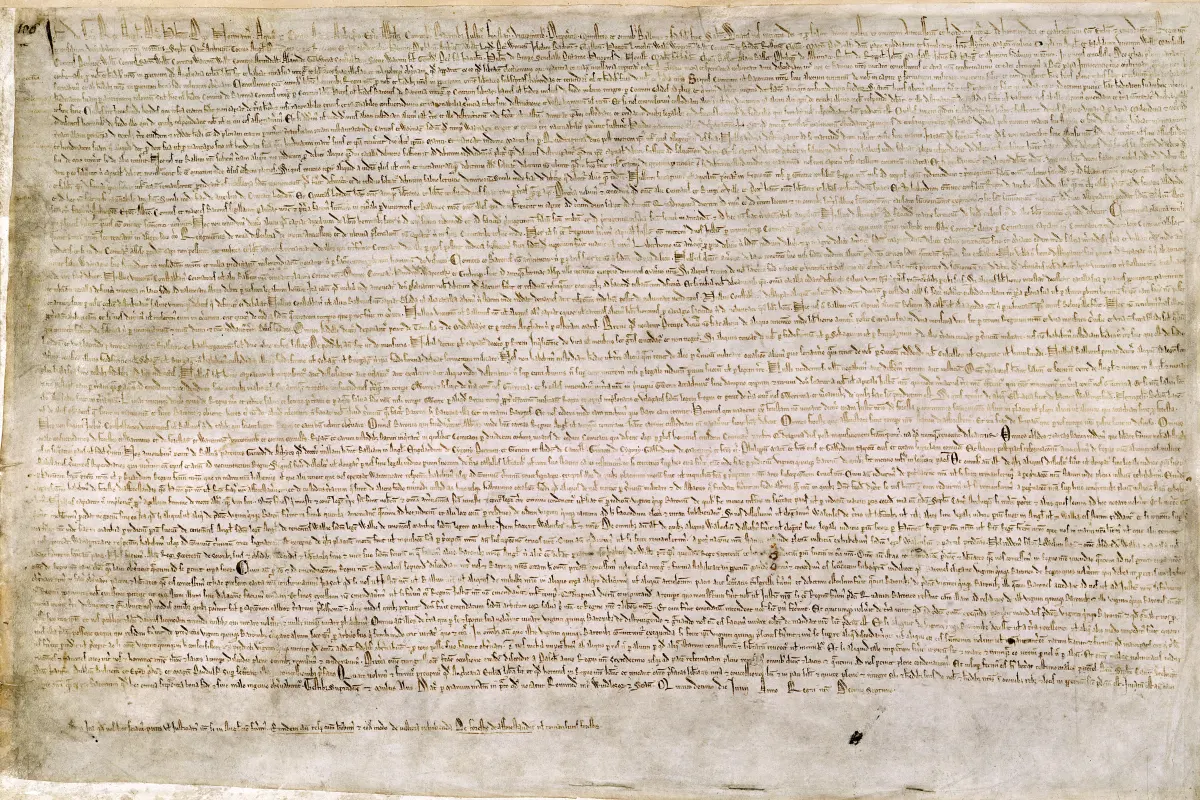
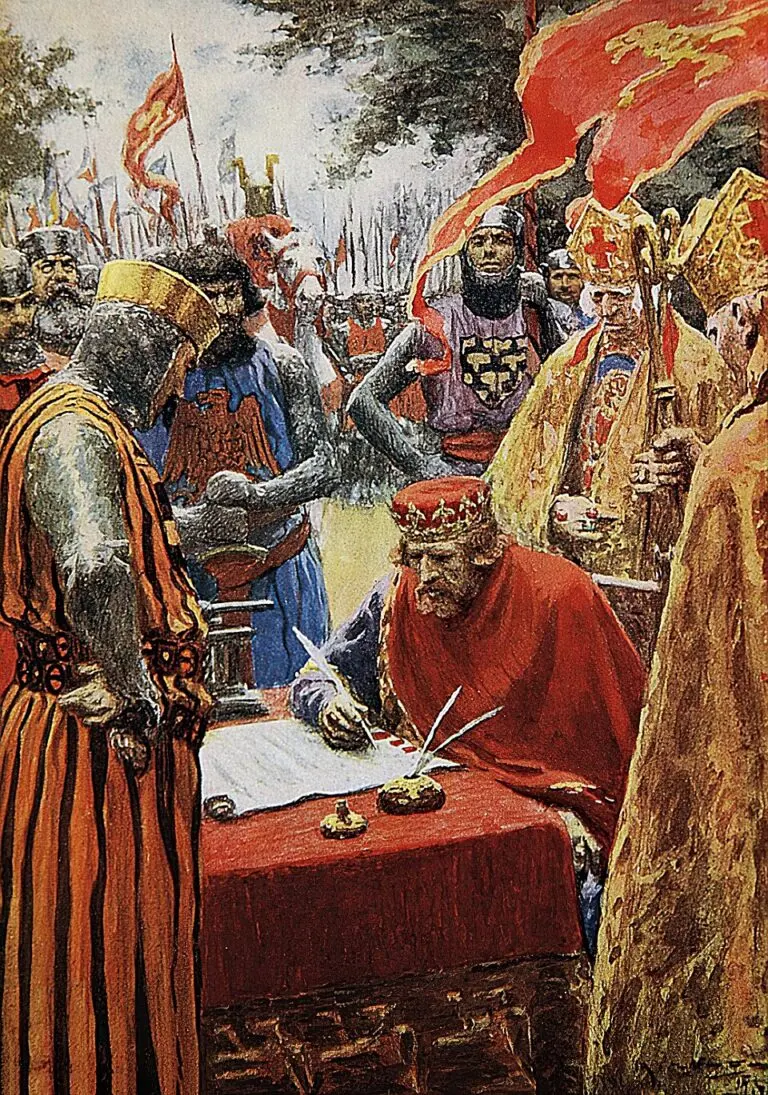
The Magna Carta, or "Great Charter," is a foundational legal document sealed by King John of England at Runnymede on June 15, 1215. It established the principle that everyone, including the monarch, is subject to the law. This historic agreement curtailed royal power and protected specific rights, influencing modern constitutional democracies worldwide.
On this page
What is the Magna Carta historically?
The Magna Carta emerged from a period of intense political crisis in 13th-century England. King John had alienated his powerful barons through heavy taxation, unsuccessful military campaigns in France, and disputes with the Pope. Facing the threat of civil war, the king was forced to negotiate with his rebellious subjects at a meadow near Windsor known as Runnymede.
The document was not initially intended as a grand declaration of human rights for all citizens. Instead, it functioned as a practical peace treaty designed to address the specific grievances of the feudal nobility. It sought to limit the king’s ability to levy taxes without consent and guaranteed that free men would not be imprisoned or stripped of their property without legal judgment.
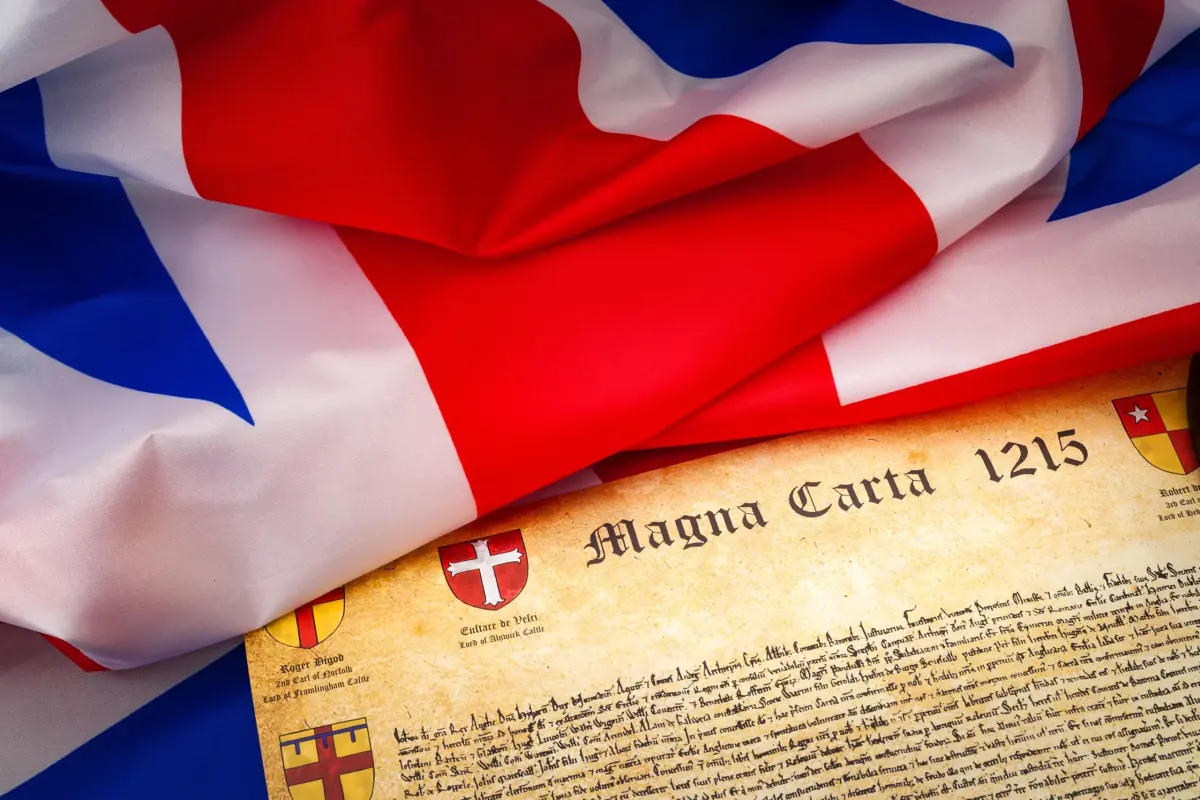
- The charter consisted of 63 clauses written in Latin on parchment.
- It was sealed, not signed, as was the custom for monarchs of the era.
- Despite its significance, the original 1215 version was annulled by Pope Innocent III within months, leading to further conflict.
Why was the Magna Carta created?
The primary driver behind the document was the unchecked authority of the English monarchy. King John frequently exerted "arbitrary power," meaning he could seize lands, demand excessive payments, or imprison opponents without a fair trial. The barons, exhausted by these abuses, drafted the charter to impose legal boundaries on the crown's executive actions.
The document also served as a mechanism for accountability. Clause 61, often called the "security clause," established a council of 25 barons authorized to seize the king's castles and lands if he violated the charter's terms. This radical concept introduced the idea that the sovereign could be held legally accountable by his subjects, fundamentally shifting the relationship between the ruler and the ruled.
- The barons demanded protection from arbitrary royal justice.
- They insisted on the preservation of traditional feudal customs.
- They required the king to consult a council before imposing certain taxes.
How does the Magna Carta affect modern law?
While most of the original 1215 clauses have been repealed or superseded by subsequent legislation, the spirit of the Magna Carta remains embedded in modern legal systems. Its most famous provision, Clause 39, declared that no free man shall be seized, imprisoned, or stripped of rights except by the lawful judgment of his peers or by the law of the land.
This clause is considered the ancestor of the right to due process and the writ of habeas corpus. These concepts prevent the government from detaining individuals indefinitely without bringing them before a court. Many legal scholars argue that the Magna Carta provided the intellectual framework for the United States Bill of Rights and the Universal Declaration of Human Rights.
- It established the principle that the law is supreme over the individual.
- It introduced the concept of trial by jury as a protection against tyranny.
- It served as a symbolic rallying cry for constitutional movements globally.
Common mistakes when studying the Magna Carta
A frequent error is assuming the Magna Carta was a democratic document that granted rights to all English subjects. In 1215, the vast majority of the population were serfs or peasants who held no status under feudal law. The protections defined in the charter were strictly limited to "free men," a small minority of the total population at the time.
Another misconception is that the Magna Carta was a permanent success immediately after its creation. In reality, King John ignored the charter almost immediately, and the country descended into the First Barons' War. It was only through subsequent reissues by later monarchs, most notably Henry III, that the document gained the legal status and prestige it holds today.
- Do not confuse the 1215 original with the 1297 version, which was the first to be entered into the English statute roll.
- Avoid the assumption that the document ended the monarchy; it merely attempted to regulate it.
- Remember that the influence of the charter grew over centuries rather than being recognized as a masterpiece of governance in the medieval period.
Where can you see the Magna Carta today?
If you wish to view the physical remnants of this history, you should know that only four original copies of the 1215 Magna Carta survive. Two are held by the British Library in London, one is at Salisbury Cathedral, and the fourth is at Lincoln Cathedral. These documents are fragile, so they are kept in climate-controlled environments to prevent light and air damage.
If you are planning a visit, follow these steps to ensure a successful experience:
- Check the official websites of the British Library or the respective cathedrals for current viewing hours.
- Book tickets in advance, as these artifacts are frequently part of rotating exhibitions or require timed entry.
- Prepare for strict photography restrictions, as flash photography is prohibited to protect the ancient ink and parchment.
By visiting these sites, you gain a tangible connection to a document that transformed the nature of governance. It serves as a reminder that the rights enjoyed by citizens today were the result of centuries of struggle, negotiation, and the persistent demand for the rule of law.
Key facts
- The Magna Carta, meaning "Great Charter," was signed on June 15, 1215, at Runnymede, England.
- King John issued the document under pressure from a group of rebellious barons to limit royal power.
- It established the principle that everyone, including the monarch, is subject to the rule of law.
- Only three of the original 63 clauses remain part of English law today.
- The document served as a foundational influence for the United States Constitution and the Bill of Rights.
- When studying the charter, avoid assuming it was a democratic document; it was originally a peace treaty between a king and his wealthy landowners.
The bottom line
The Magna Carta remains a cornerstone of modern democracy, representing the first formal limitation on absolute royal authority. While it was initially a failed peace treaty designed to protect the interests of medieval barons, its core principles—specifically the rule of law and the right to due process—have evolved into universal human rights. It serves as an enduring symbol of justice against arbitrary governance and power.
People also ask
Why was the Magna Carta originally written?
It was created to end a civil war between King John and his barons, who were angry about heavy taxation and the king's abuse of power. The charter aimed to protect feudal rights and limit the monarch's ability to act arbitrarily.
Did the Magna Carta grant rights to all citizens?
No, it primarily protected the rights of the nobility and the church. Most of the English population in 1215 were peasants or serfs and received no direct benefits from the charter.
How many copies of the 1215 Magna Carta still exist?
There are only four surviving original copies of the 1215 charter. Two are held by the British Library, one is at Salisbury Cathedral, and one is at Lincoln Cathedral.
Is the Magna Carta still legally active in the United Kingdom?
Most of its original provisions have been repealed over the centuries. However, it remains a powerful symbolic document that underpins the British constitution and the concept of due process.
What is the most famous clause in the Magna Carta?
Clause 39 is the most celebrated, as it states that no free man shall be imprisoned or stripped of his rights except by the lawful judgment of his peers or by the law of the land. This is the ancestor of the modern right to a fair trial.
Did King John actually sign the Magna Carta?
King John did not sign the document with a pen; he applied his royal seal to it. Signing was not the standard practice for validating legal documents at that time.
This answer was created with the help of AI research tools and reference sources. Spotted an error? Let us know — we correct mistakes quickly. See our editorial policy.