What is the easiest way to draw a caribou?
Short answer
The easiest way to draw a caribou is to use a simplified structural approach, building the animal from basic geometric shapes like ovals and rectangles. By establishing the proportions of the torso and neck first, you can layer the distinct antlers and thick fur textures that define this iconic Arctic ungulate.
On this page
How to draw a caribou using basic shapes
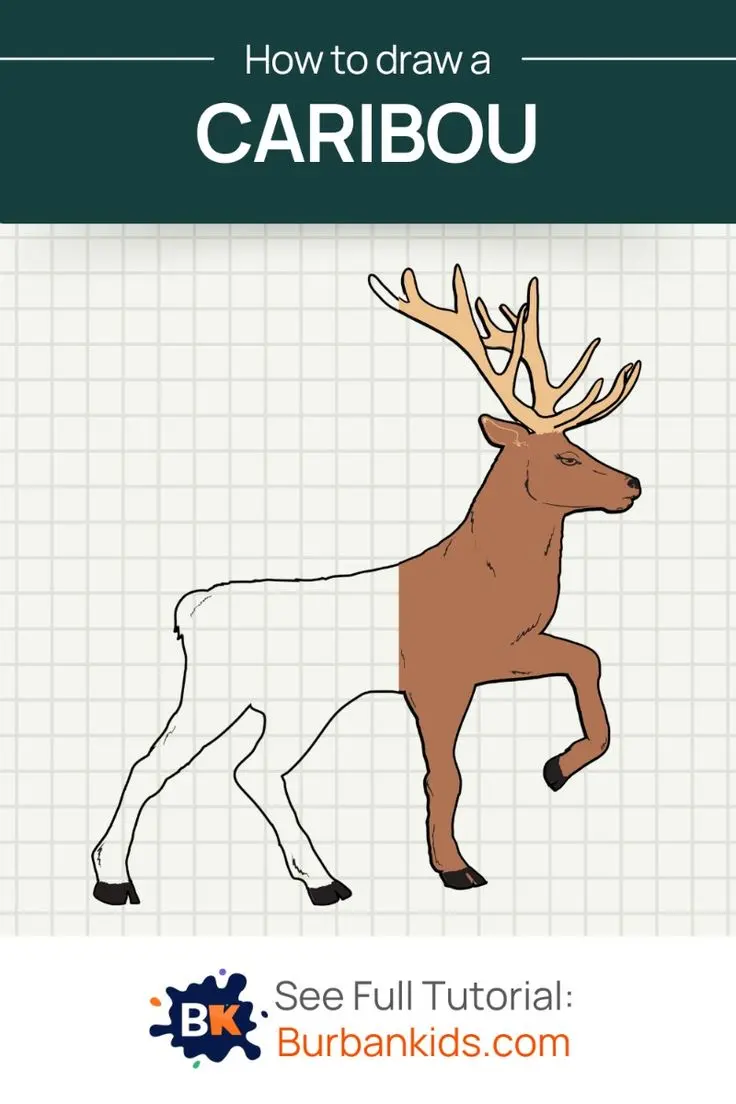
Drawing a caribou becomes much simpler when you break the complex anatomy down into fundamental geometric forms. Start by sketching a large, horizontal oval for the main body and a smaller, slightly tilted oval for the chest area. Connect these with two curved lines to suggest the back and the underbelly. Add a smaller circle for the head and a rectangular shape for the muzzle.
Once the basic framework is established, you can refine the silhouette by connecting these shapes with smooth lines. Focus on the caribou's unique posture, which typically features a slightly sloped back and sturdy, thick legs. Use these steps to build your foundation:
- Draw the large torso oval and the smaller chest oval.
- Place a circle for the head above the chest area.
- Sketch four vertical cylinders for the legs, noting that the front legs are generally straighter than the back legs.
- Connect the shapes with fluid outlines to create the animal's profile.
Best drawing techniques for beginners
For those new to wildlife illustration, the most effective method is to focus on the caribou’s distinctive silhouette rather than intricate details. Caribou, also known as reindeer, possess a heavy neck and a thick coat that often obscures the underlying muscle structure. By keeping your initial lines light and loose, you allow yourself the flexibility to adjust the proportions before committing to darker, final marks.
When you are ready to add detail, focus on the texture of the fur. Caribou fur is dense and coarse, particularly around the neck, where it forms a distinct mane. Use short, flicking strokes with your pencil to mimic the appearance of this thick hair. Avoid drawing individual hairs; instead, group them into clumps to suggest the overall volume of the coat. This technique provides a realistic look without overwhelming the drawing with unnecessary clutter.
Why caribou antlers are the most important feature
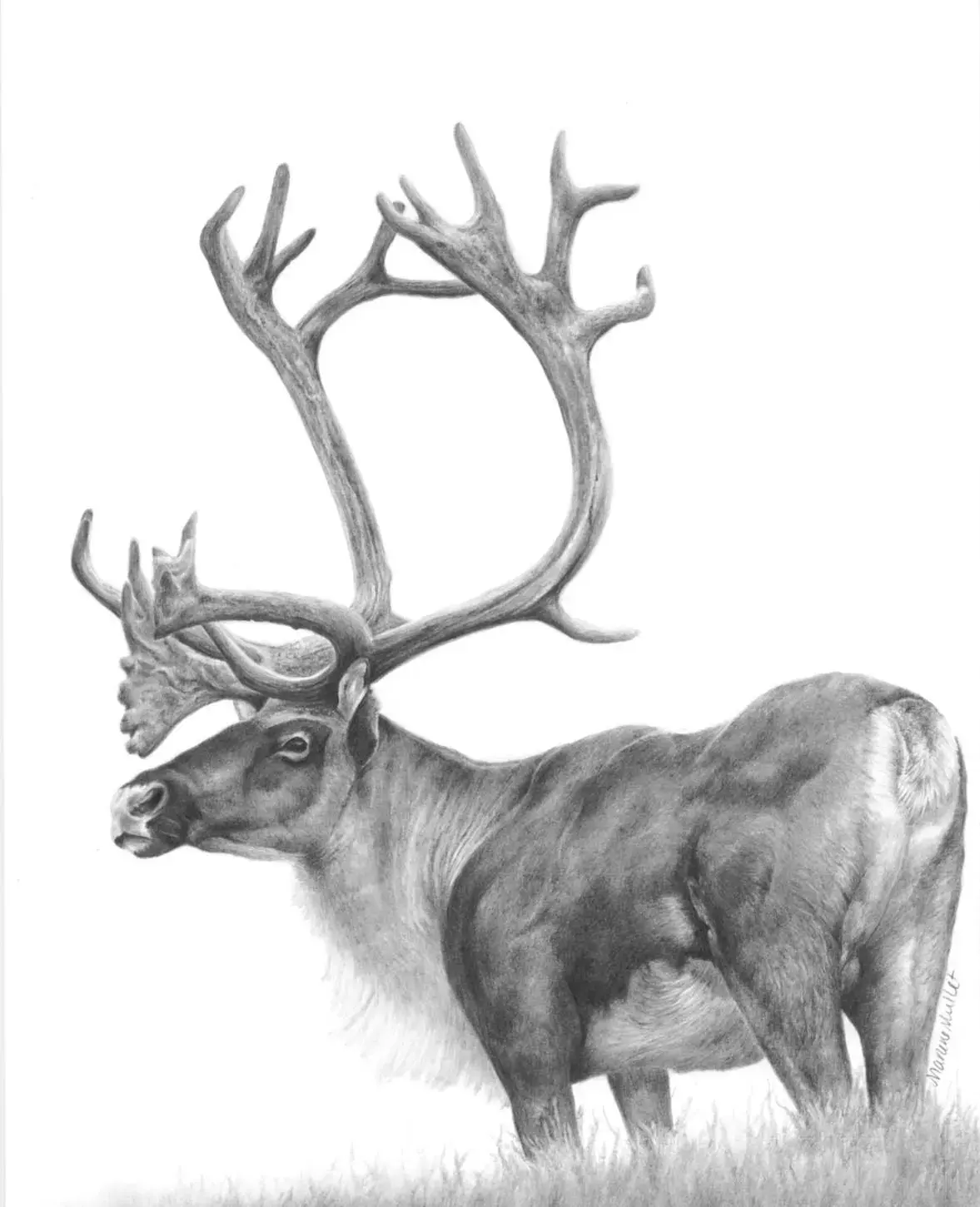
The antlers are the defining characteristic of a caribou and require careful attention to capture the animal's majesty. Unlike other deer species, both male and female caribou grow antlers, though the males typically possess much larger, more complex racks. The main beam of the antler curves backward and then forward, with smaller tines branching off in various directions.
To draw them accurately, start by sketching the main curve of the beam before adding the secondary points. Remember that the antlers are not perfectly symmetrical. Adding slight variations in the length and angle of each tine will make your drawing look more natural and authentic. If you are struggling with the shape, look at reference images of the "velvet" phase, where the antlers appear thicker and fuzzier, as this can help you understand the underlying structure before you add the hard, bony textures of mature antlers.
Common mistakes when drawing caribou
One of the most frequent errors is miscalculating the length of the legs in proportion to the body. Caribou have relatively long, sturdy legs that allow them to navigate deep snow and rugged tundra terrain. If the legs are drawn too short, the animal will look stocky or like a different species entirely. Always ensure that the legs account for at least half of the total height of the animal from the ground to the top of the shoulder.
Another common mistake involves the shape of the hooves. Caribou hooves are uniquely adapted for their environment; they are large, crescent-shaped, and concave, which helps them act like snowshoes. Many beginners draw small, pointed hooves similar to those of a horse, which ruins the realism of the drawing. Ensure that the hooves appear wide and splayed at the base to accurately reflect how the animal distributes its weight across soft or snowy ground.
How to add realistic shading and depth
Adding depth to your caribou drawing is achieved through consistent light source placement and careful observation of shadows. Because caribou have thick, light-colored fur on their necks and darker, brownish coats on their bodies, you should vary the pressure of your pencil to reflect these tonal differences. Use a soft lead pencil, such as a 4B, to create deep shadows under the belly, between the legs, and beneath the chin where the mane casts a shadow.
To finalize your work, consider the environment. Caribou are rarely seen in isolation; they are social animals that travel in herds. Adding a simple, flat horizon line or a few suggested tufts of tundra grass can ground your drawing and provide a sense of scale. By keeping the background minimal, you ensure that the viewer’s focus remains on the caribou itself, highlighting the structural work you completed in the earlier stages. Always step back from your work periodically to ensure the overall proportions remain balanced and the silhouette remains clear.
Key facts
- Caribou have large, crescent-shaped hooves that act like snowshoes to help them walk on soft tundra.
- The most distinctive feature of a caribou is its rack of antlers, which both males and females grow.
- Start your drawing with a large oval for the body and a smaller, slightly tilted oval for the head.
- Connect the shapes with two curved lines to form a thick, muscular neck typical of the species.
- Draw the legs slightly bent at the joints, as caribou have a distinct, sturdy stance for migration.
- Use a dark, heavy line for the back and a lighter, fuzzy texture for the belly to represent their thick coat.
The bottom line
To draw a caribou effectively, prioritize the animal's sturdy, compact silhouette and its iconic, branching antlers. Begin by establishing the core body mass with simple geometric shapes, then refine the details by adding the characteristic thick neck and shovel-like hooves. By focusing on the unique, blunt muzzle and the distinct texture of their dense fur, you can capture the rugged essence of this resilient arctic mammal.
People also ask
Do female caribou always have antlers?
Yes, unlike most other deer species where only males grow antlers, both male and female caribou possess them. Females typically grow smaller, thinner antlers than males.
What is the best way to draw caribou antlers?
Start with a main beam that curves backward, then add several smaller tines branching off toward the front. The brow tines are often palmated, meaning they look like flat, jagged hands.
How do you draw the caribou's unique coat?
Use short, quick pencil strokes to indicate the dense, hollow hair that covers their bodies. Focus on adding extra volume around the neck to mimic their winter ruff.
Should I draw the caribou standing or running?
Drawing a caribou standing is easier for beginners because it allows you to focus on the proportions of the legs and hooves. Running poses require more complex angles for the joints.
What is a common mistake when drawing caribou faces?
Many people draw the nose too pointed, like a horse. Caribou have a blunt, rounded muzzle that is covered in fur, which gives them a softer appearance.
How long are caribou legs compared to their body?
Caribou legs are relatively long and thick to support their heavy bodies during long-distance migrations. Ensure the legs are at least as long as the depth of the body oval.
This answer was created with the help of AI research tools and reference sources. Spotted an error? Let us know — we correct mistakes quickly. See our editorial policy.