What is permafrost?
Short answer
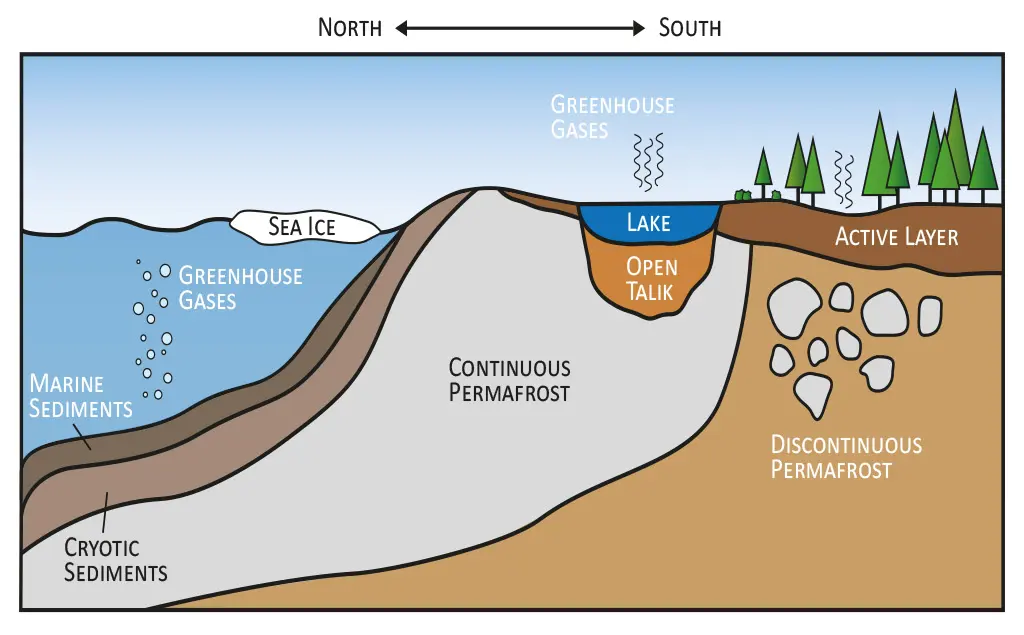
Permafrost is ground, including rock or soil, that remains at or below 0°C (32°F) for at least two consecutive years. It covers approximately 15 percent of the Northern Hemisphere’s land area. While it stays frozen year-round, the top layer, known as the active layer, thaws during the summer months and refreezes in winter.
On this page
Where is permafrost found?
Permafrost is primarily located in high-latitude regions near the North and South Poles, as well as at high altitudes in mountainous areas. The vast majority of the world's permafrost exists in the Arctic, spanning extensive regions of Alaska, Canada, Russia, and Greenland. These areas are characterized by extremely cold climates where the ground heat loss during winter exceeds the heat gain during the short summer season.
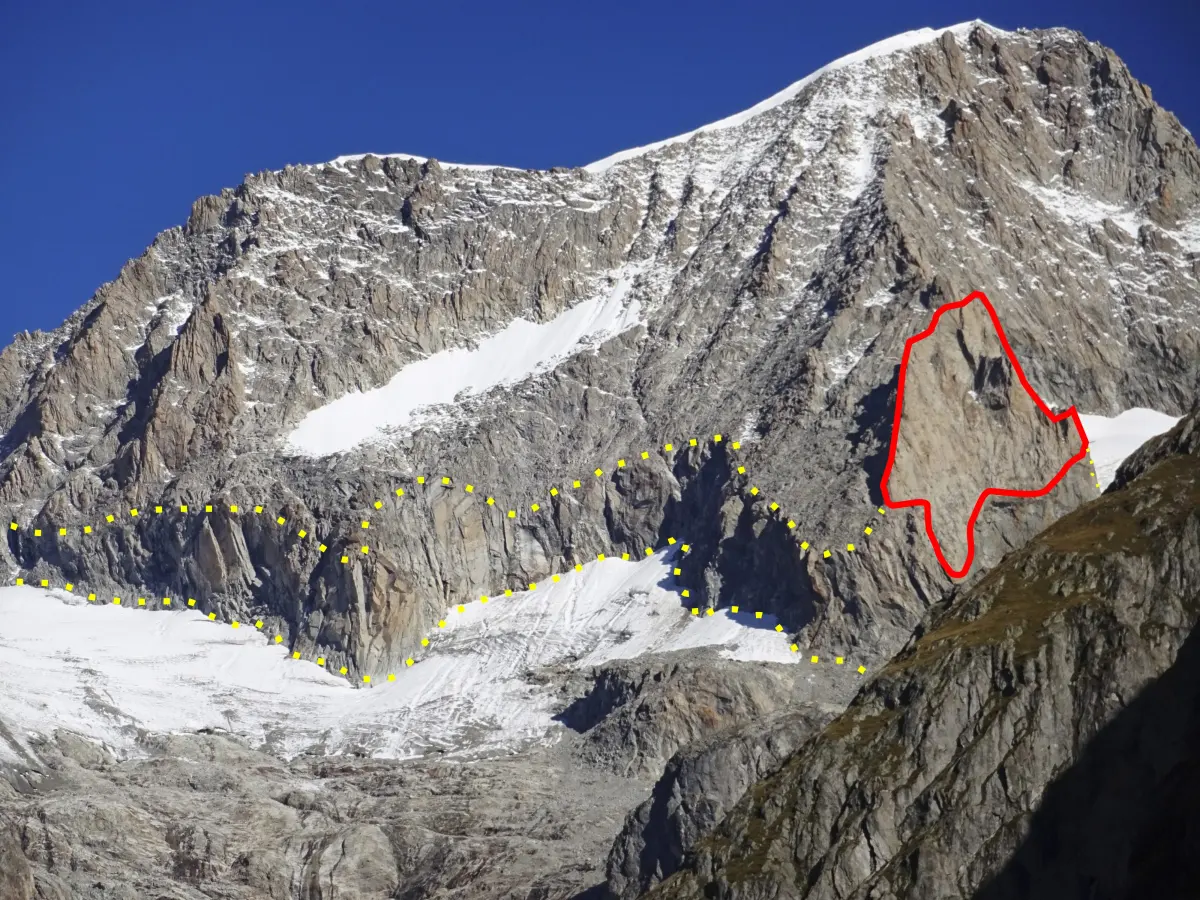
Beyond the polar regions, alpine permafrost occurs at high elevations where temperatures remain sufficiently low throughout the year. This includes mountain ranges such as the Himalayas, the Andes, and the Alps. In these locations, the presence of permafrost is highly dependent on slope aspect and altitude. Because the ground is permanently frozen, it acts as a solid base for various ecosystems, though it is highly sensitive to changes in surface temperature and snow cover.
Why does permafrost thaw happen?
Permafrost thaw occurs when the thermal balance of the ground is disrupted, causing the temperature of the soil to rise above the freezing point. This is primarily driven by global climate change, which has caused Arctic temperatures to rise at a rate significantly faster than the global average. When the surface temperature increases, the active layer—the portion of the ground that thaws annually—deepens, eventually reaching deeper layers that have been frozen for centuries or even millennia.
Human activities also contribute to localized thawing through the disturbance of the ground surface. Removing vegetation or topsoil exposes the underlying ice-rich ground to direct sunlight, which accelerates the melting process. Once the ice within the soil melts, the ground loses its structural integrity. This process, known as thermokarst, can lead to significant landscape changes, including the formation of sinkholes, slumping hillsides, and the creation of new ponds or lakes where the land has subsided.
How does permafrost affect the environment?
Permafrost plays a critical role in the global climate system because it acts as a massive storehouse for carbon. Over thousands of years, dead plant and animal matter has accumulated in the frozen soil, unable to decay fully. As this material thaws, microorganisms break down the organic matter, releasing carbon dioxide and methane into the atmosphere. This creates a feedback loop, as these greenhouse gases further warm the planet, leading to even more permafrost degradation.
The physical presence of permafrost also dictates the hydrology of northern landscapes. Because the frozen ground is impermeable, it prevents water from draining downward, resulting in the formation of vast wetlands and lakes. As the permafrost thaws, the ground becomes porous, allowing water to drain away. This leads to several environmental consequences:
- Drying up of existing lakes and wetlands, which impacts local wildlife habitats.
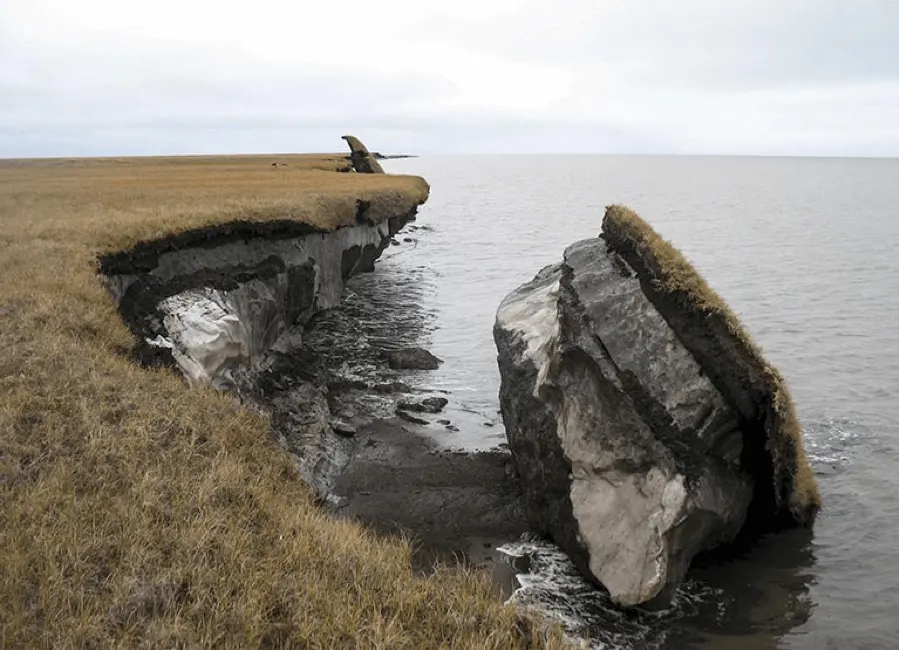
- Increased erosion along coastlines and riverbanks as the frozen soil loses its binding strength.
- Alteration of nutrient cycles in Arctic streams and rivers due to increased soil runoff.
- Increased risk of wildfires in regions that were previously too wet to support large-scale burning.
Common mistakes when building on permafrost
Construction in permafrost regions is notoriously difficult because the ground behaves like a solid foundation only as long as it remains frozen. A common mistake is using standard construction techniques that do not account for the thermal sensitivity of the soil. When a building is placed directly on the ground, the heat generated by the structure or the occupants can transfer into the soil, causing the ice to melt and the foundation to settle unevenly.
To mitigate these risks, engineers must employ specific strategies to keep the ground frozen. Failure to follow these practices often leads to catastrophic structural failure:
- Failing to use pilings or stilts to elevate buildings, which allows cold air to circulate beneath the floor.
- Neglecting to install thermosyphons, which are specialized pipes that draw heat out of the ground during winter.
- Ignoring the importance of maintaining original vegetation, which acts as an insulating layer against summer heat.
- Underestimating the depth of the active layer, leading to foundations that are not anchored into the stable, permanently frozen soil below.
What are the risks of permafrost melt?
The thawing of permafrost poses significant risks to human infrastructure and global climate stability. As the ground subsides, roads buckle, pipelines rupture, and buildings crack, requiring expensive maintenance or complete relocation of entire communities. In places like Siberia and Alaska, entire towns have faced the threat of relocation as the land beneath them literally liquefies. These physical changes create a cycle of economic hardship for indigenous populations and industries operating in the North.
Beyond infrastructure, there is the potential for the release of ancient pathogens. As the ground thaws, there is a theoretical risk that bacteria or viruses trapped in the ice for centuries could be released into the environment. While the immediate threat is often debated by scientists, the potential for public health challenges remains a serious concern. Ultimately, the stability of the global climate is deeply linked to the integrity of these frozen landscapes, making the monitoring of permafrost a priority for researchers worldwide.
Key facts
- Permafrost is ground that remains at or below 0°C (32°F) for at least two consecutive years.
- It covers approximately 24% of the exposed land surface in the Northern Hemisphere.
- Permafrost layers can reach depths of up to 1,500 meters (nearly 5,000 feet) in parts of Siberia.
- The "active layer" is the top portion of soil that thaws during the summer and refreezes in winter.
- Infrastructure built on permafrost requires specialized foundations, such as thermosyphons, to keep the ground frozen.
- Avoid building directly on permafrost without insulation, as heat from structures can cause the ground to collapse.
The bottom line
Permafrost serves as a critical, frozen foundation for northern ecosystems and human infrastructure. As global temperatures rise, the rapid degradation of this ground poses significant risks to local stability and the global climate through the release of stored carbon. Understanding the mechanics of permafrost is essential for adapting to environmental changes, managing land use effectively, and mitigating the long-term impacts of a warming planet on our world.
People also ask
Does permafrost consist only of ice?
No, permafrost is defined by its temperature, not its composition. It can consist of soil, rock, sand, or organic material held together by ice, or it can be "dry" permafrost if there is no moisture present.
What happens when permafrost thaws?
When permafrost thaws, the ice within the ground melts, causing the soil to lose its structural integrity. This leads to ground subsidence, which can damage buildings, roads, and pipelines, and releases trapped greenhouse gases like methane and carbon dioxide.
How do scientists measure permafrost?
Scientists use boreholes drilled into the ground to insert temperature sensors at various depths. These sensors record long-term thermal data to track changes in the thickness of the active layer and the stability of the underlying frozen ground.
Can you grow crops on permafrost?
You cannot grow crops directly on permafrost because the ground is frozen and often waterlogged during the brief summer thaw. The limited depth of the active layer prevents deep root growth and restricts agricultural activity to specialized, controlled environments.
Why is permafrost important for the global climate?
Permafrost acts as a massive carbon sink, storing vast amounts of ancient organic matter that has been frozen for millennia. As the planet warms, the microbial decomposition of this thawing matter releases carbon back into the atmosphere, potentially accelerating climate change.
Is all permafrost located in the Arctic?
While most permafrost is found in high-latitude regions like Alaska, Canada, and Russia, it also exists in high-altitude mountain ranges. Alpine permafrost can be found in the Himalayas, the Andes, and the Alps at elevations where temperatures remain consistently low.
This answer was created with the help of AI research tools and reference sources. Spotted an error? Let us know — we correct mistakes quickly. See our editorial policy.