Where do owls live?
Short answer
Owls inhabit every continent on Earth except Antarctica. They are highly adaptable predators found in diverse environments ranging from dense tropical rainforests and arid deserts to arctic tundras and suburban backyards. While some species are strictly territorial, others migrate seasonally to find food, occupying various natural and man-made nesting structures.
On this page
Where do owls live in the wild?
Owls are remarkably versatile birds that have successfully colonized almost every terrestrial habitat on the planet. Their distribution is primarily limited by the availability of prey and suitable nesting sites rather than specific climate requirements. For instance, the Snowy Owl thrives in the harsh, treeless expanses of the Arctic tundra, while the Great Horned Owl occupies a vast range across North and South America, adapting to forests, mountains, and even urban parks.
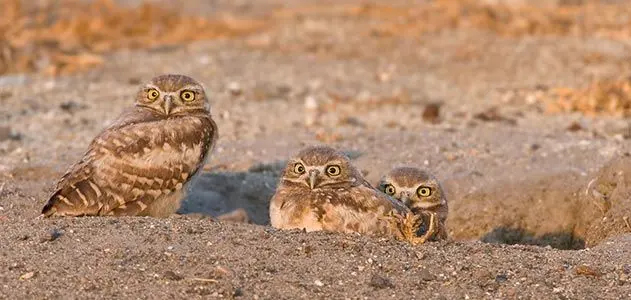
Most owl species prefer habitats that offer both cover for daytime roosting and open areas for hunting. Dense canopy forests provide protection from larger predators and mobbing songbirds, whereas grasslands and marshes allow owls to utilize their exceptional hearing to locate small mammals. Some species are highly specialized; the Burrowing Owl, for example, lives in open, dry landscapes where it occupies abandoned underground dens created by prairie dogs or ground squirrels.
- Arctic Tundra: Home to the Snowy Owl, which nests on the ground.
- Temperate Forests: Preferred by the Barred Owl and Spotted Owl for their thick foliage.
- Deserts: Inhabited by the Elf Owl, which often nests in saguaro cactus cavities.
- Grasslands: Used by Short-eared Owls for hunting and ground-level nesting.
How do owls choose their nesting sites?
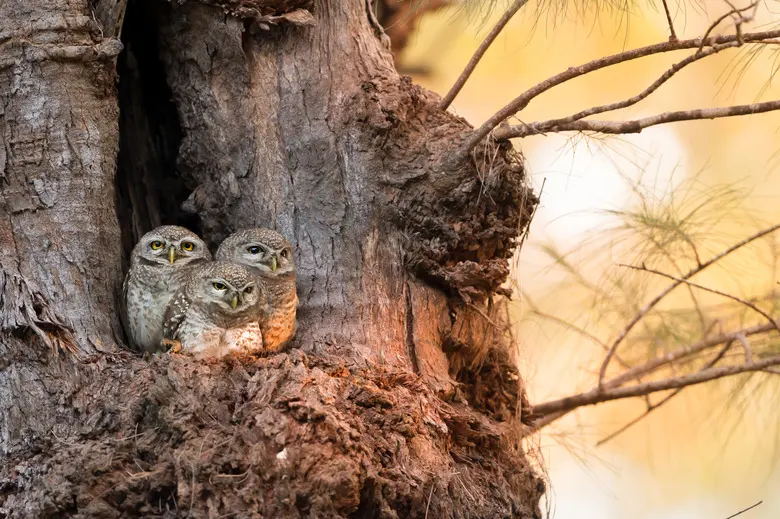
Owls do not typically build their own nests from scratch. Instead, they are opportunistic nesters that repurpose structures created by other animals or natural landscape features. Many forest-dwelling species, such as the Tawny Owl, rely on tree hollows or abandoned nests previously occupied by hawks, crows, or squirrels. These cavities provide essential insulation and protection for eggs and owlets against wind, rain, and predators.
In environments where trees are scarce, owls demonstrate significant ingenuity. They may utilize rocky crevices, cliff ledges, or even human-made structures like barns and silos. The Barn Owl is particularly famous for its association with human architecture, frequently nesting in rafters or abandoned buildings. This behavior has allowed certain species to thrive in human-dominated landscapes, provided there is a steady supply of rodents and minimal disturbance during the critical breeding months.
- Locate a suitable cavity or platform, such as a hollow tree or a large stick nest.
- Clear out debris or old nesting material if necessary.
- Establish a territory by vocalizing to deter rivals.
- Monitor the area for potential threats like snakes or larger raptors.
Why do owls migrate or stay put?
The decision to migrate depends largely on the stability of an owl's food supply. Many species, including the Great Horned Owl, are sedentary and remain in the same territory year-round as long as they can find sufficient prey. These birds have evolved to survive cold winters by increasing their metabolic efficiency and utilizing dense plumage to retain body heat. They defend their territories vigorously, ensuring they have exclusive access to resources when food becomes scarce in mid-winter.
Conversely, some species are nomadic or migratory. Snowy Owls, for example, exhibit an "irruptive" migration pattern. When lemming populations crash in the Arctic, these owls move south in search of food, occasionally appearing in unexpected regions like the northern United States. This movement is not driven by temperature, but by the urgent biological necessity of finding calorie-dense prey. Understanding these patterns helps researchers track population health and environmental changes across vast geographical ranges.
Common mistakes when looking for owls
A frequent error enthusiasts make is searching for owls during the day without understanding their specific roosting behaviors. Because most owls are nocturnal or crepuscular, they spend daylight hours in deep camouflage, often pressed tightly against tree trunks or hidden within thick evergreen branches. Beginners often walk right past an owl because they are scanning the sky rather than looking for subtle irregularities in the bark or foliage.
Another mistake is approaching a potential roosting site too aggressively. Owls are highly sensitive to movement and noise. If you approach too quickly, the bird will likely flush, which wastes its energy and exposes it to potential harassment from crows or jays. Always use binoculars or a spotting scope to observe from a distance. If an owl opens its eyes or shifts its position, you have likely moved too close and should retreat immediately to avoid causing the bird unnecessary stress.
- Making loud noises or playing owl calls, which can disrupt their hunting or resting.
- Using flash photography, which can temporarily blind the owl and ruin its night vision.
- Searching in areas that have been recently disturbed by construction or heavy foot traffic.
- Ignoring the "mobbing" behavior of smaller birds, which often reveals an owl's exact location.
How to attract owls to your property
Creating a habitat for owls requires a focus on providing food and shelter rather than just installing a nesting box. If you want to encourage owls to visit, you must first foster a healthy ecosystem that supports rodent populations. Avoid using rodenticides, as these toxins accumulate in the owl's system and can lead to secondary poisoning, which is a leading cause of mortality for urban-dwelling raptors.
To provide shelter, consider leaving dead trees standing if they do not pose a safety hazard, as these are prime real estate for cavity-nesting species. You can also install specialized nesting boxes designed for specific local species like the Screech Owl or Barn Owl. Place these boxes in quiet, dark areas of your yard, at least 10 to 15 feet above the ground, and ensure they are protected from direct sunlight and prevailing winds. By maintaining a natural, pesticide-free environment, you increase the likelihood of owls establishing a residence in your backyard.
Key facts
- Owls inhabit every continent on Earth except for Antarctica.
- Most owl species are nocturnal, meaning they are active primarily at night.
- Many owls nest in pre-existing cavities like hollow trees, abandoned buildings, or old nests built by hawks or squirrels.
- The Burrowing Owl is unique because it lives in underground tunnels often abandoned by prairie dogs or badgers.
- Snowy Owls reside in the Arctic tundra, where they nest on the ground in open, treeless areas.
- To attract owls to your property, avoid using rodenticides, as these poisons can kill owls that eat contaminated prey.
The bottom line
Owls are incredibly adaptable predators found globally in diverse ecosystems ranging from dense forests to open deserts and urban parks. Rather than building nests, they typically occupy existing cavities or abandoned structures. By preserving natural habitats, avoiding toxic rodent poisons, and installing appropriate nesting boxes, you can support these essential birds of prey. Understanding their specific environmental needs is the first step toward successful local conservation.
People also ask
Do owls migrate?
While many owl species are sedentary and stay in one area year-round, some species like the Snowy Owl and Northern Saw-whet Owl migrate south during winter. They move to find more abundant food sources when prey becomes scarce in colder climates.
How can I tell if an owl is living in my backyard?
Look for signs such as regurgitated pellets, which are compressed balls of fur and bones, at the base of trees. You may also hear distinct hooting or screeching calls during the night, especially during the breeding season.
Do owls build their own nests?
Most owls do not construct their own nests from scratch like songbirds do. Instead, they repurpose existing structures such as tree cavities, rock crevices, or nests previously built by other large birds.
Can owls live in urban environments?
Yes, species like the Great Horned Owl and the Barn Owl have adapted well to suburban and urban areas. They often utilize park trees, church steeples, or man-made nesting boxes to raise their young.
How do owls stay warm in cold climates?
Owls possess dense, insulating feathers that cover their entire bodies, including their legs and feet. This thick plumage traps heat effectively, allowing them to survive in freezing temperatures.
What is the best way to help local owl populations?
Installing a properly sized nesting box is an excellent way to provide safe shelter for owls. Ensure the box is placed in a quiet, undisturbed area away from heavy foot traffic and bright artificial lights.
This answer was created with the help of AI research tools and reference sources. Spotted an error? Let us know — we correct mistakes quickly. See our editorial policy.