What is Alphonse Mucha known for?
Short answer
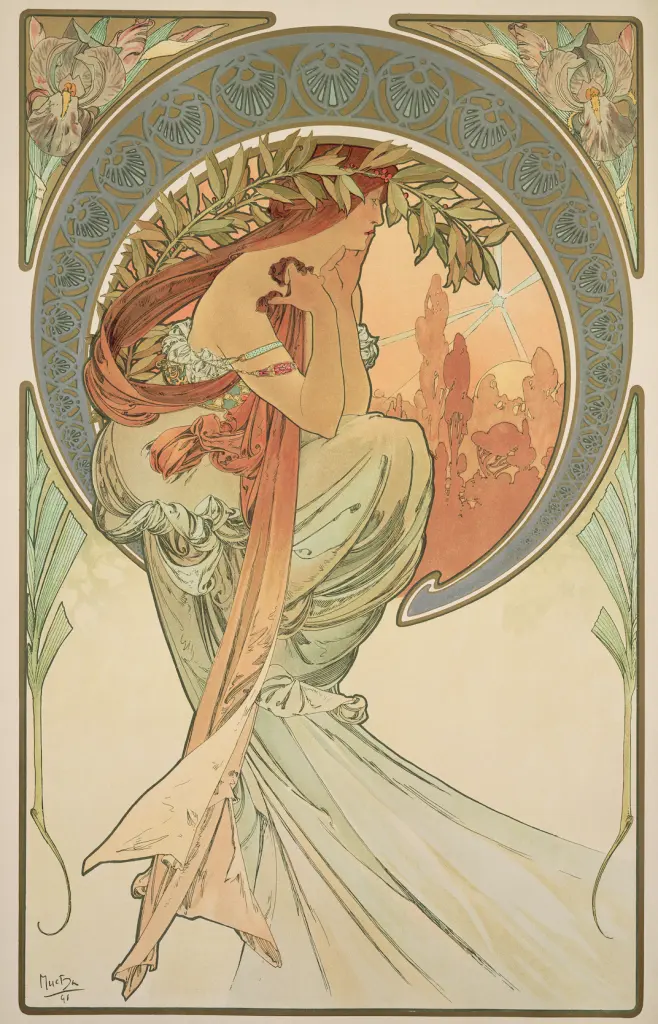
Alphonse Mucha was a Czech painter and decorative artist, best known as the definitive figure of the Art Nouveau movement. He gained international fame in 1894 for his theatrical posters featuring Sarah Bernhardt. His signature style, characterized by flowing lines, floral motifs, and idealized female figures, profoundly influenced modern graphic design.
On this page
Why is Alphonse Mucha famous?
Alphonse Mucha rose to prominence in late 19th-century Paris, a period often referred to as the Belle Époque. His breakthrough came when he designed a poster for the play Gismonda, starring the legendary actress Sarah Bernhardt. The design was revolutionary, utilizing a tall, narrow format, muted pastel colors, and a decorative halo effect around the subject's head. This aesthetic, which became known as "le style Mucha," diverged sharply from the cluttered, text-heavy advertisements of the time.
His work bridged the gap between fine art and commercial illustration, effectively democratizing beauty for the public. By elevating the poster to an art form, Mucha influenced how brands marketed products, from champagne and biscuits to cigarettes and perfume. His ability to blend Byzantine, Slavic, and floral influences created a visual language that defined the Art Nouveau movement. Today, he remains a symbol of an era that prioritized organic forms and decorative elegance in everyday objects.
How to identify Art Nouveau style
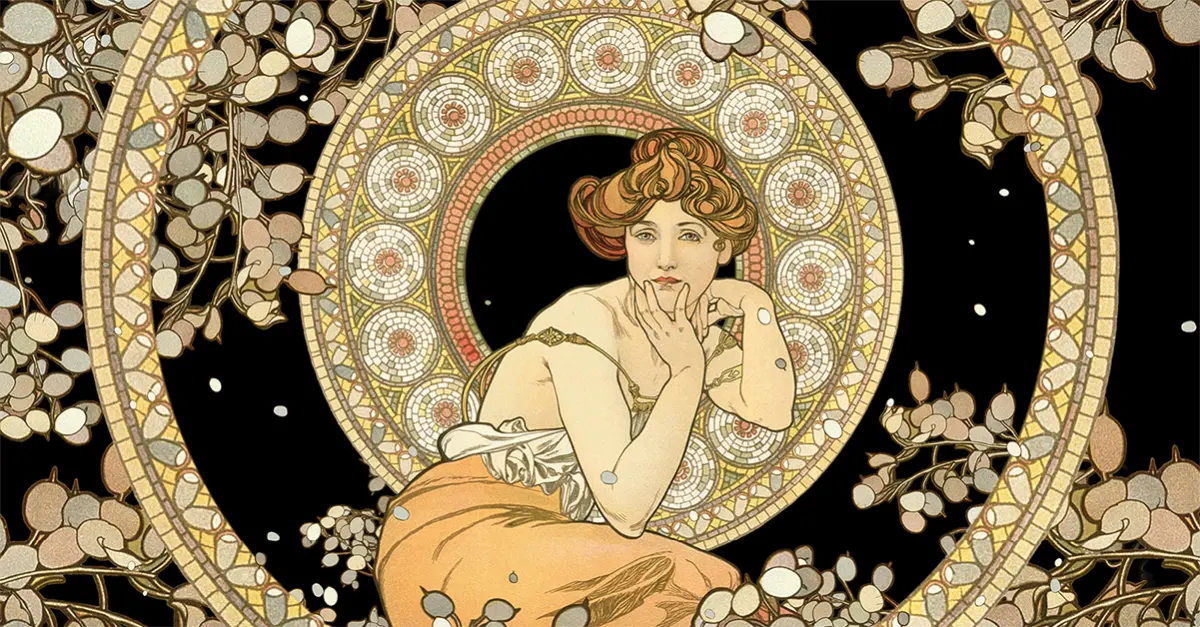
Art Nouveau, or "New Art," is characterized by its rejection of rigid academic styles in favor of organic, rhythmic lines. Mucha’s work is the quintessential example of this transition, focusing on the harmony between nature and human form. When analyzing his pieces, look for specific stylistic markers that differentiate his work from other movements like Art Deco or Impressionism.
- Flowing, serpentine lines that mimic the movement of vines or hair.
- Asymmetrical compositions that create a sense of natural growth.
- Muted, earthy color palettes often accented with gold or metallic inks.
- Highly stylized, idealized female figures surrounded by ornate floral halos.
- Intricate, lace-like borders that frame the central subject matter.
These elements work together to create a sense of movement and grace. Unlike the geometric precision of later design movements, Mucha’s style feels soft, tactile, and deeply connected to the natural world, emphasizing beauty as a primary function of design.
What is the Slavic Epic?
While Mucha is celebrated for his commercial posters, he considered his magnum opus to be The Slav Epic. This series consists of 20 massive canvases depicting the history and mythology of the Slavic people. Completed over 18 years, from 1910 to 1928, these paintings represent a shift from commercial decoration to monumental, patriotic history painting. The canvases are enormous, some measuring over 20 feet wide, and were created as a gift to the city of Prague.
The series reflects Mucha’s deep commitment to his Czech heritage and his belief in the unity of Slavic nations. He traveled extensively across the Balkans and Russia to research historical costumes and architecture, ensuring the series held cultural accuracy. While the posters brought him fame, the Slav Epic reveals the depth of his political convictions and his desire to contribute to the collective identity of his people. It remains a testament to his versatility as both a commercial artist and a serious painter.
Common mistakes when collecting Mucha prints
Many enthusiasts seek to own Mucha’s work, but the market is filled with reproductions that can confuse new collectors. A common mistake is assuming that any vintage-looking poster featuring his signature is an original lithograph from the 1890s. Many of these are later reprints or high-quality offset lithographs produced decades after his death. Understanding the difference between an original stone lithograph and a modern reproduction is essential for any serious collector.
- Check the paper quality: Original posters were printed on thick, high-quality paper, not glossy modern stock.
- Examine the printing process: Use a magnifying glass to look for a dot matrix pattern, which indicates a modern mechanical reproduction.
- Verify the signature: Mucha’s signature should appear as part of the original composition, not as an added stamp.
- Research the provenance: Authentic pieces often have gallery markings or historical records attached to their sale.
Always consult with a professional appraiser before investing significant funds. Many decorative prints are sold as "original" when they are actually mass-produced items from the 1970s or later.
How to appreciate his legacy today
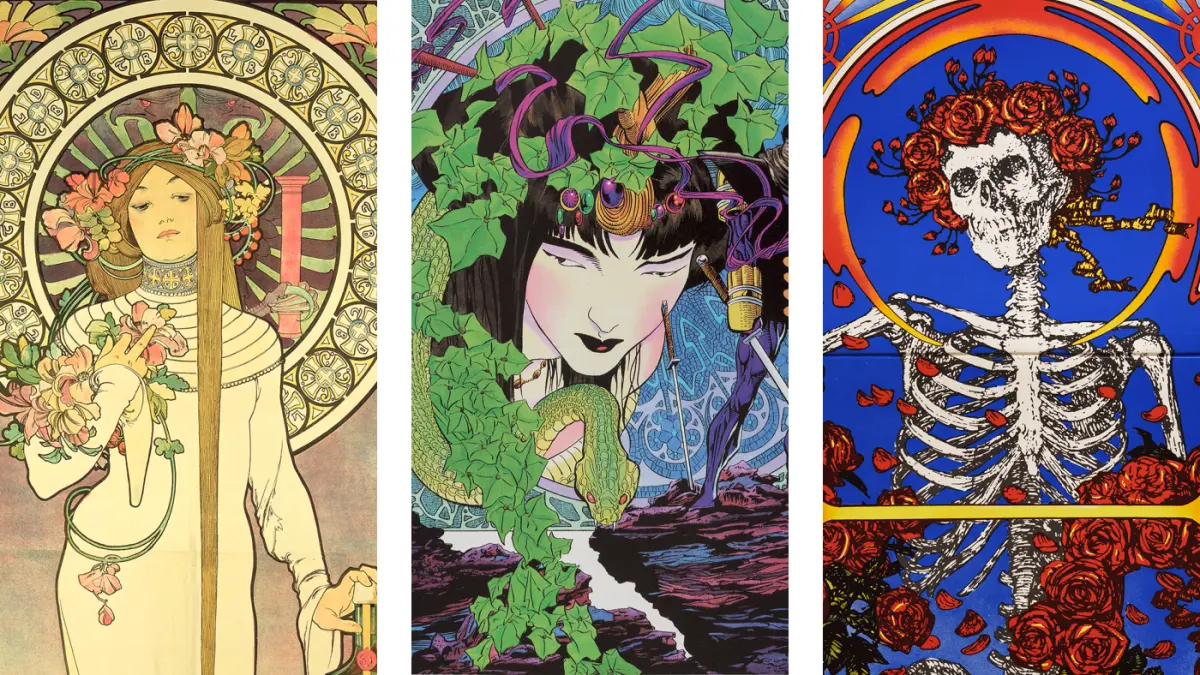
Mucha’s influence extends far beyond the turn of the century, impacting modern graphic design, comic books, and even psychedelic art of the 1960s. His emphasis on composition and the integration of text with image remains a foundational lesson for contemporary designers. To appreciate his work, one should look at how he balanced negative space and decorative detail, ensuring that the viewer’s eye is always drawn to the focal point.
His legacy is preserved today through the Mucha Foundation and various international exhibitions that showcase his diverse portfolio. Whether you are looking at his commercial advertisements or his later, more introspective paintings, Mucha’s work invites the viewer to find beauty in the mundane. By studying his techniques, artists today can learn how to balance commercial requirements with personal artistic expression. His ability to create timeless, evocative imagery ensures that he will remain a central figure in the history of visual arts for many generations to come.
Key facts
- Alphonse Mucha was a Czech painter and decorative artist, best known for his definitive role in the Art Nouveau movement.
- His breakthrough came in 1894 when he designed a theatrical poster for the actress Sarah Bernhardt, titled Gismonda.
- Mucha’s signature style, often called "Le Style Mucha," features elegant women surrounded by lush flowers, halos, and intricate decorative patterns.
- He spent 18 years creating The Slav Epic, a massive cycle of 20 monumental canvases depicting the history of Slavic people.
- To replicate his style, focus on using thick, dark outlines for figures and a muted, earthy color palette with gold accents.
- A common mistake when imitating his work is overcrowding the composition; Mucha balanced his ornate borders with clean, central focal points.
The bottom line
Alphonse Mucha remains a titan of Art Nouveau, celebrated for blending fine art with commercial design. By elevating the poster to a high art form, he created a visual language defined by grace, nature, and intricate detail. Whether through his iconic lithographs of Sarah Bernhardt or his monumental historical paintings, Mucha’s work continues to inspire artists with its timeless elegance and technical precision.
People also ask
Did Alphonse Mucha work in mediums other than posters?
Yes, Mucha was a prolific multidisciplinary artist who designed jewelry, furniture, carpets, stained glass, and even postage stamps. His influence extended far beyond two-dimensional illustration into the realm of interior design and luxury goods.
What characterizes the Art Nouveau style?
Art Nouveau is defined by its use of long, organic, sinuous lines inspired by natural forms like plants and flowers. It sought to break down the barrier between fine art and functional decorative objects.
Where can I see Mucha’s original works today?
The Mucha Museum in Prague, Czech Republic, houses the most comprehensive collection of his paintings, photographs, and personal artifacts. Many of his posters are also held in major international museums like the Musée d'Orsay in Paris.
Why did Mucha move back to his homeland later in life?
After achieving international fame in Paris, Mucha returned to the Czech lands to dedicate his talent to his heritage. He believed his most important work was the Slav Epic, which he gifted to the city of Prague in 1928.
How did Mucha’s photography influence his art?
Mucha was an avid photographer and used his photos as references for his illustrations. He took pictures of models in specific poses to ensure his drawings captured realistic anatomical proportions and drapery.
Is Mucha’s work still relevant to modern design?
His aesthetic remains highly influential, frequently appearing in modern graphic design, comic book art, and psychedelic rock posters. His mastery of composition and balance continues to serve as a foundational study for illustrators.
This answer was created with the help of AI research tools and reference sources. Spotted an error? Let us know — we correct mistakes quickly. See our editorial policy.