What is a watercolor bloom?
Short answer
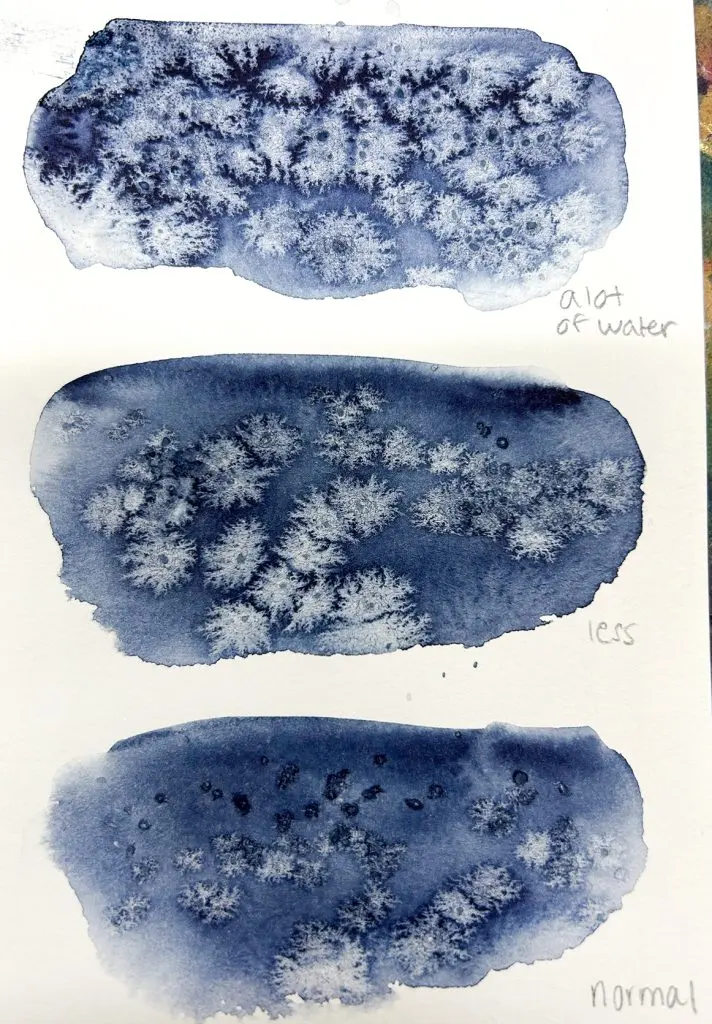
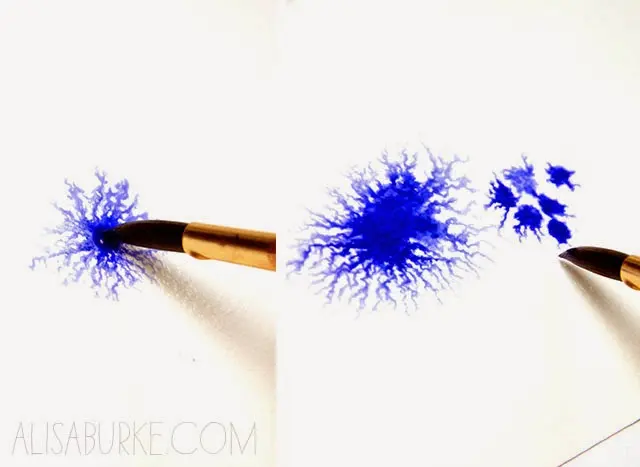
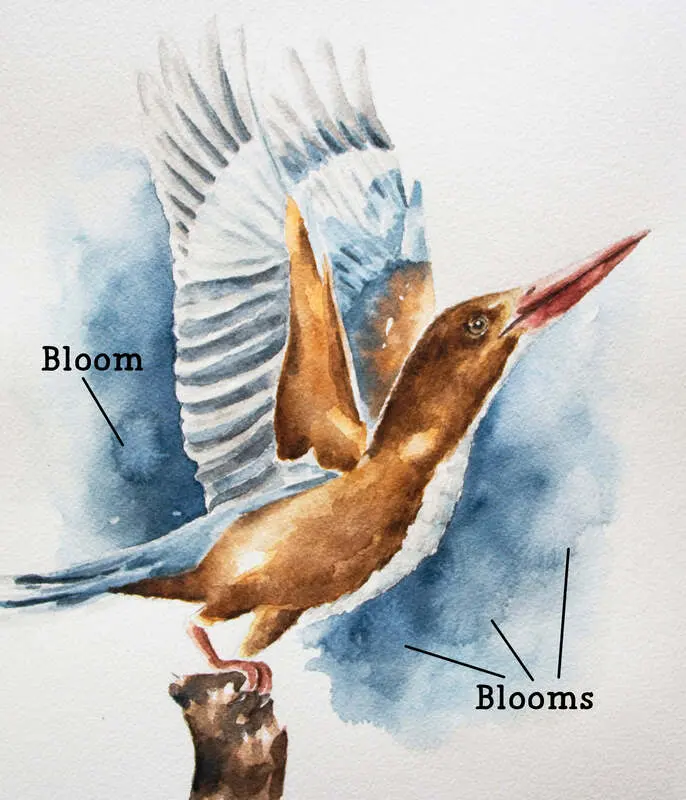
A watercolor bloom, often called a cauliflower, is a textured pattern that occurs when excess water or wet paint flows into a damp area of a painting. The incoming liquid pushes the existing pigment toward the edges, creating feathery, irregular shapes that resemble the florets of a cauliflower or a branching coral structure.
On this page
Why a watercolor bloom happens
A watercolor bloom occurs due to the principles of fluid dynamics and surface tension. When you introduce a drop of water or a wetter, thinner paint mixture into an area that is already damp but beginning to dry, the new liquid has a lower pigment concentration and a different surface tension. Because water naturally flows from areas of high concentration to low concentration, the wetter liquid forces the existing, more concentrated pigment outward.
This physical displacement creates a distinct, sharp-edged boundary where the pigment settles. The result is a lighter, often pale center surrounded by a darker, irregular ring of concentrated color. While beginners often view this as a mistake, many professional watercolorists intentionally induce blooms to create organic textures, such as the appearance of clouds, foliage, or weathered stone surfaces. Understanding that water always seeks equilibrium is the key to mastering this effect.
How to create a bloom intentionally
Artists can harness the bloom effect to add visual interest to their work. To achieve a controlled cauliflower, you must work with precise timing, as the surface must be damp rather than soaking wet or bone dry. If the paper is too wet, the colors will simply merge; if it is too dry, the water will not move the pigment at all.
Follow these steps to practice creating the effect:
- Apply a wash of color to your watercolor paper and wait for it to lose its initial sheen.
- Load a clean brush with clear water or a very thin, light-colored paint mixture.
- Gently touch the brush to the damp surface, allowing a single drop of liquid to release.
- Observe as the water pushes the pigment outward and creates the characteristic branching pattern.
- Allow the area to dry completely without touching it, as any agitation will ruin the delicate edges.
Common mistakes when painting watercolors
The most frequent error is misjudging the moisture content of the paper. Novice painters often attempt to create a bloom when the paper is still fully saturated, which results in a muddy, indistinct mess rather than a crisp texture. Conversely, waiting too long means the pigment has already bonded to the paper fibers, preventing the water from moving it.
Another common mistake involves using the wrong paper quality. High-quality, 100% cotton cold-press paper is designed to hold moisture evenly, which is essential for predictable blooms. Cheap cellulose paper often dries too quickly or absorbs water unevenly, making it difficult to achieve consistent results. Furthermore, overworking an area after a bloom has started will destroy the texture. Once the water begins to move the pigment, you must leave the surface alone until it is entirely dry to ensure the edges remain sharp and defined.
Best techniques for controlling blooms
If you want to avoid accidental blooms, you must manage your brush load and paper moisture carefully. Always dab your brush on a paper towel after dipping it in water to remove excess liquid before touching the painting. This prevents accidental drips from falling onto your work, which is the primary cause of unintentional cauliflower patterns.
To minimize the risk of blooms, consider these strategies:
- Use a hair dryer to speed up the drying process if you are working in a humid environment.
- Keep your brush relatively dry when applying details over a wash that is still slightly damp.
- Work from the background to the foreground to ensure that previous layers have fully set.
- Test your paper’s moisture levels by lightly touching the back of your hand to the edge of the sheet to feel for temperature and dampness.
How long does it take to dry
The time required for a watercolor bloom to set depends on environmental factors and the weight of your paper. In a standard room with moderate humidity, a bloom will typically begin to form within seconds and reach its final shape within a few minutes. However, the entire area must dry completely for the texture to be permanently fixed.
On heavy 300lb (640gsm) paper, the drying process is significantly slower than on thinner 140lb (300gsm) sheets. If you are working in a humid climate, you might find that the paper remains damp for hours, which can lead to unwanted blooms if you accidentally brush against the surface. Professionals often use a fan to circulate air around the painting, which helps the water evaporate evenly across the surface. Once the paper feels cool to the touch, it is still damp; wait until it reaches room temperature to ensure the bloom is fully locked into the fibers.
Key facts
- A watercolor bloom, also known as a cauliflower, occurs when a wetter paint mixture flows into a drier, semi-damp wash.
- The excess water pushes the existing pigment outward, creating jagged, fern-like edges that resemble the florets of a cauliflower.
- Blooms are most likely to happen when the paper is "damp"—meaning it has lost its initial shine but is not yet bone-dry.
- Artists can intentionally create blooms by dropping a clean brush loaded with clear water into a layer of wet, concentrated pigment.
- To avoid accidental blooms, ensure your paper is either completely wet (for a smooth wash) or completely dry before adding new strokes.
- If a bloom occurs when you do not want one, you can often soften the edges by gently lifting the excess moisture with a clean, damp brush.
The bottom line
A watercolor bloom is a distinct textural effect created when excess water disrupts a partially dried layer of paint. While often considered a technical mistake in traditional painting, it serves as a valuable tool for artists seeking to add organic, unpredictable patterns to their work. By mastering the timing of paper moisture, you can choose whether to avoid these unique shapes or intentionally incorporate them into your art.
People also ask
Can I fix a bloom once it has dried on the paper?
Once a bloom is fully dry, it is difficult to remove without damaging the paper surface. You can try to gently scrub the area with a stiff brush and clean water, but it is usually better to incorporate the texture into your design.
Why do blooms happen more often with certain pigments?
Staining pigments, such as Phthalo Blue, are less likely to bloom because they bond quickly to the paper fibers. Granulating pigments, like Ultramarine or Burnt Sienna, are more prone to blooming because the particles remain mobile on the surface longer.
Does the type of watercolor paper affect how blooms form?
Yes, cold-press or rough paper is more prone to blooms due to its textured surface, which traps water in small pockets. Hot-press paper is smoother and often results in more controlled, predictable edges.
Is a bloom considered a mistake in watercolor painting?
In traditional, realistic watercolor, a bloom is often viewed as an error because it disrupts a smooth wash. However, many contemporary artists use blooms intentionally to create organic textures, such as clouds, foliage, or weathered stone.
How much water should be on my brush to create a controlled bloom?
To create a distinct bloom, your brush should be heavily loaded with water but not dripping. The water must have enough volume to physically displace the pigment already sitting on the paper.
Do synthetic brushes make blooms more likely than natural hair brushes?
Synthetic brushes often hold less water than natural sable brushes, which can make it harder to deliver the volume of liquid needed for a large bloom. However, the technique relies more on the moisture content of the paper than the specific type of brush used.
This answer was created with the help of AI research tools and reference sources. Spotted an error? Let us know — we correct mistakes quickly. See our editorial policy.