What is a meteor shower?
Short answer
A meteor shower is a celestial event where a large number of meteors appear to originate from a single point in the night sky. These streaks of light occur when Earth passes through a trail of debris left by a comet or asteroid, causing particles to burn up in our atmosphere.
On this page
Why a meteor shower happens
A meteor shower occurs because Earth’s orbit intersects with the path of a comet or asteroid. As these celestial bodies travel through the solar system, they leave behind a trail of dust, ice, and rock fragments known as meteoroids. When Earth plows through this cloud of debris, the particles collide with our atmosphere at extremely high speeds.
The friction generated by these high-speed collisions causes the particles to incinerate, creating bright streaks of light across the sky. These flashes are what we call meteors or "shooting stars." While the debris is often no larger than a grain of sand, the intense speed—sometimes exceeding 40 miles per second—makes them clearly visible from the ground.
These events are predictable because the debris trails remain in consistent orbits around the Sun. Earth passes through the same sections of space at the same time every year, which is why annual showers like the Perseids or Geminids occur with such reliability.
How to watch a meteor shower
Viewing a meteor shower requires little equipment, but preparation significantly improves the experience. The most important requirement is a dark location away from city lights, as artificial light pollution washes out the fainter meteors. You should also allow your eyes at least 20 to 30 minutes to adjust to the darkness before you begin your observation.
Follow these steps to maximize your chances of seeing a display:
- Check the weather forecast to ensure clear, cloudless skies for your chosen night.
- Find a location with a wide, unobstructed view of the horizon and the zenith.
- Bring a reclining chair or a blanket to lie flat, as looking straight up for long periods is uncomfortable.
- Dress in layers, as temperatures often drop significantly during the late-night hours.
Avoid looking directly at your phone screen, as the bright light will reset your night vision instantly. If you need to check a star map, use a device with a red-light filter to preserve your eyes' sensitivity to the dark.
When to see the best meteor showers
Meteor showers are categorized by their peak activity, which is the night when the Earth passes through the densest part of the debris stream. While some showers last for weeks, the peak may only last for a few hours. The timing of the Moon is also critical; a full moon can brighten the sky enough to obscure all but the brightest fireballs.
The following list highlights some of the most consistent and spectacular annual showers:
- Quadrantids: Occurring in early January, these are known for short, intense peaks.
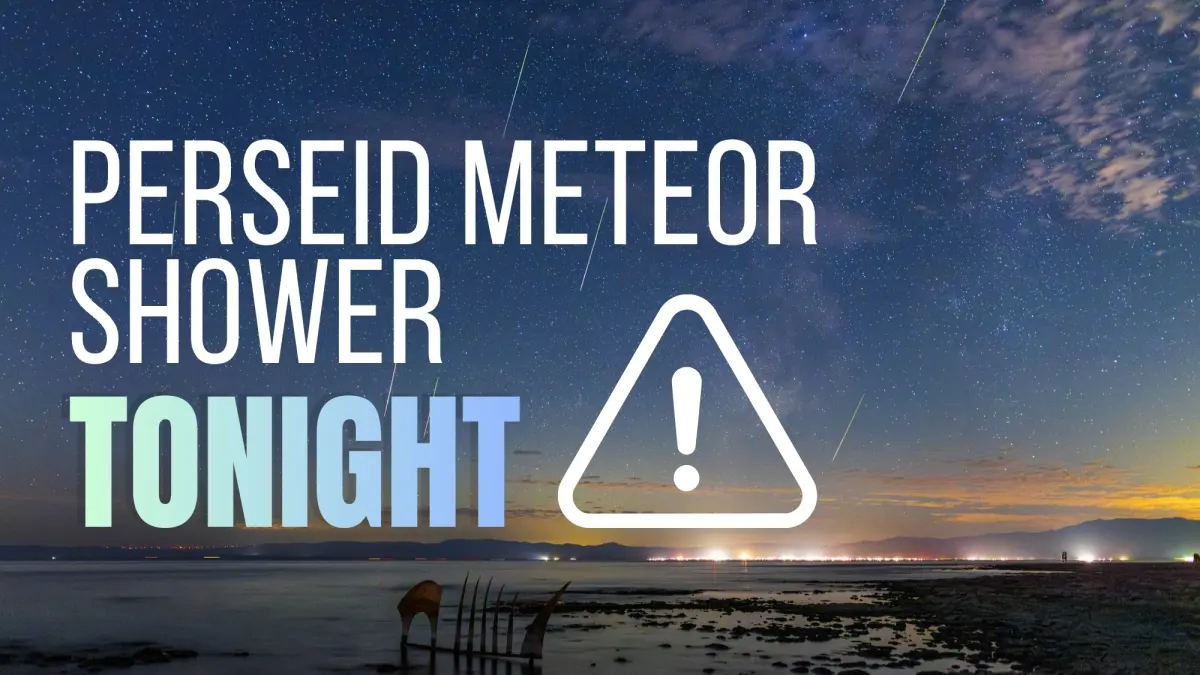
- Perseids: Peaking in mid-August, these are widely considered the best summer shower.
- Orionids: Visible in late October, these are associated with the famous Halley’s Comet.
- Geminids: Taking place in mid-December, this is often the most prolific shower of the year.
Consult an astronomical calendar each year to determine the peak date and the lunar phase. A new moon is the ideal condition for viewing, as it provides the darkest possible background for the meteors to shine against.
Common mistakes when watching meteor showers
Many beginners make the mistake of using telescopes or binoculars to view a meteor shower. These tools have a very narrow field of view, which makes it nearly impossible to track a meteor that streaks across a large portion of the sky. The best way to observe is with the naked eye, allowing you to scan the entire expanse of the heavens.
Another common error is focusing too intently on the "radiant," the point in the sky from which the meteors appear to originate. While identifying the radiant helps confirm which shower you are watching, the meteors themselves often appear further away from that point. You should look toward a dark patch of sky about 45 degrees away from the radiant to see the longest, most dramatic streaks.
Finally, do not give up too early. Meteor activity is often sporadic, meaning you might see nothing for ten minutes and then witness three meteors in a single minute. Patience is the most essential tool for any amateur astronomer.
What is the difference between a meteor, meteoroid, and meteorite
Understanding the terminology helps clarify the nature of these objects. A meteoroid is a small piece of rock or metal in space. Once it enters the Earth's atmosphere and begins to glow, it is officially classified as a meteor. If a piece of that object is large enough to survive the trip through the atmosphere and reach the ground, it is called a meteorite.
Most meteor showers are caused by cometary debris, which consists of fragile, icy particles that vaporize completely in the upper atmosphere. Consequently, it is very rare for a meteor shower to produce a meteorite. Most of the "shooting stars" you see are simply the final, fleeting moments of dust that has been traveling through space for thousands of years.
By observing these events, you are witnessing the physical remnants of the early solar system. Each streak of light represents a small piece of history interacting with our planet, providing a direct, visual connection to the vast and dynamic environment of space that surrounds our world.
Key facts
- A meteor shower occurs when Earth passes through a trail of debris left behind by a comet or asteroid.
- Most meteors are no larger than a grain of sand, vaporizing instantly upon hitting the atmosphere at high speeds.
- The "radiant" is the point in the sky from which all meteors in a shower appear to originate.
- You do not need a telescope or binoculars; the naked eye provides the widest field of view for spotting streaks.
- Find a dark location far from city lights and allow your eyes at least 20 minutes to adjust to the darkness.
- Lie flat on your back and look toward the zenith, the point directly overhead, to maximize your chances of seeing activity.
The bottom line
Meteor showers are spectacular celestial displays caused by Earth sweeping through trails of cosmic dust left by comets. By choosing a dark location, avoiding bright moonlight, and allowing your eyes time to adjust, you can witness these natural light shows without any special equipment. Simply look up, be patient, and enjoy the rhythmic dance of light as these tiny particles vaporize in our upper atmosphere.
People also ask
What is the difference between a meteor, a meteoroid, and a meteorite?
A meteoroid is a small space rock, a meteor is the flash of light seen when it enters the atmosphere, and a meteorite is the remnant that survives to hit the ground.
Why do meteor showers happen at the same time every year?
They occur annually because Earth follows the same orbit around the Sun and intersects the same debris streams at specific points in its path.
Can I see a meteor shower during the day?
No, the brightness of the Sun washes out the faint light of the meteors, making them invisible to the human eye regardless of their frequency.
Do meteor showers pose a danger to people on Earth?
Meteor showers are harmless because the particles are tiny and burn up high in the atmosphere, long before they can reach the surface.
What is the best time of night to watch a meteor shower?
The best viewing usually occurs between midnight and dawn, as the leading edge of Earth rotates into the debris stream during these hours.
Does the phase of the moon affect my ability to see meteors?
Yes, a bright moon acts as light pollution, significantly reducing the number of fainter meteors visible to the naked eye.
This answer was created with the help of AI research tools and reference sources. Spotted an error? Let us know — we correct mistakes quickly. See our editorial policy.