What art style did Jean-Michel Basquiat use?
Short answer
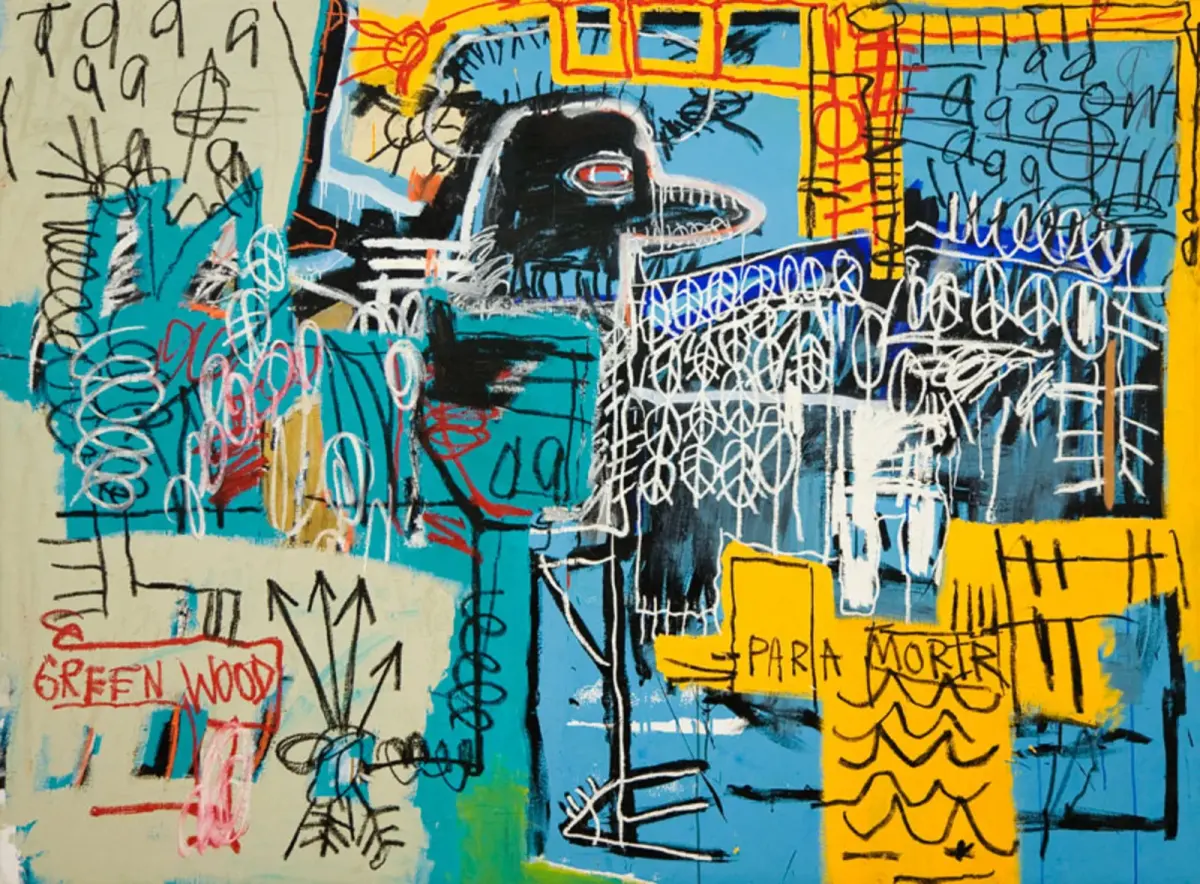
Jean-Michel Basquiat’s work is primarily categorized as Neo-Expressionism, a movement defined by raw emotion, gestural brushwork, and intense color. His unique style synthesized street-level graffiti, abstract expressionism, and social commentary. By blending cryptic text, anatomical diagrams, and cultural iconography, he created a visual language that challenged traditional art historical boundaries and hierarchies.
On this page
What defines the Neo-Expressionist style
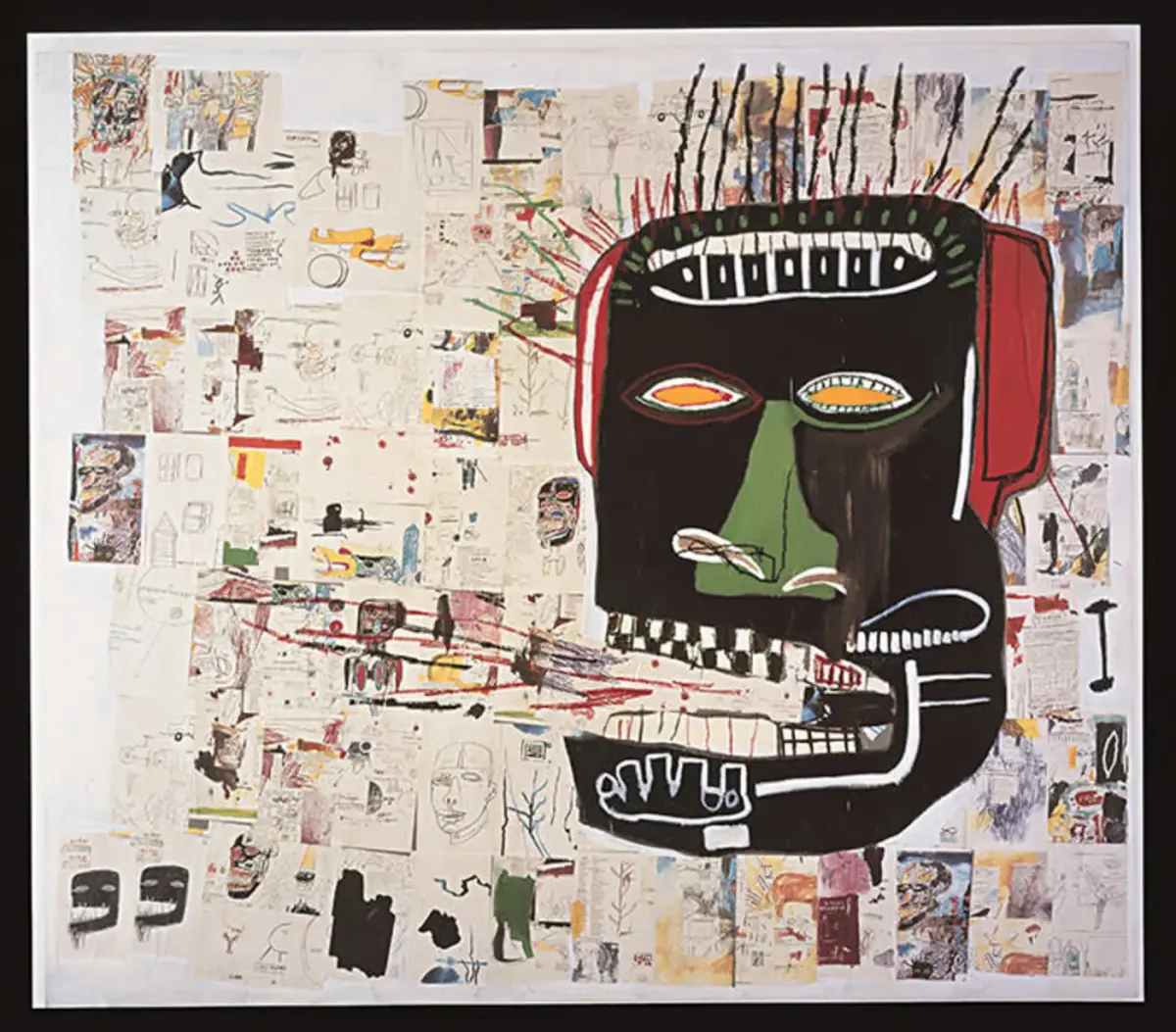
Neo-Expressionism emerged in the late 1970s and early 1980s as a reaction against the cold, intellectual nature of Minimalism and Conceptual art. Basquiat became a central figure of this movement, which prioritized raw, subjective expression over technical precision. His work features intense, clashing colors and energetic, almost frantic brushwork that conveys a sense of urgency and emotional turmoil.
Basquiat’s canvases are rarely static; they are dense with layers of paint, oil sticks, and collage elements. This "maximalist" approach creates a chaotic yet structured visual field where the viewer must decipher overlapping symbols. By rejecting the polished aesthetic of his contemporaries, Basquiat aligned himself with the visceral energy of the New York City underground scene. His style is characterized by several key visual markers:
- Aggressive, gestural mark-making that emphasizes the artist's physical presence.
- The use of "primitive" or raw figures that evoke both ancient art and modern street murals.
- A deliberate rejection of traditional perspective and balanced composition in favor of fragmented, multi-layered narratives.
How Basquiat integrated graffiti and street art
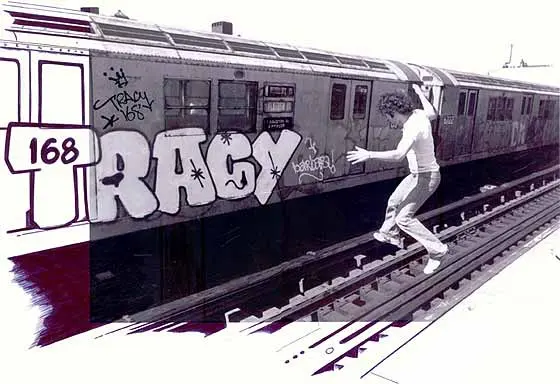
Before gaining fame in the gallery world, Basquiat was known for his street art under the pseudonym SAMO©. Throughout the late 1970s, he sprayed poetic, cryptic aphorisms across Lower Manhattan. This background fundamentally shaped his studio practice, as he continued to treat the canvas as a wall, often incorporating spray paint, markers, and text directly into his paintings.
His integration of text was not merely decorative; it was a structural element of his compositions. He often crossed out words, a technique he claimed was intended to make the viewer more interested in them. This act of erasure highlights his preoccupation with censorship, history, and the commodification of language. To understand his style, consider these elements of his street-influenced process:
- Incorporating found objects and scraps of paper into the canvas surface.
- Using repetitive, rhythmic text that functions as both visual texture and social critique.
- Employing a "stream of consciousness" approach to composition that mimics the rapid-fire nature of urban life.
Why Basquiat used anatomical and cultural imagery
Basquiat’s work is heavily influenced by his childhood exposure to Gray’s Anatomy, a gift he received while recovering from a car accident. This fascination with the human body manifested in his paintings as skeletal figures, detached limbs, and exposed internal organs. These anatomical drawings serve as a metaphor for the vulnerability of the human condition and the systemic violence often directed at Black bodies in American history.
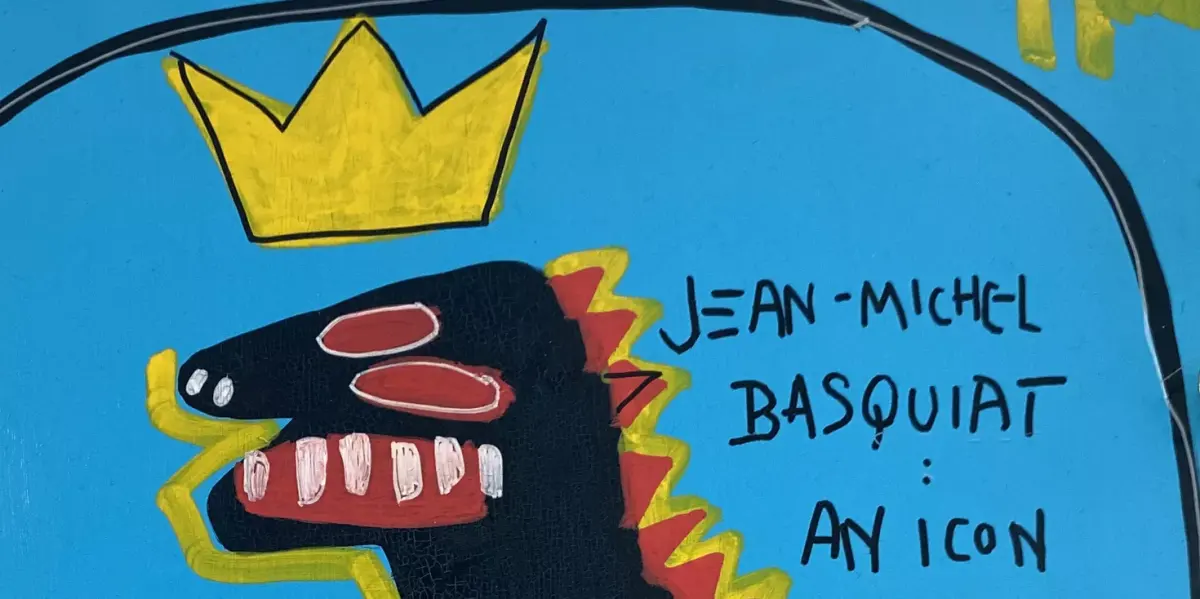
Beyond anatomy, Basquiat frequently referenced African American history, jazz musicians, and historical figures like boxer Jack Johnson. He acted as a cultural historian, using his art to reclaim narratives that had been erased or marginalized. By placing these figures in heroic, crown-wearing poses, he challenged the white-dominated canon of Western art. His style was a deliberate act of subversion, using the visual language of the elite to critique the very power structures that excluded him.
Common mistakes when analyzing Basquiat’s work
A frequent error is viewing Basquiat’s work solely through the lens of "primitivism" or labeling it as purely chaotic. While his style appears spontaneous, it was highly informed and deeply researched. He was a voracious reader with a profound knowledge of art history, frequently referencing Leonardo da Vinci, Pablo Picasso, and Cy Twombly. Dismissing his technical choices as accidental ignores the calculated complexity of his layered compositions.
Another common mistake is ignoring the political weight of his symbols. Viewers often focus on the aesthetic "coolness" of his work while overlooking the biting social commentary embedded in his iconography. To correctly interpret his style, one must look beyond the surface:
- Avoid assuming that the lack of traditional perspective indicates a lack of skill.
- Recognize that his use of color is often symbolic rather than purely aesthetic.
- Acknowledge that the "unfinished" look of his paintings was a conscious stylistic choice, not a result of haste or lack of planning.
How to emulate Basquiat’s creative process
To understand Basquiat’s style through practice, one must prioritize intuition over perfection. Start by selecting a surface—not necessarily a canvas—and allow yourself to layer materials without worrying about a final, polished outcome. Use a mix of media, such as acrylic paint, oil sticks, and charcoal, to build depth and texture. The goal is to create a dialogue between the different layers of your work.
When developing your own style inspired by Basquiat, focus on the following steps:
- Write down phrases or observations from your daily life and incorporate them into your work as visual elements.
- Experiment with "erasure" by painting over parts of your work to create tension and mystery.
- Study the anatomy or historical figures that interest you and find ways to represent them through simplified, expressive lines.
- Allow your brushwork to be fast and uninhibited, focusing on the movement of your hand rather than the accuracy of the image.
By focusing on the raw expression of ideas rather than the perfection of form, you can begin to appreciate the intentionality behind Basquiat’s iconic, revolutionary approach to contemporary painting.
Key facts
- Jean-Michel Basquiat’s primary style is classified as Neo-Expressionism, characterized by raw, gestural brushwork and intense emotional energy.
- He began his career in the late 1970s under the street-art tag "SAMO," using graffiti as a foundational element of his visual language.
- His work frequently incorporates "word-art," utilizing cryptic phrases, crossed-out text, and lists to challenge traditional notions of literacy and power.
- Basquiat often employed a "layering" technique, applying acrylic paint, oil stick, and collage elements onto canvases or unconventional surfaces like salvaged doors.
- To emulate his style, prioritize spontaneity over technical perfection; focus on capturing a visceral reaction rather than a realistic depiction of a subject.
- A common mistake is over-polishing the composition; Basquiat’s aesthetic relies on the tension created by chaotic, unrefined marks and deliberate erasures.
The bottom line
Jean-Michel Basquiat’s Neo-Expressionist style is defined by its raw, improvisational energy and deep social commentary. By blending street-art aesthetics with high-art sensibilities, he created a unique visual language that remains influential today. His work challenges viewers to look past the surface, utilizing layered text and symbolic imagery to confront complex themes of identity, power, and history within the modern cultural landscape of the twentieth century.
People also ask
Did Basquiat receive formal training in fine art?
No, Basquiat was largely self-taught. He spent his youth visiting the Brooklyn Museum and the Metropolitan Museum of Art, where he studied anatomy and classical techniques independently.
What is the significance of the crown motif in his paintings?
The crown serves as a recurring symbol of royalty and power. He often used it to elevate his subjects—frequently Black historical figures or athletes—to the status of kings and heroes.
How did his background in music influence his art?
Basquiat was a musician in the band Gray and a fan of bebop jazz. This influence is visible in his "rhythmic" compositions, which mimic the improvisational, syncopated nature of jazz music.
What materials did he typically use to create his works?
He used a wide variety of materials including acrylic paint, oil sticks, spray paint, crayons, and collage. He frequently painted on unconventional surfaces like wood panels, metal, and discarded objects.
Why did he cross out so many words in his paintings?
Basquiat famously stated that he crossed out words so the viewer would want to read them more. This technique draws attention to the text while simultaneously questioning the reliability of the information.
How did his work reflect the social climate of the 1980s?
His art addressed systemic racism, police brutality, and the commodification of Black culture. He used his platform to critique the social hierarchies and political tensions present in New York City during that era.
This answer was created with the help of AI research tools and reference sources. Spotted an error? Let us know — we correct mistakes quickly. See our editorial policy.