What is Roy Lichtenstein known for?
Short answer
Roy Lichtenstein is best known as a leading figure of the American Pop Art movement. He gained international fame for his large-scale paintings inspired by comic strips, characterized by bold colors, thick outlines, and the use of Ben-Day dots. His work challenged traditional fine art boundaries by elevating commercial imagery to high art.
On this page
What defines Roy Lichtenstein’s art style?
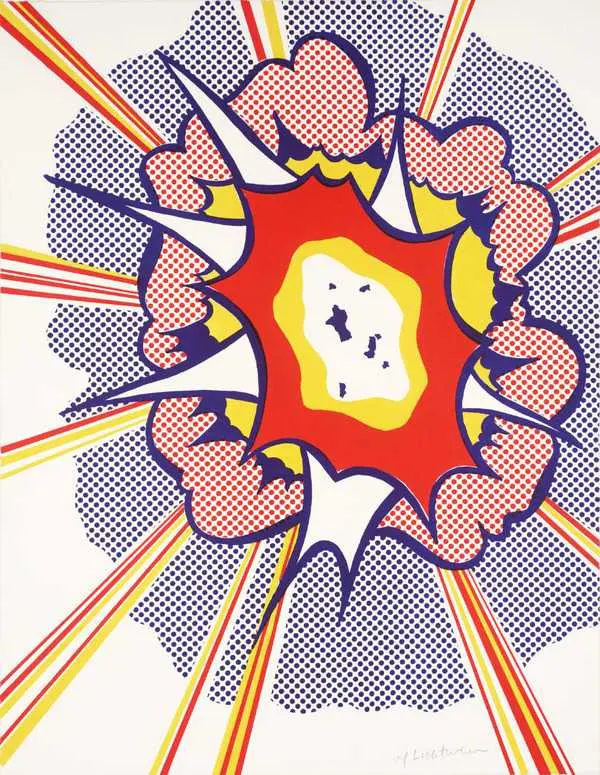
Lichtenstein is primarily recognized for his distinctive aesthetic that mimics the mechanical printing processes of mass-produced comic books. He utilized a technique known as Ben-Day dots, which are small, colored dots used in commercial printing to create shading and secondary colors. By enlarging these dots and applying them by hand or with stencils, he transformed ephemeral, low-brow imagery into monumental, gallery-worthy canvases.
His compositions frequently featured dramatic scenes of romance or war, often accompanied by speech bubbles that provided a narrative context. This juxtaposition of high art scale with low art subject matter was his signature contribution to the art world. His style is defined by several key visual elements:
- Primary color palettes, specifically red, yellow, and blue.
- Thick, bold black outlines that delineate figures and shapes.
- The use of flat, unmodulated areas of color to emphasize graphic impact.
- Stylized, emotionally charged imagery extracted from mid-century popular culture.
How did he influence the Pop Art movement?
During the 1960s, Lichtenstein helped shift the focus of the art world away from the emotional intensity of Abstract Expressionism. While artists like Jackson Pollock prioritized spontaneous, gestural brushwork, Lichtenstein championed a cool, detached, and industrial aesthetic. His work reflected the consumerist culture of post-war America, turning everyday objects and advertisements into subjects for serious contemplation.
He was part of a generation that included Andy Warhol, James Rosenquist, and Claes Oldenburg, all of whom sought to bridge the gap between "high" culture and "low" culture. By recreating comic panels, he forced viewers to reconsider the artistic value of commercial illustrations. His influence remains significant because he proved that fine art could be accessible, ironic, and rooted in the visual language of the modern, media-saturated world.
What are his most famous works?
Lichtenstein produced a vast body of work, but a few pieces stand out as quintessential examples of his style. His 1963 painting Whaam! is perhaps his most recognizable work, depicting a fighter jet firing a missile in a dramatic, explosive composition. Another iconic piece is Drowning Girl (1963), which captures a woman in distress, utilizing the comic book format to explore themes of melodrama and isolation.
Beyond his comic-inspired paintings, he experimented with various subjects and mediums throughout his career. His portfolio includes:
- Look Mickey (1961): One of his earliest Pop paintings featuring Mickey Mouse and Donald Duck.
- Brushstrokes series (1965–1966): A clever critique of Abstract Expressionism that rendered "spontaneous" brushwork as a mechanical, printed image.
- Modern Sculpture series: Large-scale metal sculptures that translated his two-dimensional graphic style into three-dimensional space.
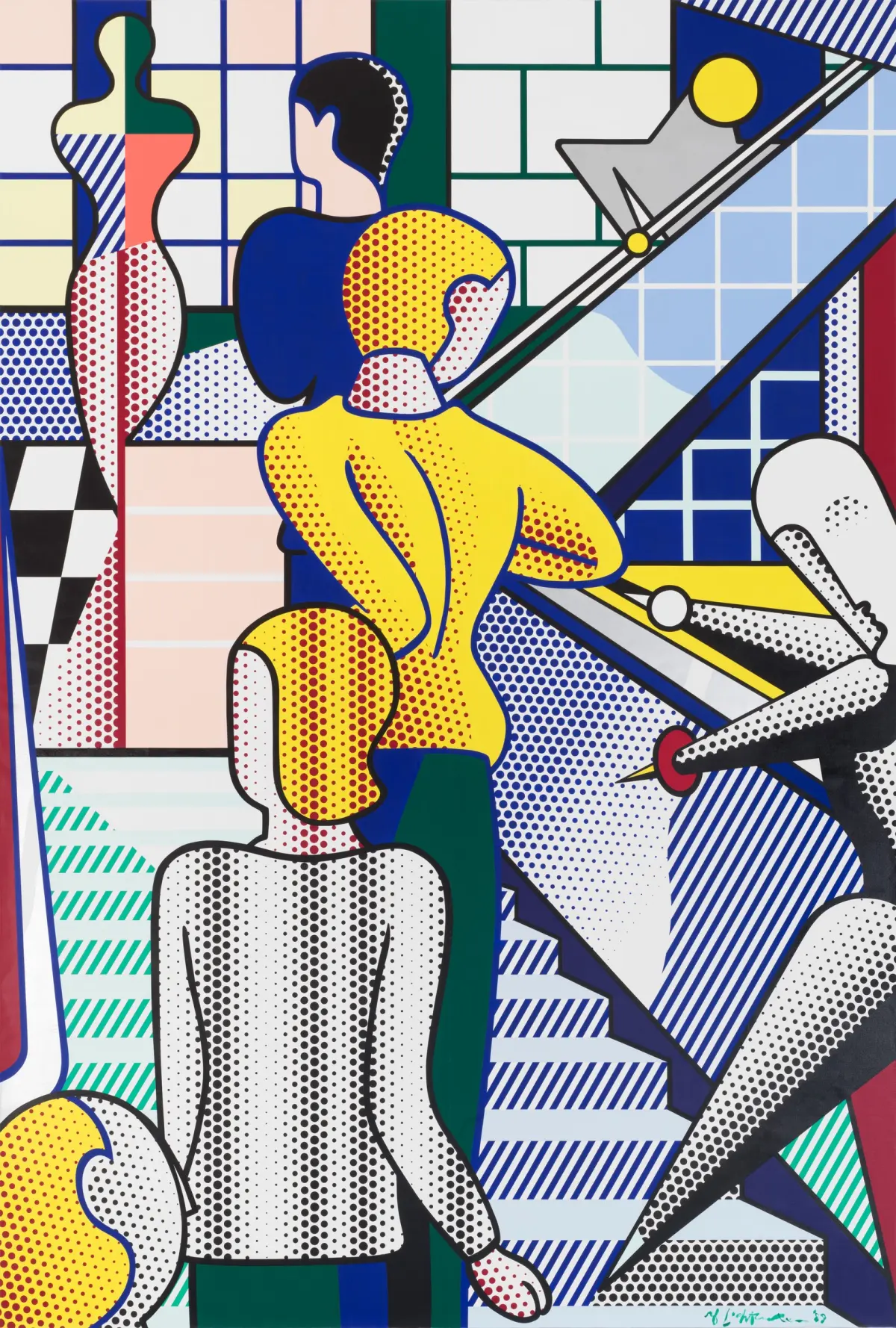
- Interiors series (1990s): Later works that explored domestic spaces with the same flat, patterned aesthetic.
How to appreciate Lichtenstein’s work today
To truly appreciate his art, one must look past the surface simplicity and recognize the technical precision involved. Lichtenstein did not merely copy comics; he carefully composed, edited, and refined his source material to create a balanced, aesthetic experience. When viewing his work, pay attention to how the dots and lines interact to create a sense of depth or movement, despite the flat appearance of the canvas.
When studying his art, avoid the common mistake of dismissing his work as simple "copying." Critics once accused him of plagiarism, but art historians argue that his process involved significant transformation and intellectual commentary. To gain a deeper understanding, consider these steps:
- Research the original comic panels he used as inspiration to see how he altered the composition.
- Visit a museum that holds his work to see the scale in person, as the impact of the dots changes significantly with distance.
- Compare his work to other Pop artists to see how he differed in his approach to irony and subject matter.
Common mistakes when analyzing Pop Art
A frequent error when discussing Lichtenstein is assuming that his work was intended to be purely cynical or mocking. While his art is undeniably ironic, it also demonstrates a deep respect for the formal qualities of graphic design and printing. He was fascinated by the way images are constructed and how the human eye perceives patterns, making his work as much about the mechanics of vision as it was about cultural commentary.
Another mistake is ignoring his later career, which moved beyond the "comic strip" phase. He spent decades exploring art history, creating his own versions of works by Picasso, Monet, and Matisse, all filtered through his unique, dot-heavy lens. By pigeonholing him solely as the "comic book guy," viewers miss the breadth of his technical evolution. His legacy is not just about the subject matter he chose, but about his ability to redefine the boundaries of what constitutes a masterpiece in the modern era.
Key facts
- Roy Lichtenstein was a leading figure in the American Pop Art movement during the 1960s.
- He is best known for his signature style that mimics the aesthetic of mass-produced comic books.
- His works frequently feature "Ben-Day dots," a printing technique used to create shading and secondary colors in mechanical reproduction.
- He often utilized bold black outlines, primary colors, and speech bubbles to emphasize the irony of commercial imagery.
- His 1963 painting Whaam! is one of his most recognizable works, depicting a fighter jet firing a missile.
- To identify his work, look for a flat, graphic appearance that intentionally removes the visible brushstrokes of traditional fine art.
The bottom line
Roy Lichtenstein transformed the art world by bringing commercial aesthetics into the gallery space. By mastering the use of Ben-Day dots and comic-style graphics, he challenged traditional notions of artistic originality and high culture. His work remains a defining symbol of the 1960s Pop Art movement, proving that mechanical, mass-produced imagery could possess profound artistic depth and continue to influence contemporary graphic design and visual culture today.
People also ask
Why did Lichtenstein use comic books for inspiration?
He sought to bridge the gap between "high art" and "low culture" by elevating mundane commercial imagery to the status of fine art. By isolating single frames from comics, he forced viewers to reconsider the emotional weight of popular media.
Did Lichtenstein face criticism for his work?
Early in his career, he faced accusations of plagiarism from comic book artists who felt he was simply copying their panels. Lichtenstein defended his process by noting that he significantly altered the composition, scale, and color to create a new artistic statement.
What are Ben-Day dots?
Named after illustrator Benjamin Day, these are small colored dots used in printing to create gradients and textures. Lichtenstein painstakingly recreated these dots by hand or with stencils to mimic the look of cheap, mechanical newspaper printing.
What materials did Lichtenstein primarily use?
He typically painted with Magna, an early brand of acrylic resin paint, on large-scale canvases. This medium allowed for the flat, vibrant, and durable finish that became a hallmark of his Pop Art style.
How did his style evolve over his career?
While famous for his comic-inspired paintings, he later explored diverse styles including Art Deco, Surrealism, and Abstract Expressionism. He also created large-scale public sculptures and ceramic works throughout the 1970s and 1980s.
Are his original paintings valuable?
Yes, his works are among the most expensive in the art market. Several of his paintings have sold at auction for over $40 million, reflecting his status as a titan of 20th-century American art.
This answer was created with the help of AI research tools and reference sources. Spotted an error? Let us know — we correct mistakes quickly. See our editorial policy.