Is resin art safe?
Short answer
Resin art is not inherently safe, as liquid epoxy contains chemicals that can cause skin irritation, respiratory issues, and allergic reactions. However, it can be practiced safely by using professional-grade personal protective equipment, ensuring constant ventilation, and strictly following the manufacturer’s safety data sheets for every specific brand of resin used.
On this page
Is resin art toxic to your health?
Most modern resin art uses epoxy resin, which consists of two parts: a resin and a hardener. When mixed, these components undergo an exothermic chemical reaction. In their liquid state, these chemicals are known skin sensitizers and can cause contact dermatitis or severe allergic reactions upon repeated exposure. Furthermore, the vapors released during the mixing and curing process can irritate the eyes, nose, and throat.
While cured resin is generally considered inert and safe to touch, the liquid form requires caution. Some resins contain volatile organic compounds (VOCs) or bisphenol A (BPA), which can pose health risks if inhaled or absorbed through the skin. Long-term exposure to these chemicals without proper protection has been linked to respiratory sensitization. Understanding that "non-toxic" labels on packaging often refer to the cured state rather than the liquid mixture is a critical distinction for any artist.
What safety gear do you need?
To work with resin safely, you must create a barrier between your body and the chemicals. A standard dust mask is insufficient because it cannot filter out chemical vapors or fumes. Instead, you need specific equipment designed to handle organic vapors.
- Wear a respirator mask equipped with organic vapor cartridges (rated for epoxy fumes).
- Use nitrile gloves, as latex gloves can be permeable to certain resin chemicals.
- Protect your eyes with safety goggles to prevent accidental splashes or vapor irritation.
- Wear long sleeves and an apron to keep chemicals off your skin and clothing.
- Keep a supply of resin-specific skin cleanser nearby, avoiding harsh solvents like acetone that can push chemicals deeper into your pores.
Always inspect your equipment before starting. If your respirator cartridges have expired or your gloves show signs of degradation, replace them immediately to maintain a reliable safety barrier.
How to set up a safe workspace?
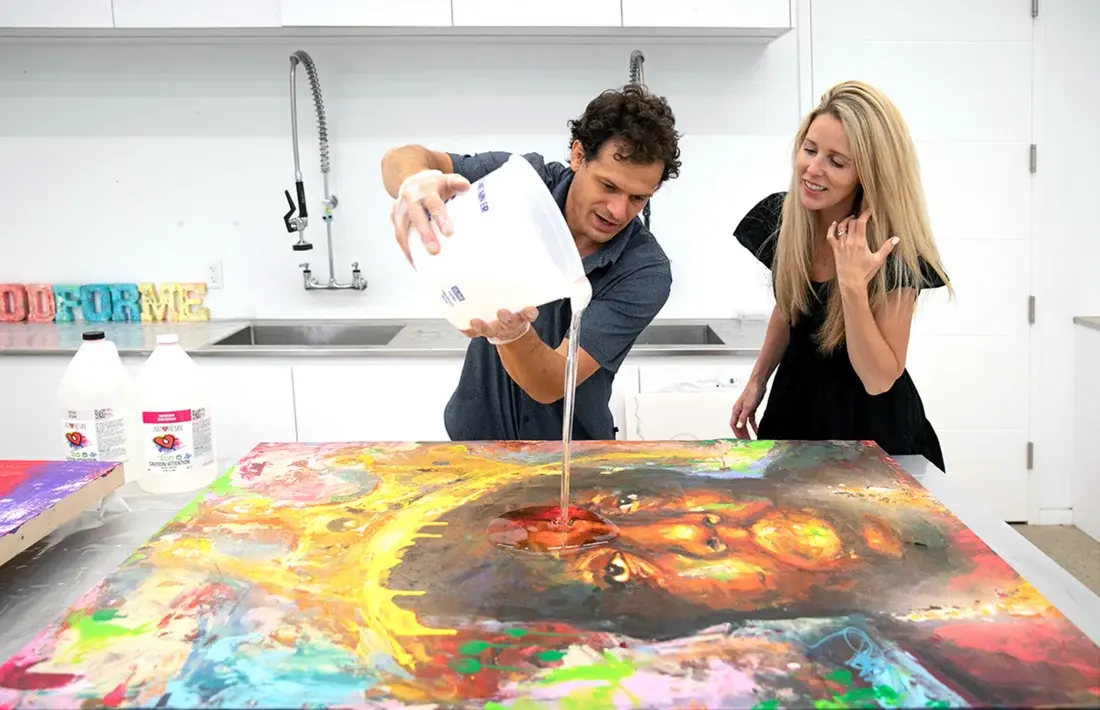
The most important factor in a safe resin studio is ventilation. You should never work in a small, enclosed space, such as a bedroom or a closet, where fumes can accumulate to dangerous levels. A dedicated workspace with a window or a door to the outside is essential.
- Position a box fan in a window to pull air out of the room, creating negative pressure.
- Place your workspace near the fan so fumes are drawn away from your face.
- Avoid eating, drinking, or smoking in the area where you are working with resin.
- Cover your work surface with silicone mats or parchment paper for easy cleanup of spills.
- Keep a dedicated trash bin for resin-contaminated waste, which should be sealed before disposal.
If you cannot provide adequate ventilation, consider using a portable fume extractor or moving your project to a garage or outdoor area with proper airflow.
Common mistakes when working with resin
Many beginners underestimate the importance of the curing phase. One common error is assuming that because the resin feels hard to the touch, it is fully cured and safe to handle without gloves. In reality, the chemical reaction may still be ongoing, and the surface can still harbor uncured residue that causes skin irritation.
Another frequent mistake is failing to read the Safety Data Sheet (SDS) provided by the manufacturer. Every brand of resin has a unique chemical composition, and the SDS details exactly what protective measures are required for that specific product. Ignoring temperature and humidity guidelines can also lead to an incomplete cure, leaving the resin tacky or brittle. This not only ruins your artwork but also increases the risk of leaching chemicals from the unstable, uncured surface. Always mix in a well-lit area to ensure you are thoroughly blending the two parts, as poorly mixed resin is a major cause of safety issues.
How to dispose of resin safely?
Proper disposal is a vital part of the resin art process. You should never pour liquid resin or hardener down the drain, as it will harden in your pipes and contaminate the water supply. Instead, allow any leftover resin to cure completely in your mixing cups before throwing it away.
- Scrape excess liquid into a disposable container.
- Let the material cure fully in a well-ventilated area until it is rock hard.
- Once cured, the plastic-like waste can be disposed of in your regular household trash.
- Wipe down your tools with paper towels while the resin is still liquid, then dispose of those towels in a sealed bag.
- Check your local municipal guidelines, as some regions classify uncured resin as hazardous waste that requires special drop-off procedures.
By following these disposal protocols, you protect both your home environment and the local ecosystem from chemical contamination. Consistency with these safety habits ensures that your creative process remains enjoyable and sustainable over the long term.
Key facts
- Epoxy resin releases volatile organic compounds (VOCs) during the curing process, which can irritate the respiratory system.
- Always wear a respirator equipped with organic vapor cartridges, not just a standard dust mask.
- Skin contact with uncured resin can cause sensitization, leading to severe allergic contact dermatitis over time.
- Work in a space with at least 10 air exchanges per hour, such as a room with open windows and a box fan.
- Nitrile gloves are mandatory, as latex gloves provide inadequate protection against chemical penetration.
- Once resin is fully cured and hardened, it is generally considered inert and safe for incidental contact.
The bottom line
Resin art is a rewarding creative medium, but it requires strict adherence to safety protocols to mitigate chemical risks. By prioritizing high-quality ventilation, utilizing proper personal protective equipment like nitrile gloves and organic vapor respirators, and disposing of materials responsibly, artists can significantly reduce health hazards. Always treat uncured resin as a hazardous substance and ensure your workspace is isolated from daily living environments.
People also ask
Can I use resin art products in a small bedroom or office?
It is strongly discouraged to use resin in living spaces or bedrooms. These areas often lack the high-volume ventilation required to dissipate toxic fumes, posing a significant health risk to occupants.
How do I know if my respirator is effective?
Ensure your respirator is NIOSH-approved and specifically rated for organic vapors. You must perform a seal check before every use, and cartridges should be replaced according to the manufacturer's expiration schedule.
Is cured resin food-safe?
Most epoxy resins are not food-safe, even after curing. Unless a product is specifically certified as FDA-compliant for food contact, it should not be used for serving or storing food.
What should I do if I spill resin on my skin?
Wipe the area immediately with a dry paper towel or specialized resin remover, then wash thoroughly with soap and water. Never use acetone or other solvents to clean skin, as they can drive the resin deeper into your pores.
Do I need to wear eye protection while pouring resin?
Yes, safety goggles are essential to prevent accidental splashes from entering the eyes. Resin can cause permanent corneal damage if it comes into direct contact with the eye tissue.
How should I dispose of leftover resin?
Never pour liquid resin down the drain, as it will harden and destroy plumbing. Mix any remaining resin with a small amount of hardener, let it cure completely in a ventilated area, and dispose of the solid mass in your regular trash.
This answer was created with the help of AI research tools and reference sources. Spotted an error? Let us know — we correct mistakes quickly. See our editorial policy.