How do you start swimming?
Short answer
Begin swimming by enrolling in professional lessons at a local pool to master fundamental water safety and stroke mechanics. Start in shallow water where you can stand comfortably. Focus on rhythmic breathing, body positioning, and relaxation before attempting distance. Consistent practice in a supervised environment builds the confidence necessary for independent swimming.
On this page
How to start swimming for the first time
The most effective way to begin swimming is to find a facility with a shallow end, such as a community center or health club pool. Before entering the water, ensure you have appropriate gear, including well-fitting goggles and a comfortable swimsuit. Goggles are essential for beginners because they allow you to see underwater, which significantly reduces anxiety and helps you maintain proper body alignment.
Once in the water, start by holding onto the pool edge to get accustomed to the sensation of buoyancy. Practice submerging your face while exhaling through your nose to develop comfort with water around your eyes and mouth. Taking a formal class is highly recommended, as certified instructors provide structured feedback that prevents the development of poor habits. Professional guidance ensures you learn the basics of water safety, such as how to exit the pool safely and how to float properly.
Best swimming equipment for beginners
Investing in the right gear makes the learning process smoother and more enjoyable. While many people believe they only need a swimsuit, specific tools can help you focus on individual aspects of your technique. Beginners should prioritize comfort and durability to ensure their equipment remains effective through the initial weeks of training.
- Goggles: Select a pair with soft silicone seals to prevent leaks and ensure they fit your face shape comfortably.
- Swim Cap: Silicone caps keep hair out of your face and protect it from chlorine, while also reducing drag in the water.
- Kickboard: This foam board allows you to isolate your legs, helping you build strength and master the flutter kick without worrying about arm movements.
- Pull Buoy: Placed between your thighs, this tool keeps your hips high, allowing you to focus entirely on your arm stroke and breathing rhythm.
How long does it take to learn to swim
The time required to become a competent swimmer varies significantly based on individual comfort levels and frequency of practice. Most adults can learn the fundamentals of floating, treading water, and basic freestyle within 10 to 20 hours of instruction. Consistency is more important than the total duration of each session; practicing for 30 minutes three times a week is far more effective than a single three-hour session.
Progress often follows a non-linear path, with periods of rapid improvement followed by plateaus. It is common for beginners to feel frustrated when they cannot coordinate their breathing with their arm movements immediately. By focusing on small, incremental goals—such as swimming one full lap without stopping—you can measure your progress objectively. Most beginners reach a level of basic water proficiency within three months of regular, disciplined training in a pool environment.
Common mistakes when learning to swim
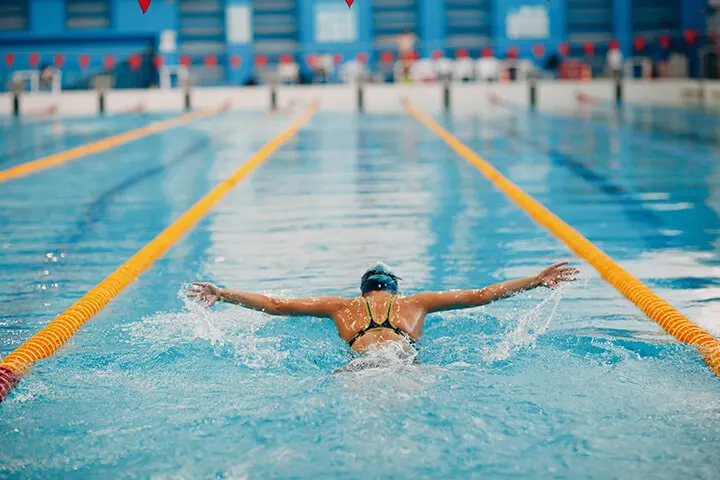
Many beginners struggle because they try to move too quickly or fight against the water rather than working with it. One of the most frequent errors is holding the breath, which leads to rapid fatigue and tension. Instead, focus on a rhythmic breathing pattern where you exhale steadily while your face is submerged and inhale quickly when you turn your head to the side.
Another common mistake is looking forward rather than down at the pool floor. Keeping your head lifted creates unnecessary drag and causes your hips and legs to sink, making it harder to move forward. To correct this, keep your neck neutral and your eyes focused on the bottom of the pool. Additionally, avoid kicking from your knees; power should originate from your hips, with your legs remaining relatively straight but relaxed. Proper body position is the foundation of all efficient swimming strokes.
Why you should learn to swim
Swimming is a comprehensive full-body workout that provides significant cardiovascular benefits while remaining low-impact on the joints. Because water is denser than air, it provides natural resistance that tones muscles and improves endurance without the high risk of injury associated with running or weightlifting. It is an ideal exercise for people of all ages, offering a way to stay active throughout a lifetime.
Beyond the physical benefits, swimming is a critical life skill that provides safety in and around water. Knowing how to stay afloat, navigate currents, and rescue oneself in an emergency is essential for anyone who spends time near oceans, lakes, or pools. The psychological benefits are equally profound, as the meditative nature of rhythmic swimming is known to reduce stress and improve mental clarity. By committing to the learning process, you gain a versatile skill that enhances both your physical health and your overall safety in aquatic environments.
Key facts
- Start in shallow water where you can comfortably stand with your head above the surface.
- Master rhythmic breathing by exhaling bubbles underwater through your nose before inhaling above the surface.
- Practice the "starfish float" by extending your limbs to find your natural buoyancy point.
- Keep your body horizontal and streamlined to reduce drag and conserve energy while moving.
- Use a flutter kick, originating from the hips rather than the knees, to maintain momentum.
- Enroll in a certified lesson program, such as those offered by the American Red Cross, to ensure proper technique.
The bottom line
Learning to swim is a rewarding skill that prioritizes safety and physical coordination. By mastering fundamental buoyancy, rhythmic breathing, and proper body alignment, you can transform your relationship with the water. Consistency is key, so aim for regular, short practice sessions with professional guidance. Once you conquer your initial hesitation and develop a solid technique, you will unlock a lifelong activity that promotes cardiovascular health and relaxation.
People also ask
How long does it take to learn how to swim?
Most adults can learn basic water safety and fundamental strokes in 10 to 20 hours of instruction. Proficiency depends on your comfort level in the water and the frequency of your practice sessions.
What equipment do I need to start swimming?
You only need a well-fitting swimsuit and a pair of swimming goggles to protect your eyes. A swim cap is recommended to keep hair out of your face and protect it from pool chemicals.
Is it dangerous to learn to swim as an adult?
Learning to swim is safe provided you remain in shallow water and have a qualified instructor present. Never attempt to practice in deep water or open bodies of water like lakes until you have mastered basic skills.
How can I overcome a fear of the water?
Start by simply walking in the shallow end to acclimate to the sensation of water against your skin. Focus on controlled breathing and always stay within reach of a wall or a support railing.
What is the most common mistake beginners make?
Many beginners hold their breath underwater, which leads to rapid fatigue and panic. Learning to exhale continuously while submerged is the most critical step for developing endurance and relaxation.
Can I teach myself to swim using videos?
While videos provide visual examples, they cannot correct your specific form or ensure your safety. In-person instruction is essential for receiving immediate feedback and preventing the development of bad habits.
This answer was created with the help of AI research tools and reference sources. Spotted an error? Let us know — we correct mistakes quickly. See our editorial policy.