How do you paint lavender with watercolor?
Short answer
Painting lavender with watercolor requires a "less is more" approach, focusing on loose, rhythmic brushstrokes rather than individual petals. Use a mix of ultramarine and permanent rose to create varying shades of purple. Apply paint using a small round brush, tapping in clusters to mimic the plant's unique, elongated, and textured floral spikes.
On this page
How to choose the best brushes and paints for lavender
To capture the delicate nature of lavender, you need a small round brush, typically a size 2 or 4, which offers a fine point for detail and enough belly to hold water. Synthetic sable brushes are excellent because they maintain their shape well over time. For your palette, avoid pre-mixed purple tubes, as they often appear flat and artificial. Instead, mix your own shades using cool blues like ultramarine or cobalt and warm reds like permanent rose or alizarin crimson.
Having the right paper is equally vital for this technique. Use 140-pound (300 gsm) cold-press watercolor paper. The slight texture of cold-press paper helps the brush catch, creating the broken, organic marks that define lavender flowers. If your paper is too smooth, the paint will slide, making it difficult to achieve the varied, dappled look required for the flower heads.
How to mix the perfect lavender color
The secret to realistic lavender is color variation. You should never use a single shade of purple for an entire plant. Create a range of mixtures on your palette before you begin painting. Aim for three distinct variations to add depth and visual interest to your work:
- A cool, blue-leaning violet for the shadowed side of the flower.
- A warm, pink-leaning lilac for the highlights where the sun hits.
- A neutral, desaturated grey-purple for the stems and distant buds.
To achieve these, start with your base purple and add tiny amounts of water to lighten the pigment. To desaturate a color, add a touch of its complementary color, which is yellow. Adding a tiny speck of yellow to your purple mix will instantly make the color look more natural and botanical, preventing it from appearing like a cartoonish neon shade.
Step-by-step guide to painting lavender stalks
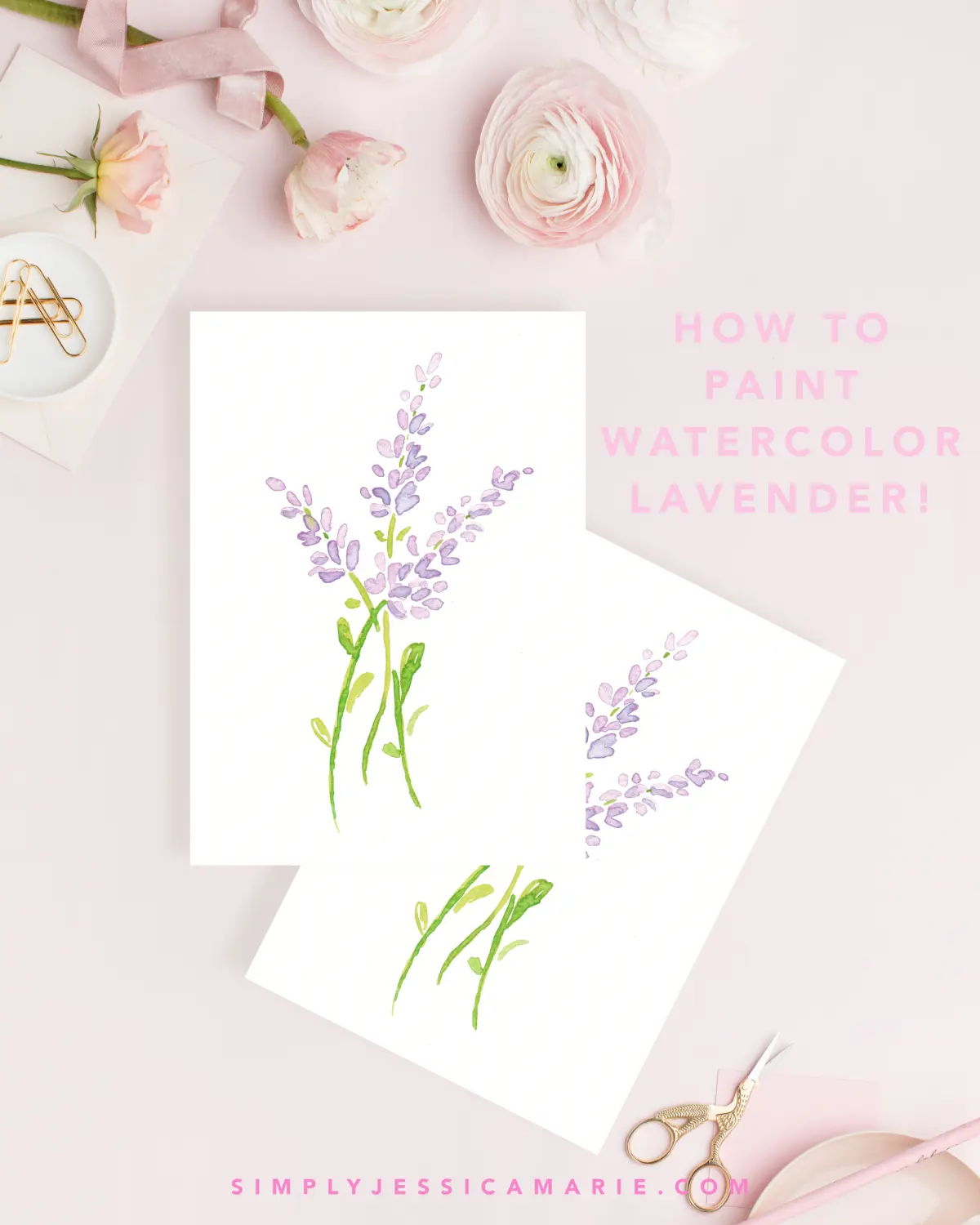
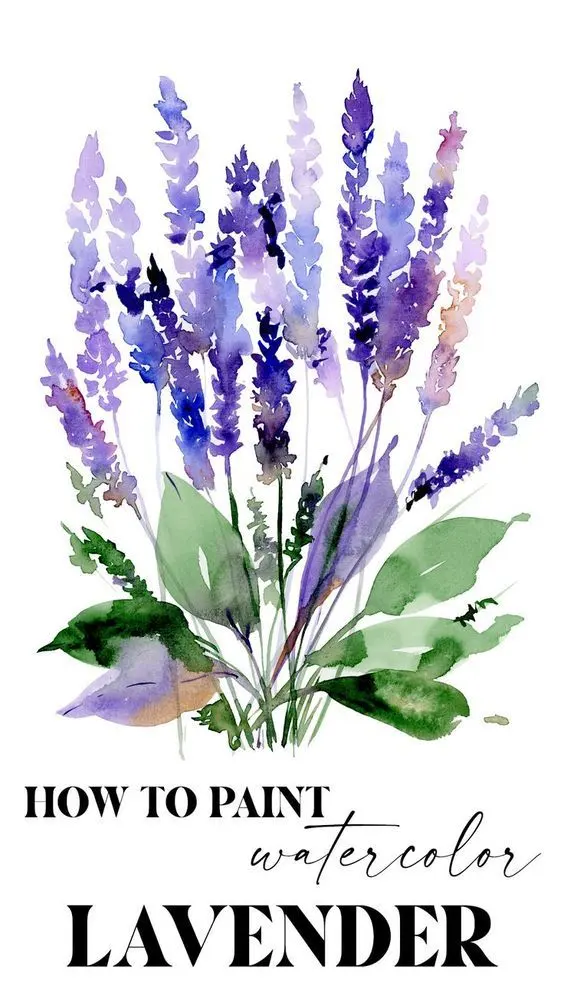
Painting lavender is a process of layering and rhythm. Start by painting the stems first using a thin, pale green mix. Keep the stems slightly curved to reflect the natural movement of the plant in the wind. Once the stems are dry, you can begin adding the flower spikes. Use a light touch to ensure the texture looks airy.
- Load your brush with a medium-consistency violet paint.
- Starting at the top of the stem, make short, horizontal "dashes" or taps with the tip of your brush.
- As you move down the stem, increase the pressure slightly to make the marks larger and more spaced out.
- Leave small gaps of white paper between the marks to suggest light filtering through the petals.
- While the paint is still damp, drop in a slightly darker purple on one side of the spikes to create a sense of volume.
Why lavender paintings look muddy or flat
A common issue in watercolor painting is the "mud" effect, which occurs when colors are overworked or mixed too aggressively on the paper. If you keep brushing over the same area, you will disturb the layers beneath, resulting in a dull, brown-grey color. To avoid this, apply your paint in one or two confident strokes and leave it alone. If you make a mistake, it is often better to start over than to try and scrub the pigment out.
Flatness occurs when there is no tonal contrast. Lavender is not a solid mass; it is a collection of tiny, individual buds. If you paint the entire flower head as one solid block of purple, it will look like a heavy, singular shape. Always ensure your paint has varying degrees of transparency, allowing the white of the paper to show through the clusters, which provides the necessary sparkle and life to the painting.
Common mistakes when painting lavender foliage
Many beginners focus too heavily on the flowers while neglecting the foliage. Lavender leaves are long, thin, and silvery-green, not a bright, grassy green. Avoid using sap green straight from the tube, as it is usually too vibrant. Instead, mix your green with a bit of red or a touch of blue to dull it down, which will make the purple flowers pop by comparison.
Another frequent error is painting the flowers too perfectly. Lavender is a wild, organic herb, and its spikes are rarely symmetrical. If your marks are too uniform, the plant will look stiff and manufactured. Embrace the "loose" style by varying the length of your strokes and the spacing between the buds. If you find your flowers look too rigid, try holding your brush further back on the handle; this reduces your control and forces a more relaxed, fluid motion that captures the true, swaying essence of a lavender field.
Key facts
- Use a round brush with a fine tip to create the characteristic tapered shape of lavender florets.
- Mix ultramarine blue and permanent rose to achieve a natural, vibrant lavender hue.
- Apply paint using a "dabbing" motion to mimic the clustered, organic texture of the flower buds.
- Leave small gaps of white paper between strokes to represent light hitting the petals.
- Paint the stems using a mix of sap green and a touch of burnt umber for a realistic, earthy tone.
- Work from the top of the flower spike downward, gradually making the florets larger as you descend.
The bottom line
Painting lavender with watercolors relies on mastering the dabbing motion to capture the plant's unique, clustered texture. By using a mix of ultramarine and rose, you can achieve a realistic palette, while varying your brush pressure creates the necessary depth. Remember to leave white space for highlights and always work from the top down. With patience and light, rhythmic strokes, you will create a beautiful, botanical-inspired composition.
People also ask
Should I paint the stems before or after the flowers?
It is generally best to paint the flower spikes first so you can anchor the stems directly to the base of the blooms. This ensures the connection points look natural and prevents the green paint from bleeding into your purple pigment.
How do I create depth in a lavender field?
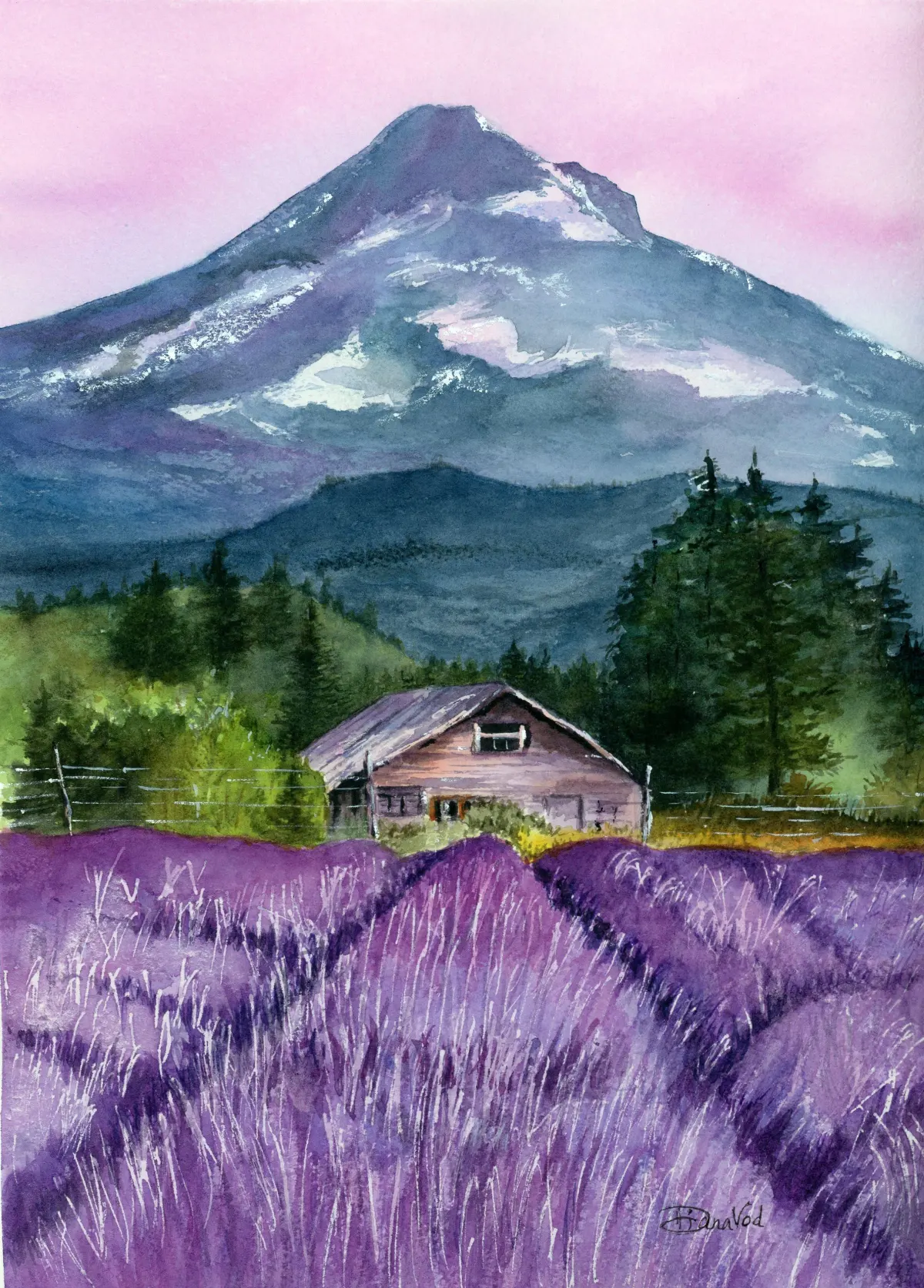
Use a concentrated, darker purple mix for the lavender in the foreground and a more diluted, lighter wash for the distant rows. Adding a touch of blue to the distant flowers helps create an atmospheric perspective that mimics depth.
What paper is best for watercolor lavender?
Cold-press watercolor paper with a 140-pound (300 gsm) weight is ideal for this subject. The slight texture of the paper helps capture the dappled, soft appearance of the flower clusters.
How do I fix a mistake if I use too much water?
Use a clean, dry brush or a paper towel to lift excess moisture immediately while the paint is still wet. If the paint has already dried, you can gently scrub the area with a damp brush, though this may damage the paper surface.
Can I use masking fluid for lavender?
Masking fluid can be used to preserve bright highlights on the petals, but it is often unnecessary for lavender. It is usually better to paint around the highlights to maintain a softer, more painterly aesthetic.
How do I make the lavender look less like a solid blob?
Focus on varying the pressure of your brush to create individual, distinct marks rather than a single solid shape. Ensure you leave negative space between the clusters to allow the eye to perceive the individual florets.
This answer was created with the help of AI research tools and reference sources. Spotted an error? Let us know — we correct mistakes quickly. See our editorial policy.