How do you fix charcoal so it doesn't smudge?
Short answer
Charcoal smudges because it is essentially loose carbon dust sitting on the surface of your paper. You can prevent this by applying a fixative spray, which acts as a clear adhesive to bond the pigment to the fibers. Alternatively, you can use high-quality textured paper or work in layers to minimize movement.
On this page
Why does charcoal smudge so easily?
Charcoal is a friable medium, meaning it consists of fine, loose particles that do not chemically bind to the surface of the paper. Unlike oil or acrylic paints that contain binders, charcoal remains as a powdery deposit that is easily displaced by friction, gravity, or even a light breeze. This characteristic is precisely what makes charcoal excellent for blending and expressive mark-making, but it also makes the final artwork vulnerable to accidental erasure or smearing.
The texture of your paper plays a significant role in how much charcoal stays in place. Smooth surfaces, such as hot-pressed paper, provide little "tooth" or physical grip for the charcoal particles to settle into. Consequently, the dust sits entirely on top of the surface, making it highly susceptible to movement. Choosing a paper with a heavier grain or tooth allows the charcoal to nestle into the valleys of the paper fibers, providing a more stable foundation that resists accidental smudging.
How to use fixative spray correctly
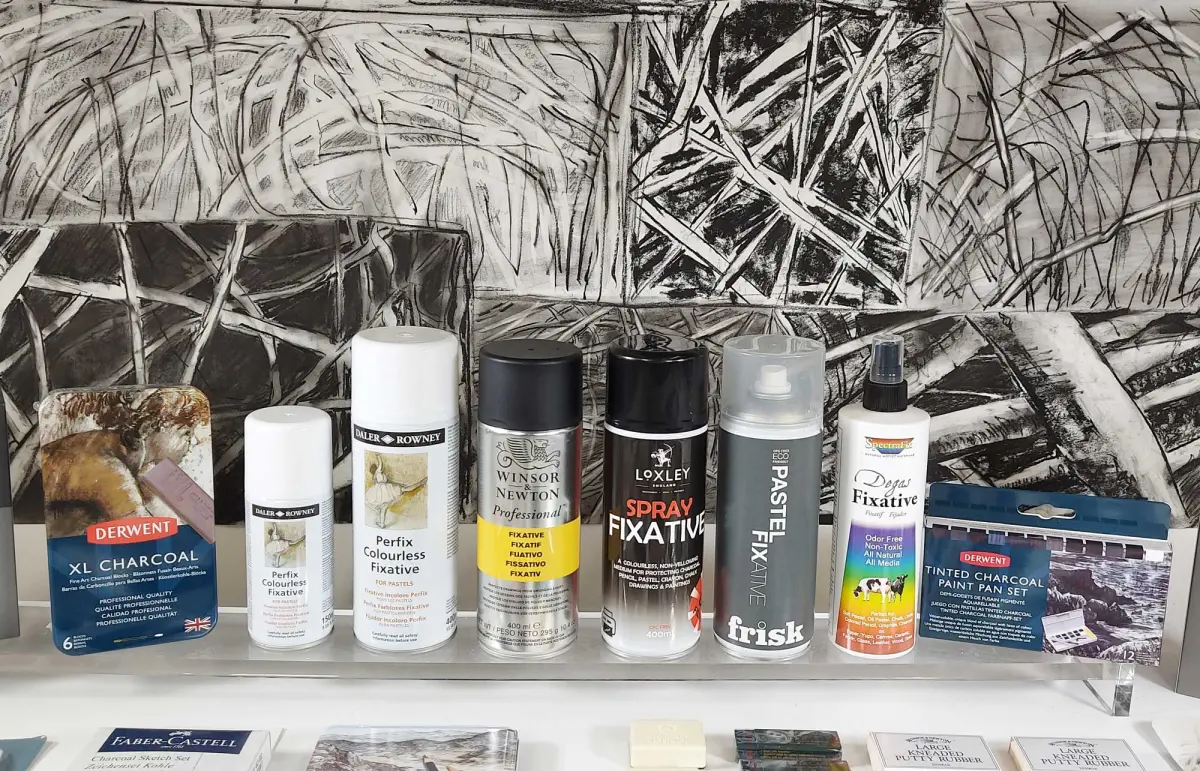
Fixative sprays are the industry-standard solution for securing charcoal drawings. These products are essentially clear, aerosolized resins that create a protective layer over your work. To achieve the best results without ruining your drawing, you must apply the spray in thin, light coats rather than one heavy, saturating layer. Holding the can about 12 to 18 inches away from the surface ensures an even mist that does not cause the charcoal to run or pool.
When using fixatives, follow these professional application steps to maintain the integrity of your drawing:
- Place your artwork on a flat, horizontal surface in a well-ventilated area to prevent inhaling fumes.
- Shake the can vigorously for at least one minute to ensure the resin and solvent are properly mixed.
- Use a sweeping motion, starting the spray off the edge of the paper and moving across the entire surface.
- Allow the first layer to dry completely for at least 15 minutes before deciding if a second coat is necessary.
- Avoid over-spraying, as too much liquid can darken the charcoal values or create an unwanted glossy sheen.
Best tools to prevent smudging while drawing
Managing your workspace is just as important as applying a final coating. Many artists use a "bridge" or a mahl stick to keep their hands elevated above the paper while they work. By resting your hand on a physical barrier that spans across the drawing, you prevent the oils and moisture from your skin from transferring to the paper, which can lock charcoal dust into the fibers and create permanent, unwanted dark spots.
Another effective technique involves using a piece of glassine paper or a clean sheet of drafting film as a hand rest. Unlike standard printer paper, glassine is non-porous and smooth, meaning it will not pick up the charcoal dust and redistribute it elsewhere on your page. By keeping your hand protected behind this barrier, you can work on intricate details without worrying about your palm dragging through your carefully rendered shadows.
Common mistakes when fixing charcoal
One of the most frequent errors artists make is applying fixative too close to the drawing surface. When the nozzle is too near, the force of the propellant can blow the loose charcoal dust around, effectively ruining your composition before the resin has a chance to set. Additionally, spraying too heavily can cause the charcoal to clump together, resulting in a muddy appearance that obscures the fine lines you spent hours perfecting.
Another common mistake is failing to test the fixative on a scrap piece of paper first. Different brands of fixative interact differently with various types of charcoal, such as willow, vine, or compressed varieties. Always perform a test run with the same paper and charcoal type you used for your final piece. This allows you to observe how much the fixative darkens the values, as most sprays will slightly deepen the blacks and change the overall contrast of the drawing.
How to store charcoal drawings safely
Once your drawing is finished and properly fixed, long-term storage is the final step in preventing damage. Never stack raw charcoal drawings directly on top of one another, as the friction between sheets will inevitably cause smudging, regardless of whether a fixative was applied. Instead, use sheets of glassine or acid-free tissue paper to interleave between your drawings, providing a protective barrier that prevents the charcoal from rubbing against the back of the next sheet.
For those who wish to display their work, framing is the most reliable way to ensure the charcoal remains pristine. Mounting the drawing behind glass or acrylic creates a permanent physical barrier against dust, moisture, and accidental contact. When framing, ensure the charcoal does not touch the glass directly by using a mat board or spacers. This small gap prevents the charcoal from transferring to the glass due to static electricity, keeping your artwork preserved in its original, smudge-free condition for years to come.
Key facts
- Charcoal is essentially pure carbon, which lacks a binder, causing it to remain loose on the paper surface.
- Fixative sprays are specialized aerosols containing resins that create a protective, transparent film over the drawing.
- Workable fixatives allow you to continue drawing over the surface, while final fixatives provide a permanent, non-removable seal.
- Always apply fixative in a well-ventilated area, holding the can at least 12 inches away from the artwork to prevent pooling.
- Hair spray is a common but discouraged DIY alternative because it often contains oils or perfumes that yellow and degrade paper over time.
- Using a high-quality, acid-free spray ensures the longevity of the artwork and prevents the charcoal from flaking or smudging over the years.
The bottom line
To effectively prevent charcoal smudging, prioritize using professional-grade, acid-free fixatives applied in light, even layers. Avoid household substitutes like hair spray, which can damage your work over time. By combining proper storage techniques, such as using glassine paper, with a quality fixative, you ensure your drawings remain crisp and protected. Always work in a well-ventilated space to maintain safety while securing your artistic efforts.
People also ask
Can I use hair spray instead of professional fixative?
While hair spray is a popular household substitute, it is not recommended for professional art. It often contains additives that can yellow the paper or cause the charcoal to become brittle and crack over time.
How many coats of fixative should I apply?
Two to three light, even coats are usually sufficient for most drawings. Applying too much liquid at once can cause the charcoal particles to shift or bleed into the paper fibers, ruining the detail.
Is there a way to prevent smudging without using a spray?
Using a high-quality, textured paper—such as charcoal or pastel paper—helps trap the loose pigment in the tooth of the surface. Additionally, using a drafting bridge or keeping a piece of glassine paper under your hand while drawing prevents accidental smudging.
Will fixative change the appearance of my charcoal drawing?
Most fixatives will slightly darken the values of the charcoal, as the resin binds the pigment and makes it appear more saturated. It is best to test the spray on a small scrap of paper with similar charcoal marks before applying it to your final piece.
Should I use a matte or glossy fixative?
Matte fixative is the standard choice for charcoal because it preserves the non-reflective, velvety quality of the medium. Glossy sprays can create unwanted glare that obscures the delicate transitions and textures of a charcoal drawing.
How long does it take for fixative to dry?
Most professional fixatives dry to the touch within 15 to 30 minutes. However, it is best to let the artwork sit in a horizontal position for at least an hour to ensure the resins have fully set and the surface is stable.
This answer was created with the help of AI research tools and reference sources. Spotted an error? Let us know — we correct mistakes quickly. See our editorial policy.