How do you draw a llama step by step?
Short answer
Drawing a llama involves capturing its distinct silhouette, characterized by a long neck, oval body, and tufted ears. By breaking the animal down into basic geometric shapes like circles and rectangles, you can construct a proportional sketch. Focus on the woolly texture and expressive facial features to bring your drawing to life.
On this page
How to draw a llama step by step
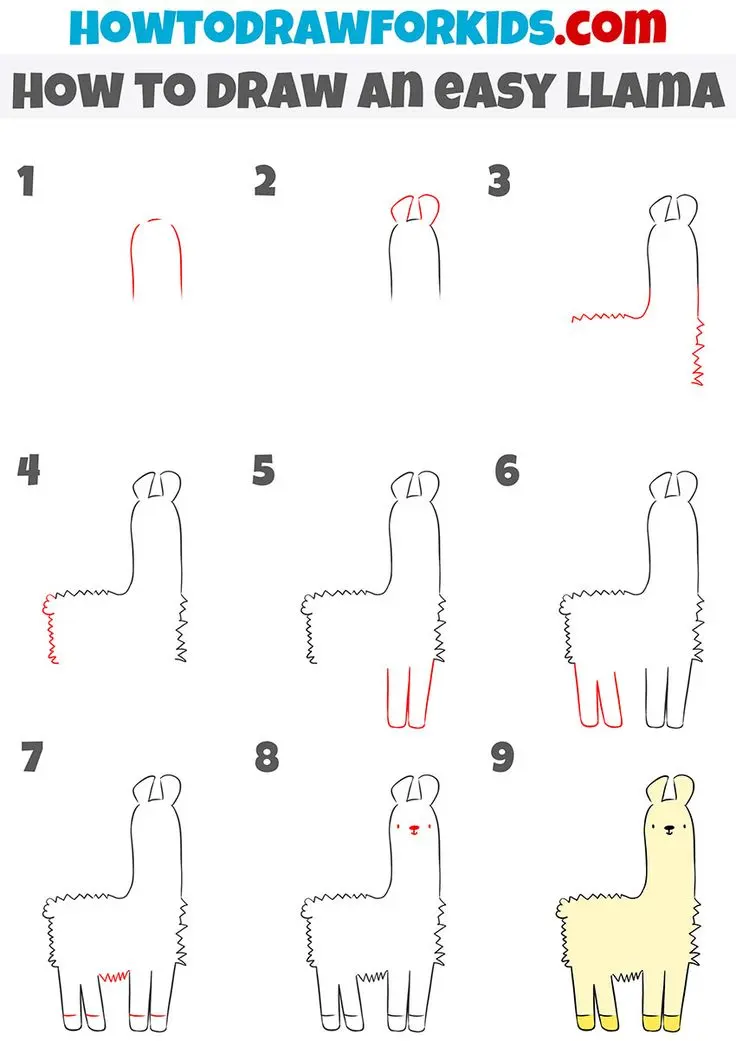
To begin your drawing, establish the llama's proportions using light pencil strokes. Start by sketching a small oval for the head and a larger, horizontal oval for the body. Connect these shapes with two parallel lines to represent the long, slender neck. Ensure the neck is roughly the same length as the body to maintain the animal's characteristic look.
Once the frame is set, add the limbs and facial details. Llamas have sturdy legs that should be drawn as thin rectangles with small, rounded hooves at the bottom. Position the ears high on the head, drawing them as elongated, slightly curved triangles. Finally, add a small, triangular nose and a soft mouth line to complete the basic structure before refining the details.
- Sketch a small oval for the head and a larger one for the body.
- Connect the shapes with two lines to create the neck.
- Add four rectangular legs with small hooves.
- Draw two tall, pointed ears on top of the head.
- Outline the woolly coat with jagged, irregular lines.
Best tools for drawing animals
For beginners, a standard HB graphite pencil is ideal because it allows for light initial sketches that are easy to erase. As you progress, consider using a 2B or 4B pencil to add depth and darker shadows to the wool. High-quality drawing paper with a slight tooth, or texture, helps the graphite adhere better and allows for more expressive shading techniques.
Erasers are just as important as pencils when drawing animals. A kneaded eraser is particularly useful because it can be molded into specific shapes to lift highlights from the fur or correct small anatomical errors without damaging the paper surface. By keeping your tools clean and sharp, you ensure that your lines remain crisp and your shading stays consistent throughout the entire drawing process.
- HB pencils for light sketching and guidelines.
- 2B or 4B pencils for shading and texture.
- Kneaded erasers for precision and highlights.
- Smooth-finish drawing paper to prevent smudging.
- A sharpener to maintain fine points for detail work.
Why llama anatomy looks unique
The llama's anatomy is defined by its adaptation to high-altitude environments in the Andes mountains. Their long necks are essential for reaching vegetation, while their thick, woolly coats provide insulation against extreme temperature fluctuations. When drawing these animals, it is helpful to remember that the wool often obscures the underlying muscle structure, creating a rounded, bulky appearance that contrasts with their thin legs.
Observe the way the fur clusters around the neck and chest. Instead of drawing individual hairs, use short, rhythmic strokes to suggest the density of the coat. The llama’s face is also distinctive, featuring large, dark eyes and a split upper lip, which is a common trait among camelids. Capturing these subtle facial expressions will make your drawing feel more authentic and grounded in the actual biology of the animal.
Common mistakes when drawing llamas
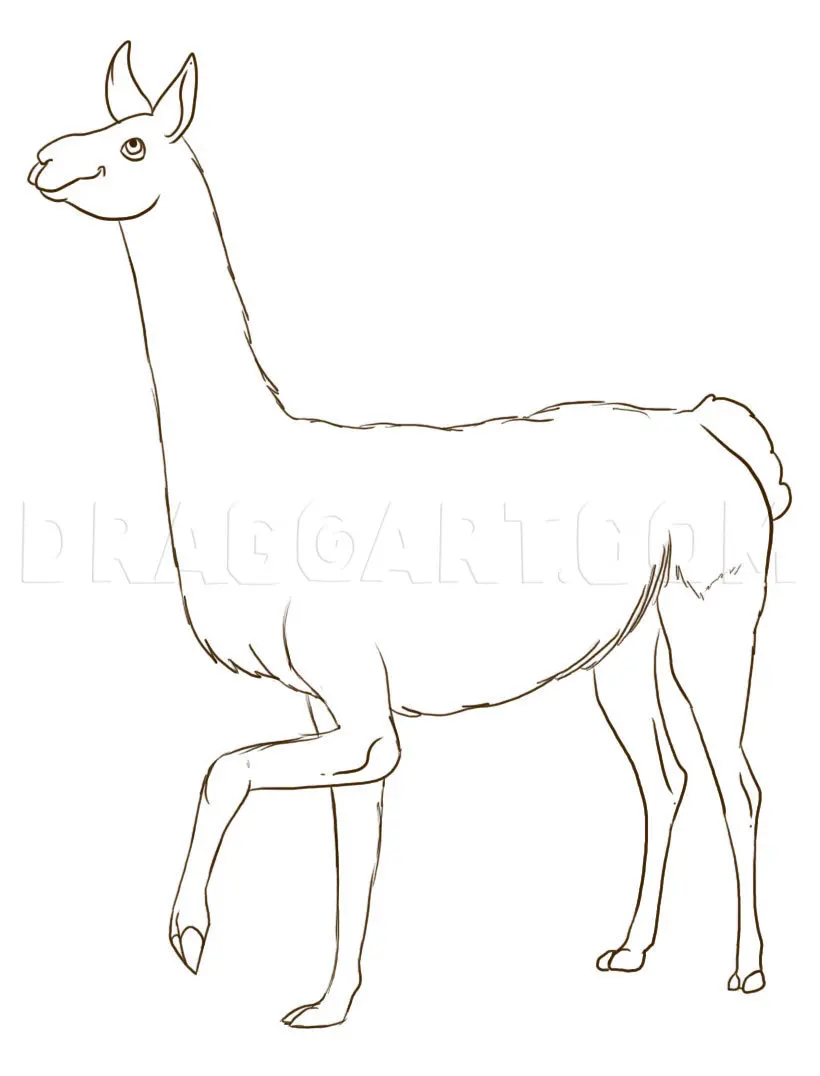
One frequent error is making the neck too short or too thick. The llama’s neck is a defining feature, and if it is drawn too stoutly, the animal may end up looking more like a sheep or a small horse. Always double-check your reference images to ensure the neck length is proportional to the body size, usually spanning about one-third of the total height.
Another common mistake involves the legs. Beginners often draw the legs perfectly straight, but llamas have a slight bend at the joints, giving them a graceful, walking posture. Avoid drawing the legs as simple sticks; instead, add a slight thickness at the knees and ankles to represent the joints. Failing to account for these subtle curves can make the drawing appear stiff and unnatural, detracting from the overall movement of the figure.
How to add texture to animal fur
Adding texture is what transforms a simple outline into a realistic llama portrait. Rather than trying to draw every single strand of hair, focus on the way light hits the wool. Use "scumbling," a technique where you create small, circular scribbles with your pencil, to build up layers of density. This mimics the fluffy, uneven nature of llama fleece and creates a sense of volume.
Pay attention to your light source when adding texture. The areas where the light hits the wool should be kept lighter, while the undersides of the neck and the belly should be shaded more heavily to suggest depth. By varying the pressure of your pencil, you can create a range of tones that define the animal's form. With practice, these layered strokes will create a convincing, tactile surface that defines the character of the llama.
Key facts
- Llamas are camelids, so emphasize their long necks and oval-shaped bodies.
- Start with a large oval for the body and a smaller, rounded rectangle for the head.
- Connect the head to the body with two parallel vertical lines to create a sturdy neck.
- Draw ears that look like elongated leaves or bananas, positioned at the top of the head.
- Add fluffy, woolly texture to the body using short, curved "U" strokes rather than straight lines.
- Keep the legs thin and end them with two-toed feet, as llamas have soft pads instead of hooves.
The bottom line
Drawing a llama is a rewarding exercise in balancing simple geometric shapes with textured detail. By establishing a strong foundation with an oval body and a long, sturdy neck, you create the necessary structure for the animal's unique silhouette. Focus on adding woolly texture through short, curved lines and remember that the ears and legs are defining features that bring the character of the llama to life.
People also ask
How do I make the llama look fluffy instead of smooth?
Use short, jagged, or scalloped lines along the outline of the body to suggest thick wool. Avoid perfectly straight lines, as they make the animal appear hairless or cartoonish.
Should the llama's legs be straight or bent?
Draw the legs with slight angles at the joints to show movement. Straight, stick-like legs can make the drawing look stiff and unnatural.
What is the most common mistake when drawing a llama's face?
Many people draw the eyes too high or too far apart. Place the eyes on the sides of the head to reflect the llama's wide field of vision.
How do I draw the tail correctly?
Keep the tail small and fluffy, often pointing slightly upward or tucked against the rump. It should not be long or bushy like a horse's tail.
Are there specific proportions I should follow?
A llama's neck is roughly the same length as its body. Maintaining this one-to-one ratio helps ensure the animal looks anatomically balanced.
Can I add accessories like blankets or tassels?
Yes, llamas are often depicted with colorful Andean-style woven blankets. Drape a rectangle over the back and add fringe along the bottom edges for detail.
This answer was created with the help of AI research tools and reference sources. Spotted an error? Let us know — we correct mistakes quickly. See our editorial policy.