How do you draw a heart?
Short answer
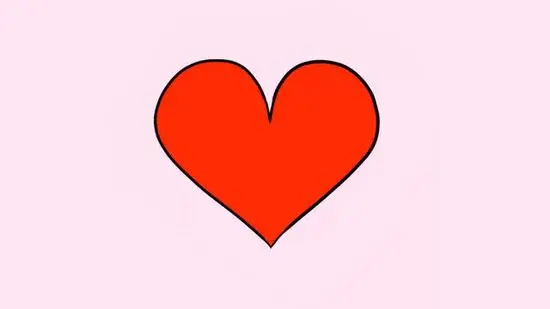
Drawing a classic heart involves sketching two symmetrical, rounded lobes that meet at a central point at the top and taper down to a sharp vertex at the bottom. By mastering basic geometric shapes like circles or teardrops, you can create a balanced, aesthetically pleasing heart shape with just a pencil.
On this page
How to draw a heart for beginners
The most reliable method for beginners is the "V-shape" technique, which uses a simple guide to maintain symmetry. Start by drawing a light, downward-pointing V on your paper. This V serves as the bottom half of your heart, defining the point where the two sides will eventually meet. Keep your lines faint so you can easily erase them later if you need to adjust the proportions.
Once you have your V, draw two rounded humps on top of the open ends. Imagine you are drawing two semicircles or rounded ears that connect to the top of your V. The key to a professional look is ensuring the humps are equal in size and height. If one side looks larger than the other, your heart will appear lopsided. Practice this motion several times until your hand feels comfortable creating the curves.
Best tools for drawing a heart
While you can draw a heart with any writing instrument, using a graphite pencil with an HB lead is ideal for initial sketches. The HB lead is soft enough to create dark lines but hard enough to be erased without leaving smudges or damaging the paper. If you are aiming for a finished, professional look, consider using fine-liner pens or markers to trace over your pencil lines once you are satisfied with the shape.
When choosing paper, select a smooth, medium-weight stock. Textured paper can make it difficult to draw clean, continuous curves, leading to jagged edges. If you are coloring your heart, ensure your paper is thick enough to handle markers without bleeding through to the other side. Using a ruler or a compass can also help if you want to create a perfectly geometric heart, though freehand drawing is generally preferred for a more organic feel.
Why heart shapes look uneven
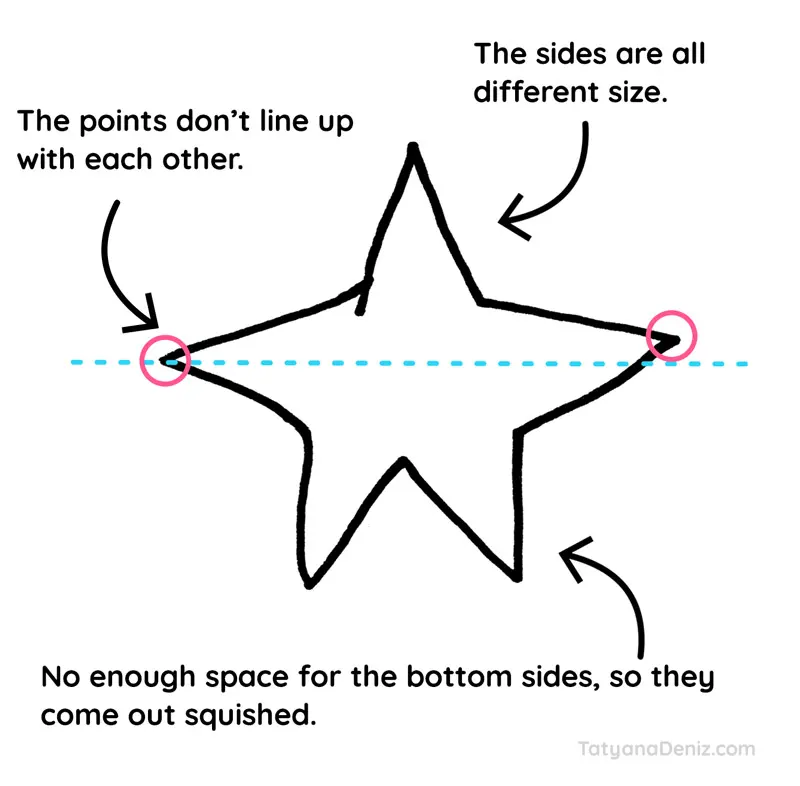
The most common reason a heart looks uneven is a lack of symmetry between the two lobes. Because the human eye is highly sensitive to balance, even a slight deviation in the height or width of one lobe will make the entire drawing look distorted. To fix this, draw a vertical line down the center of your paper before you begin. This line acts as a mirror axis, allowing you to check that each side is a reflection of the other.
Another issue is the "point" at the bottom. If the V-shape is too wide or too narrow, the heart will lose its classic appearance. A standard heart usually has a point that aligns with the center of the top curves. If your heart looks more like a rounded bulb, you likely need to sharpen the angle of your V. Conversely, if it looks too much like a triangle, round out the top lobes more aggressively to add volume.
Common mistakes when drawing a heart
Many people struggle with the transition point where the two top lobes meet in the middle. If you do not bring the curves all the way to the center, you end up with a shape that looks like two separate circles rather than a unified heart. Avoid these common pitfalls to ensure your drawing remains clean and professional:
- Stopping the top curves too early, which creates a gap in the center.
- Making the bottom point too blunt, which results in a pear-like shape.
- Pressing too hard with the pencil, making it impossible to erase mistakes.
- Drawing the lobes at different heights, which creates an unbalanced silhouette.
By following these steps, you can identify where your technique is failing. Always step back from your work every few minutes to look at the drawing from a distance, as this helps you spot asymmetry that is not obvious when looking closely.
How to add depth to a heart
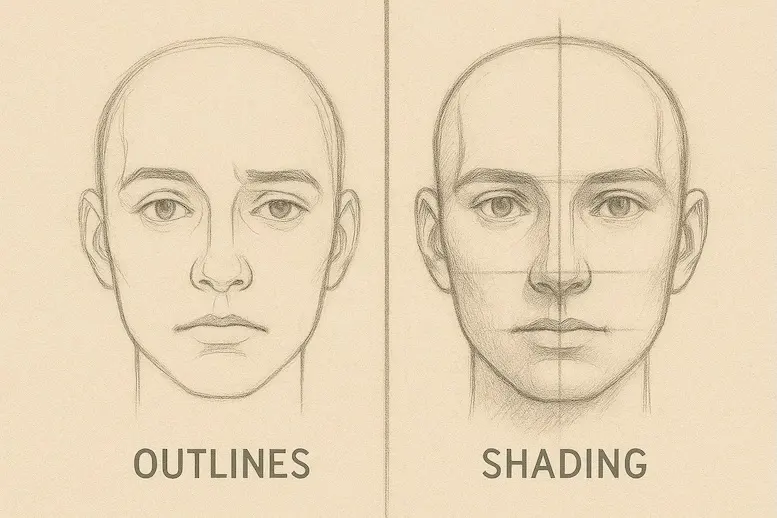
Once you have mastered the basic outline, you can add depth to make your heart look three-dimensional. Start by drawing a secondary, smaller heart inside the first one, or use shading to create a sense of volume. Use a soft pencil to apply a light layer of graphite along one side of the heart, gradually fading it toward the center. This technique, known as gradient shading, mimics the way light hits a curved surface.
- Draw your base heart shape using light pencil strokes.
- Choose a light source, such as the top-left corner, and keep that area the lightest.
- Apply darker shading to the opposite side and the bottom point.
- Use a blending stump or a clean tissue to smooth out the transition between light and shadow.
- Add a small, white highlight near the top of the lobes to suggest a glossy, polished texture.
Following these steps will transform a flat, two-dimensional drawing into a vibrant, professional-looking illustration that stands out on the page.
Key facts
- The modern heart shape is derived from the silphium plant, which was used in ancient Cyrene as a contraceptive and featured a seed pod shaped like a heart.
- To draw a symmetrical heart, start by drawing a light vertical guideline to act as an axis of symmetry.
- The two lobes at the top of the heart are essentially two semicircles that meet at the center point.
- A common mistake is making the bottom point too blunt; aim for a sharp, V-shaped convergence to maintain the iconic silhouette.
- If you struggle with balance, draw one side first, then fold your paper in half along the vertical axis to trace the second side.
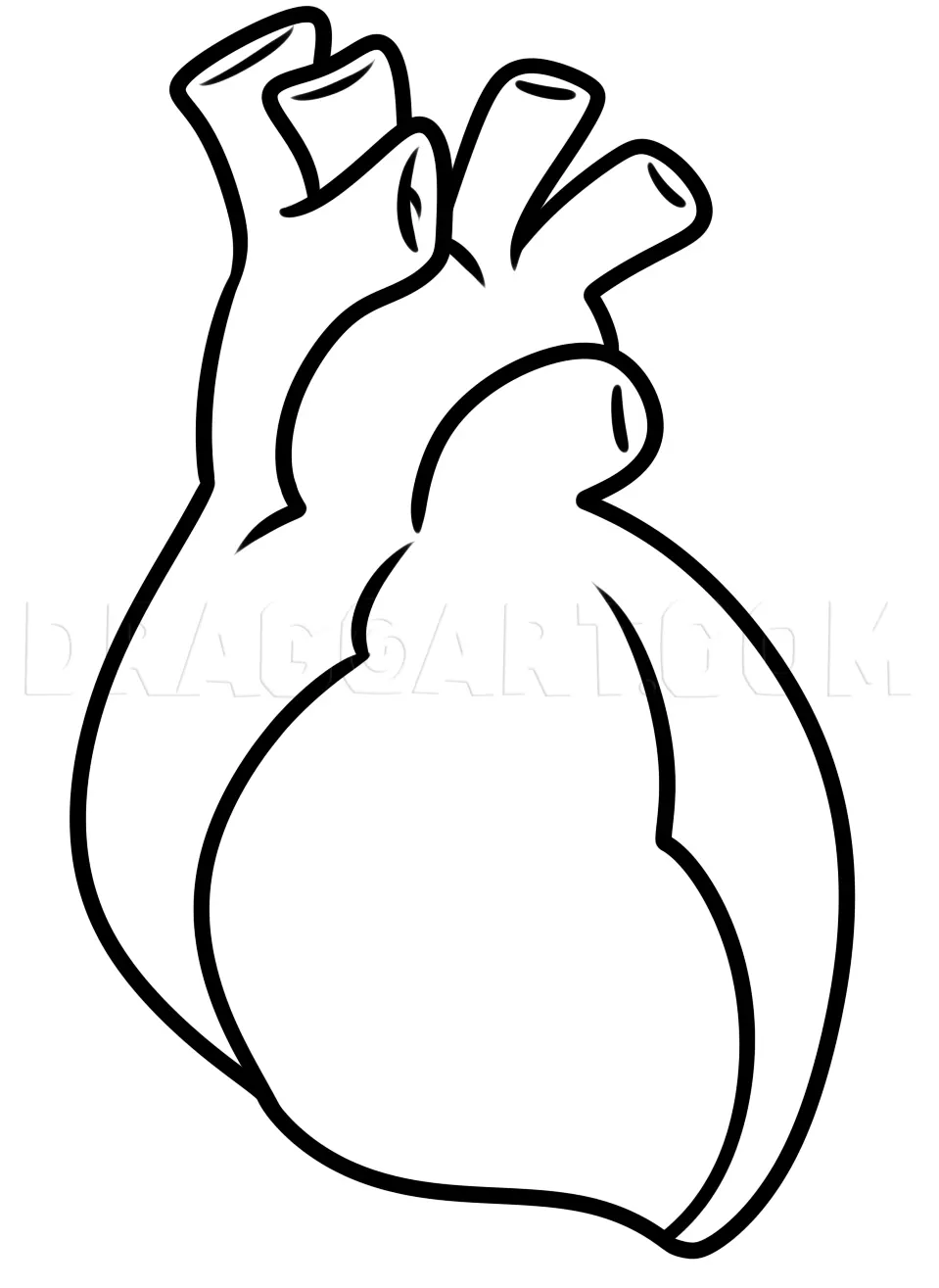
- Anatomical hearts differ significantly from the symbolic shape, featuring complex chambers, valves, and asymmetrical vessels.
The bottom line
Drawing a heart is a fundamental skill that relies more on symmetry than complex artistry. By utilizing a central guideline and focusing on the relationship between the top lobes and the bottom point, you can create a balanced symbol. Whether you prefer a freehand sketch or a geometric construction, consistency in your curves remains the most important factor for achieving a clean, recognizable result every time.
People also ask
Why is the heart symbol not shaped like a real human heart?
The symbol likely evolved from stylized depictions of leaves, seeds, or even human anatomy from antiquity. While it lacks the biological accuracy of ventricles and atria, it has served as a universal cultural shorthand for love and emotion for centuries.
Can I draw a heart using a compass?
Yes, you can create a perfect heart by drawing two overlapping circles of the same size. By connecting the bottom intersection points with a V-shape and erasing the top inner arcs, you achieve a geometrically balanced heart.
What is the easiest way to draw a heart for a card?
The simplest method is to draw a letter "V" and then add two rounded humps on top. Adjust the height of the humps to make the heart look either chubby or elongated depending on your preference.
Why does my heart drawing look lopsided?
Lopsidedness usually occurs because the eye struggles to replicate curves in reverse. Using a light pencil sketch to map out the width of the lobes before committing to ink helps ensure both sides match.
Are there different styles of heart drawings?
Artists often vary heart shapes by adjusting the sharpness of the bottom point or the depth of the top cleavage. You can also experiment with "tribal" or "geometric" styles by using straight lines instead of curves.
Is it better to draw from the top down or the bottom up?
Drawing from the top down is generally easier because it allows you to establish the width of the heart immediately. Starting with the top lobes provides a clear framework for where the bottom point should land.
This answer was created with the help of AI research tools and reference sources. Spotted an error? Let us know — we correct mistakes quickly. See our editorial policy.