How do you draw a cartoon heart?
Short answer
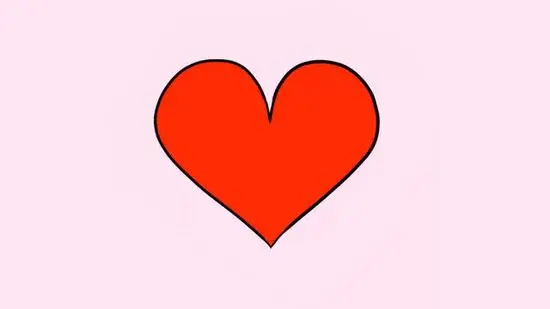
Drawing a cartoon heart involves sketching two symmetrical, rounded humps that meet at a central point, tapering down into a sharp bottom tip. By using basic geometric shapes like circles or ovals as a foundation, you can easily create balanced, stylized heart icons suitable for illustrations, greeting cards, or digital graphic designs.
On this page
How to draw a cartoon heart step by step
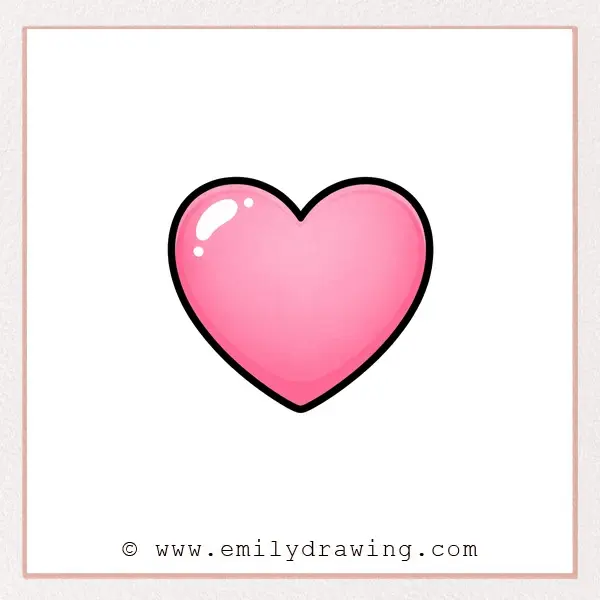
Creating a classic cartoon heart requires a balance between symmetry and fluid curves. Beginners often struggle with the transition from the top lobes to the bottom point, which can result in a lopsided or overly triangular shape. By following a structured approach, you ensure the proportions remain consistent regardless of the size of your drawing.
- Draw a light horizontal line to serve as a guide for the top of the heart.
- Sketch two circles of equal size sitting side-by-side along this line, ensuring they overlap slightly in the middle.
- Draw a "V" shape starting from the bottom edges of the circles, meeting at a central point below the circles.
- Erase the internal lines where the circles meet the "V" to reveal the continuous outer contour of the heart.
- Refine the curves with a steady hand to smooth out any jagged transitions between the lobes and the base.
Best tools for drawing hearts
Selecting the right medium depends on your desired outcome, whether you are sketching for practice or creating a polished final piece. Graphite pencils are ideal for beginners because they allow for easy corrections, while felt-tip pens or fine-liners are better for achieving the bold, clean lines characteristic of professional cartooning. Digital tablets offer the most flexibility, as they allow artists to use layers to separate their initial construction lines from the final ink work.
- Graphite pencils (HB or 2B) for initial sketching and layout.
- Erasers, specifically kneaded erasers, to lift graphite without damaging paper fibers.
- Fine-tip ink pens (0.5mm to 0.8mm) for creating crisp, permanent outlines.
- Alcohol-based markers or colored pencils for adding vibrant, consistent color fills.
- Digital drawing software with stabilizer settings to smooth out shaky hand movements.
Why cartoon hearts look different from anatomy
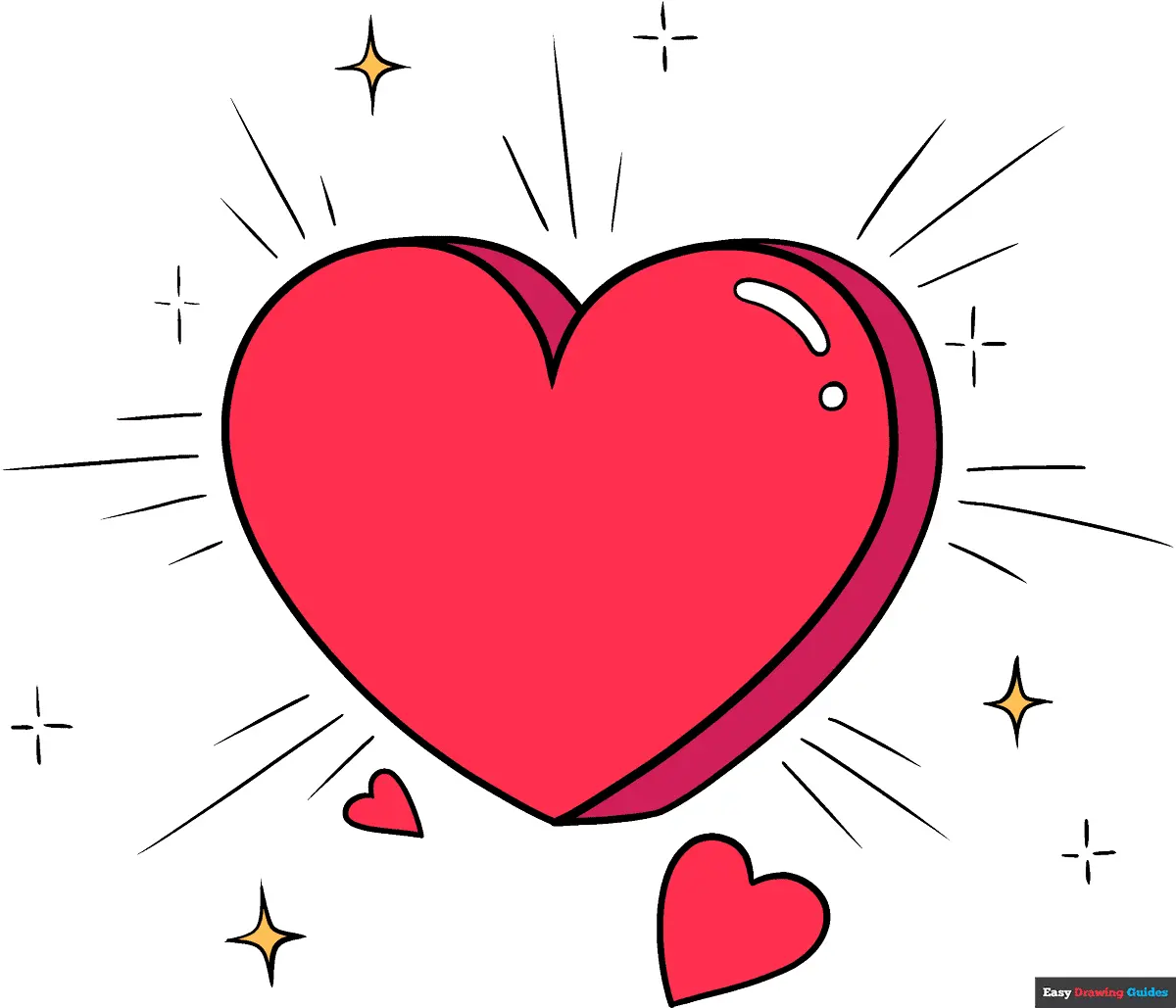
The stylized cartoon heart is a symbolic representation that bears little resemblance to the actual human organ. While a biological heart is a complex, four-chambered muscular pump, the cartoon version focuses on visual shorthand and emotional association. This abstraction dates back to the early 20th century, where simplified icons were popularized in print media and advertising to represent concepts like love, affection, or vitality. The cartoon heart prioritizes symmetry and simplicity, which makes it easier for the human brain to process and recognize instantly as a universal symbol of emotion.
When you draw a cartoon heart, you are not aiming for anatomical accuracy, but rather for a pleasing aesthetic. By exaggerating the curves at the top and sharpening the point at the bottom, you emphasize the "sweetness" of the design. This deviation from reality is intentional, as it allows the heart to function as a versatile graphic element that can be scaled, colored, or distorted to fit any creative context.
Common mistakes when drawing hearts
One of the most frequent errors is creating uneven lobes, where one side of the heart appears significantly larger or more rounded than the other. This lack of balance often stems from drawing the entire shape in one continuous motion without using construction lines. Another common mistake is making the bottom tip too blunt, which makes the heart look more like a rounded pebble than a traditional heart shape. To avoid this, always ensure your "V" shape is sufficiently deep and that the point is clearly defined.
- Neglecting to use a center guideline, which leads to asymmetrical lobes.
- Pressing too hard with the pencil during the initial sketch, making it difficult to erase construction lines.
- Drawing the top lobes too far apart, which creates an awkward gap in the center of the heart.
- Forgetting to taper the curves toward the base, resulting in a shape that looks like a triangle with rounded corners.
- Using inconsistent line weight, which can make the drawing look messy or unprofessional.
How to add personality to your heart
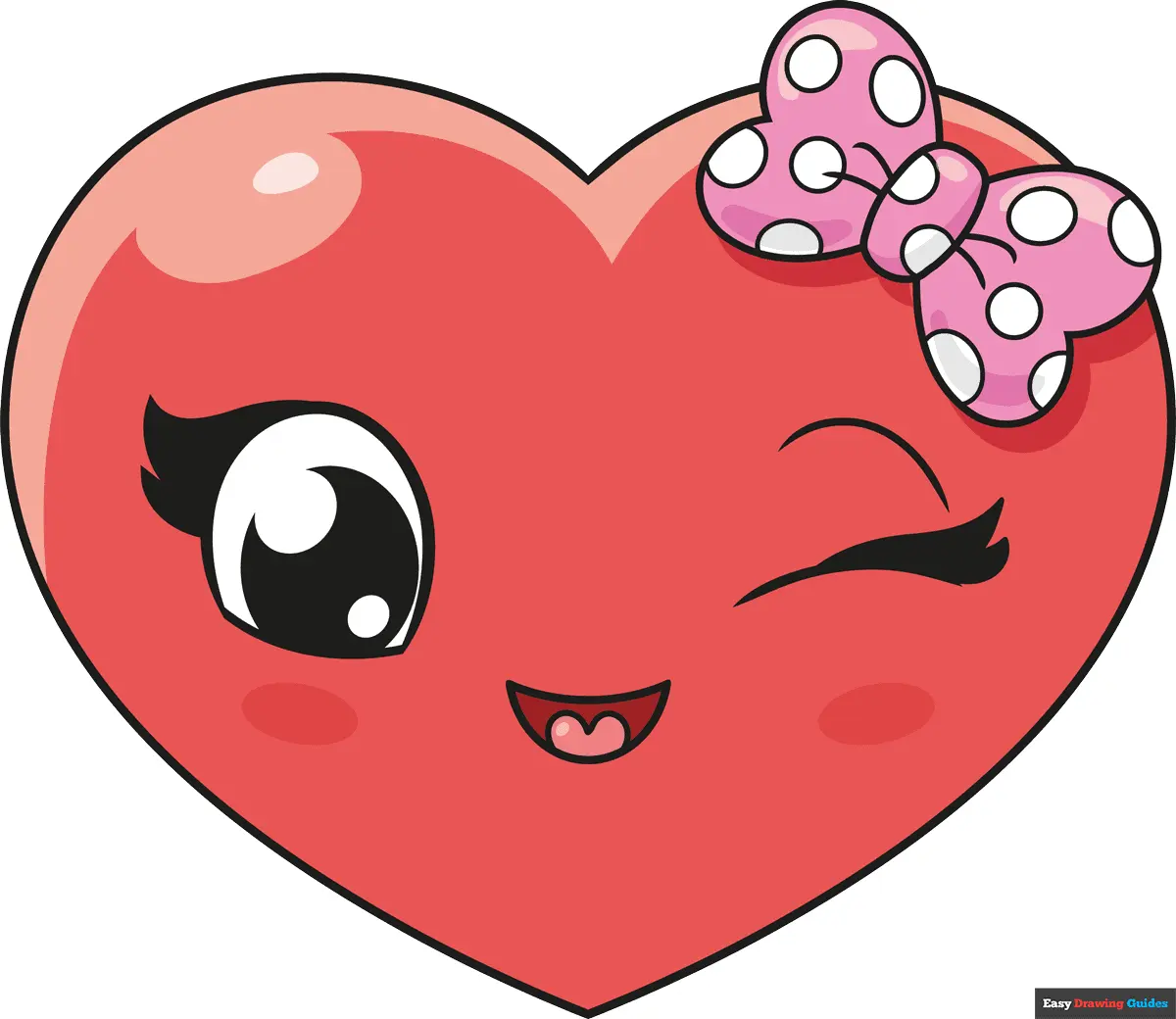
Once you have mastered the basic shape, you can customize your heart to convey different moods or characters. Adding a face is the most popular way to turn a simple icon into a cartoon character. By placing two small, circular eyes and a tiny, curved mouth in the upper half of the heart, you instantly give it a personality. You can also experiment with different line weights, such as using a thick outer stroke and thinner inner details, to create a sense of depth or a modern, minimalist look.
Beyond facial expressions, consider adding accessories like small wings, a crown, or a decorative border to enhance the design. You can also play with color gradients, using a deep crimson at the base and a lighter pink at the top to create a three-dimensional effect. These small adjustments transform a generic symbol into a unique piece of art. Remember that the goal of cartooning is to communicate an idea quickly, so keep your additions simple and focused on the overall silhouette of the heart.
Key facts
- The standard heart shape is technically called a cordiform, derived from the ivy leaf symbol used in ancient Mediterranean cultures.
- Start by drawing two overlapping circles side-by-side to act as the upper lobes of the heart.
- Connect the bottom edges of the circles with two curved lines that meet at a sharp point in the center.
- Use a light pencil sketch first to ensure symmetry before finalizing the outline with a permanent marker.
- Avoid making the bottom point too blunt, as a sharp, tapered base is essential for the classic cartoon aesthetic.
- Adding a slight tilt to the heart shape creates a sense of movement and makes the drawing look more dynamic.
The bottom line
Drawing a cartoon heart is a simple process that relies on basic geometric shapes and symmetry. By starting with two overlapping circles and connecting them to a sharp, tapered point, you can create a clean and recognizable icon. Focus on maintaining balance between the left and right sides, and use light shading to add depth. With consistent practice, you will master this fundamental artistic shape quickly.
People also ask
Why is the symbol for a heart different from the actual human organ?
The symbolic heart likely evolved from stylized illustrations of silphium seeds or ivy leaves used by ancient Greeks. These shapes were easier to reproduce artistically than the complex, four-chambered anatomy of a biological heart.
How can I make my heart drawing look three-dimensional?
Add a curved highlight line on the upper left lobe and a shadow area on the lower right side. This use of light and dark shading creates the illusion of volume and depth.
What is the best way to draw a perfect heart without using a stencil?
Fold a piece of paper in half and draw half of a heart along the crease. When you cut out the shape and unfold the paper, the two sides will be perfectly symmetrical.
Can I draw a heart using only straight lines?
Yes, geometric hearts are a popular modern style. By using a ruler to connect points in a V-shape at the bottom and angled lines at the top, you create a sharp, minimalist aesthetic.
Why do my hearts often look lopsided?
Lopsidedness usually occurs because the two top lobes are drawn at different heights or widths. Always check that your starting circles or guidelines are aligned horizontally before connecting them.
What tools are best for beginners to practice drawing hearts?
A soft-lead graphite pencil is ideal for beginners because it allows for easy erasing of initial guidelines. Once comfortable, you can use fine-liner pens to define the final shape.
This answer was created with the help of AI research tools and reference sources. Spotted an error? Let us know — we correct mistakes quickly. See our editorial policy.