How do you draw a fishing village step by step?
Short answer
Drawing a fishing village requires establishing a horizon line, sketching simple geometric shapes for buildings, and adding nautical details like boats and docks. By layering perspective, textures of wood and water, and atmospheric lighting, you create a cohesive coastal scene that captures the authentic charm of a working maritime community.
On this page
How to sketch the basic layout of a fishing village
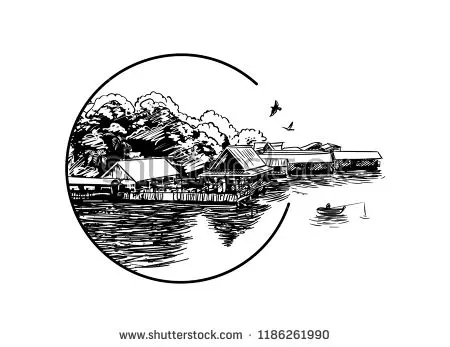
Begin by drawing a horizontal line across your paper to represent the horizon where the sky meets the sea. Below this line, sketch the shoreline using jagged, irregular strokes to suggest natural rocks or sandy banks. Place your primary structures, such as small cottages and storage sheds, along this perimeter. Use simple rectangles and triangles to map out the basic forms of these buildings, ensuring they vary in size to create visual interest.
Focus on the perspective of the village to ensure it looks grounded. Objects closer to the bottom of the page should be larger and more detailed, while those near the horizon line should appear smaller and less distinct. This technique, known as atmospheric perspective, helps the viewer understand the depth of the scene. Keep your initial lines light so you can easily adjust the composition before committing to darker, permanent ink or pencil strokes.
Best drawing techniques for beginners
For those new to drawing, the most effective approach is to break complex structures down into fundamental shapes. A house is simply a cube with a triangular prism on top, and a fishing boat is a curved hull with a small cabin. By mastering these basic geometries, you can build a complex village without feeling overwhelmed by the intricate details of architecture.
- Start with a light pencil sketch of the shoreline and the horizon.
- Outline the buildings using basic geometric shapes, keeping them clustered near the water.
- Draw the docks as long, narrow rectangles extending from the shore into the sea.
- Add simple boat shapes, such as oval hulls with small masts, floating near the piers.
- Use vertical lines to represent pilings and ropes, which add immediate nautical character.
Consistency in your light source is essential for beginners. Choose one side of your page for the sun and ensure all shadows fall in the opposite direction. This simple rule prevents your drawing from looking flat and provides a sense of volume to the buildings and boats.
How to add realistic nautical details
Once the foundation is set, focus on the unique elements that define a fishing village. Add wooden textures to the docks by drawing short, horizontal lines across the planks. Incorporate nets, lobster traps, and piles of rope near the water’s edge to suggest active work. These small, specific details tell a story about the people who live in the village and make the scene feel lived-in rather than static.
- Draw nets as loose, crisscrossing patterns draped over railings or stacked on the pier.
- Use small, dark circles to represent lobster traps or crates.
- Add mooring rings on the sides of the docks to connect the boats to the land.
- Sketch seagulls or fishing birds in the sky to add movement and life to the composition.
- Include reflections in the water by drawing faint, vertical distortions directly beneath each boat and piling.
Refining these elements requires patience. Do not try to draw every single rope or nail; instead, suggest their presence with a few well-placed marks. This impressionistic approach often results in a more natural and professional-looking illustration.
Common mistakes when drawing coastal scenes
A frequent error is ignoring the relationship between the water and the shore. Beginners often draw the water as a flat, empty space, which makes the village appear disconnected. To avoid this, ensure the water has texture, such as small ripples or waves, and that the boats are clearly interacting with the docks. If a boat is floating, it should have a clear waterline where the hull meets the surface.
Another common mistake is making the buildings too uniform. Real fishing villages are often built over many years, resulting in a mix of architectural styles, weathered wood, and varying roof heights. Avoid drawing perfectly straight lines for every edge; slight wobbles or uneven angles can actually make the buildings look more authentic and aged. Finally, ensure your scale remains consistent throughout the drawing; a boat should not be larger than a nearby house unless it is significantly closer to the viewer.
Why perspective is vital for depth
Perspective is the mathematical framework that allows you to translate a three-dimensional world onto a two-dimensional surface. In a fishing village, this is particularly important because the long lines of docks and the receding shoreline provide clear visual cues for the eye. Use a vanishing point on the horizon to guide your lines, ensuring that the sides of buildings and piers converge toward that single point.
If you struggle with perspective, try using a grid to map out your scene. By drawing a light grid on your paper, you can ensure that the angles of your roofs and the length of your docks remain proportional. Remember that as objects move further away, they lose contrast and detail. By keeping the background buildings slightly lighter and less defined than those in the foreground, you naturally guide the viewer’s eye through the village and out toward the open sea, completing the composition.
Key facts
- Establish a horizon line roughly one-third of the way down the page to create a clear separation between the sky and the water.
- Use simple geometric shapes like triangles for roofs and rectangles for building bases to maintain proper perspective.
- Draw vertical lines for pilings or docks, ensuring they are perfectly perpendicular to the water line to suggest stability.
- Vary the sizes of buildings to create depth, placing larger structures in the foreground and smaller ones toward the horizon.
- Add texture to the water using horizontal, wavy lines that become tighter and more condensed as they approach the distant shore.
- Include small, V-shaped marks in the sky to represent birds, which adds life and scale to the overall composition.
The bottom line
Drawing a fishing village requires balancing geometric structures with the fluid, organic nature of the sea. By establishing a clear horizon and using varying line weights to create depth, you can transform simple shapes into a compelling coastal scene. Remember to focus on the interplay between the verticality of the docks and the horizontal movement of the water to capture the authentic atmosphere of a harbor.
People also ask
How do I create the illusion of depth in a coastal drawing?
Use atmospheric perspective by drawing foreground objects with darker, bolder lines and distant objects with lighter, thinner strokes. This technique mimics how air density affects visibility at a distance.
What is the best way to draw realistic fishing boats?
Start with an elongated oval shape for the hull and add a small cabin toward the front or middle. Keep the lines simple, as overly complex details can clutter the drawing and distract from the village setting.
Should I use a ruler for the buildings in a village scene?
While a ruler ensures straight lines, freehand drawing often adds character to a rustic fishing village. Slight imperfections in wooden structures can make the scene feel more authentic and lived-in.
How do I draw reflections of the village in the water?
Draw a mirror image of the buildings and docks directly beneath them, but distort the lines with horizontal ripples. Keep the reflection slightly darker than the objects themselves to suggest depth.
What are common mistakes when drawing a harbor?
A frequent error is placing the horizon line exactly in the middle of the page, which splits the composition in half. Another mistake is drawing water lines that are too vertical, which makes the water look like a solid wall.
How do I add detail to the shoreline?
Incorporate irregular shapes for rocks, sand dunes, or wooden debris along the water's edge. These organic elements break up the rigid lines of the buildings and provide a natural transition to the sea.
This answer was created with the help of AI research tools and reference sources. Spotted an error? Let us know — we correct mistakes quickly. See our editorial policy.