How do you draw a fishbowl?
Short answer
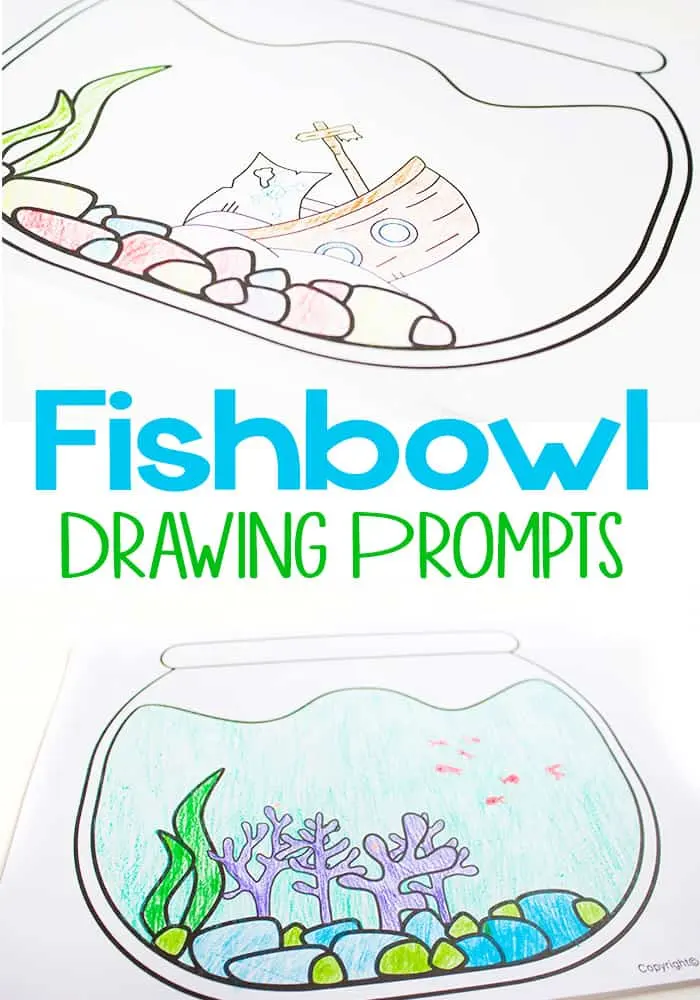
Drawing a fishbowl requires creating a three-dimensional sphere using perspective and shading. Begin by sketching a circle for the bowl and an oval for the opening. Add depth by layering curved lines that follow the bowl’s curvature. Finally, incorporate highlights and shadows to give the glass a realistic, transparent appearance.
On this page
How to draw the basic shape of a fishbowl
To begin, you must establish the structural foundation of the bowl. Start by drawing a light, circular guide shape in the center of your page. Do not worry about perfection at this stage; a slightly imperfect circle often looks more natural. Once the sphere is set, draw a horizontal oval across the top third of the circle. This oval represents the opening, or the "lip," of the bowl.
After sketching the basic geometry, refine the lines to create the glass container. Connect the sides of the oval to the main circle using smooth, continuous curves. Ensure the bottom of the bowl is slightly flattened to suggest it is resting on a surface. This creates a realistic base that prevents your drawing from appearing as though it is floating in mid-air.
- Lightly sketch a circle for the main body.
- Draw a wide oval at the top for the opening.
- Connect the oval to the circle with smooth curves.
- Erase the interior lines where the opening meets the body.
How to add depth and perspective
Creating the illusion of three-dimensional glass requires careful attention to perspective. The opening of the bowl should be drawn as an ellipse, which is a flattened circle. The further away the bowl is viewed from, the thinner this ellipse will appear. By varying the width of this oval, you can dictate the angle from which the viewer sees the fishbowl.
To enhance the three-dimensional effect, add a secondary curved line just inside the top rim. This represents the thickness of the glass wall. You should also draw a slight curve at the bottom of the bowl to indicate the water line. These subtle details provide visual cues that help the brain interpret the flat drawing as a solid, hollow object filled with liquid.
How to shade glass realistically
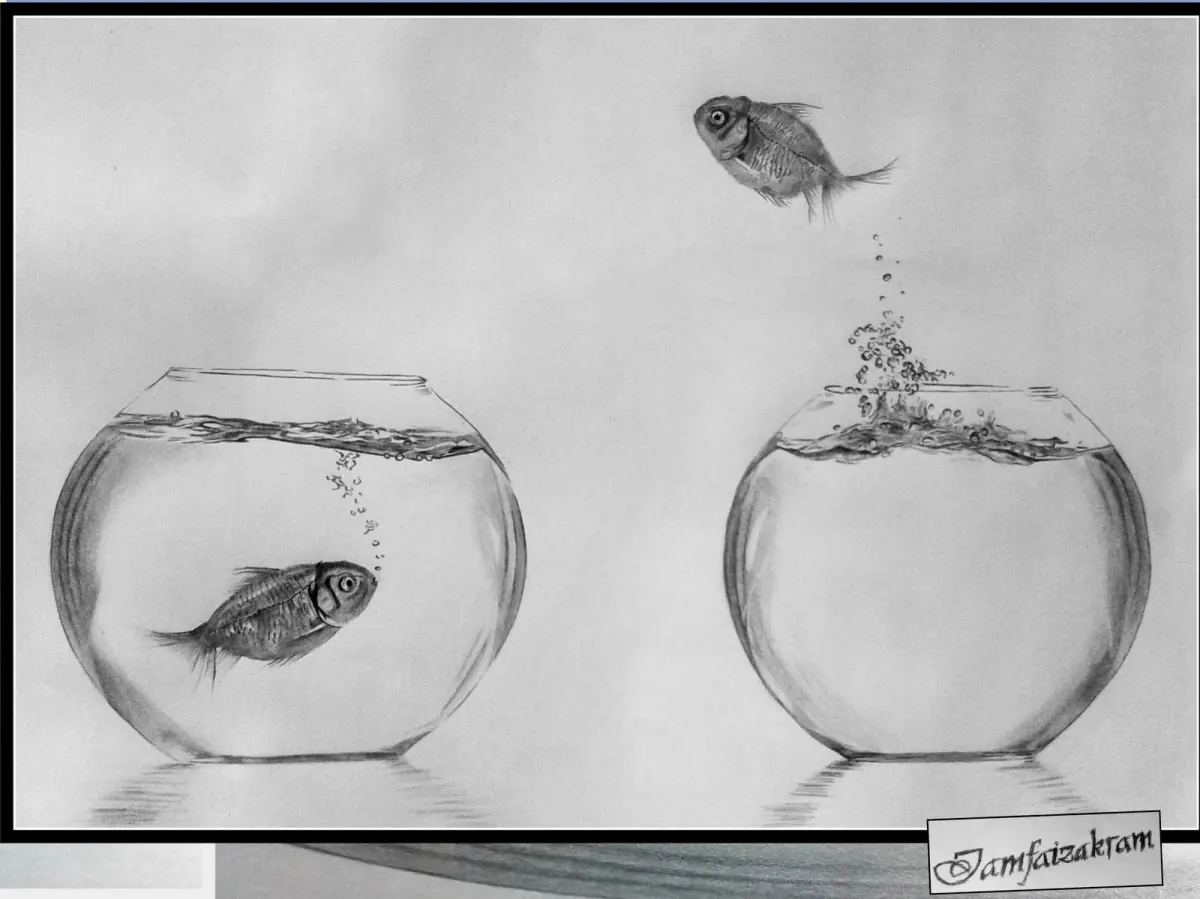
Shading is the most critical step in making a fishbowl look like glass rather than a solid ball. Glass is highly reflective, meaning it captures light from the surrounding environment. Identify a primary light source, such as a window or lamp, and keep the area closest to that source the lightest. Use a white eraser to lift graphite and create bright, sharp highlights on the upper curve of the bowl.
The opposite side of the bowl should feature darker, more saturated shading. Because glass is transparent, you should also show a faint reflection of the light source on the side of the bowl furthest from the primary light. This "rim light" effect is a hallmark of realistic glass rendering. Avoid using uniform gray tones, as glass requires high contrast between deep shadows and brilliant highlights to look authentic.
- Use a soft graphite pencil for dark shadows.
- Keep a kneaded eraser handy to lift highlights.
- Blend shadows smoothly to mimic the surface of glass.
- Add small, sharp white dots to indicate reflections.
How to draw water and contents inside
Once the bowl is complete, you must address the contents inside. Water refracts light, which means objects inside the bowl should appear slightly distorted or magnified. If you draw a fish or a plant, ensure the lines are slightly thicker or shifted compared to how they would look in open air. This optical phenomenon is what makes the interior of a fishbowl look convincing to the viewer.
When drawing the water line, use a very light horizontal stroke across the middle of the bowl. You do not need a heavy line; a subtle transition in shading is often more effective. If you add decorations like gravel or a plastic castle, keep them at the very bottom. Remember that the glass walls will curve these objects, so adjust your lines to follow the rounded interior surface of the bowl.
Common mistakes when drawing a fishbowl
The most frequent error is drawing the bowl as a perfectly flat circle. This makes the object look like a two-dimensional sticker rather than a container. Always ensure the bottom is slightly flattened and the top opening is a distinct, wide ellipse. Another common mistake is failing to account for the thickness of the glass, which can be easily fixed by adding a secondary inner rim.
Many beginners also make the mistake of over-shading the entire surface. Glass is mostly transparent, so the majority of the bowl should remain relatively light. Only the areas where the glass bends or reflects light should have heavy shading. By keeping your lines light and focusing on high-contrast highlights, you will achieve a much more professional result. Avoid heavy outlines, as they can make the bowl look cartoonish rather than realistic.
Key facts
- Start by drawing a large circle to define the main body of the bowl.
- Flatten the top of the circle with a horizontal line to create the opening.
- Add a smaller, slightly curved oval at the bottom to serve as the base.
- Use a thick, horizontal ellipse at the top to represent the rim of the glass.
- Draw a curved line inside the bowl to indicate the water line.
- Use light, thin lines for the glass to suggest transparency rather than heavy outlines.
The bottom line
Drawing a fishbowl is an exercise in perspective and light. By focusing on the elliptical shapes of the rim and base, you establish the volume of the container. Adding subtle highlights and a clear water line enhances the illusion of transparency. With practice, these simple geometric foundations allow you to create a realistic, three-dimensional representation of a glass bowl that looks both functional and visually appealing.
People also ask
How do you make a drawing look like glass?
Focus on adding highlights and reflections rather than just drawing the container. Use a white pencil or eraser to create sharp, bright spots on the upper edges where light hits the curved surface.
Should I draw the fish inside the bowl?
Adding a fish adds character, but keep it simple to avoid cluttering the drawing. Place the fish near the center and use distorted, wavy lines to simulate the effect of looking through water and curved glass.
What is the best way to draw the water line?
Draw a horizontal line across the middle of the bowl that slightly curves downward at the edges. This creates the illusion that the water is contained within a three-dimensional, spherical object.
How do I draw the base of the bowl?
The base should be a smaller, flattened oval at the bottom of the main circle. Ensure the bottom of the bowl sits firmly on this base so the object appears balanced and grounded.
Why does my bowl look like a flat circle?
You likely missed the perspective of the rim and base. Adding an ellipse at the top and bottom provides the necessary depth to turn a two-dimensional circle into a three-dimensional sphere.
What are common mistakes when drawing a fishbowl?
Beginners often draw the rim as a straight line, which makes the bowl look flat. Avoid using heavy, dark outlines, as these make the object look like a solid container rather than clear, transparent glass.
This answer was created with the help of AI research tools and reference sources. Spotted an error? Let us know — we correct mistakes quickly. See our editorial policy.