How do you draw a cute seal?
Short answer
Drawing a cute seal involves simplifying its anatomy into soft, rounded shapes. Focus on large, expressive eyes and a plump, bean-shaped body to emphasize the animal's natural charm. By utilizing basic circles and ovals, you can construct a friendly character that captures the essence of a seal through minimalist, approachable artistic techniques.
On this page
How to sketch the basic shape of a seal
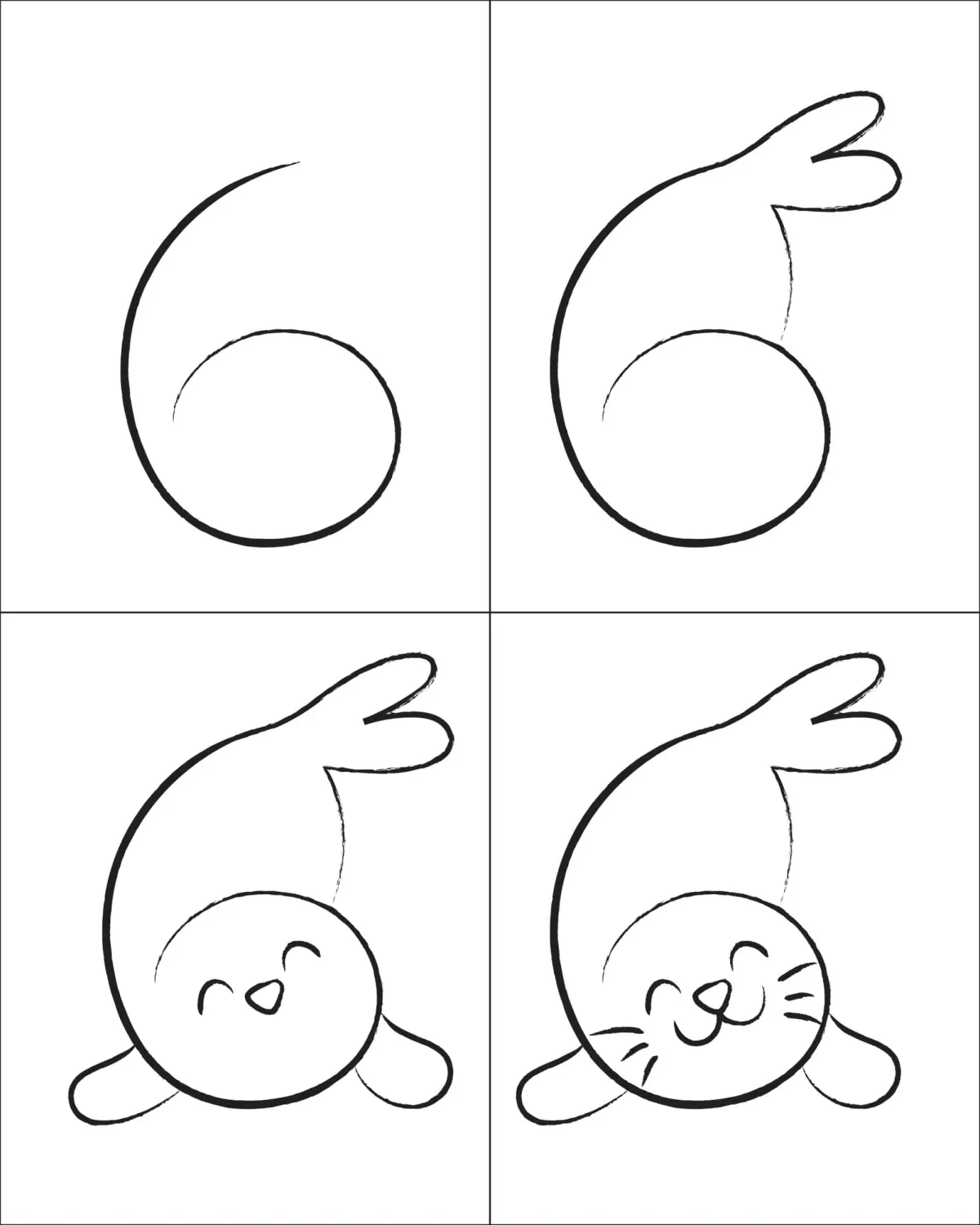
To begin your drawing, focus on the silhouette rather than intricate details. Seals are naturally bulbous, so start by sketching a large, horizontal oval for the body. Place a smaller, slightly flattened circle overlapping the front end to serve as the head. Keep your pencil lines light and loose during this stage, as you will refine the contours later to make the form look more fluid and organic.
Once you have the two primary shapes, connect them with smooth, curved lines to create a seamless transition between the head and the torso. Remember that seals do not have distinct necks; their bodies taper gracefully from the head to the tail. Avoid sharp angles or rigid lines, as these will detract from the "cute" aesthetic. Aim for a soft, pill-like appearance that suggests a cuddly, well-fed marine mammal resting comfortably on the ice or sand.
How to add facial features for a cute look
The key to making any animal appear cute is the "baby schema," which involves large eyes and a small snout. Place two large, dark circles near the center of the head, leaving enough space between them for a small, triangular nose. Position the nose slightly below the eyes to give the face a gentle, downward-sloping expression. Adding a small, subtle curve for the mouth will complete the friendly look.
To enhance the expressive quality of your seal, consider these specific details:
- Draw large, circular pupils with a small white highlight to suggest a glistening, curious gaze.
- Keep the nose small and rounded, often shaped like an inverted triangle or a soft heart.
- Add tiny, delicate whiskers extending from the muzzle using quick, light strokes to provide texture without cluttering the face.
- Place the ears as tiny, barely visible slits or small curves on the sides of the head to maintain a streamlined profile.
How to draw flippers and tail
Seals have distinct, paddle-like limbs that are essential for their movement in water. For the front flippers, draw two elongated, rounded shapes extending from the chest area. These should look like soft mittens attached to the body. Keep them tucked close to the torso if you want the seal to look relaxed, or angle them outward if you want to show the seal waving or moving.
The rear flippers are typically held together, forming a fan-like shape at the back of the body. Sketch this as a wide, flattened triangle or a semi-circle at the end of the tail. Adding a few subtle lines within the flippers can indicate the digits or webbing, but do not over-detail these areas. The goal is to maintain a simple, cartoon-like quality that complements the rest of the body. Follow these steps for the best results:
- Sketch the front flippers as soft, rounded extensions near the shoulder line.
- Outline the rear flippers as a single, unified fan shape at the bottom.
- Ensure the flippers are proportional to the body, keeping them relatively small to emphasize the seal's plumpness.
Common mistakes when drawing seals
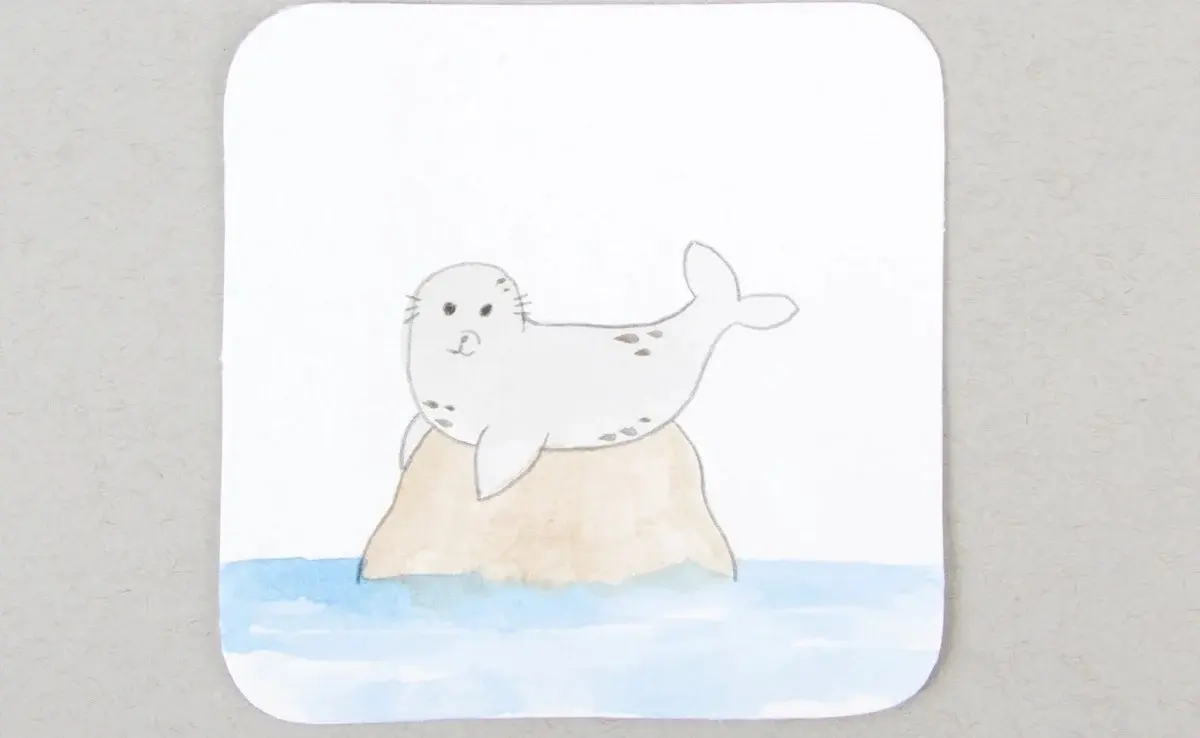
One of the most frequent errors is making the neck too defined or long. Seals have a very compact anatomy where the head flows directly into the chest, so drawing a distinct "neck" will make the seal look more like a dog or a bear. Always prioritize a continuous, smooth curve from the top of the head down to the back. If the transition looks too abrupt, simply erase the inner line and soften the curve.
Another common mistake is placing the eyes too far apart or too high on the head. Because the seal's face is somewhat flat, the eyes should be positioned centrally, close to the horizontal midline of the face. Additionally, beginners often make the body too thin or rectangular. Remember that a cute seal should look chubby and well-rounded; if your drawing looks too lean, increase the width of the oval shapes until the creature appears soft and portly.
Best tools for beginners to use
You do not need expensive equipment to create a charming seal drawing. A standard HB pencil is perfect for the initial sketch, as it allows for light, erasable lines. Pair this with a soft, white vinyl eraser to clean up your construction lines once the final form is established. For those who prefer digital art, a basic tablet with a pressure-sensitive stylus provides excellent control over line weight, which is vital for creating those soft, rounded edges.
If you are working with traditional media, consider using a fine-liner pen to trace your final sketch once you are satisfied with the proportions. This creates a clean, professional look that is common in character design. After inking, you can add color using soft pastels or colored pencils, focusing on muted grays, creams, or light browns. By keeping your tools simple and your focus on the rounded anatomy, you will successfully create an endearing seal illustration that captures the heart of your audience.
Key facts
- Seals have streamlined, spindle-shaped bodies designed for efficient swimming.
- A cute seal drawing emphasizes a large, rounded head and oversized, dark eyes.
- Use a soft "bean" or "oval" shape as the primary base for the body.
- Whiskers should be drawn as thin, slightly curved lines radiating from the muzzle.
- Keep limbs small and tucked close to the body to maintain a compact, circular silhouette.
- Simplify the flippers into rounded triangles rather than drawing individual digits.
The bottom line
Drawing a cute seal is an exercise in simplification and rounding. By focusing on a bean-shaped body, large glossy eyes, and soft, curved outlines, you can capture the essence of this marine mammal. Avoid sharp angles and overly complex details. By keeping the limbs small and the overall silhouette compact, you create a charming, approachable character that effectively captures the seal's natural, endearing charm.
People also ask
Should I use sharp or rounded lines when drawing a seal?
Always prioritize rounded lines and soft curves. Seals lack sharp angles in their natural anatomy, so using smooth, circular strokes helps convey their characteristic "cute" and cuddly appearance.
How do I make the eyes look expressive?
Draw large, solid black ovals and leave a tiny white circle inside to represent a highlight. This reflection makes the eyes appear glossy and lifelike, which is a key element of "cute" character design.
What is the best way to draw the seal's snout?
Start with a small, heart-shaped or triangular nose placed in the center of the face. Extend two small curves downward from the nose to form the mouth, keeping the expression neutral or slightly smiling.
How do I draw the flippers correctly?
Position the front flippers near the chest area and the back flippers pointing outward. Keep them simple and blob-like, as adding too much detail or complex anatomy can detract from the minimalist, cute aesthetic.
Should I add fur texture to the drawing?
Avoid drawing individual hairs, as this can make the seal look messy. Instead, use a smooth outline and perhaps a few small, subtle shading marks near the neck to suggest a soft, velvety coat.
What is a common mistake when drawing a seal?
A frequent error is making the neck too long or defined. Seals have very thick, short necks that blend directly into their bodies, so keep the transition between the head and torso seamless and wide.
This answer was created with the help of AI research tools and reference sources. Spotted an error? Let us know — we correct mistakes quickly. See our editorial policy.