How do you draw a chihuahua step by step?
Short answer
To draw a Chihuahua, focus on capturing its distinct apple-shaped head, large expressive eyes, and oversized, upright ears. Start by sketching basic geometric shapes to establish the proportions, then refine the features with delicate lines. By emphasizing these characteristic traits, you can create a recognizable and charming portrait of the breed.
On this page
How to draw a Chihuahua step by step
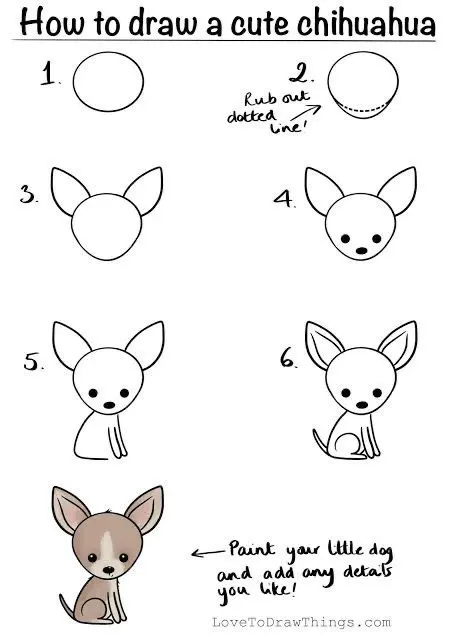
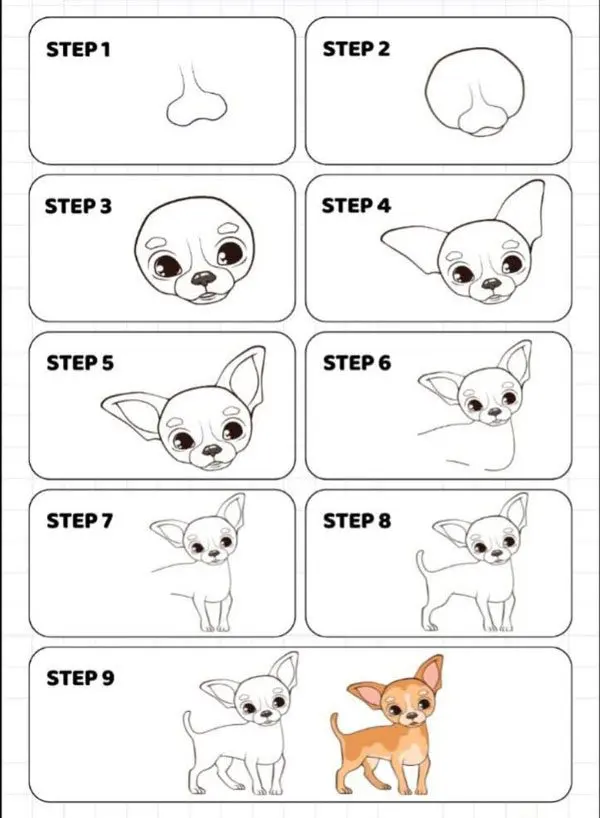
Drawing a Chihuahua requires attention to its unique anatomy, which differs significantly from larger dog breeds. Begin by sketching a circle for the head and a smaller, slightly elongated oval for the snout. The transition between the forehead and the muzzle, known as the stop, should be quite pronounced in this breed. Use light pencil strokes to map out these shapes, as you will refine them later.
Once the head structure is in place, add two large triangles on top of the head for the ears. Chihuahua ears are typically held erect and are quite large relative to their skull size. Connect the head to a small, compact body using a curved line for the neck and an oval for the torso. Keep the limbs slender and delicate, as Chihuahuas are known for their fine-boned, graceful appearance.
- Draw a circle for the head and add a small, tapered muzzle.
- Place two large, upright triangles on the head for ears.
- Sketch a small, compact body with thin, straight legs.
- Add a curved tail that arches over the back or hangs low.
- Refine the outline, adding details like eyes, a nose, and fur texture.
Best drawing techniques for beginners
When starting your sketch, focus on the "apple dome" skull shape, which is a hallmark of the breed. Beginners often make the mistake of drawing a flat forehead, but the Chihuahua’s head should be rounded and prominent. Use a soft lead pencil, such as an HB or 2B, to allow for easy erasing and adjustments as you refine your proportions. Do not press too hard initially, as heavy lines can make it difficult to correct errors in the underlying structure.
Observation is your most valuable tool when capturing the essence of the animal. Look at photographs of Chihuahuas to see how their large, dark eyes sit wide apart on the face. Practice drawing these features separately before attempting the full portrait. By mastering the individual components, you will find it much easier to assemble a cohesive and accurate drawing. Focus on the relationship between the size of the eyes and the overall head size to maintain proper balance.
How to capture Chihuahua facial expressions
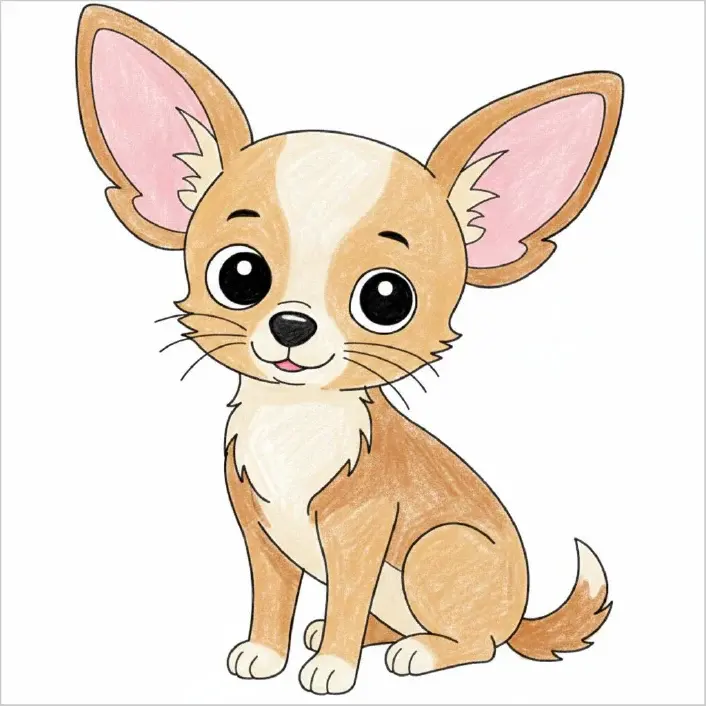
The face of a Chihuahua is highly expressive, often characterized by a "worried" or alert look. This is largely due to their large, luminous eyes and the way they hold their ears. To convey this, draw the eyes slightly bulging and set them deep into the skull. Adding a small highlight in the pupil can bring the drawing to life, making the dog appear attentive and sentient.
The nose should be small and dark, positioned at the very tip of the muzzle. Keep the mouth line simple, often drawn as a short, horizontal dash or a soft curve if the dog is panting. Avoid over-detailing the mouth, as a Chihuahua’s muzzle is quite short and delicate. Pay close attention to the space between the eyes; a wider gap often enhances the "cute" or "puppy-like" quality that many people associate with the breed.
- Use thin, light lines for the initial sketch.
- Place the eyes slightly lower than the center of the head circle.
- Keep the muzzle short to maintain breed-specific proportions.
- Add subtle shading around the eyes to give them depth.
- Use short, light strokes to suggest fur texture around the neck.
Common mistakes when drawing Chihuahuas
One of the most frequent errors is making the snout too long or pointed, which gives the drawing the appearance of a fox or a different dog breed. Chihuahuas have a very short, compact muzzle that stops abruptly at the forehead. Another common mistake is drawing the body too large or muscular. Remember that this is a toy breed; their frames should appear fragile and light rather than robust or heavy-set.
Additionally, many artists struggle with the scale of the ears. If the ears are drawn too small, the dog loses its signature look. Ensure the ears are wide at the base and taper to a point, standing tall above the head. If you find the ears look disconnected, check their placement relative to the top of the skull circle. They should appear to grow naturally from the sides of the head, framing the face effectively.
How to add realistic details to your drawing
Once the basic outline is complete, you can add texture to distinguish between the long-haired and short-haired varieties. For short-haired Chihuahuas, use very light, smooth shading to suggest a sleek coat. For long-haired versions, use slightly longer, flicking pencil strokes to mimic the appearance of soft, flowing fur, particularly around the ears and tail. Pay attention to the direction of the fur growth to ensure the drawing looks natural.
Finally, consider the background and the dog’s posture to add context to your work. A simple ground line or a small shadow beneath the paws can ground the figure and prevent it from appearing as if it is floating. Use a kneaded eraser to lift graphite for highlights on the nose or eyes, which adds a professional, polished finish. Take your time with these final touches, as they are what transform a basic sketch into a detailed and accurate representation of a Chihuahua.
Key facts
- Chihuahuas are defined by their distinct "apple-shaped" head, which is significantly rounder than other dog breeds.
- Their large, luminous eyes should be set wide apart to capture the breed's signature alert expression.
- The ears are a defining feature; they should be large, upright, and set at a 45-degree angle from the head.
- A Chihuahua's body is compact and square-proportioned, meaning the length from the shoulder to the rump is roughly equal to the height at the withers.
- When drawing, use light, sketchy lines for the initial frame to ensure the small, delicate limbs remain proportional to the torso.
- Avoid drawing the snout too long, as Chihuahuas possess a very short, slightly pointed muzzle that distinguishes them from terriers.
The bottom line
Drawing a Chihuahua requires a focus on specific anatomical markers, primarily the rounded apple-shaped head and the large, upright ears. By maintaining a compact, square-shaped body and keeping the muzzle short, you capture the essence of this toy breed. Practice sketching the basic geometric shapes first to ensure proper proportions, then refine the details to highlight the alert and spirited personality characteristic of the Chihuahua.
People also ask
Should I start with the head or the body when drawing a dog?
It is best to start with the head because it establishes the scale and perspective for the rest of the drawing. Once the head is placed, you can use its size to gauge the proportions of the body.
How do I make the Chihuahua look small?
To emphasize the breed's diminutive size, draw the legs thin and keep the overall frame compact. Using a slightly larger head-to-body ratio than you would for a larger dog breed helps convey their "toy" status.
What is the best way to draw the texture of short hair?
Use short, directional pencil strokes that follow the contours of the dog's muscles. Avoid long, flowing lines, as these make the dog look like it has a long or shaggy coat.
How do I draw the tail correctly?
The tail should be carried in a sickle shape or looped over the back. Keep it relatively thin and tapered toward the end to maintain the breed's elegant silhouette.
Why does my drawing look more like a cat than a dog?
This often happens if the snout is drawn too flat or the ears are placed too high on top of the head. Ensure the muzzle has a slight forward projection and the ears are set on the sides of the skull.
Is it better to use ink or pencil for a beginner?
Start with a graphite pencil to allow for easy corrections of the underlying shapes. Once the proportions are accurate, you can go over your lines with ink to add definition and contrast.
This answer was created with the help of AI research tools and reference sources. Spotted an error? Let us know — we correct mistakes quickly. See our editorial policy.