How do you draw an elf?
Short answer
Drawing an elf involves emphasizing elongated, pointed ears, slender features, and a graceful, ethereal posture. Start by sketching a basic human frame, then refine the silhouette with sharp angles and flowing lines. Focus on expressive eyes and elegant attire to capture the traditional fantasy aesthetic associated with these legendary woodland beings.
On this page
How to draw elf ears step by step
The defining feature of any elf is the ear, which should be drawn as an extension of the natural human shape but with a distinct, tapered point. Start by drawing a standard ear shape, then extend the upper cartilage into a sharp, elongated triangle that angles slightly backward. You should ensure the transition from the base of the ear to the tip is smooth rather than jagged to maintain a sense of elegance.
- Sketch a standard oval or "C" shape on the side of the head.
- Extend the top curve upward and outward into a sharp, pointed tip.
- Connect the tip back down to the middle of the ear’s outer edge.
- Add fine lines inside the ear to suggest cartilage and depth.
Avoid making the ears look like simple triangles glued to the side of the head. The ear must appear to grow organically from the skull, maintaining a realistic connection to the jawline and the hairline.
Best drawing techniques for beginners
When beginning your elf portrait, focus on the "gesture" of the character, which refers to the flow and movement of the pose. Elves are traditionally depicted as agile and light-footed, so use long, sweeping lines to construct the spine and limbs. Keep your initial sketches extremely light so you can easily refine the proportions later without leaving heavy graphite marks on the paper.
- Use a 2H pencil for light under-drawings to ensure easy erasing.
- Focus on "S-curves" in the body to create a sense of grace.
- Keep the neck slightly longer than a human’s to enhance the slender aesthetic.
- Use reference photos of dancers or gymnasts for inspiration regarding fluid posture.
By focusing on these rhythmic lines, you create a character that feels alive and nimble. Remember that beginners often make the mistake of drawing stiff, rigid figures, which contradicts the classic portrayal of elves as creatures of nature and fluid motion.
How to design elf facial features
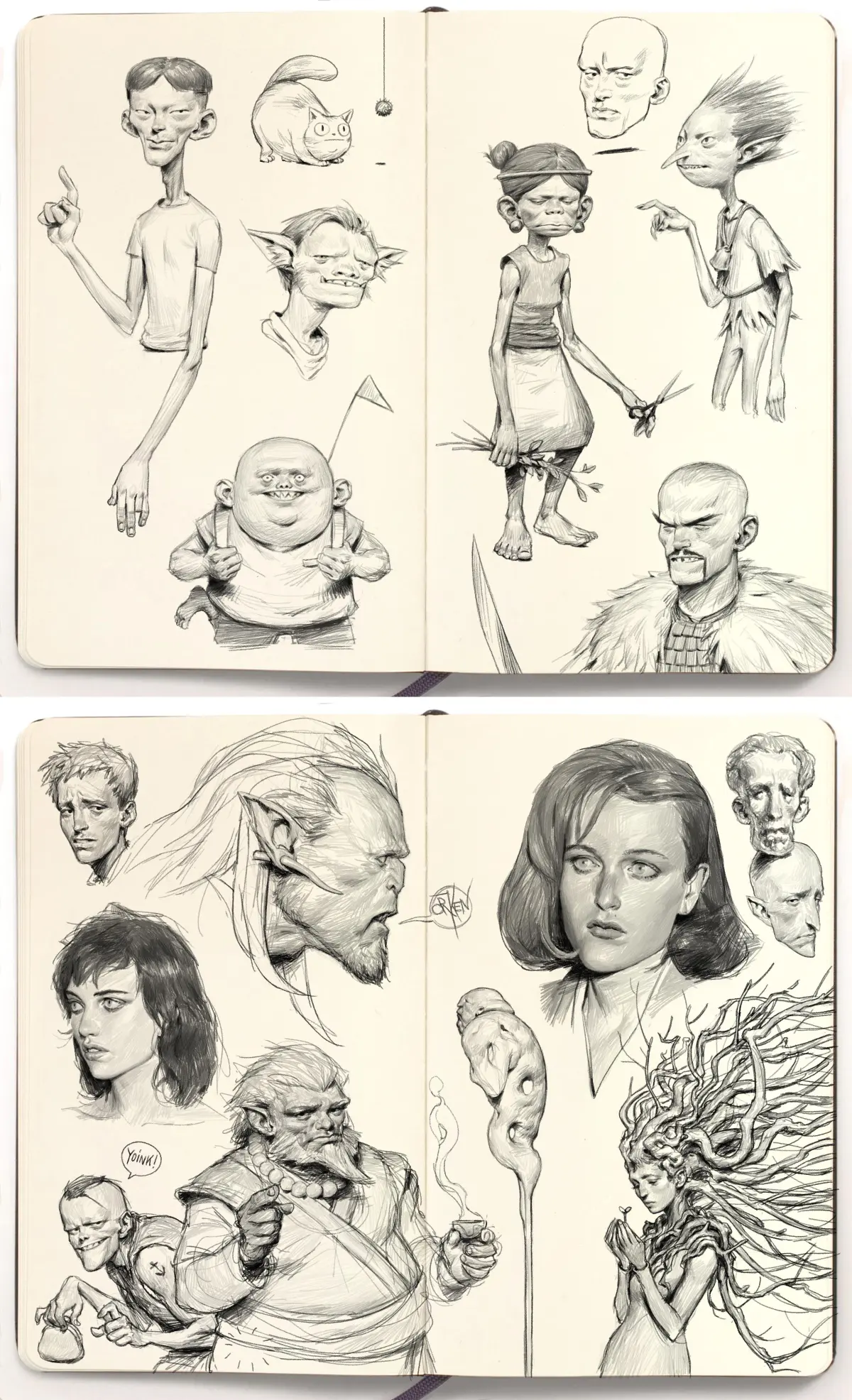
Elf faces are typically characterized by high cheekbones, narrow chins, and large, almond-shaped eyes that convey wisdom or mystery. When drawing the eyes, place them slightly further apart than you would for a human to give the face a more exotic, ethereal appearance. Keep the eyebrows thin and arched, as these features help emphasize the sharpness of the cheekbones and the overall delicate structure of the face.
The nose should be drawn with a thin, straight bridge, avoiding overly wide or bulbous shapes. You can add a slight point to the chin to complement the sharp ears, creating a cohesive visual language across the entire head. Ensure the lips are well-defined but not overly full, which keeps the face looking refined and aristocratic. This balance between sharp angles and smooth, flowing curves is the key to achieving a professional fantasy illustration style.
Common mistakes when drawing elves
One of the most frequent errors is failing to integrate the ears into the overall perspective of the head. If the head is turned, the ears must be foreshortened accordingly, meaning the ear further away should appear smaller and less detailed than the one in the foreground. Another common mistake is making the character look too much like a human with simple attachments; you must adjust the entire facial structure to match the pointed ears.
- Forgetting to adjust the ear shape based on the head's angle.
- Making the neck too thick, which ruins the slender, elegant elf silhouette.
- Over-detailing the skin, which can make the character look aged rather than timeless.
- Using heavy, blocky lines instead of fine, tapering strokes.
By maintaining a consistent style throughout the piece, you avoid the "uncanny valley" effect where the ears look like an afterthought. Always check your proportions by flipping your canvas or holding your drawing up to a mirror to spot imbalances.
Why anatomy matters for fantasy art
Even though elves are mythical, grounding your drawing in human anatomy makes the character more believable and engaging. Study the placement of muscles in the neck and shoulders to ensure that even a slender elf looks capable of movement and strength. Understanding where the collarbone sits or how the shoulder blades rotate allows you to draw your character in complex poses without the anatomy appearing broken or unnatural.
When you master the underlying structure, you can exaggerate features—such as making the fingers longer or the posture more upright—without losing the viewer's trust. This deliberate exaggeration is what separates a professional illustration from a amateur sketch. By learning the rules of human anatomy first, you gain the freedom to break them intentionally, creating a unique, high-quality elf that stands out in the crowded genre of fantasy art. Focus on the harmony between the realistic base and the fantastical elements to finalize your work.
Key facts
- Elves are traditionally defined by their pointed, leaf-shaped ears that extend outward or upward from the skull.
- Use a "gesture drawing" technique to establish a slender, graceful silhouette before adding details like clothing or hair.
- Focus on sharp, angular facial features such as high cheekbones and a narrow chin to evoke an ethereal, non-human appearance.
- Eyes should be drawn slightly larger than human proportions, often with an almond shape to enhance the mystical aesthetic.
- Incorporate natural elements like flowing fabrics, leaf-inspired patterns, or intricate vine-like jewelry to reinforce the connection to nature.
- Avoid drawing the ears too low; they should typically align between the top of the eyebrow and the bottom of the nose.
The bottom line
Drawing an elf requires balancing human anatomy with stylized, supernatural features. By mastering the pointed ear placement and emphasizing slender, graceful proportions, you can create a character that feels both grounded and mystical. Focus on nature-inspired details and sharp facial structures to distinguish your elf from human subjects. Practice these core elements consistently, and you will soon be able to render unique, high-fantasy characters with confidence.
People also ask
What is the best pencil grade for sketching an elf?
Use an HB pencil for initial light construction lines and a 2B or 4B pencil for darker, final details. These softer leads allow for better control when shading the delicate features of an elf.
How do I make an elf look more masculine or feminine?
Adjust the jawline and brow ridge to define gender; a sharper, more prominent brow often signifies a masculine elf. A softer, more rounded jawline and larger, more expressive eyes are common stylistic choices for a feminine elf.
Should I add wings to my elf drawing?
Wings are not a standard feature of traditional folklore elves, but they are common in modern fantasy art. If you choose to add them, ensure they are proportional to the body size so the character remains balanced.
How do I draw the ears so they look realistic?
Treat the ear as a continuation of the head's structure rather than an attachment. Ensure the cartilage curves naturally toward the point to avoid a "pasted-on" appearance.
What clothing styles suit an elf character?
Elves are frequently depicted in garments that suggest agility, such as tunics, leather armor, or flowing robes. Use earthy color palettes like forest greens, deep browns, and muted golds to ground the character in a woodland setting.
How can I make my elf look magical?
Add subtle glowing effects around the eyes or incorporate ethereal accessories like glowing crystals or floating ornaments. Long, flowing hair that seems to defy gravity can also suggest a supernatural origin.
This answer was created with the help of AI research tools and reference sources. Spotted an error? Let us know — we correct mistakes quickly. See our editorial policy.