How can I draw a beagle easily?
Short answer
Drawing a beagle involves capturing its signature floppy ears, sturdy build, and expressive, large eyes. By breaking the dog’s anatomy into basic geometric shapes like circles and ovals, you can establish a framework. Focus on the triangular ear shape and the gentle curve of the back to achieve a recognizable beagle silhouette.
On this page
How to sketch a beagle using basic shapes
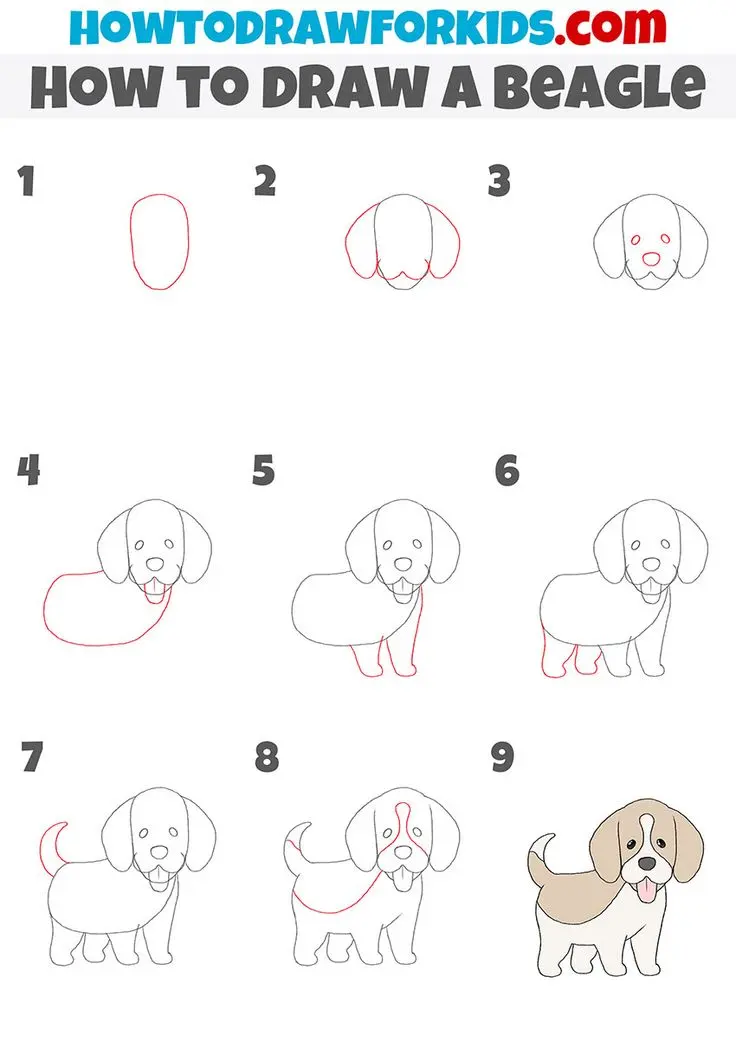
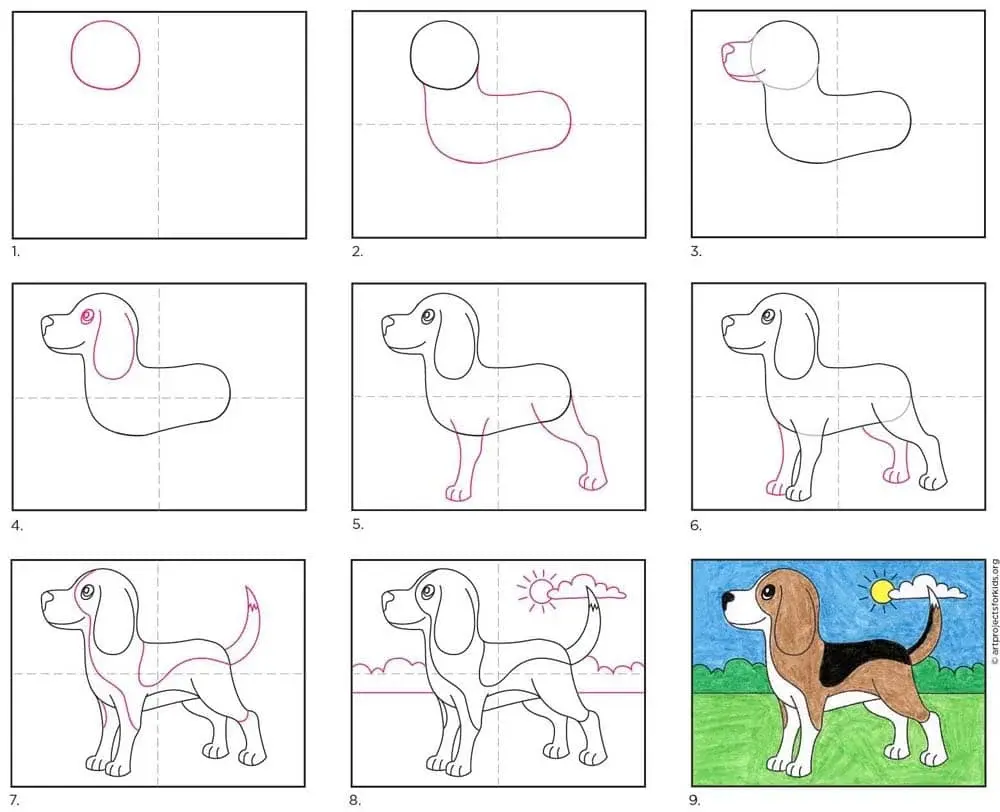
The most effective way to draw a beagle is to start with a skeletal framework composed of simple geometric forms. Begin by drawing a medium-sized circle for the head and a larger, slightly elongated oval for the chest cavity. Connect these with two curved lines to represent the neck, ensuring the neck appears thick and sturdy, which is a hallmark of the breed.
Once the main body masses are in place, add smaller circles for the joints and rectangles for the legs. Beagles are compact, muscular hounds, so avoid making the limbs too spindly or long. Keep your pencil strokes light during this phase, as these lines will serve only as a guide for the final contours. Refining these shapes early prevents proportion issues later in the drawing process.
- Draw a circle for the head and a larger oval for the torso.
- Add a smaller circle for the shoulder and hip placement.
- Connect these shapes with lines to establish the spine and neck.
- Sketch simple cylinders for the legs, keeping them relatively short.
How to capture the beagle's facial features
The beagle’s head is defined by its soft, rounded muzzle and deep, soulful eyes. Start by drawing a horizontal line across the center of your head circle to help align the eyes. Beagles typically have hazel or brown eyes that should be placed slightly apart, giving them a gentle, inquisitive expression. The nose should be broad and dark, positioned at the end of a square-shaped muzzle.
The ears are the most critical element for breed identification. They should be long, wide, and set low on the head, hanging down close to the cheeks. When drawing them, use a soft, rounded shape that tapers toward the bottom. Avoid making the ears look stiff or pointed; they should appear heavy and velvety, draping naturally against the skull.
- Use a soft "U" shape for the muzzle to keep it rounded.
- Place the ears starting from the middle of the head circle.
- Add a slight highlight in the eyes to make them look bright and alert.
- Keep the brow line soft to maintain the breed's friendly appearance.
Best techniques for drawing beagle fur and markings
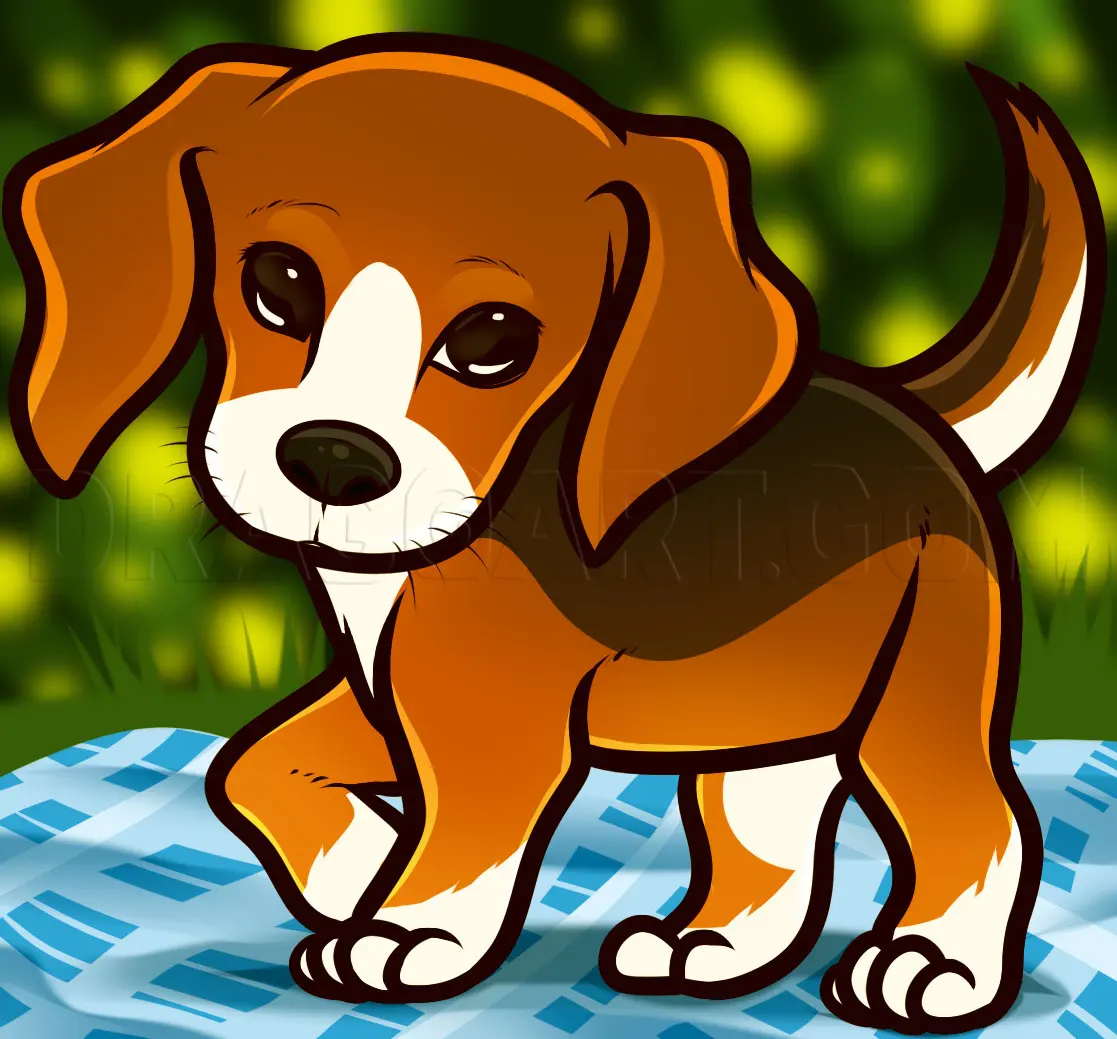
Beagles are famously tri-colored, featuring a combination of black, white, and tan. When shading your drawing, focus on the patches of color rather than individual hairs. Use light, directional strokes to suggest the texture of the coat, following the contours of the body. Start with the white areas on the chest and paws, keeping these sections clean and bright.
For the darker patches, use a cross-hatching technique to build up depth and shadow. The ears are typically dark, often black or deep brown, which provides a strong contrast to the lighter face. Remember that a beagle’s tail is usually tipped with white, a feature known as a "flag." Adding this small detail at the end of the tail helps solidify the accuracy of your portrait.
- Outline the boundaries of the color patches before shading.
- Use soft, short pencil strokes to mimic the direction of fur growth.
- Apply darker pressure for the black patches and lighter pressure for tan areas.
- Leave the white areas of the chest and belly mostly untouched by graphite.
Common mistakes when drawing beagles
A frequent error is making the beagle’s legs too long or thin. Beagles are sturdy, compact hounds, so their legs should look powerful and proportional to their body length. Another common mistake is drawing the ears too high on the head. If the ears start at the top of the skull, the dog will look more like a spaniel than a beagle. Always ensure the ears hang from the side of the head.
Furthermore, beginners often neglect the "stop," which is the transition point between the forehead and the muzzle. A beagle should have a moderate stop, meaning the forehead shouldn't be perfectly flat or overly sloped. If the muzzle connects to the head at an awkward angle, the dog’s face will lose its characteristic friendly, hound-like appearance. Adjusting these subtle angles makes a significant difference in the final result.
- Avoid drawing the legs like sticks; give them visible muscle mass.
- Do not place the eyes too close together, as this ruins the beagle's soft expression.
- Ensure the tail is not curled over the back; it should be held upright but not hooked.
- Watch the scale of the head; it should be large enough to look balanced with the torso.
How to add personality to your beagle drawing
To bring your beagle to life, focus on the posture and the tilt of the head. Beagles are curious and active, so drawing one with its head slightly cocked to the side suggests an alert, listening animal. You can also add a slight curve to the back or a raised paw to imply movement. These small adjustments move your drawing from a static diagram to a dynamic character study.
Finally, consider the environment. Placing your beagle on a simple patch of grass or near a scent trail adds context to the breed’s history as a tracking hound. Keep the background minimal so the focus remains on the dog’s anatomy. By combining accurate proportions with a sense of curiosity, you create a drawing that honors the unique spirit of the beagle while showcasing your technical skills as an artist.
Key facts
- Beagles are characterized by their sturdy, compact build and long, low-set ears that frame their faces.
- Start your sketch with a large circle for the head and a slightly larger oval for the body to establish proportions.
- The beagle’s muzzle is square-shaped, so avoid drawing a pointed or overly narrow snout.
- Draw the ears as long, rounded rectangles that hang down to the level of the mouth.
- A signature feature is the tail, which is moderately long and typically held upright with a white tip.
- Use light, sketchy lines initially to map out the anatomy before committing to darker, final outlines.
The bottom line
To draw a beagle effectively, prioritize its signature silhouette by emphasizing the long, low-set ears and a sturdy, compact body. Start with simple geometric shapes to establish the correct proportions, then refine the square muzzle and expressive eyes. By focusing on these distinct breed characteristics and avoiding overly thin features, you can create an accurate representation of this beloved hound with just a few simple steps.
People also ask
What is the most important feature to capture when drawing a beagle?
The most iconic features are the long, pendulous ears and the expressive, soulful eyes. Focusing on the soft curve of the ears and the slightly droopy lower eyelids will immediately make the drawing look like a beagle.
Should I use geometric shapes to help with the beagle's proportions?
Yes, using basic shapes like circles for the head and chest is the best way to maintain accuracy. Beagles are relatively short and stocky, so keep the legs proportional to the body's length.
How do I draw the beagle’s coat pattern correctly?
Beagles are typically tri-colored, featuring black, white, and brown patches. Use irregular, organic shapes to outline these color zones rather than rigid lines to make the fur look natural.
What common mistake should I avoid when sketching a beagle?
A common error is making the snout too long or thin like a greyhound. Beagles have a robust, shorter muzzle that should look solid and blunt at the end.
How do I make the eyes look realistic?
Draw the eyes as dark, rounded ovals and add a small white highlight to create a sense of depth. Placing the eyes slightly apart helps capture the breed's gentle and inquisitive expression.
Is it better to draw a beagle sitting or standing?
Drawing a beagle in a sitting position is often easier for beginners because it simplifies the leg anatomy. A sitting pose highlights the breed's compact, sturdy frame and makes the ears more prominent.
This answer was created with the help of AI research tools and reference sources. Spotted an error? Let us know — we correct mistakes quickly. See our editorial policy.