Are chimpanzees dangerous to humans?
Short answer
Yes, chimpanzees are extremely dangerous to humans. Despite their portrayal in media, they are wild animals with immense physical strength, unpredictable temperaments, and complex social hierarchies. Adult chimpanzees are significantly stronger than humans and possess the capacity for lethal aggression, making any direct interaction with them a severe safety risk.
On this page
Why are chimpanzees considered dangerous?
Chimpanzees are not the docile, human-like creatures often depicted in films. An adult male chimpanzee can weigh between 100 and 150 pounds and possesses muscle density roughly 1.3 to 1.5 times greater than that of an average human. This physical advantage allows them to exert force that can easily break human bones or cause deep lacerations with their powerful jaws.
Beyond raw strength, chimpanzees are highly territorial and possess a natural instinct for dominance. In the wild, they engage in organized group violence, including lethal raids against rival communities. When a chimpanzee perceives a human as a threat or a subordinate, it may react with explosive aggression. Their behavior is often unpredictable, and they lack the social inhibitions that prevent domestic animals from inflicting serious injury on humans.
How do chimpanzee attacks happen?
Attacks typically occur when a human encroaches on a chimpanzee's personal space or attempts to exert control over the animal. Chimpanzees are sensitive to body language, eye contact, and vocalizations. A perceived challenge, such as staring directly at an alpha male, can trigger an immediate, violent defensive response. These animals do not distinguish between play and aggression in the same way humans do, meaning a "playful" swipe can quickly escalate into a life-altering assault.
The most severe incidents have occurred in captive settings, such as the 2009 attack on Charla Nash by a pet chimpanzee named Travis. In that instance, the animal weighed nearly 200 pounds and inflicted catastrophic injuries in a matter of minutes. These events illustrate that even animals raised in human households retain their wild instincts and can revert to predatory or defensive violence without warning or clear provocation.
- Avoid direct, sustained eye contact, which is interpreted as a challenge.
- Never attempt to touch or feed a chimpanzee, as this invites physical proximity.
- Retreat slowly if a chimpanzee displays signs of agitation, such as hair standing on end or aggressive vocalizations.
- Do not show fear or run, as this may trigger a predatory chase response.
What are the warning signs of aggression?
Recognizing the body language of a chimpanzee is essential for anyone who might encounter one, such as researchers or park rangers. Before an attack, chimpanzees often exhibit specific behavioral cues that signal their intent to intimidate or strike. Ignoring these signals is a common mistake that leads to unnecessary conflict.
- Piloerection: The chimpanzee’s hair stands on end, making it appear larger and more intimidating.
- Displays: The animal may drag branches, stomp, or shake vegetation to assert dominance.
- Vocalizations: High-pitched screams, barks, or "pant-hoots" often precede an aggressive outbreak.
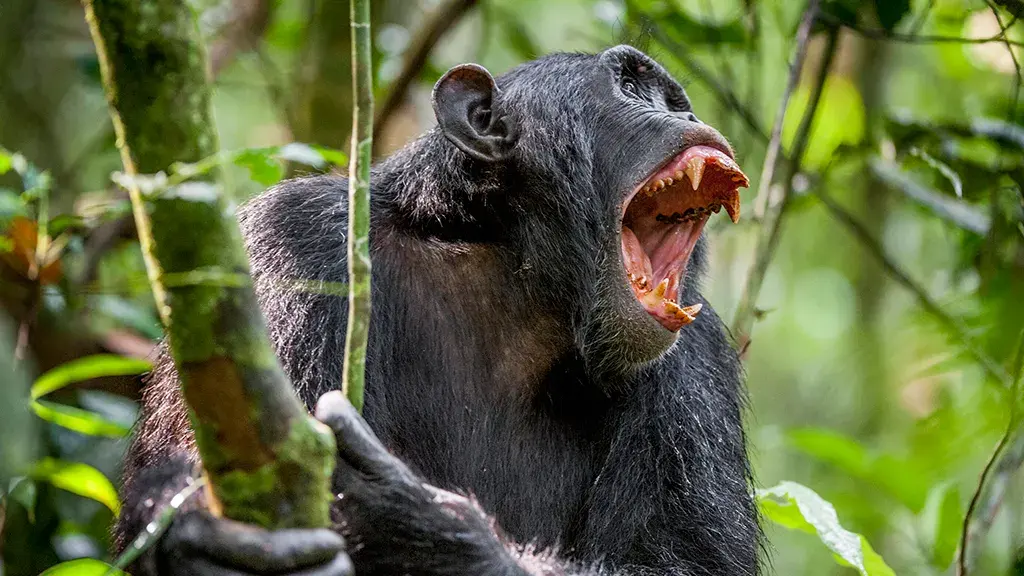
- Teeth baring: Showing teeth is not a smile; it is a sign of extreme tension or a threat.
If you observe these behaviors, you are already in a dangerous position. The animal is signaling that it feels threatened or is preparing to establish its dominance. At this point, the only safe course of action is to increase the distance between yourself and the animal immediately and calmly.
Common mistakes when interacting with chimpanzees
Many people mistakenly believe that because chimpanzees share a large portion of our DNA, they can be socialized like pet dogs or cats. This is a dangerous misconception. Chimpanzees are not domesticated; they are wild primates with complex, often violent, social structures. Treating them as companions ignores their fundamental need for dominance and their capacity for extreme, sudden violence.
Another major error is underestimating the speed and agility of these animals. Chimpanzees can move through trees and across the ground with incredible velocity, far outstripping human reaction times. People often assume they can retreat if a situation turns sour, but a chimpanzee can close the gap between itself and a human in a fraction of a second. Relying on distance as a safety buffer is often ineffective once an animal has decided to attack.
- Assuming that a "smiling" chimpanzee is friendly or happy.
- Attempting to intervene in a fight between two chimpanzees.
- Bringing food into an area where chimpanzees are present.
- Overestimating the efficacy of physical barriers like fences or glass.
How to stay safe around primates
The most effective way to remain safe is to maintain a significant distance and observe from a secure location. If you are in a habitat where chimpanzees live, always follow the guidance of local experts or park authorities. Never venture off marked trails, as this increases the likelihood of an accidental encounter.
If you find yourself in close proximity to a chimpanzee, keep your movements slow and deliberate. Do not make sudden gestures or loud noises, as these can be misinterpreted as threats. If the animal approaches you, do not attempt to fight back or use physical force, as this will almost certainly result in severe injury. Instead, prioritize your exit, keep your posture non-threatening, and move away until you are entirely out of the animal's sight. Prioritizing caution and respect for their space is the only way to ensure safety in their presence.
Key facts
- Adult chimpanzees are approximately 1.5 times stronger than an average human male.
- Chimpanzees possess canine teeth that can grow up to two inches long, capable of inflicting severe lacerations.
- Wild chimpanzees are territorial and have been documented hunting and killing other primates, including monkeys.
- A well-known 2009 incident involving Travis, a pet chimpanzee in Connecticut, resulted in a brutal attack that left the victim permanently disfigured.
- Never attempt to feed or make direct eye contact with a wild chimpanzee, as these actions are often interpreted as threats or challenges.
- If you encounter a chimpanzee, back away slowly while avoiding sudden movements or loud vocalizations.
The bottom line
Chimpanzees are powerful, intelligent, and inherently wild creatures that pose a significant danger to humans. Their immense physical strength, sharp teeth, and unpredictable behavior make them unsuitable for any form of casual interaction. Whether in the wild or captivity, maintaining a respectful distance is the only way to ensure safety. Always prioritize professional distance and avoid treating these primates as domesticated or friendly companions.
People also ask
Can chimpanzees be kept as safe household pets?
No, chimpanzees are wild animals with complex social needs and unpredictable aggression that cannot be managed in a domestic environment. They are physically powerful and prone to biting or scratching when they reach sexual maturity, making them unsuitable and dangerous as pets.
Do chimpanzees recognize humans as friends?
While chimpanzees can form bonds with human caretakers, they remain wild animals that retain their natural instincts. Even long-term relationships can turn violent instantly due to perceived slights or changes in the animal's hormonal state.
Are chimpanzees more aggressive than gorillas?
Chimpanzees are generally considered more volatile and prone to unprovoked aggression than gorillas. While gorillas are physically larger, they are typically more reserved and will often issue warnings before charging, whereas chimpanzees can become hostile without clear signals.
What should I do if a chimpanzee charges at me?
Do not run, as this will trigger the animal's predatory chase instinct. Instead, stand your ground, avoid direct eye contact, and slowly retreat while keeping your body sideways to appear less threatening.
Are young chimpanzees safe to interact with?
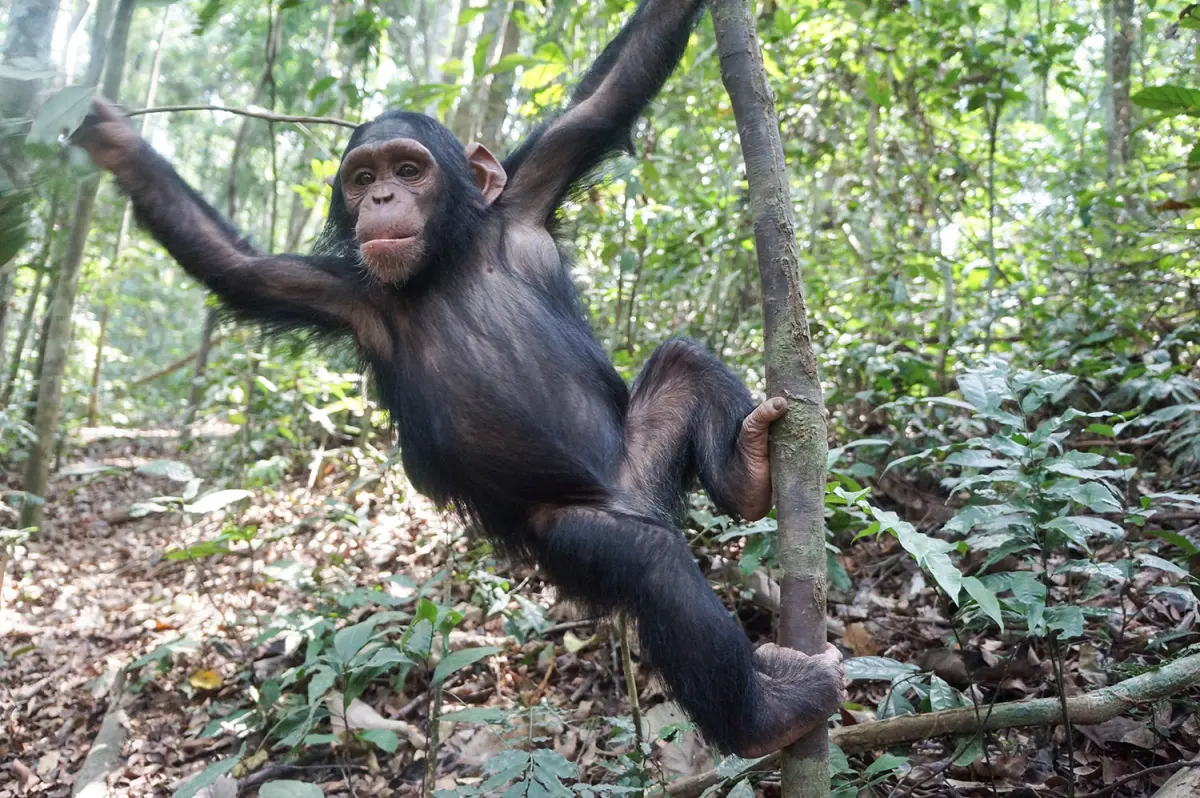
Even infant or juvenile chimpanzees can be dangerous because they possess sharp teeth and unpredictable temperaments. Furthermore, their presence often means a protective mother is nearby, which significantly increases the risk of a defensive attack.
Do chimpanzees carry diseases that can infect humans?
Yes, because chimpanzees share approximately 98 percent of our DNA, they can easily transmit zoonotic diseases. Viruses like Ebola, tuberculosis, and various respiratory infections can pass between humans and chimpanzees with high efficacy.
This answer was created with the help of AI research tools and reference sources. Spotted an error? Let us know — we correct mistakes quickly. See our editorial policy.