Why do birds sing in the morning?
Short answer
Birds sing during the dawn chorus primarily to defend their territory and attract potential mates. The calm, cool air of early morning carries sound waves more efficiently than the warmer air later in the day. By vocalizing at sunrise, males establish their presence and signal their fitness to competitors and females alike.
On this page
Why do birds sing in the morning?
The dawn chorus occurs because the early morning environment provides the optimal acoustic conditions for long-distance communication. As the sun begins to rise, the air is typically still and stable, which minimizes atmospheric turbulence. This allows bird songs to travel significantly farther than they would during the heat of the day, when rising thermal currents distort sound waves.
Beyond physics, biological rhythms play a critical role in this timing. Most songbirds are diurnal, meaning they are active during the day and rest at night. As light levels increase, the bird’s internal clock triggers the production of hormones that stimulate vocalization. This period is also when foraging is less efficient due to lower light, allowing birds to dedicate their energy to territory maintenance without missing out on essential feeding opportunities.
How to identify birds by their morning songs
To distinguish between different species, focus on the rhythm, pitch, and repetition of the song. Many birds, such as the American Robin or the Northern Cardinal, have distinct, melodic phrases that are easy to memorize. Beginners should start by listening for the "anchor" species in their local area, which are the most common birds that sing consistently every morning.
Use these steps to improve your bird identification skills:
- Record the song on your smartphone to compare it later with online databases.
- Observe the bird's posture; species like the House Finch often sing from the very top of a tree.
- Note the time of day, as some species, such as the Wood Thrush, prefer the dim light of very early dawn.
- Use a field guide app to match the visual description with the auditory pattern you heard.
Which birds participate in the dawn chorus?
Not all birds sing at the same time, as there is a specific order to the dawn chorus. Larger birds with lower-pitched voices often start singing first, while smaller birds with higher-pitched songs join in as the light increases. This staggered timing helps reduce competition for auditory space, ensuring that each species can be heard clearly by its intended audience.
Common participants in the chorus include:
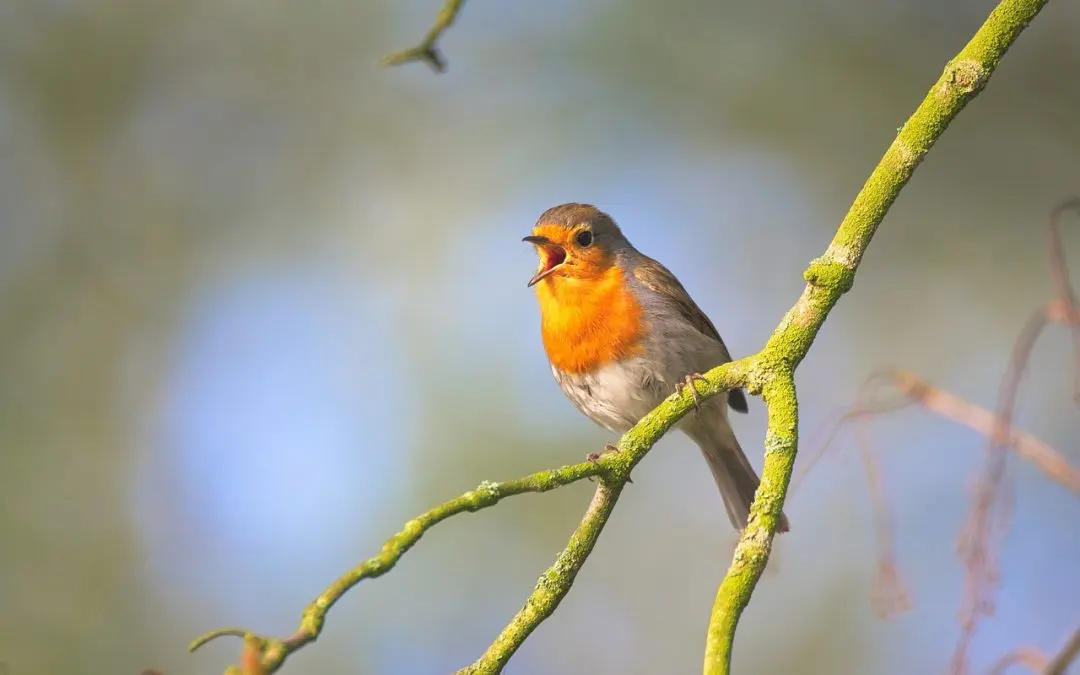
- American Robin: Known for its cheerful, rhythmic "cheerily, cheer up" song.
- Northern Cardinal: Recognized by its loud, clear whistles and metallic chips.
- Mourning Dove: Distinctive for its soft, mournful cooing sounds.
- Song Sparrow: Famous for its complex, variable melodies that often start with a series of notes.
- Black-capped Chickadee: Identified by its simple, two-note "fee-bee" whistle.
Common mistakes when observing morning birds
One frequent error is assuming that all singing birds are male. While it is true that males perform the majority of territorial singing, females of many species—including Northern Cardinals and Baltimore Orioles—also sing. Ignoring the possibility of female vocalization can lead to incomplete data when tracking bird populations or individual behavior in your backyard.
Another common mistake is excessive movement or noise during the observation period. Birds are highly sensitive to vibrations and sudden shadows, which can cause them to stop singing abruptly. To get the best experience, find a comfortable spot, sit quietly, and remain still for at least twenty minutes. Avoid wearing bright colors or using strong perfumes, as these can alert birds to your presence and alter their natural behavior.
How to encourage birds to sing in your yard
Creating a habitat that supports nesting and foraging is the most effective way to invite songbirds to your property. Provide a variety of native plants that offer both shelter and food, such as berry-producing shrubs or seed-bearing flowers. A consistent water source, such as a shallow birdbath, is also essential for attracting birds, as they need to bathe and drink frequently.
Follow these practices to maintain a bird-friendly environment:
- Leave dead trees or branches standing if they are safe, as these provide excellent singing perches.
- Avoid using chemical pesticides, which reduce the population of insects that many songbirds rely on for protein.
- Install nesting boxes specifically designed for the species native to your region.
- Keep cats indoors, as domestic predators are a primary cause of stress and mortality for songbirds.
- Provide high-quality birdseed in feeders, but ensure they are cleaned regularly to prevent the spread of avian diseases.
Key facts
- The morning chorus occurs because low light levels make it difficult for birds to forage, leaving them time to sing.
- Sound travels up to 20 times farther in the cool, still air of dawn compared to the heat of midday.
- Males sing primarily to defend their territory from rivals and to attract potential mates.
- Songbirds possess a specialized vocal organ called the syrinx, which allows them to produce complex, multi-layered sounds.
- Most singing is done by males, though in some species like the Northern Cardinal, females also sing to communicate.
- To identify birds by their morning songs, record the audio on your phone and use identification apps like Merlin Bird ID.
The bottom line
The morning chorus is a strategic biological performance driven by the physics of sound and the necessity of survival. By singing during the calm, low-light hours of dawn, birds maximize the reach of their territorial claims and mating signals. Understanding these natural rhythms provides a window into avian behavior, showing how birds balance the high energy cost of vocalization with the daily demands of foraging and nesting.
People also ask
Do birds sing at night?
Yes, nocturnal singers like mockingbirds, nightingales, and whip-poor-wills sing after dark to defend territory or attract mates. This behavior is often triggered by artificial light pollution in urban areas.
Why do birds stop singing as the day progresses?
As the sun rises, birds must prioritize foraging for food and tending to their nests. Additionally, the increasing wind and ambient noise make it harder for their songs to be heard.
Is there a specific order in which birds start singing?
Yes, species with larger eyes, such as American Robins, begin singing earlier because they can see in lower light levels. Smaller birds typically wait until there is more light to begin their performances.
Does singing consume a lot of energy for birds?
Singing is a high-energy activity that requires significant oxygen and physical exertion. A bird’s ability to sing loudly and frequently acts as a signal of its overall health and fitness.
Can I encourage birds to sing in my garden?
You can attract singing birds by planting native shrubs for cover and providing consistent water sources. Avoid using chemical pesticides to ensure a healthy insect population for them to eat.
Why do some birds sing in the fall?
While spring singing is linked to breeding, fall singing often happens as young birds practice their vocalizations. Adults may also sing to re-establish territorial boundaries before winter migration.
This answer was created with the help of AI research tools and reference sources. Spotted an error? Let us know — we correct mistakes quickly. See our editorial policy.