What is plankton?
Short answer
Plankton are diverse organisms that drift in water columns, unable to swim against currents. They range from microscopic bacteria and algae to large jellyfish. These organisms form the foundation of aquatic food webs, providing essential nutrients for marine life and generating a significant portion of the Earth’s oxygen through photosynthesis.
On this page
What are the different types of plankton?
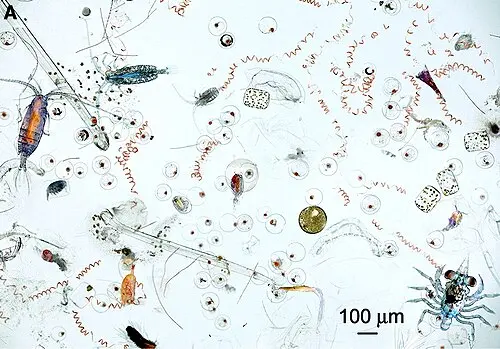
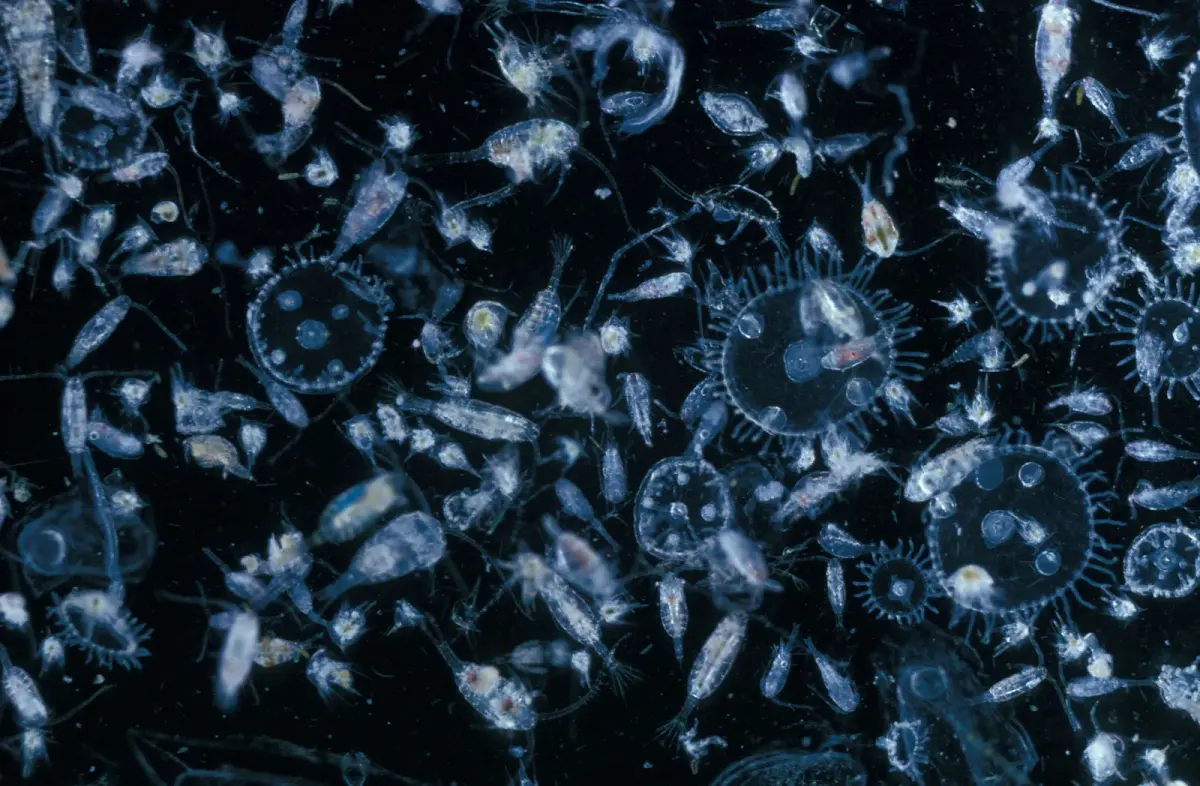
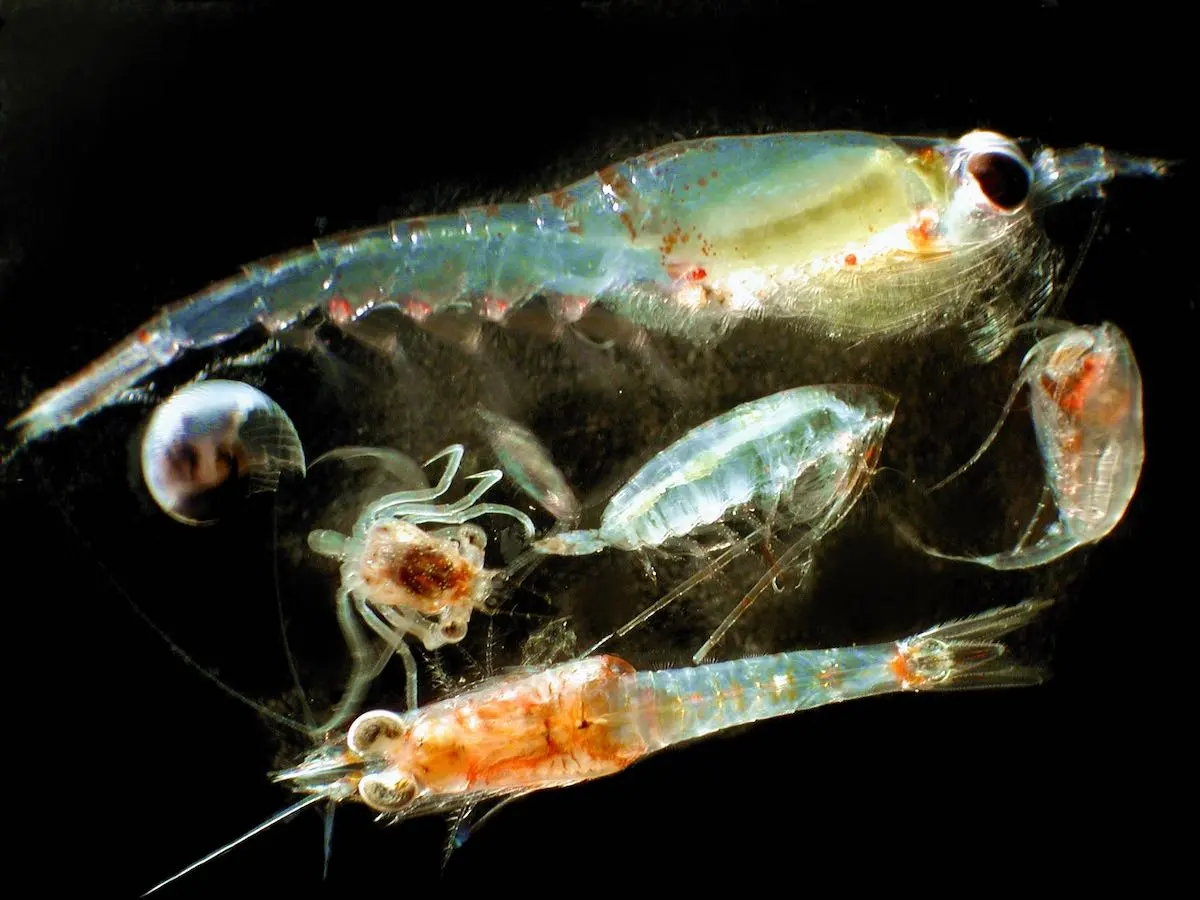
Plankton are categorized primarily by their biological nature and their method of obtaining energy. Phytoplankton are plant-like organisms, such as diatoms and dinoflagellates, which perform photosynthesis. Zooplankton, by contrast, are animal-like organisms that consume other plankton or organic matter to survive. This group includes tiny crustaceans like copepods, as well as the larval stages of fish, crabs, and starfish.
Beyond these two main categories, scientists also classify plankton based on their life cycle. Holoplankton spend their entire life cycle as plankton, drifting perpetually through the water. Meroplankton are only planktonic for a portion of their lives, typically during their larval stages before they settle on the seafloor or develop into larger, free-swimming adults. Understanding these distinctions helps researchers track how marine populations shift and evolve over time.
- Phytoplankton: Microscopic producers that convert sunlight into energy.
- Zooplankton: Consumers that feed on phytoplankton or other zooplankton.
- Holoplankton: Organisms that remain plankton for their entire existence.
- Meroplankton: Organisms that are planktonic only during early life stages.
Why is plankton important to the ecosystem?
Plankton serve as the essential bedrock for nearly all aquatic food webs. Phytoplankton are primary producers, capturing solar energy and turning it into organic carbon that supports everything from tiny krill to massive blue whales. Without this constant supply of energy, the complex hierarchy of marine life would collapse, as higher-level predators rely on the biomass generated by these microscopic organisms.
Beyond the food web, plankton play a critical role in the global climate. Phytoplankton are responsible for producing approximately 50 percent of the oxygen in our atmosphere through photosynthesis. They also act as a massive carbon sink, absorbing carbon dioxide from the atmosphere and sequestering it in the deep ocean when they die and sink. This process, known as the biological pump, is a vital mechanism for regulating global temperatures and mitigating the effects of greenhouse gas emissions.
How do you observe plankton in the wild?
Observing plankton requires specialized equipment because most specimens are invisible to the naked eye. To get started, you will need a plankton net, which is a fine-mesh funnel designed to filter water while retaining the organisms inside. You should also have a set of glass slides, a cover slip, and a compound microscope with at least 40x magnification to see the intricate details of their structures.
- Locate a calm area of water, such as a pier or a sheltered bay, away from heavy boat traffic.
- Slowly tow your plankton net through the water for several minutes to collect a sample.
- Carefully transfer the concentrated sample into a glass vial using a pipette.
- Place a drop of the sample onto a slide and examine it under the microscope.
- Use a field guide to identify the various shapes and movement patterns of the organisms.
Common mistakes when studying plankton
A frequent error for beginners is using a net with a mesh size that is too large. If the holes in the netting are wider than the organisms, the plankton will simply pass through, resulting in an empty sample. Always check the mesh size, typically measured in micrometers, to ensure it matches the specific size range of the plankton you intend to study.
Another mistake is failing to keep the samples cool and aerated during transport. Plankton are highly sensitive to changes in temperature and oxygen levels; if they are left in a warm, crowded container, they will quickly perish and decompose. This makes it difficult to observe their natural behavior under a microscope. To avoid this, keep your samples in a shaded, cool environment and examine them as soon as possible after collection to ensure you are viewing live, active specimens.
Where do plankton live in the ocean?
Plankton are found in virtually every body of water on Earth, from freshwater lakes to the deepest parts of the ocean. However, they are not distributed evenly. Phytoplankton are restricted to the photic zone, the upper layer of water where sunlight can penetrate, because they require light for photosynthesis. Because of this, you will find the highest concentrations of plankton in areas where nutrient-rich water rises from the depths to the surface.
These nutrient-rich events, known as upwelling, occur when winds push surface water away from the coast, allowing colder, deeper water to replace it. This process brings essential minerals like nitrates and phosphates to the surface, fueling massive blooms of plankton. While zooplankton are also found in the photic zone, they often perform a daily vertical migration, moving to deeper, darker waters during the day to avoid predators and rising to the surface at night to feed.
Key facts
- Plankton are organisms that cannot swim against a current, meaning they drift wherever the water takes them.
- The term plankton refers to a functional group defined by movement, not a specific biological classification like plants or animals.
- Phytoplankton are microscopic, plant-like organisms that produce roughly 50 percent of the Earth's oxygen through photosynthesis.
- Zooplankton are the animal component, ranging from tiny single-celled protozoa to large jellyfish.
- Many marine animals, including blue whales and basking sharks, rely entirely on plankton as their primary food source.
- To observe plankton at home, use a fine-mesh net to collect water samples and view them under a microscope with at least 40x magnification.
The bottom line
Plankton are the drifting foundation of aquatic ecosystems, encompassing everything from microscopic algae to large jellyfish. By converting sunlight into energy and serving as the primary food source for countless marine species, they sustain life across the world’s oceans. Understanding these organisms is essential for grasping how marine environments function and how they contribute to the global oxygen supply and climate regulation processes.
People also ask
What is the difference between phytoplankton and zooplankton?
Phytoplankton are autotrophs that create their own energy from sunlight, acting as the base of the marine food web. Zooplankton are heterotrophs that must consume other organisms, such as phytoplankton or smaller zooplankton, to survive.
Do all plankton stay plankton for their entire lives?
Not necessarily, as many species are holoplankton, meaning they remain plankton forever. Others are meroplankton, which are only planktonic during their larval stages before growing into creatures like crabs, starfish, or fish.
Why are plankton important to the global climate?
Plankton play a critical role in the carbon cycle by absorbing carbon dioxide from the atmosphere during photosynthesis. When they die, they sink to the ocean floor, effectively sequestering that carbon in deep-sea sediments for centuries.
Can you see plankton with the naked eye?
While most phytoplankton are microscopic, some zooplankton are visible without tools. Jellyfish are the most famous example of macroplankton, but you can also spot tiny copepods or krill if the water density is high enough.
What is a plankton bloom?
A bloom occurs when conditions such as light, temperature, and nutrient levels become ideal, causing a rapid population explosion. These blooms can be so massive that they are visible from space as large, discolored patches in the ocean.
Is it safe to swim in water with high plankton concentrations?
Generally, yes, but some blooms, known as harmful algal blooms or red tides, produce toxins. These can cause skin irritation or respiratory issues in humans, so it is best to avoid swimming in discolored or foul-smelling water.
This answer was created with the help of AI research tools and reference sources. Spotted an error? Let us know — we correct mistakes quickly. See our editorial policy.