Who was Thomas Edison?
Short answer
Thomas Edison was a prolific American inventor and businessman who held 1,093 U.S. patents. He revolutionized modern life by developing the practical incandescent light bulb, the phonograph, and the motion picture camera. His work established the first industrial research laboratory, setting the standard for how technological innovation is conducted today.
On this page
What were Thomas Edison's most famous inventions?
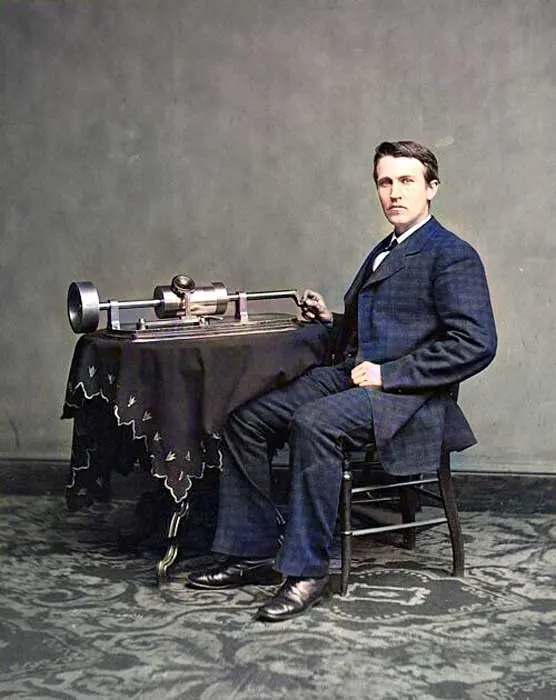
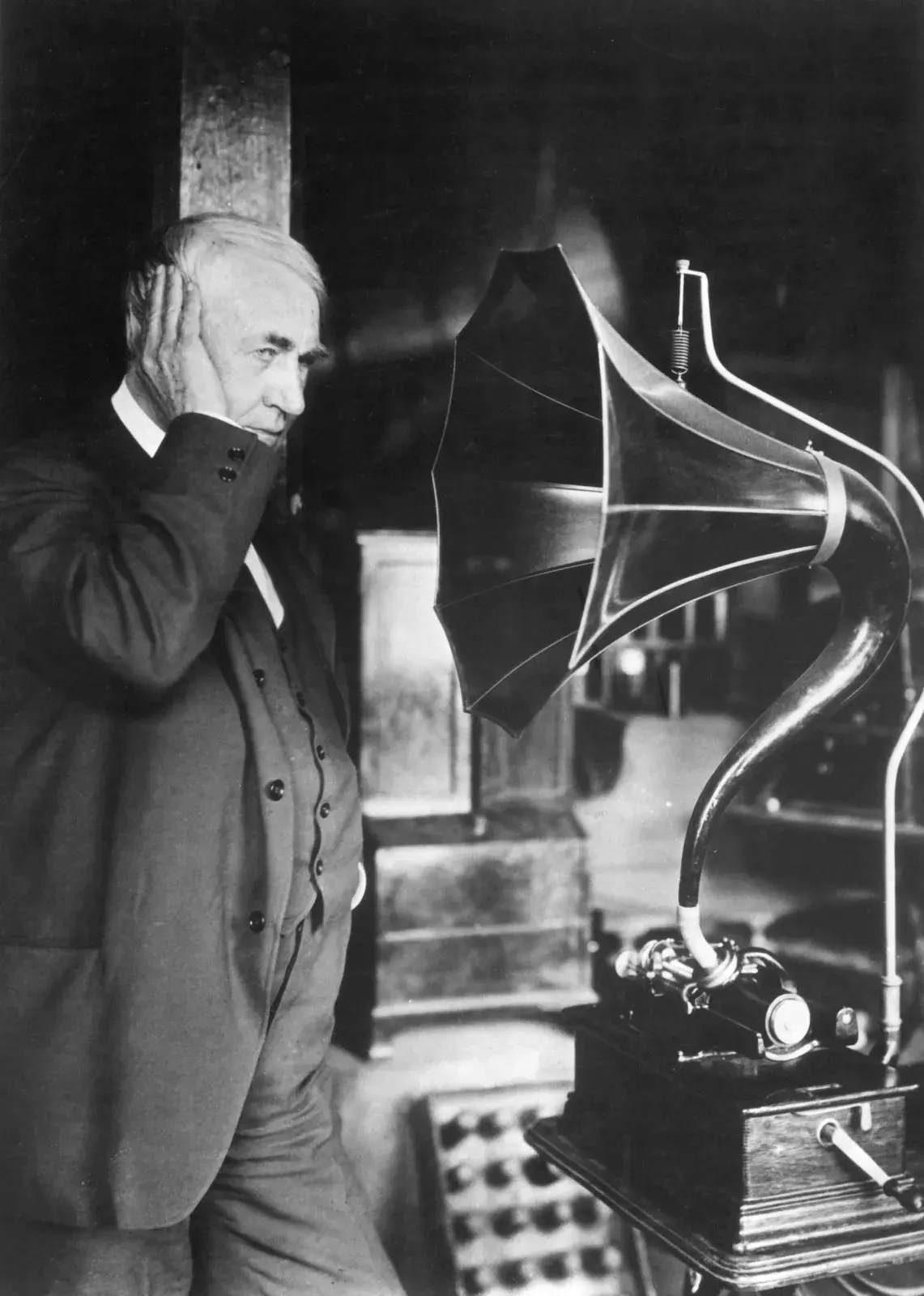
Edison’s legacy is defined by devices that fundamentally altered human communication and daily existence. In 1877, he invented the phonograph, the first machine capable of recording and reproducing sound. This discovery surprised the scientific community and earned him the nickname "The Wizard of Menlo Park." Shortly thereafter, he focused on creating a long-lasting, commercially viable incandescent light bulb. While others had experimented with electric light, Edison perfected the carbon filament, which allowed the bulb to burn for hundreds of hours.
Beyond these, Edison contributed significantly to the infrastructure of the modern age. His inventions include:
- The Kinetoscope, a precursor to the modern motion picture projector.
- The alkaline storage battery, designed for electric vehicles.
- The carbon microphone, which vastly improved the clarity of telephone transmissions.
- The mimeograph, an early office machine for duplicating documents.
These inventions were not merely scientific curiosities; they were designed for mass production, ensuring that his technological advancements reached homes and businesses across the globe.
How did Edison create his research laboratory?
In 1876, Edison established a laboratory in Menlo Park, New Jersey, which is widely considered the first industrial research and development facility. Unlike previous inventors who worked in isolation, Edison employed a team of skilled machinists, scientists, and engineers. This collaborative environment allowed for rapid prototyping and iterative testing. He believed that innovation was a process of trial and error rather than a sudden stroke of genius.
The laboratory operated on a strict, high-pressure schedule to maximize productivity. Edison’s approach involved:
- Identifying a specific market need or consumer problem.
- Conducting exhaustive research into existing materials and methods.
- Testing hundreds, sometimes thousands, of variations until a solution was found.
- Securing patents to protect the intellectual property of the team.
This systematic method of invention transformed the way companies approach development. By focusing on teamwork and commercial viability, he successfully bridged the gap between abstract scientific theory and practical, everyday application.
Why did the War of the Currents happen?
The "War of the Currents" was a fierce commercial and technological rivalry in the late 1880s between Edison and George Westinghouse. Edison championed Direct Current (DC), which flowed in one direction and was safe for short-distance power delivery. However, DC power was difficult to transmit over long distances without significant energy loss. Westinghouse, supported by Nikola Tesla, advocated for Alternating Current (AC), which could be stepped up to high voltages for efficient long-distance transmission.
Edison viewed AC as a threat to his established DC power plants and his financial interests. He launched a public campaign to discredit AC, even going so far as to publicly demonstrate the dangers of high-voltage electricity. Despite these efforts, the superior efficiency and scalability of the AC system eventually won out. By the 1890s, AC became the standard for the electrical grid. This conflict remains a classic case study in how technological standards are set and how competition can drive rapid, albeit sometimes contentious, industry evolution.
Common mistakes when studying Edison's life
Many people mistakenly believe that Edison was a solitary genius who invented everything from scratch. In reality, he was a master of improvement and integration. He often took existing concepts—such as the arc lamp or the telephone transmitter—and refined them into practical, reliable products. Another common error is ignoring the role of his business acumen. Edison was as much a financier and marketer as he was an inventor, often securing venture capital to scale his projects.
To gain an accurate understanding of his life, avoid these pitfalls:
- Do not assume every invention bearing his name was his sole creation; he relied heavily on his staff.
- Do not overlook his failures, such as his expensive attempt to mine iron ore, which nearly bankrupted him.
- Do not characterize him merely as a scientist; he was primarily an entrepreneur who prioritized commercial success.
Viewing Edison through a balanced lens allows one to appreciate the complexity of his career. He was a man of intense work ethic who navigated the transition from the artisanal era to the industrial age.
How can modern innovators learn from his methods?
Aspiring inventors can learn much from Edison’s philosophy of persistence and market-driven design. He famously stated that genius is "one percent inspiration and ninety-nine percent perspiration." This mindset encourages individuals to focus on the grit required to see a project through to completion. Rather than waiting for a perfect idea, modern innovators should focus on identifying pain points in everyday life and iterating on potential solutions until they are functional and affordable.
When applying his methods to your own projects, follow these principles:
- Document every failure as a learning step rather than a dead end.
- Seek out collaborators who possess skills that complement your own weaknesses.
- Prioritize the user experience to ensure your invention is actually useful to people.
- Protect your ideas through legal channels early in the development process.
By emphasizing practical utility over pure theory, you can emulate the spirit of the Menlo Park laboratory. Edison’s life proves that consistent, disciplined effort is the most reliable path to achieving significant technological change in any era.
Key facts
- Thomas Edison was born on February 11, 1847, in Milan, Ohio, and died on October 18, 1931.
- He held 1,093 U.S. patents, the most granted to any individual inventor at the time.
- His Menlo Park, New Jersey, laboratory is considered the world's first industrial research facility.
- To improve your own productivity, adopt his habit of rigorous experimentation and meticulous note-taking.
- Avoid the common mistake of giving up too early; Edison famously viewed failed experiments as learning steps rather than defeats.
- Focus on practical utility, as Edison prioritized inventions that solved specific problems, such as the phonograph and the incandescent light bulb.
The bottom line
Thomas Edison was a prolific American inventor and businessman who fundamentally shaped the modern world through his dedication to industrial research. By transforming the process of innovation into a systematic, team-based endeavor, he successfully commercialized technologies like the light bulb and the phonograph. His legacy serves as a testament to the power of persistence, iterative testing, and the practical application of scientific discovery in daily life.
People also ask
Did Thomas Edison invent the light bulb?
Edison did not invent the first light bulb, but he created the first commercially practical incandescent light. He developed a high-resistance carbon filament that allowed bulbs to burn for hundreds of hours.
What was Edison’s most famous invention?
The phonograph, invented in 1877, is often cited as his most original achievement. It was the first device capable of both recording and reproducing sound.
How did Edison’s education influence his work?
Edison received very little formal schooling and was largely taught by his mother. This unconventional upbringing fostered his self-reliance and lifelong curiosity for scientific experimentation.
What was the "War of the Currents"?
This was a commercial rivalry between Edison and George Westinghouse over electrical power distribution. Edison championed Direct Current (DC), while Westinghouse promoted Alternating Current (AC), which eventually became the standard.
How many times did Edison fail before succeeding?
Edison often claimed he did not fail, but rather found thousands of ways that did not work. This mindset was essential to his development of the alkaline storage battery and the light bulb.
What is the significance of the motion picture camera?
Edison’s Kinetograph and Kinetoscope were foundational to the film industry. They allowed for the capture and viewing of moving images, laying the groundwork for modern cinema.
This answer was created with the help of AI research tools and reference sources. Spotted an error? Let us know — we correct mistakes quickly. See our editorial policy.