Who invented the compass?
Short answer
The magnetic compass was invented in China during the Han dynasty, between the 2nd century BCE and the 1st century CE. Initially used for geomancy and fortune-telling rather than navigation, the device utilized lodestone, a naturally magnetized iron ore. By the 11th century, it had been adapted for maritime travel and orientation.
On this page
Who actually invented the compass?
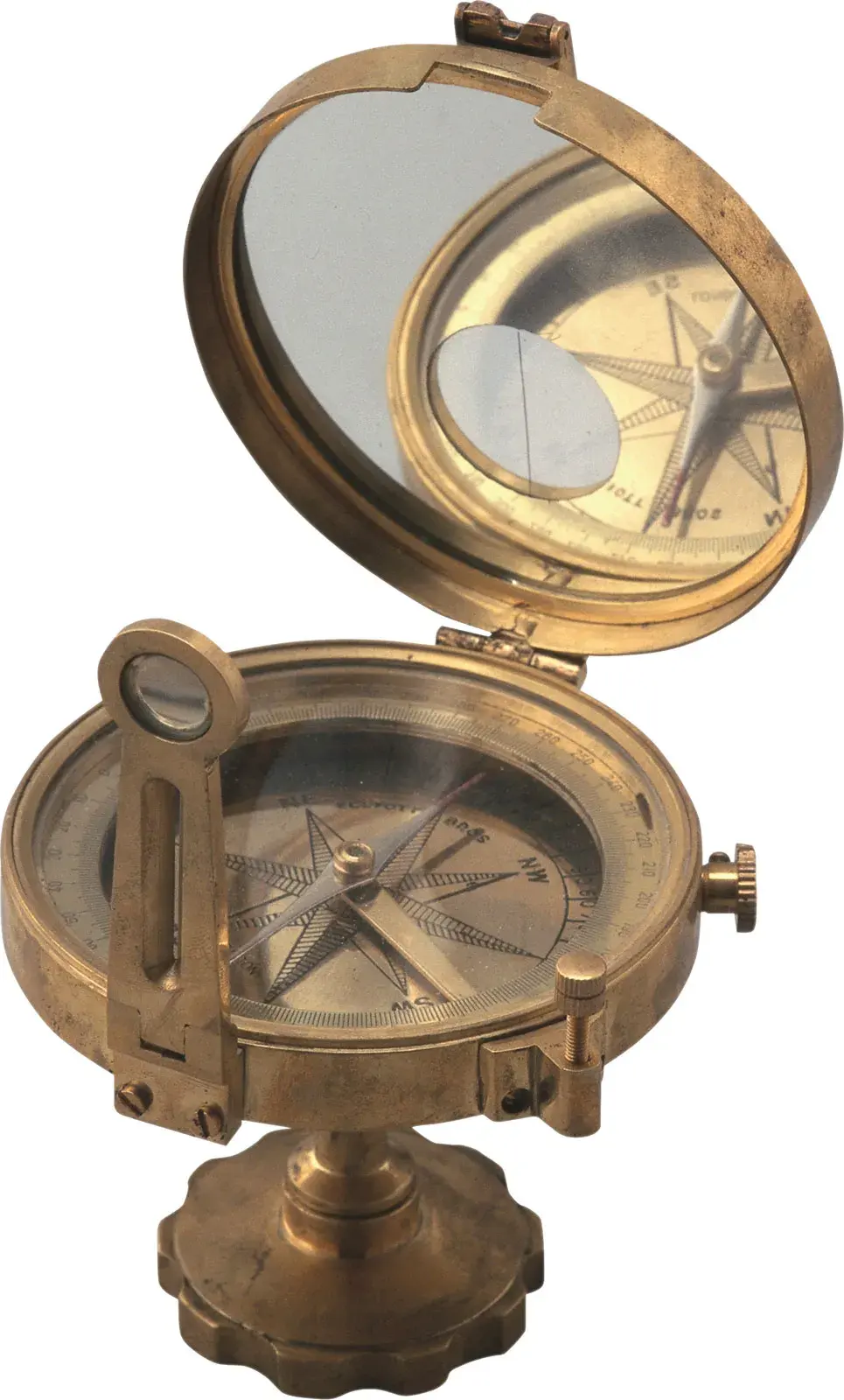
The invention of the compass was not the work of a single individual but rather a gradual evolution of Chinese scientific observation. Early versions, known as "south-pointers," consisted of a lodestone spoon balanced on a bronze plate inscribed with cardinal directions. These tools were primarily used by practitioners of feng shui to align buildings and graves with cosmic energy rather than for geographic navigation.
Scholars generally attribute the transition from divination to navigation to the Song dynasty. By the 1080s, the scientist Shen Kuo provided the first clear written description of the magnetic needle in his work, Dream Pool Essays. He noted that rubbing a steel needle with lodestone created a magnetized instrument capable of pointing north. This discovery transformed the device from a mystical tool into a practical instrument of exploration.
How did the compass spread to the rest of the world?
The technology migrated from China to the West through the complex networks of the Silk Road and maritime trade routes. Arab traders operating in the Indian Ocean likely encountered the Chinese compass and refined its design. By the late 12th century, the technology had reached the Mediterranean, where European sailors began integrating it into their navigational practices.
The adoption of the compass in Europe was relatively rapid, as it solved the persistent problem of navigating during overcast weather. Before this, sailors relied on the Sun, stars, and coastal landmarks, which were often obscured by fog or storms. Once the compass was mounted on a pivot and placed inside a protective box, it became the standard tool for crossing the open ocean.
- Chinese sailors utilized magnetized needles floating in water bowls.
- Arab merchants adopted the technology for desert and sea navigation.
- European mariners added the "compass rose" to improve directional accuracy.
- The dry-mounted needle eventually replaced the floating needle design.
Why does a compass needle point north?
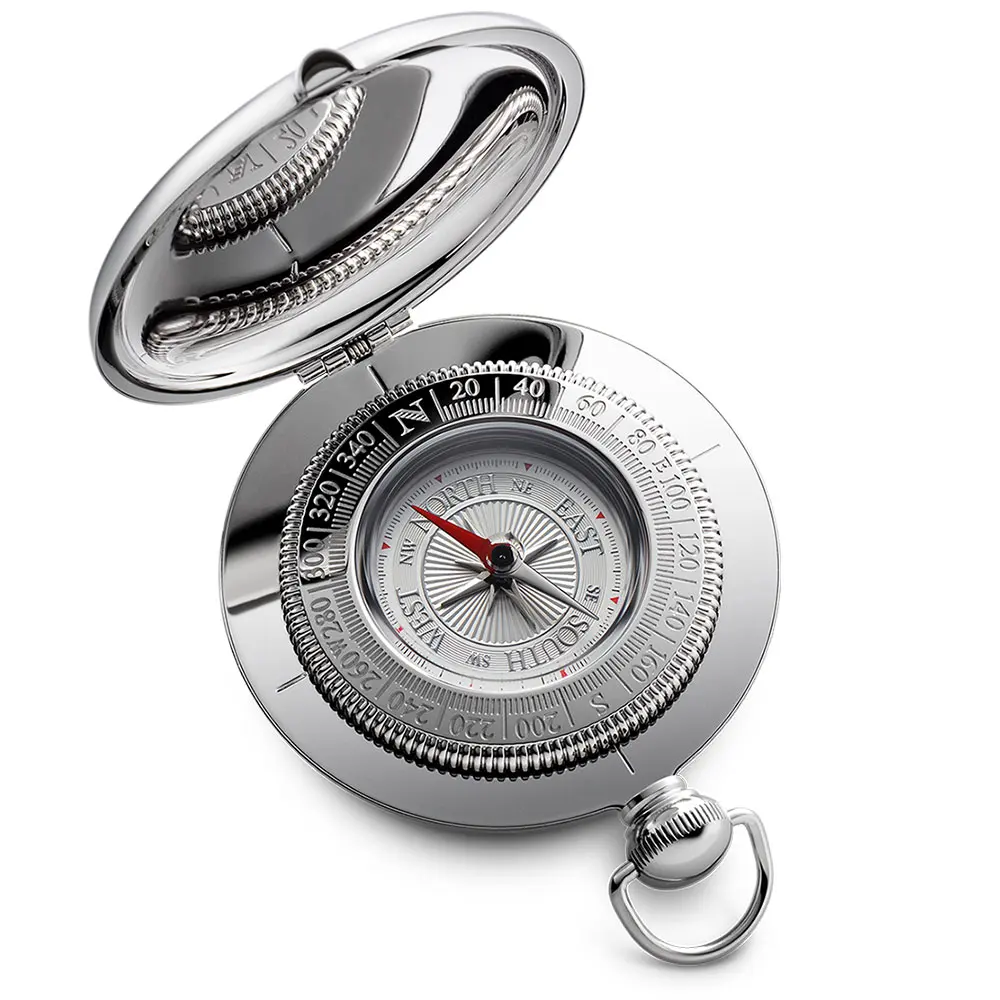
A compass functions by interacting with the Earth’s magnetic field. The Earth acts like a massive bar magnet with poles near the geographic North and South. Because the needle of a compass is itself a small, lightweight magnet, it naturally aligns with these magnetic field lines. The north-seeking pole of the needle is attracted to the Earth's magnetic north pole.
It is important to note that a compass does not point to the geographic North Pole, which is the axis of the Earth's rotation. Instead, it points toward the magnetic north pole, which is constantly shifting due to changes in the Earth's molten iron core. This difference is known as magnetic declination, and navigators must adjust their readings based on their specific location on the globe to maintain an accurate course.
- The Earth's outer core consists of liquid iron and nickel.
- Convection currents in the core generate a global magnetic field.
- Local magnetic anomalies can interfere with needle orientation.
- Solar storms can temporarily distort magnetic readings.
How do you use a compass for navigation?
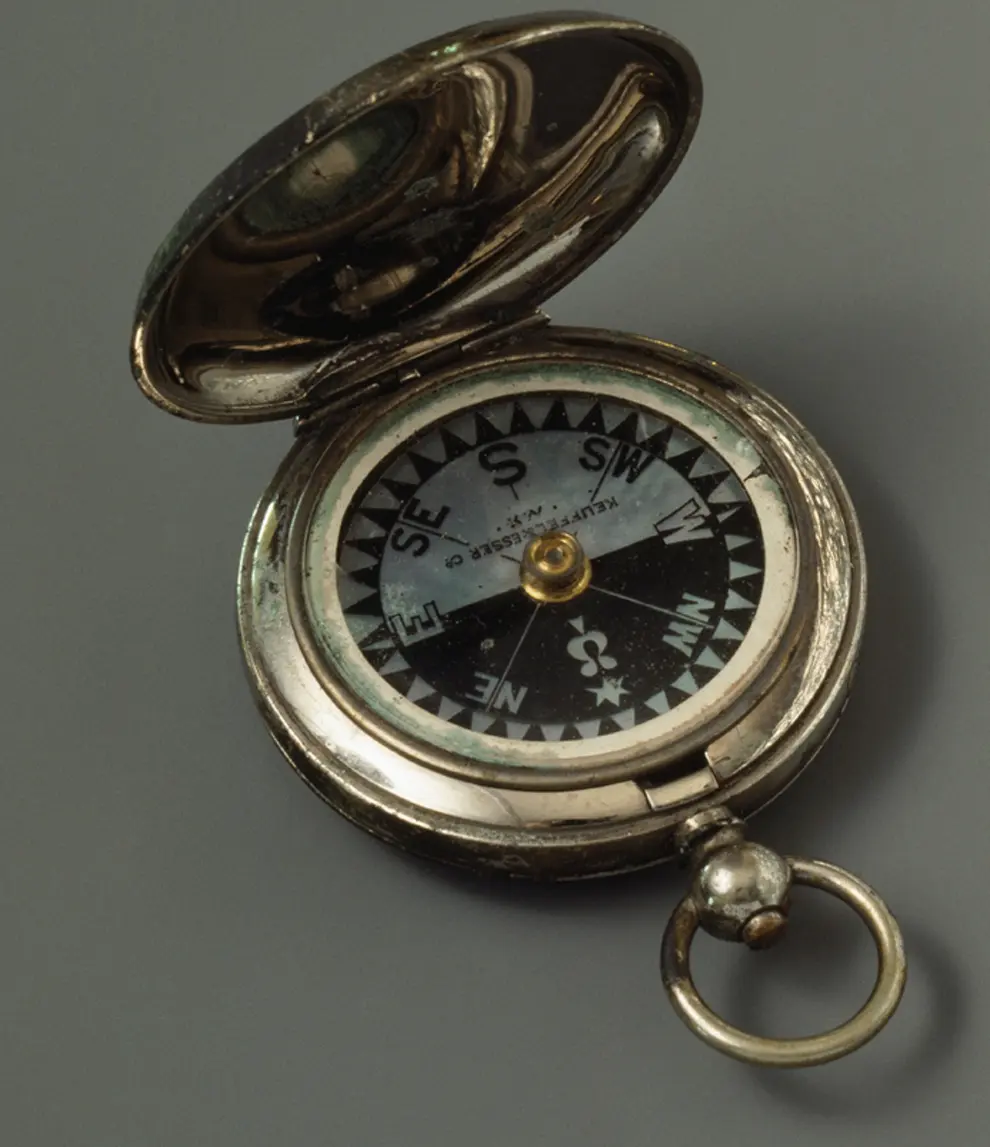
Using a compass effectively requires understanding how to orient yourself relative to a map. To find your bearing, hold the compass flat in your palm at waist height. Rotate the housing so that the orienting arrow aligns with the magnetic needle, ensuring the red end points toward "N." This allows you to visualize your direction of travel relative to the landscape.
When navigating in the field, follow these steps to ensure accuracy:
- Identify your destination on a topographic map.
- Place the edge of the compass along the line connecting your current position and your destination.
- Rotate the compass housing until the orienting lines are parallel to the map's north-south grid lines.
- Hold the compass level and turn your entire body until the magnetic needle sits inside the "shed" or orienting arrow.
- Follow the direction indicated by the travel arrow on the baseplate.
Common mistakes when using a compass
The most frequent error beginners make is failing to account for local magnetic interference. Metal objects, such as belt buckles, wristwatches, or even a smartphone, can pull the needle away from magnetic north. Always keep your compass at least several inches away from any electronic devices or ferrous metals to ensure the needle moves freely and accurately.
Another common pitfall is ignoring magnetic declination, which varies depending on where you are on Earth. If you are in a region where the magnetic north and geographic north differ by several degrees, your path will drift significantly over long distances. Always check the declination value printed on your map’s legend and adjust your compass bezel accordingly before starting your journey. Finally, never assume the compass is working if the needle appears sluggish or stuck; always check for physical damage to the pivot point or housing.
Key facts
- The magnetic compass was invented in China during the Han Dynasty between the 2nd century BCE and 1st century CE.
- Early compasses consisted of a naturally magnetized iron ore called lodestone shaped into a spoon that spun on a bronze plate.
- Chinese mariners began using magnetized needles for navigation at sea during the 11th century, as recorded by Shen Kuo.
- To make a DIY compass, magnetize a steel needle by stroking it with a magnet in one direction at least 30 times.
- Place your magnetized needle on a small piece of cork floating in a bowl of water to allow it to align with Earth’s magnetic field.
- Avoid placing your compass near large metal objects, speakers, or electronic devices, as these interfere with the needle's accuracy.
The bottom line
The magnetic compass was a transformative innovation originating in ancient China, initially used for geomancy before revolutionizing maritime navigation. By utilizing the Earth's natural magnetic field, this simple tool allowed explorers to traverse open oceans with newfound confidence. Today, while digital technology has largely replaced mechanical versions, the fundamental principle of magnetic alignment remains a cornerstone of orientation and travel for people across the globe.
People also ask
Did the Vikings use compasses?
There is no archaeological evidence that Vikings used magnetic compasses. They likely navigated using sunstones, stars, and observations of bird migrations or whale movements.
Why does a compass point north?
A compass needle is a small magnet that aligns itself with the Earth's magnetic field. The north pole of the needle is attracted to the magnetic north pole of the planet.
What is the difference between true north and magnetic north?
True north is the geographic North Pole where all lines of longitude meet. Magnetic north is the point toward which a compass needle points, which shifts over time due to changes in Earth's core.
Can a compass work in space?
A compass will not function in deep space because it requires a planetary magnetic field to operate. Inside a spacecraft, the magnetic interference from onboard equipment would likely render it useless.
How do digital compasses work?
Digital compasses use sensors called magnetometers to measure the strength and direction of magnetic fields. These readings are processed by a computer chip to display the heading on a screen.
What is compass declination?
Declination is the angle of difference between true north and magnetic north at any specific location on Earth. Navigators must adjust their maps to account for this variation to maintain an accurate course.
This answer was created with the help of AI research tools and reference sources. Spotted an error? Let us know — we correct mistakes quickly. See our editorial policy.