Who invented pizza?
Short answer
Pizza as we recognize it today was invented in Naples, Italy, during the late 18th or early 19th century. While flatbreads with toppings existed in ancient civilizations, the modern dish emerged when Neapolitan bakers began adding tomatoes to seasoned flatbreads, creating a popular, affordable meal for the city's working-class population.

On this page
Who actually invented pizza?
The evolution of pizza is a complex journey from ancient culinary traditions to the specific dish popularized in Naples. While ancient Greeks, Romans, and Egyptians consumed flatbreads topped with oils, herbs, and cheeses, these lacked the essential ingredient that defines modern pizza: the tomato. Tomatoes were brought to Europe from the Americas in the 16th century, but they were initially feared and considered poisonous by many Europeans.
By the late 1700s, the poor residents of Naples began using tomatoes on their flatbreads to create a cheap, quick meal. This innovation transformed the dish from a simple bread into what we now identify as pizza. While no single individual is credited with the "invention," the Neapolitan street vendors of the 1800s refined the technique and ingredients, establishing the foundation for the global industry that exists today.
Why did pizza become popular?
Pizza’s rise to global prominence began with its status as a convenient, portable food for the working class. In 19th-century Naples, street vendors sold slices to laborers who needed inexpensive sustenance while working long hours. The combination of simple, flavorful ingredients like dough, tomato, and olive oil made it an accessible staple that required no utensils to consume.
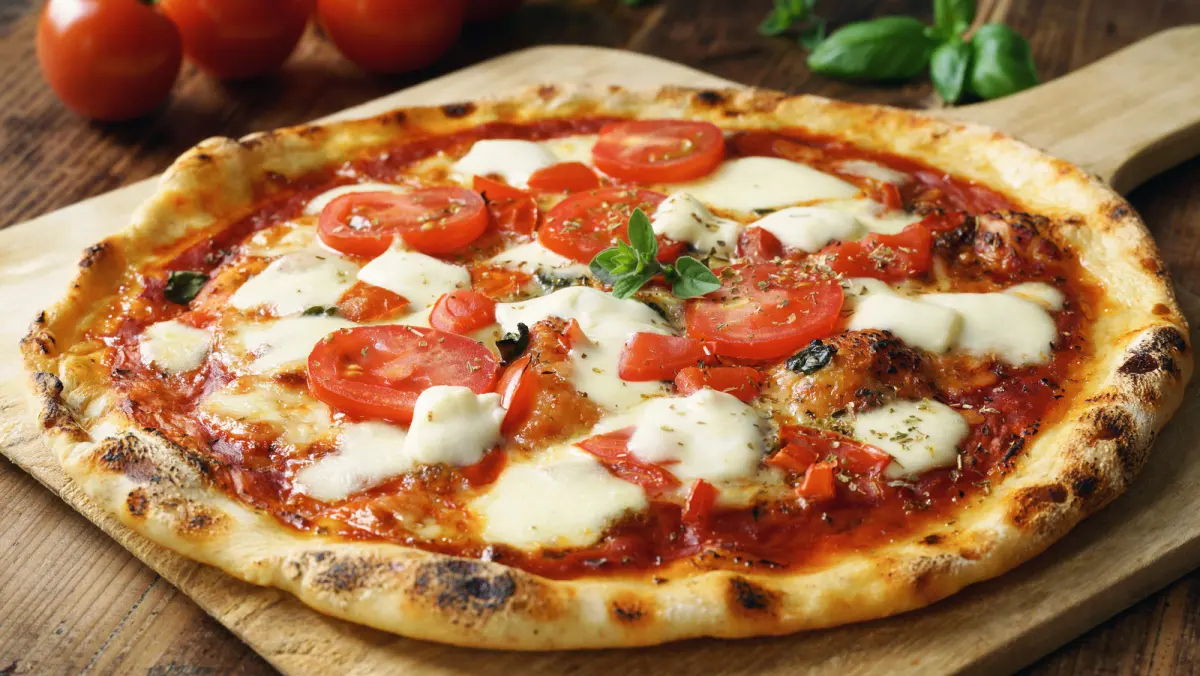
The dish gained significant cultural status in 1889 during a visit by Queen Margherita of Savoy to Naples. According to popular legend, local pizzaiolo Raffaele Esposito created three pizzas for the queen, one of which featured tomatoes, mozzarella, and basil to represent the colors of the Italian flag. This royal endorsement elevated pizza’s reputation beyond the streets, helping it transition into a celebrated culinary tradition that eventually spread across the globe through Italian immigration.
How to make authentic Neapolitan pizza
Achieving an authentic result at home requires attention to the quality of ingredients and the specific handling of the dough. The process focuses on high-temperature baking and precise fermentation to create a light, airy crust.
- Prepare a dough using "00" flour, water, sea salt, and a small amount of yeast.
- Allow the dough to undergo a long, cold fermentation process in the refrigerator for at least 24 hours to develop complex flavors.
- Stretch the dough by hand rather than using a rolling pin, which preserves the air bubbles in the crust.
- Top with high-quality San Marzano tomatoes and fresh mozzarella di bufala.
- Bake in a preheated oven at the highest possible temperature, ideally on a preheated pizza stone or steel.
Best tools for pizza at home
To replicate the results of a professional wood-fired oven, home cooks should invest in specific equipment. Standard baking sheets often fail to provide the necessary heat transfer to achieve a crispy bottom and a blistered crust.
- Pizza stone or baking steel: These materials absorb and retain heat, mimicking the floor of a brick oven.
- Pizza peel: A wooden or metal paddle is essential for safely transferring the raw pizza into the oven without deforming the shape.
- Infrared thermometer: This tool allows you to measure the surface temperature of your stone or steel to ensure it has reached the optimal range of 500 to 550 degrees Fahrenheit.
- Dough scraper: This simple tool helps in portioning the dough and keeping your workspace clean during the stretching process.
Using these tools improves the consistency of your crust and helps you manage the high heat required for a proper bake.
Common mistakes when making pizza
Beginners often struggle with the moisture content of the dough or the temperature of the oven. A frequent error is using too much water, which results in a sticky dough that is difficult to handle and fails to crisp properly. Conversely, using too much flour during the stretching phase can lead to a dry, tough crust that lacks the characteristic chew of a Neapolitan pie.
Another common mistake is overloading the pizza with too many toppings. Excessive sauce or cheese releases too much moisture during the baking process, resulting in a soggy center that cannot support the weight of the ingredients. Additionally, failing to preheat the oven and the stone for at least an hour prevents the crust from developing the necessary "oven spring." By limiting your toppings and ensuring your equipment is sufficiently hot, you will achieve a much more professional and satisfying result in your own kitchen.
Key facts
- Flatbreads with toppings existed in ancient civilizations like Egypt, Greece, and Rome, but modern pizza originated in Naples, Italy.
- Raffaele Esposito is widely credited with creating the "Pizza Margherita" in 1889 to honor Queen Margherita of Savoy.
- The iconic colors of the Margherita—red tomato, white mozzarella, and green basil—were chosen to represent the Italian flag.
- Before the 19th century, pizza was primarily street food sold by vendors to the working poor in Naples.
- To achieve a professional crust at home, use a pizza stone or steel to mimic the high heat of a wood-fired oven.
- Avoid the common mistake of overloading toppings, which creates a soggy center and prevents the dough from cooking through.
The bottom line
While ancient cultures enjoyed topped flatbreads, the pizza we recognize today was perfected in 19th-century Naples. By combining simple, high-quality ingredients like tomatoes, cheese, and herbs, Neapolitan bakers transformed humble street food into a global culinary icon. Whether you prefer a thin, charred crust or a hearty deep-dish style, understanding these historical roots helps you appreciate the craftsmanship behind every slice you eat today.
People also ask
Why is Neapolitan pizza considered the gold standard?
Neapolitan pizza is protected by strict regulations requiring specific ingredients like San Marzano tomatoes and buffalo mozzarella. It must be baked in a wood-fired oven at very high temperatures for 60 to 90 seconds.
Did pizza originate in the United States?
No, pizza was brought to the United States by Italian immigrants in the late 19th and early 20th centuries. The first documented pizzeria in America, Lombardi’s, opened in New York City in 1905.
What is the difference between thin-crust and deep-dish pizza?
Thin-crust styles, like the Neapolitan or New York slice, focus on a crisp, foldable base. Deep-dish, famously from Chicago, features a thick, buttery crust baked in a high-sided pan to accommodate large amounts of cheese and chunky sauce.
Can I make authentic pizza dough without a specialty oven?
Yes, you can produce excellent results in a home oven by preheating it to its maximum temperature for at least an hour. Using a baking stone helps retain heat and crisps the bottom of the dough effectively.
Why do some recipes call for "00" flour?
"00" flour is a finely milled Italian wheat flour with a specific protein content that creates a soft, elastic dough. It is the industry standard for achieving the authentic, chewy texture found in traditional Italian pizzerias.
How long should pizza dough rest before stretching?
Dough should rest at room temperature for at least 30 to 60 minutes after being portioned into balls. This allows the gluten to relax, making the dough much easier to stretch without snapping back.
This answer was created with the help of AI research tools and reference sources. Spotted an error? Let us know — we correct mistakes quickly. See our editorial policy.