Where do orcas live?
Short answer
Orcas inhabit every ocean on Earth, ranging from the frigid waters of the Arctic and Antarctic to tropical seas near the equator. They are the most widely distributed marine mammals, thriving in both coastal regions and the open ocean. Their presence is dictated primarily by prey availability rather than specific water temperatures.
On this page
Where are orcas found globally
Orcas, or Orcinus orca, possess the most expansive range of any cetacean species. They are found in all major ocean basins, including the Atlantic, Pacific, Indian, Southern, and Arctic oceans. While they are most frequently observed in cooler, temperate waters, they are also documented in tropical regions such as the Caribbean, the Gulf of Mexico, and the waters surrounding the Galápagos Islands.
Despite this global presence, their distribution is not uniform. Orcas tend to concentrate in areas with high biological productivity, such as regions with significant upwelling or seasonal migrations of prey like salmon, seals, or whales. They are highly adaptable, navigating through deep oceanic trenches and shallow coastal estuaries with equal proficiency. Their ability to survive in such diverse environments is a testament to their complex social structures and highly developed hunting strategies.
How to track orca populations
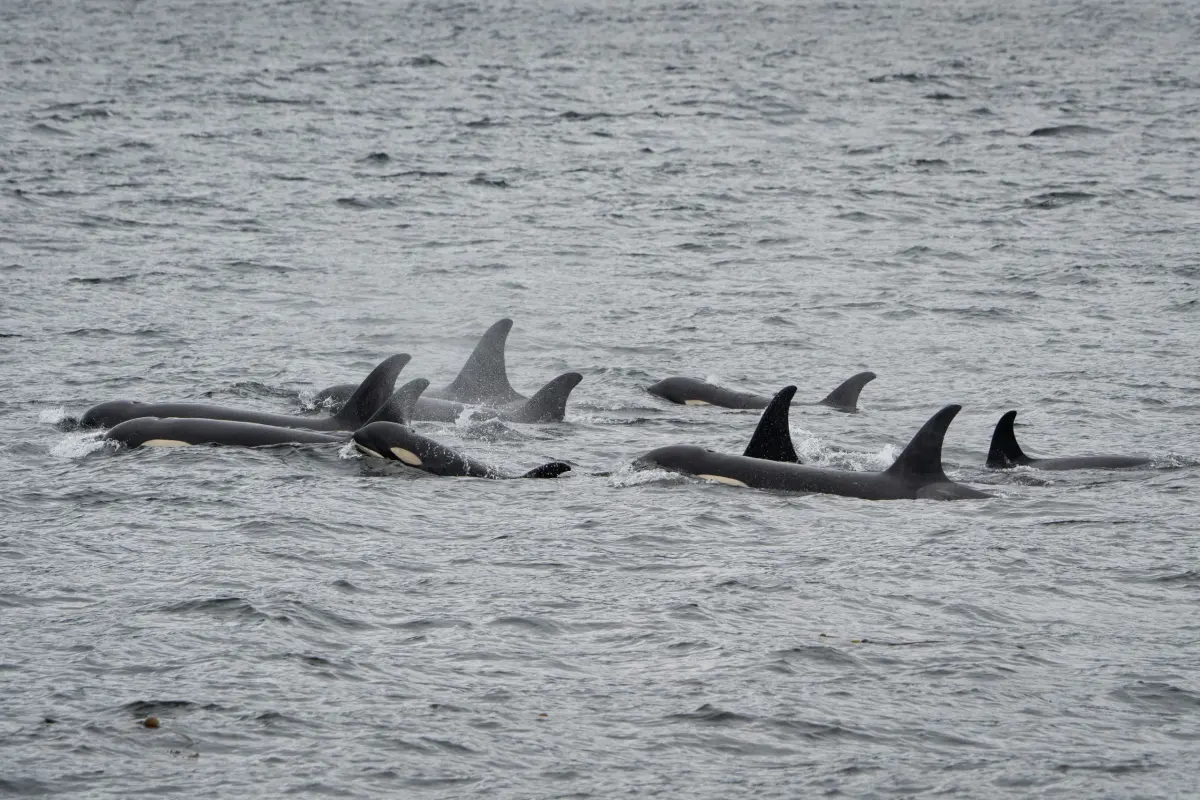
Researchers and enthusiasts track orca movements using a combination of acoustic monitoring and photo-identification. Because orcas have unique markings—specifically the gray "saddle patch" behind their dorsal fin and the shape of the fin itself—scientists can catalog individual whales. This allows for long-term studies on their migration patterns and social bonds.
If you are interested in tracking orcas, consider these methods:
- Utilize online databases like the Orca Network or regional whale-watching logs to see recent sightings.
- Use hydrophones to listen for the distinct vocalizations or "dialects" specific to different pods.
- Participate in community science projects that allow you to upload photographs of dorsal fins for identification.
- Follow satellite tagging programs conducted by organizations like NOAA, which provide real-time location data for specific pods.
Why orcas migrate to different areas
Orca migration is rarely a simple seasonal shift toward warmer weather. Instead, these movements are driven by the search for food. Resident orcas, for example, often follow the predictable runs of Chinook salmon in the Pacific Northwest. Conversely, transient or Bigg’s orcas travel vast distances to hunt marine mammals, moving wherever seals, sea lions, and porpoises are most abundant.
The environmental conditions of these habitats play a crucial role in their behavior. Orcas rely on echolocation to find prey, which is highly effective in the murky, nutrient-rich waters of coastal shelves. In the open ocean, they utilize their speed and cooperative hunting techniques to corner schools of fish or pods of dolphins. Their movement is essentially a constant, strategic pursuit of the most caloric-dense food sources available within their vast home ranges.
Common mistakes when looking for orcas
Many people assume that orcas are easily spotted from any beach, leading to disappointment during whale-watching trips. One common mistake is failing to account for the specific "ecotype" of the orca you are trying to find. Resident orcas have predictable, localized ranges, while offshore orcas are notoriously difficult to track because they spend most of their time in deep, open waters far from the coast.
To maximize your chances of a successful sighting, avoid these errors:
- Don't rely solely on general "whale season" charts, as these often focus on migratory baleen whales rather than resident orcas.
- Avoid ignoring local weather and tide reports, as orcas often time their hunting to coincide with specific tidal currents that concentrate prey.
- Don't assume that a lack of surface activity means the pod is absent; orcas may be foraging deep underwater or traveling silently to avoid detection by prey.
- Avoid approaching pods too closely, as this disrupts their hunting behavior and violates marine mammal protection laws.
Where to see orcas in the wild
If you are planning a trip to see orcas, certain locations offer significantly higher probabilities of success. The San Juan Islands in Washington State and the waters off Vancouver Island in British Columbia are world-renowned for their resident orca populations. These areas provide protected inland passages where orcas frequently hunt and socialize, making them ideal for observation.
Other prime locations include the coast of Norway, particularly around the fjords where orcas follow herring migrations, and the Antarctic Peninsula, where they hunt seals on ice floes. In the Southern Hemisphere, the waters off the coast of New Zealand and South Africa also host distinct pods. When planning your excursion, prioritize reputable operators who adhere to strict conservation guidelines and provide educational context about the specific pod you are observing. Always check local regulations regarding minimum distance requirements to ensure you are respecting the animals' natural space while enjoying a safe and ethical wildlife experience.
Key facts
- Orcas are the most widely distributed marine mammals, inhabiting every ocean on Earth from the Arctic to the Antarctic.
- They thrive in a diverse range of temperatures, from freezing polar waters to the relatively warm seas near the equator.
- While they occupy all oceans, they are most frequently spotted in colder, nutrient-rich coastal waters like those off Norway, Alaska, and British Columbia.
- Orcas do not have a single migratory route; instead, different populations, or "ecotypes," occupy specific home ranges.
- You are most likely to spot them near shorelines because they often hunt in shallow coastal waters where prey is abundant.
- Avoid assuming all orcas live in the same place; resident populations stay in specific areas, while transient orcas travel vast distances along coastlines.
The bottom line
Orcas are truly global citizens, occupying every ocean across the planet. Their presence is determined by the availability of food rather than specific geographical boundaries or climate preferences. Whether navigating icy polar corridors or temperate coastal shelves, these apex predators demonstrate remarkable adaptability. Understanding their reliance on local prey is the key to predicting where you might encounter these intelligent, highly social marine mammals in nature.
People also ask
Do orcas live in freshwater rivers?
While orcas are primarily saltwater animals, they have been documented traveling significant distances up large rivers, such as the Columbia River, to hunt salmon. However, they cannot survive long-term in freshwater and always return to the ocean.
Can you see orcas in the Mediterranean Sea?
Yes, there is a small, genetically distinct population of orcas that lives in the Strait of Gibraltar. This group is critically endangered and is often observed interacting with boats in the region.
Do orcas migrate like humpback whales?
Unlike many baleen whales that follow strict seasonal migration paths between breeding and feeding grounds, orca movements are dictated by the availability of their specific prey. Some populations remain in the same general area year-round.
Are there orcas in the Gulf of Mexico?
Orcas are occasionally sighted in the Gulf of Mexico, though they are not considered a primary habitat for the species. These sightings are rare and typically involve individuals passing through the area.
How deep do orcas dive?
Orcas are capable of diving to depths of at least 1,000 feet (300 meters) to hunt, though they spend most of their time in the upper layers of the water column. They are highly adaptable to different depths depending on where their prey is located.
Do orcas live in captivity in the wild?
The term "captivity" refers to human-controlled environments like marine parks, not the wild. In the wild, orcas live in complex social groups called pods, which can consist of a few individuals or dozens of related members.
This answer was created with the help of AI research tools and reference sources. Spotted an error? Let us know — we correct mistakes quickly. See our editorial policy.