Where do mountain goats live?
Short answer
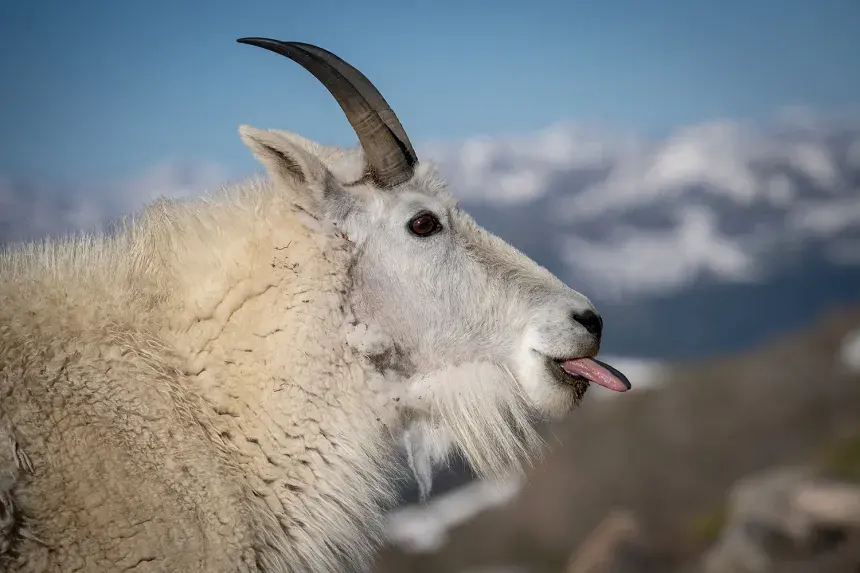
Mountain goats live in the rugged, high-altitude regions of western North America. Their primary range spans from southern Alaska and the Yukon through British Columbia and Alberta into the northwestern United States, including Washington, Idaho, and Montana. They thrive in steep, rocky terrain, typically staying above the timberline to avoid predators.
On this page
Where do mountain goats live geographically?
Mountain goats, scientifically known as Oreamnos americanus, are endemic to the mountainous regions of North America. Their distribution is primarily concentrated in the northern Rocky Mountains and the Coast Mountains of British Columbia and Alaska. While they are iconic symbols of the American West, their natural range does not extend into the southern United States or the eastern mountain chains.
These animals are highly specialized to survive in isolated, fragmented habitats. Because they require steep cliffs for protection, their populations are often found in distinct "islands" of alpine terrain. While they are native to the regions mentioned above, humans have introduced small, non-native herds to other areas, such as the Olympic Mountains in Washington and parts of Colorado. These introduced populations have sometimes struggled to adapt or have negatively impacted local alpine ecosystems.
Why do mountain goats live at high altitudes?
The primary reason mountain goats inhabit extreme elevations is to utilize vertical terrain as a defense mechanism against predators. By living on cliffs with slopes often exceeding 40 degrees, they gain a significant advantage over wolves, grizzly bears, and mountain lions. Their specialized hooves, which feature a hard outer rim and a soft, rubbery pad, provide exceptional grip on slick rock and ice.
Beyond predator avoidance, these altitudes offer a specific climate that the goats are biologically adapted to handle. Their thick, double-layered coats provide insulation against extreme cold, while their high-altitude range allows them to forage on grasses, mosses, and lichens that grow in rocky crevices. During the summer, they move to higher elevations to find fresh vegetation, while in winter, they often descend slightly to wind-swept ridges where snow accumulation is lower, allowing them to reach food sources.
- They prefer slopes between 30 and 60 degrees.
- They seek out south-facing slopes in winter to maximize sun exposure.
- They avoid dense forests where visibility is limited and movement is restricted.
- They remain near escape terrain, which is defined as rock outcrops that are inaccessible to larger predators.
How to spot mountain goats in the wild?
To successfully observe mountain goats, enthusiasts must visit high-elevation trails during the summer months when the animals are most active. Because they are shy and easily disturbed, spotting them requires patience and the right equipment. Using high-quality binoculars or a spotting scope is essential, as these animals often remain hundreds of yards away from human-accessible paths.
When searching for them, focus your gaze on cliff faces, rocky ledges, and alpine meadows located above the timberline. Look for white, shaggy shapes against the gray rock, as their coat stands out significantly during the summer. If you see a group, it is likely a nursery herd consisting of nannies and their kids, while adult males, known as billies, are more frequently found in solitary groups or alone.
- Research the specific mountain range for recent sightings or known herd locations.
- Arrive at the trailhead before dawn to maximize your chances of seeing them while they forage.
- Keep a distance of at least 100 yards to prevent the animals from fleeing.
- Scan the base of cliff bands, as they often rest there during the heat of the day.
Common mistakes when looking for mountain goats
One of the most frequent errors observers make is failing to account for the goats' incredible camouflage and ability to blend into the landscape. Many beginners look for moving animals, but mountain goats spend a significant portion of their day standing perfectly still to conserve energy. If you scan a cliff face too quickly, you will likely miss them, as they can look like patches of snow or light-colored rock.
Another common mistake is ignoring the wind direction. Mountain goats have an excellent sense of smell and will detect human scent long before they are seen. Always approach from downwind to ensure you do not alert the herd to your presence. Additionally, many people attempt to hike too far off-trail to get a better photo. This is dangerous for the hiker and causes unnecessary stress for the goats, which may lead them to abandon prime feeding grounds or fall while attempting to navigate unstable, steep terrain in a panic.
How to identify mountain goat habitat features
Identifying suitable mountain goat habitat involves recognizing specific geological and botanical markers. Look for areas characterized by craggy peaks, sheer rock walls, and alpine tundra. These areas are typically devoid of tall trees, which allows the goats to maintain a clear line of sight in all directions. If you are in a dense forest, you are likely outside of their primary living zone.
You can also identify their presence by looking for signs of their activity rather than the animals themselves. Look for patches of coarse, white hair caught on low-growing shrubs or rock edges. You may also find "wallows," which are shallow depressions in the dirt where goats roll to shed their winter coats or deter insects. By learning to identify these environmental clues, you can determine if an area is likely to support a population of mountain goats without needing to see the animals directly.
Key facts
- Mountain goats are native only to North America, primarily inhabiting the western mountain ranges.
- Their natural range extends from southern Alaska and the Yukon down through British Columbia into Washington, Idaho, and Montana.
- They thrive at elevations between 1,000 and 5,000 meters, often living above the timberline.
- Their hooves feature a hard, sharp outer rim for grip and a soft, rubbery pad for traction on steep rock faces.
- During winter, they descend to lower, forested elevations to avoid deep snow and avalanches.
- A common mistake is confusing them with true goats; they are actually "goat-antelopes" more closely related to chamois and serow.
The bottom line
Mountain goats are specialized inhabitants of the rugged, high-altitude terrain of North America’s western ranges. Their survival depends on extraordinary physical adaptations, including specialized hooves and thick, insulating coats, which allow them to thrive in vertical landscapes. By moving vertically between alpine meadows and sheltered forests, they successfully navigate extreme seasonal changes, making them one of the most resilient and fascinating mammals in the wild.
People also ask
Are mountain goats good climbers?
They are arguably the most skilled climbers in the animal kingdom. They can scale near-vertical cliffs with inclines of 60 degrees or more by utilizing small rock ledges.
What do mountain goats eat in such harsh environments?
Their diet consists of grasses, herbs, sedges, ferns, mosses, and lichens. In winter, they often strip bark from trees or dig through snow to reach buried vegetation.
How do they survive the extreme cold?
They possess a dense, double-layered coat consisting of a fine, woolly undercoat and long, hollow guard hairs. This insulation allows them to withstand temperatures as low as -50 degrees Fahrenheit.
Do mountain goats migrate long distances?
They do not migrate in the traditional sense but perform seasonal vertical movements. They move between high alpine summer ranges and lower, protected wintering grounds within a relatively small home range.
How can you spot a mountain goat in the wild?
Use high-powered binoculars or a spotting scope to scan rocky cliff faces during early morning or late evening. Look for white, blocky shapes against the gray or brown stone, as their white coats are highly visible.
Are they dangerous to humans?
While generally shy, they can become aggressive if cornered or if they feel their space is being invaded. Maintain a distance of at least 100 yards to ensure both your safety and the animal's well-being.
This answer was created with the help of AI research tools and reference sources. Spotted an error? Let us know — we correct mistakes quickly. See our editorial policy.