What is the difference between a dolphin and a porpoise?
Short answer
Dolphins and porpoises are both small toothed whales, but they belong to different families. Dolphins generally have elongated snouts, curved dorsal fins, and conical teeth. Porpoises possess blunt, rounded faces, triangular dorsal fins, and spade-shaped teeth. Dolphins are also typically more social, vocal, and acrobatic than their more reserved porpoise cousins.
On this page
How to tell dolphins and porpoises apart
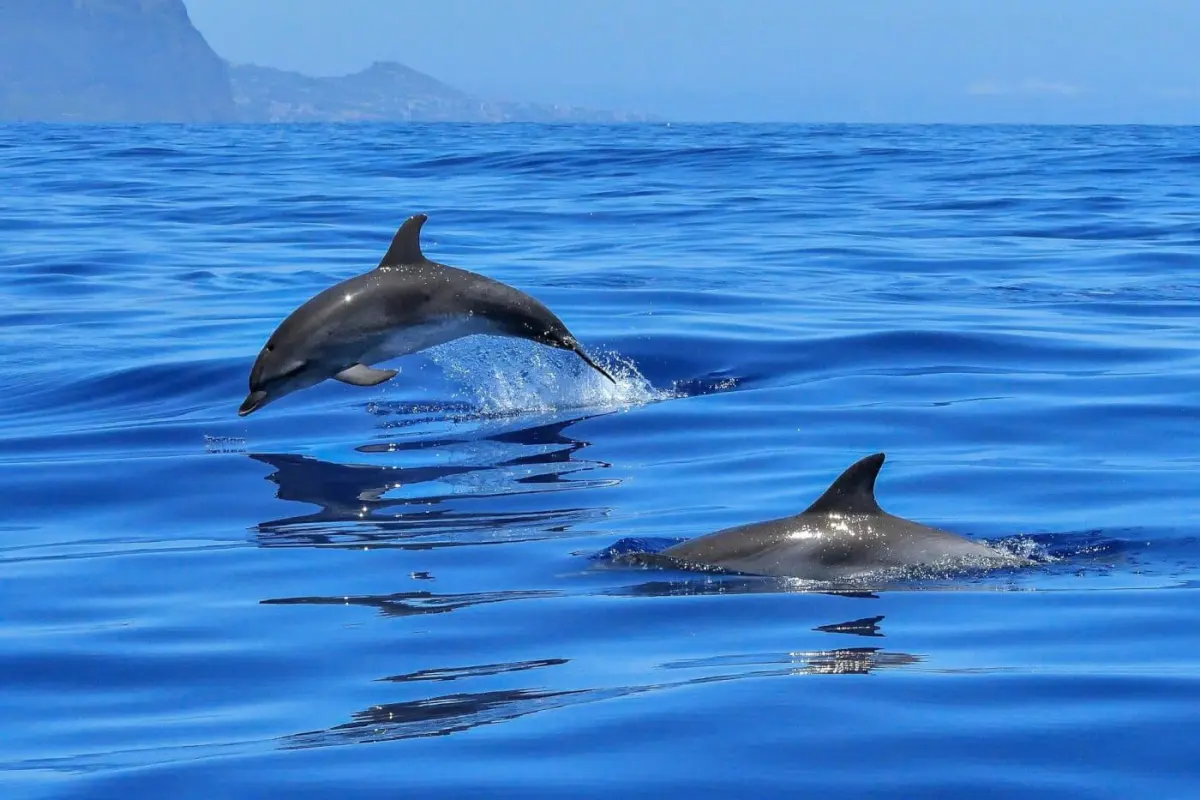
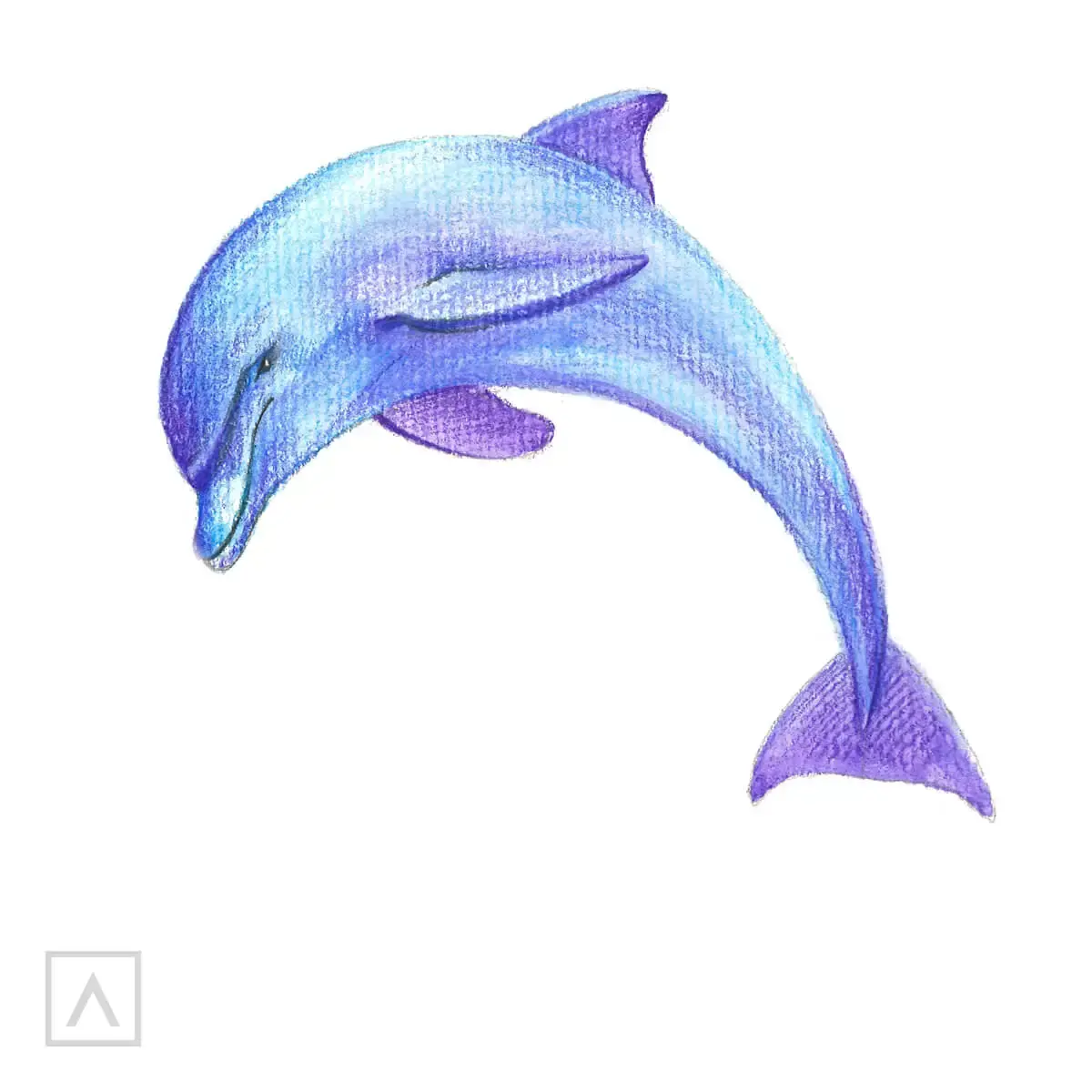
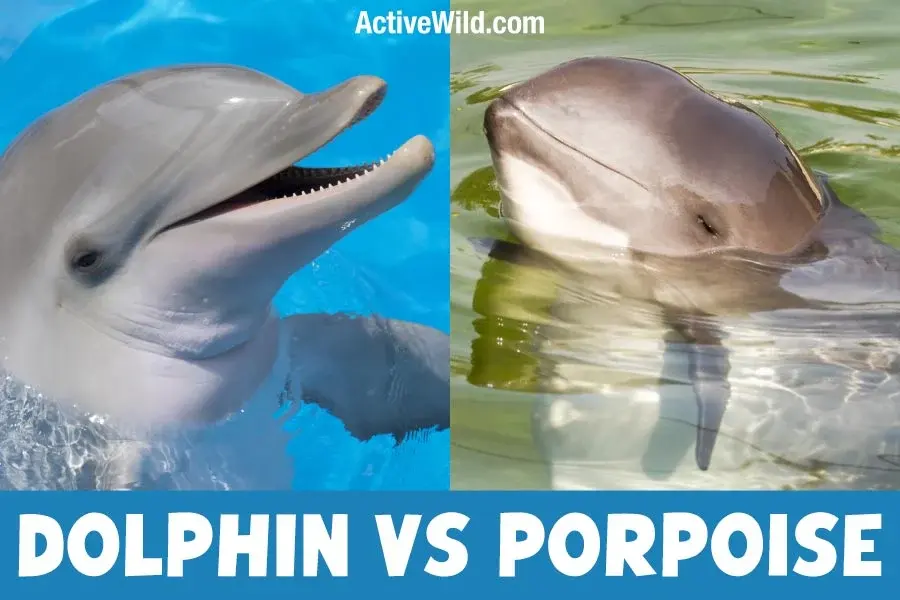
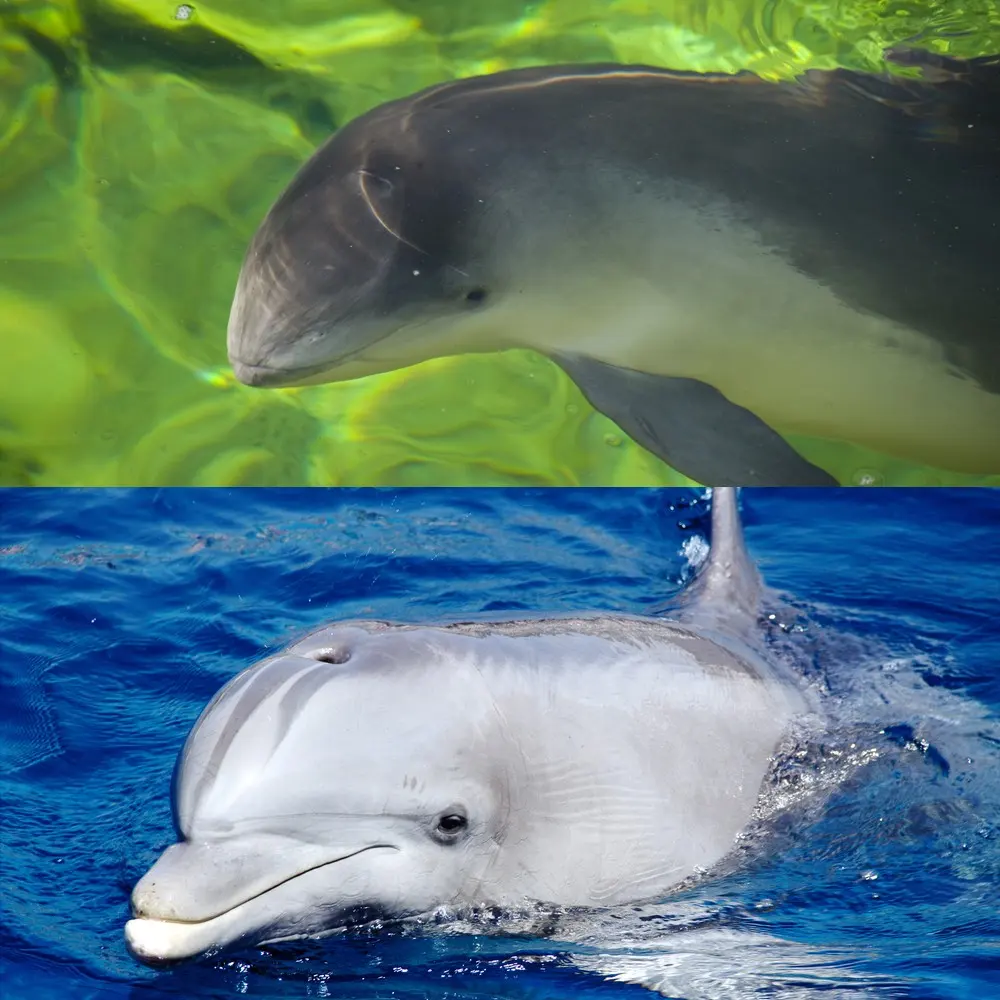
The most reliable way to distinguish between these marine mammals is by looking at their facial features and dorsal fins. Dolphins typically have a prominent "beak" or elongated snout, which gives them a permanent, smiling appearance. In contrast, porpoises have short, rounded faces without a distinct beak, making their heads appear blunt.
The dorsal fin—the fin located on the animal's back—also provides a clear visual clue. Most dolphins have a curved, sickle-shaped dorsal fin that sweeps backward. Porpoises, however, usually feature a smaller, triangular dorsal fin that looks like a shark’s fin. You can use these physical markers to identify the species from a distance while whale watching:
- Check the snout: Does it protrude like a beak or is it flat?
- Inspect the fin: Is it curved and sickle-shaped or stiff and triangular?
- Observe the body: Are they slender and streamlined, or shorter and more robust?
Why dolphins are more social than porpoises
Dolphins are well-known for their complex social structures and highly interactive behaviors. They often live in large groups called pods, which can sometimes include hundreds of individuals. These groups engage in cooperative hunting, sophisticated communication through clicks and whistles, and frequent social play. This high level of social intelligence makes them appear more curious and friendly toward humans.
Porpoises are generally much more shy and elusive. They tend to travel in smaller, tighter groups, often consisting of only a few individuals. Unlike the gregarious dolphin, porpoises rarely approach boats or interact with humans, preferring to stay away from surface activity. Because of their secretive nature, they are much harder to spot in the wild. If you see a group of marine mammals performing high-energy leaps or riding the bow waves of a ship, you are almost certainly looking at dolphins rather than porpoises.
Where to find dolphins and porpoises
Dolphins inhabit a wide range of environments, including all the world's oceans and several major river systems. While many species prefer warm, tropical waters, some, such as the orca (the largest member of the dolphin family), thrive in polar regions. Their adaptability allows them to occupy coastal areas, open oceans, and even freshwater habitats like the Amazon River.
Porpoises have a more restricted distribution compared to their dolphin counterparts. You will primarily find them in cooler, temperate coastal waters. Because they rely on specific prey found in these environments, they rarely venture into the open ocean or tropical zones. If you are planning a trip to observe these animals, consider these geographic tips:
- Research the specific species native to your coastal region.
- Visit temperate, shallow bays if you are hoping to spot a porpoise.
- Look for tropical or offshore waters if you are searching for common bottlenose dolphins.
- Always maintain a respectful distance to avoid disturbing their natural behavior.
Common mistakes when identifying marine mammals
A frequent error is assuming that every small, gray animal in the water is a dolphin. People often misidentify porpoises because they lack the "showy" behavior of dolphins, leading observers to overlook them entirely. Another common mistake is relying solely on size to make a judgment. While many porpoises are smaller than dolphins, some dolphin species are quite compact, and some porpoises can grow to a surprising length.
Do not rely on the presence of a "beak" as the only indicator. Some dolphin species, such as the Risso’s dolphin, have very blunt heads that can look similar to a porpoise at a distance. Instead, look for a combination of traits. If the animal is leaping high out of the water, it is likely a dolphin, as porpoises rarely breach the surface with such intensity. By observing the animal's movement patterns alongside its physical characteristics, you will significantly improve your accuracy in the field.
What makes their teeth different
The internal anatomy of these animals also reveals their evolutionary divergence. Scientists classify them by their dental structures, which are adapted to different feeding strategies. Dolphins possess conical, sharp teeth designed for grasping slippery prey like fish and squid. These teeth are often used to hold onto prey while the dolphin maneuvers it into a position for swallowing.
Porpoises have evolved spade-shaped, flatter teeth that are better suited for different types of foraging. This dental morphology reflects their diet and how they process food in their specific habitats. While you cannot see these teeth unless the animal is breaching or stranded, this biological distinction is the primary reason scientists place them into separate families: Delphinidae for dolphins and Phocoenidae for porpoises. Understanding these hidden, evolutionary differences helps researchers track how these animals have adapted to their distinct ecological niches over millions of years of oceanic evolution.
Key facts
- Dolphins have elongated, beak-like snouts, while porpoises have blunt, rounded faces.
- Dolphin dorsal fins are typically curved or hooked, whereas porpoise fins are triangular and smaller.
- Dolphin teeth are cone-shaped; porpoise teeth are spade-shaped or flattened.
- Dolphins are generally more social and vocal, often living in larger pods than porpoises.
- Porpoises are smaller, reaching maximum lengths of about 7 feet, while dolphins can exceed 12 feet.
- To identify them at sea, look for the "beak"; if it is prominent, you are likely viewing a dolphin.
The bottom line
While dolphins and porpoises appear similar at a distance, they are distinct animals with clear anatomical differences. The easiest way to distinguish them is by observing the face and fin shape; dolphins possess a distinct beak and curved dorsal fin, while porpoises have a blunt face and triangular fin. Understanding these physical traits allows observers to accurately identify these fascinating marine mammals during coastal wildlife excursions.
People also ask
Are dolphins or porpoises more dangerous to humans?
Both animals are generally shy and avoid human contact in the wild. While dolphins are more curious and occasionally interact with swimmers, they are wild predators and should never be approached or fed.
Do dolphins and porpoises live in the same habitats?
Their ranges often overlap, but dolphins are found in all oceans and some rivers, while porpoises prefer cooler, temperate coastal waters. You are unlikely to find porpoises in tropical open oceans where many dolphin species thrive.
How can I tell them apart by their swimming behavior?
Dolphins often leap high out of the water and ride bow waves of boats. Porpoises tend to be more reserved, surfacing briefly to breathe without making large splashes or acrobatic jumps.
Are porpoises considered a type of dolphin?
No, they belong to different biological families. Dolphins are in the family Delphinidae, while porpoises belong to the family Phocoenidae, making them distinct evolutionary branches.
Which species is more common to see in captivity?
Dolphins, specifically the common bottlenose dolphin, are the primary species kept in marine parks. Porpoises are extremely difficult to maintain in captivity due to their specialized needs and stress-prone nature.
Do they eat the same types of food?
Both are carnivores that consume fish and squid. However, dolphins may hunt larger prey in coordinated groups, while porpoises typically focus on smaller schooling fish found near the seafloor.
This answer was created with the help of AI research tools and reference sources. Spotted an error? Let us know — we correct mistakes quickly. See our editorial policy.