What is osmosis?
Short answer
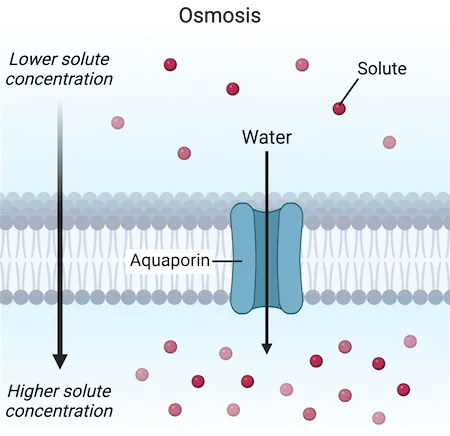
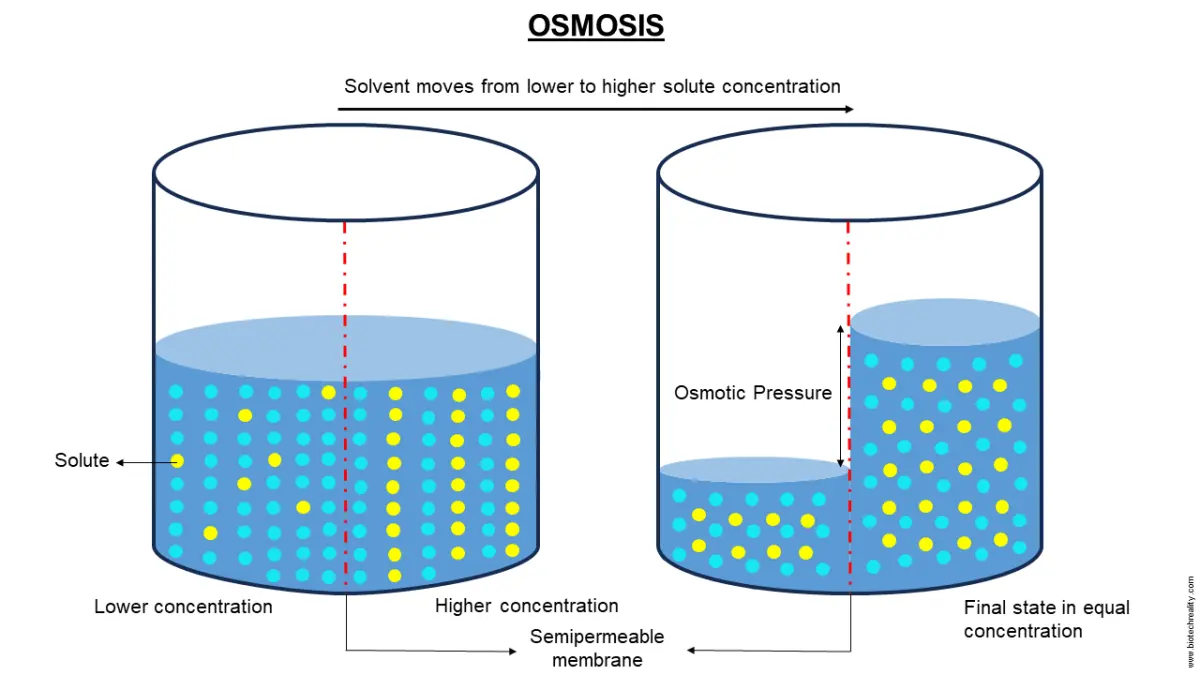
Osmosis is the spontaneous movement of water molecules across a semipermeable membrane from an area of low solute concentration to an area of high solute concentration. This process continues until the concentration of solutes is equalized on both sides, playing a vital role in biological hydration and cellular balance.
On this page
Why osmosis happens in nature
Osmosis occurs because nature seeks equilibrium. When two solutions with different concentrations are separated by a membrane that allows water but not larger solute particles to pass, water naturally flows toward the side with more solutes. This movement is driven by osmotic pressure, which acts to dilute the concentrated side. The process does not require energy, making it a passive transport mechanism essential for life.
In plants, osmosis is the primary force that keeps stems upright and leaves turgid. When roots absorb water from the soil, the fluid moves into cells, creating internal pressure against the cell wall. This turgor pressure prevents the plant from wilting. Similarly, in humans, osmosis regulates the volume of blood and the hydration levels within individual cells. Without this constant balancing act, cells would either shrivel from dehydration or burst from excessive water intake.
How osmosis works in cells
The cell membrane acts as the gatekeeper for osmosis. It is composed of a phospholipid bilayer that contains tiny protein channels called aquaporins, which specifically facilitate the rapid movement of water. Because these membranes are semipermeable, they allow small, uncharged molecules like water to slip through while blocking larger molecules like glucose or ions like sodium.
The movement of water depends on the tonicity of the surrounding environment, which is categorized into three states:
- Isotonic: The concentration of solutes is equal inside and outside the cell, resulting in no net movement.
- Hypertonic: The concentration of solutes is higher outside the cell, causing water to leave the cell and potentially leading to shrinkage.
- Hypotonic: The concentration of solutes is lower outside the cell, causing water to rush in and potentially causing the cell to swell or burst.
How to demonstrate osmosis at home
You can observe the principles of osmosis using simple household items. A classic experiment involves using a raw egg to visualize how membranes interact with different liquids. By removing the hard shell with vinegar, you are left with the delicate, semipermeable membrane of the egg, which allows you to see the effects of osmotic pressure in real time.
- Place a raw egg in a glass of white vinegar for 48 hours until the shell dissolves.
- Measure the egg’s size and place it into a glass of corn syrup, which is a hypertonic solution.
- Observe the egg after 24 hours to see it shrivel as water leaves the egg.
- Place the shriveled egg into a glass of distilled water, which is a hypotonic solution.
- Watch as the egg expands back to its original size or larger as water enters.
Common mistakes when studying osmosis
A frequent error is confusing osmosis with diffusion. While both are passive transport processes, diffusion involves the movement of any molecule from high to low concentration. Osmosis is specifically restricted to water molecules moving across a semipermeable membrane. Remembering this distinction is crucial for understanding how substances move through biological systems without wasting energy.
Another common mistake is assuming that water stops moving once equilibrium is reached. In reality, water molecules continue to cross the membrane in both directions, but the rate of movement becomes equal on both sides. This dynamic equilibrium means there is no net change in the volume or concentration of the solutions, even though the molecules are still in constant motion. Always check the concentration gradient before predicting the direction of water flow.
Best ways to use osmosis in technology
Engineers have harnessed the power of osmosis to solve critical global challenges, most notably in water purification. Reverse osmosis is a process that applies external pressure to a concentrated solution, forcing water through a membrane in the opposite direction of natural osmosis. This effectively strips away salt, bacteria, and contaminants, leaving behind purified drinking water.
- Desalination plants use this technology to turn seawater into fresh water for arid regions.
- Home filtration systems utilize reverse osmosis to remove lead, chlorine, and pesticides from tap water.
- Dialysis machines for kidney patients rely on osmotic principles to filter waste products from the blood.
- Food preservation techniques, such as curing meat with salt, use osmosis to draw moisture out of bacteria, preventing spoilage.
By manipulating the osmotic gradient, scientists can create efficient systems for resource management and medical treatment. As technology advances, the application of osmotic membranes continues to improve, offering more sustainable ways to provide clean water to growing populations while reducing the energy costs associated with traditional filtration methods. The fundamental physics of this process remains a cornerstone of modern industrial and biological science.
Key facts
- Osmosis is the spontaneous movement of water molecules across a semipermeable membrane from a region of low solute concentration to a region of high solute concentration.
- The process requires no external energy input, making it a passive transport mechanism essential for cellular homeostasis.
- A semipermeable membrane acts like a selective filter, allowing small solvent molecules like water to pass while blocking larger solute particles like salt or sugar.
- Osmotic pressure is the exact pressure required to stop the flow of water across a membrane, a concept first quantified by Wilhelm Pfeffer in 1877.
- Plant cells use osmosis to maintain turgor pressure, which provides structural support and prevents the plant from wilting.
- To prevent osmotic damage in medical settings, intravenous fluids are carefully balanced to be isotonic, meaning they have the same solute concentration as human blood.
The bottom line
Osmosis is a fundamental biological and physical process where water moves through a semipermeable membrane to balance solute concentrations. By maintaining fluid equilibrium, it supports everything from plant structure to human kidney function. Understanding this passive movement is crucial for fields ranging from biology and medicine to water purification technology, proving that simple physical laws often govern the most complex systems in the natural world.
People also ask
How does osmosis differ from diffusion?
Diffusion involves the movement of any particles from an area of high concentration to low concentration. Osmosis is specifically the movement of water across a membrane.
What happens to cells placed in a hypertonic solution?
In a hypertonic solution, the solute concentration outside the cell is higher than inside. Water rushes out of the cell, causing it to shrink or shrivel.
Can osmosis be reversed?
Yes, reverse osmosis uses external pressure to force water through a membrane against its natural gradient. This is the primary method used for industrial water desalination.
Why do grocery stores spray vegetables with water?
The water has a lower solute concentration than the vegetables, so it enters the plant cells via osmosis. This keeps the produce crisp and prevents wilting.
What is the role of aquaporins in osmosis?
Aquaporins are specialized channel proteins in cell membranes that act as "pipes" for water. They significantly increase the rate at which water molecules can cross the membrane.
Is osmosis harmful to humans?
While vital for survival, extreme osmotic imbalances can be dangerous. Drinking excessive amounts of water too quickly can dilute blood sodium, leading to a condition called hyponatremia.
This answer was created with the help of AI research tools and reference sources. Spotted an error? Let us know — we correct mistakes quickly. See our editorial policy.

![9+ Polar Moment Of Inertia Formulas [2026]](/img/d0/what-is-inertia-1.webp)