What is Nowruz?
Short answer
Nowruz is the Iranian or Persian New Year, marking the vernal equinox and the beginning of spring. Celebrated for over 3,000 years by various cultures across Central and Western Asia, it symbolizes rebirth and the renewal of nature. The holiday involves elaborate traditions, family gatherings, and the symbolic preparation of the Haft-sin table.
On this page
When is Nowruz celebrated?
Nowruz occurs precisely at the moment of the vernal equinox, which typically falls on March 20 or March 21 in the Gregorian calendar. Because it is based on astronomical observations of the sun crossing the celestial equator, the exact time of the new year changes annually. This moment signifies the exact transition from winter to spring, a time historically associated with agricultural renewal and the awakening of the earth.
While the core celebration happens at the moment of the equinox, the festivities extend over 13 days. This period is filled with social visits, the exchange of gifts, and communal meals. The final day, known as Sizdah Bedar, is spent outdoors to ward off bad luck associated with the number thirteen. By aligning the celebration with the solar cycle, Nowruz maintains a deep connection to the natural environment and the changing seasons.
What are the traditions of Nowruz?
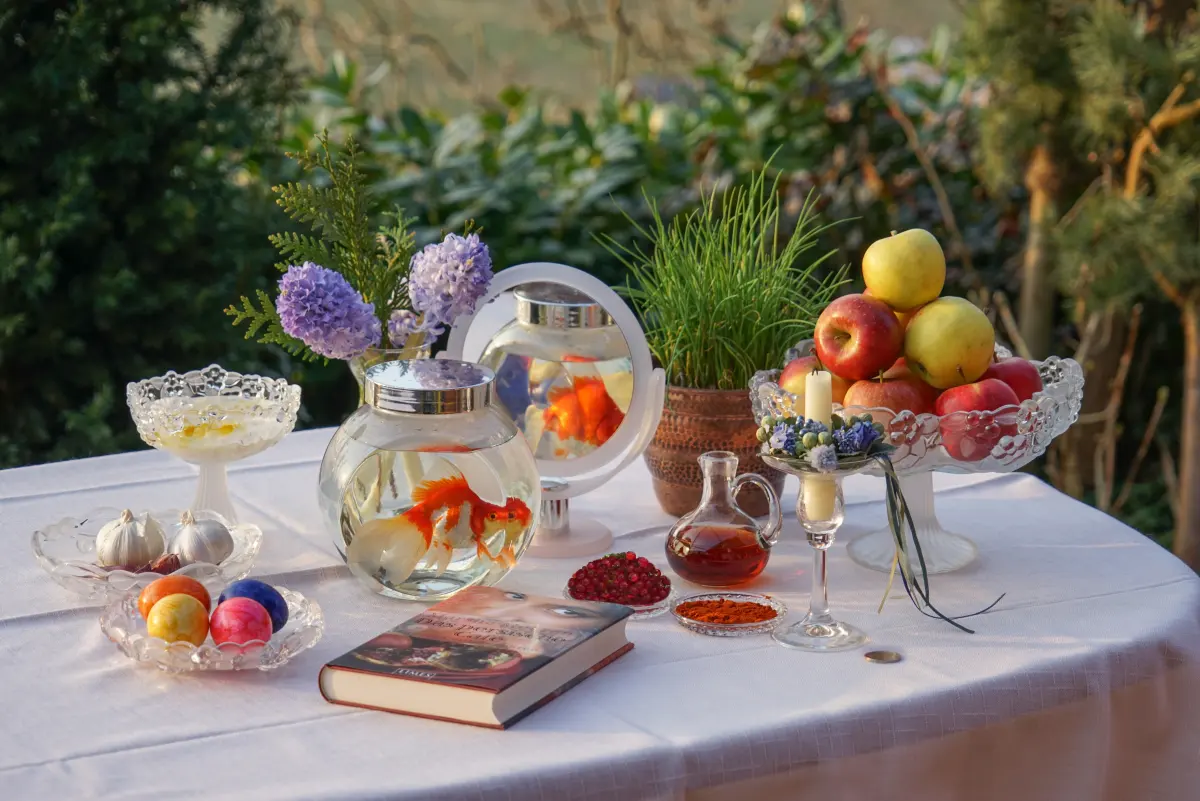
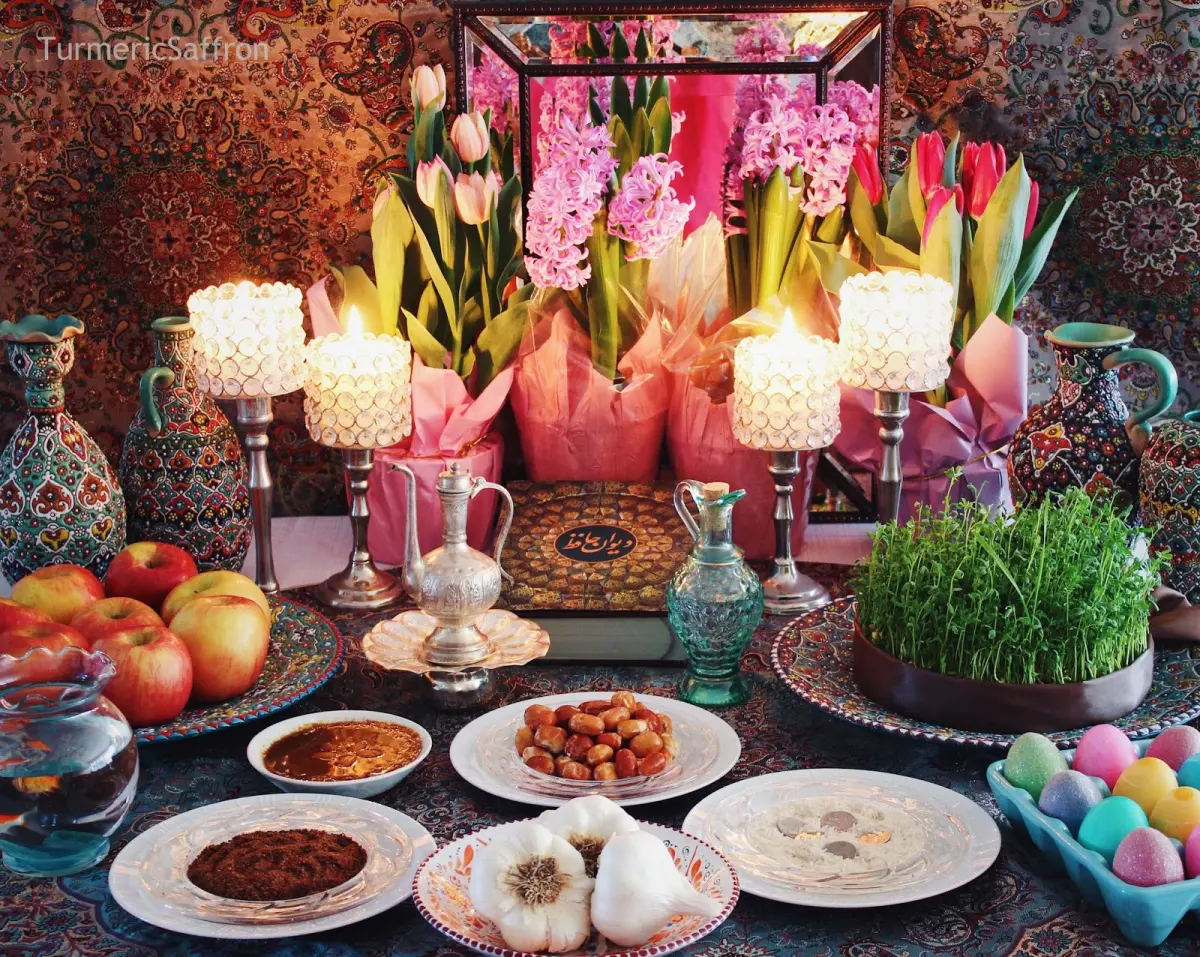
The centerpiece of the celebration is the Haft-sin, a traditional table setting featuring seven items that start with the Persian letter "sin" (s). Each item holds symbolic significance, representing concepts like health, love, prosperity, and rebirth. Families carefully arrange these items in their homes to welcome the new year with positive intentions and cultural pride.
Common items found on a traditional Haft-sin table include:
- Sabzeh: Wheat, barley, or lentil sprouts representing rebirth and growth.
- Samanu: A sweet pudding made from wheat germ, symbolizing affluence.
- Senjed: Dried oleaster fruit, representing love.
- Sir: Garlic, symbolizing medicine and health.
- Sib: Apples, representing beauty and vitality.
- Somaq: Sumac berries, symbolizing the color of sunrise.
- Serkeh: Vinegar, representing age and patience.
In addition to these items, the table often includes a mirror, candles, a bowl of goldfish, painted eggs, and a book of poetry or religious texts. These elements collectively create a focal point for the household during the holiday.
How to prepare for Nowruz?
Preparation for Nowruz begins weeks in advance with a tradition known as Khaneh-tekani, which translates to "shaking the house." This is a thorough spring cleaning intended to clear out the dust and stagnation of the previous year. By cleaning every corner of the home, participants prepare to welcome the new year with a fresh, organized, and purified living space.
Beyond cleaning, the preparation involves several practical steps to ensure a successful celebration:
- Purchase or grow the Sabzeh at least two weeks before the equinox so it is lush and green.
- Buy new clothes for family members to signify a fresh start.
- Prepare traditional sweets and pastries, such as baklava or chickpea cookies, to share with guests.
- Arrange the Haft-sin table in a prominent location in the home.
- Plan the menu for the New Year's Eve dinner, which traditionally features herb-infused rice with fish.
Common mistakes when celebrating Nowruz
One frequent error is failing to account for the exact astronomical timing of the equinox. Because the new year is not a fixed date, some people mistakenly treat it as a static holiday like Christmas. It is essential to check the specific time of the equinox for your time zone to ensure you are celebrating at the correct moment. Missing this window can disrupt the traditional transition rituals that many families value.
Another common mistake is neglecting the symbolic maintenance of the Haft-sin table throughout the 13 days. Some individuals set up the table but fail to keep the sprouts watered or the environment tidy. The table is meant to represent a living, thriving home; therefore, allowing the Sabzeh to wither or the table to become cluttered is considered poor form. Additionally, avoid the mistake of rushing the 13-day period; the holiday is designed to be a gradual, intentional transition into the spring season.
Why is Nowruz important?
Nowruz serves as a vital cultural bridge, connecting millions of people across diverse regions, including Iran, Afghanistan, Tajikistan, and parts of Turkey and India. It transcends religious and political boundaries, focusing instead on the universal human experience of seasonal change and the hope for a prosperous year ahead. By celebrating the return of light and the fertility of the land, it reinforces community bonds and historical identity.
In recognition of its significance, the United Nations officially recognized the International Day of Nowruz in 2010. It is also inscribed on the UNESCO Representative List of the Intangible Cultural Heritage of Humanity. These designations highlight the holiday's role in promoting peace, solidarity, and environmental consciousness. As a celebration of nature's resilience, Nowruz remains a powerful reminder of the importance of harmony between humanity and the world around us, ensuring its continued relevance for future generations.
Key facts
- Nowruz marks the Iranian New Year and the exact moment of the vernal equinox, typically occurring on March 20 or 21.
- The holiday has been celebrated for over 3,000 years, with roots in Zoroastrianism and ancient Persian culture.
- A central tradition is the Haft-sin table, which features seven symbolic items starting with the Persian letter "s."
- Common Haft-sin items include sabzeh (sprouted wheat or lentils) representing rebirth and seeb (apples) representing health.
- The festival lasts for 13 days, concluding with Sizdah Bedar, a day spent outdoors to ward off bad luck.
- Avoid the common mistake of treating Nowruz as a religious holiday; it is a secular cultural celebration observed by diverse ethnic groups.
The bottom line
Nowruz is a profound cultural celebration of the vernal equinox, symbolizing renewal, growth, and the triumph of light over darkness. By gathering with family around the symbolic Haft-sin table and engaging in time-honored rituals, participants honor their heritage while welcoming the arrival of spring. It serves as a vital bridge between ancient traditions and modern life, fostering community, hope, and reflection across diverse global populations.
People also ask
Who celebrates Nowruz?
Nowruz is celebrated by over 300 million people across the world, primarily in Iran, Afghanistan, Central Asia, and by various diaspora communities. It is observed by diverse religious and ethnic groups, including Persians, Kurds, Azeris, and Tajiks.
What is the significance of the number thirteen?
In Persian culture, the number thirteen is considered unlucky. On the thirteenth day of the New Year, families go to parks or the countryside to "leave the bad luck behind" in nature.
What is Chaharshanbe Suri?
This is the "Red Wednesday" festival held on the eve of the last Wednesday before Nowruz. Participants jump over small bonfires to symbolically purify themselves and replace their paleness with the fire's warmth and energy.
Is Nowruz a public holiday?
Yes, it is an official public holiday in many countries, including Iran, Afghanistan, Iraq, and several Central Asian nations. Schools, government offices, and businesses typically close for the duration of the festivities.
What kind of food is traditionally served?
A classic dish is Sabzi Polo ba Mahi, which is herb-infused rice served with fried fish. Another popular treat is Ash-e Reshteh, a thick noodle soup symbolizing the complexity of life and the untangling of one's future.
How should one greet someone during Nowruz?
The most common greeting is "Nowruz-e Mobarak," which translates to "Happy New Year." You may also hear "Eid-e Shoma Mobarak," which means "Happy holiday to you."
This answer was created with the help of AI research tools and reference sources. Spotted an error? Let us know — we correct mistakes quickly. See our editorial policy.