What is a French curve used for?
Short answer
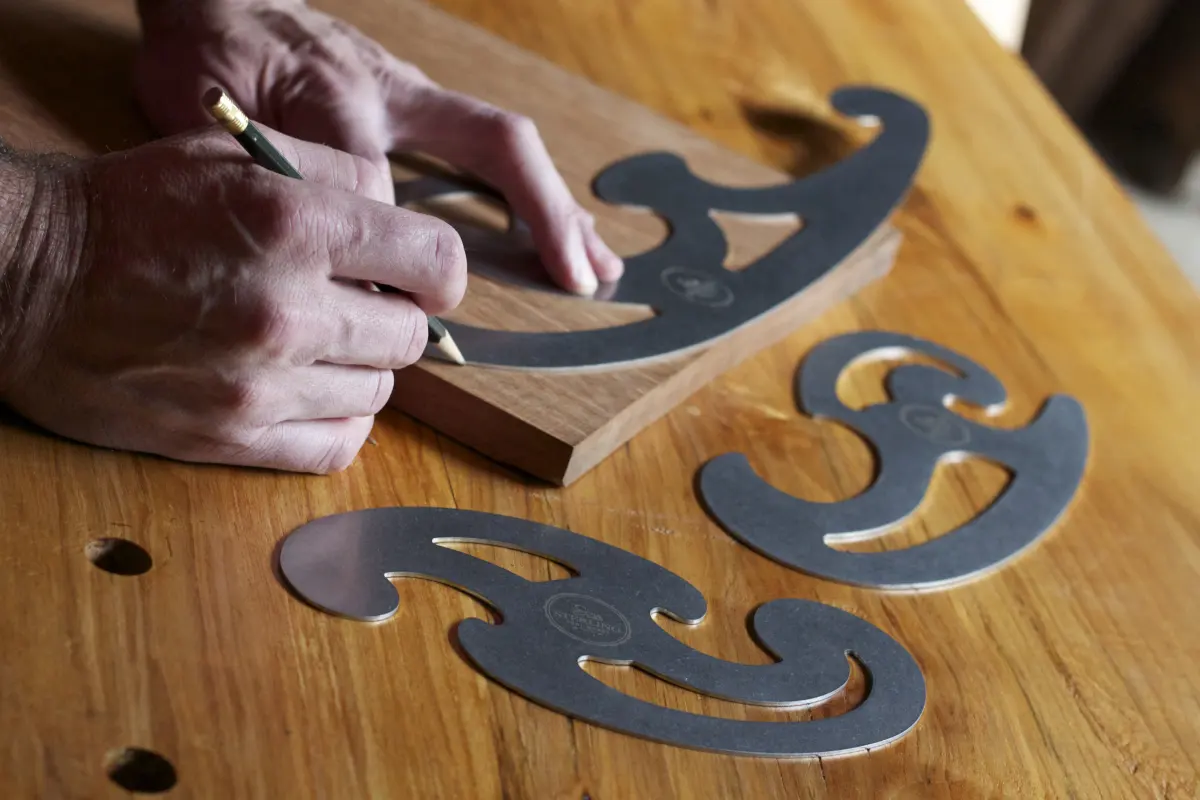
A French curve is a drafting tool used to draw smooth, precise curves that cannot be created with a standard compass. It features a variety of complex, non-circular arcs along its edges. Designers, tailors, and engineers use it to connect points with fluid lines in pattern making, fashion design, and technical illustration.
On this page
What is a French curve used for in design?
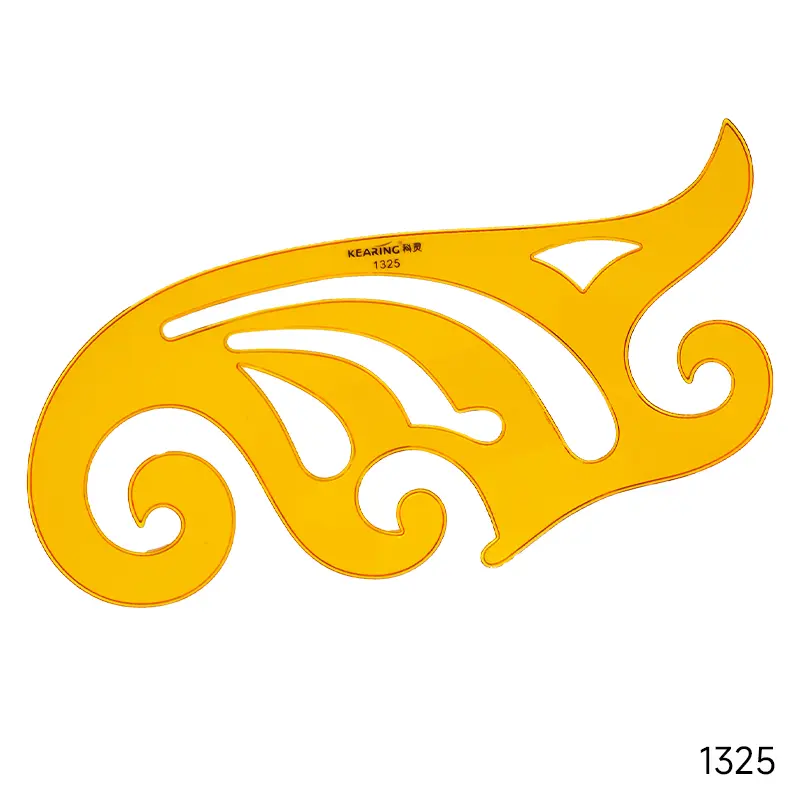
The French curve is a template primarily utilized in manual drafting and pattern making to draw smooth, varying curves. Unlike a compass, which creates perfect circles or arcs with a constant radius, a French curve contains multiple compound curves. These shapes allow a designer to transition between different radii seamlessly, which is essential for creating organic forms.
In the fashion industry, these tools are indispensable for drafting garment patterns. They help shape necklines, armholes, sleeve caps, and hip curves to ensure clothing fits the human body’s natural contours. By aligning the edge of the tool with pre-marked points on a pattern, a designer can connect disparate marks into a single, continuous line. This process ensures that the finished garment hangs correctly and maintains aesthetic symmetry across both sides of a piece.
How to use a French curve correctly
Using a French curve effectively requires patience and a steady hand to maintain contact between the pen and the template edge. The tool is designed with various curvatures, so you must rotate and shift it until a segment of the edge aligns with at least three points on your paper. Once aligned, hold the tool firmly in place and draw the line along the edge.
Follow these steps to achieve a professional result:
- Identify the specific curve on your template that best matches the trajectory of your plotted points.
- Align the template so the edge passes through your points, ensuring the curve flows naturally without sharp angles.
- Keep your pencil or pen at a consistent angle, preferably upright, to prevent the lead from slipping under the plastic edge.
- If the line is longer than the template, mark the end of your drawn line, shift the tool, and carefully overlap the previous segment to continue the path.
Why do designers prefer French curves?
Designers rely on French curves because they provide a level of precision that is nearly impossible to replicate by hand. Freehand sketching often results in shaky or inconsistent lines, which can lead to structural errors in mechanical drawings or poor fit in sewing projects. The rigid plastic construction of the French curve acts as a reliable guide, ensuring that the final output is clean and professional.
Beyond fashion, these tools are vital in mechanical engineering and architecture for drawing complex splines. A spline is a mathematical curve that passes through a set of points, and the French curve allows for the physical representation of these calculations. By using a standardized tool, professionals can ensure that their designs are reproducible and accurate. This consistency is critical when creating technical blueprints where even a slight deviation in a curve could affect the assembly or function of a final product.
Common mistakes when using French curves
One of the most frequent errors is attempting to force a single, mismatched curve to fit a long series of points. This often results in "kinked" lines where the curve suddenly changes direction, ruining the flow of the design. If the template does not align perfectly with your points, do not force it; instead, move the tool slightly and draw the line in smaller, more manageable segments.
Another common mistake involves the angle of the pen or pencil during the drawing process. Holding the pen at an angle can cause the tip to drift away from the template edge, resulting in a line that is slightly offset from where you intended it to be. Always keep your marking tool perpendicular to the paper. Additionally, avoid pressing too hard against the plastic, as this can cause the template to shift or slide during the process, leading to smudges or inaccurate lines.
Best French curve sets for beginners
For those starting out, a standard set of three to four templates is usually sufficient to cover most basic drafting needs. These sets are typically made from transparent, durable acrylic or tinted plastic, which allows the user to see the underlying marks on the paper clearly. Look for sets that include a variety of shapes, ranging from tight, sharp curves to long, sweeping arcs, as this versatility will serve you well across different projects.
When selecting your first set, consider the following features:
- Transparency: Ensure the plastic is clear enough to see your pencil marks through the material.
- Durability: Opt for high-quality acrylic that resists cracking and has smooth, burr-free edges.
- Edge profile: Some professional-grade templates feature a "raised" edge, which prevents ink from bleeding or smearing under the template when using technical pens.
- Size variety: A set containing both small and large templates will allow you to handle detailed work, like collars, as well as larger patterns, like skirt hemlines.
Investing in a reputable brand will ensure that the curves are mathematically accurate and that the edges remain smooth over years of regular use.
Key facts
- A French curve is a drafting template used to draw smooth, non-circular curves on paper.
- The tool typically features a combination of clothoid, elliptical, and spiral curves within a single plastic or wooden shape.
- It was popularized in the 19th century by engineers and architects to draft complex geometric shapes that compasses could not replicate.
- To use it, you must align at least two points of the curve template with your plotted points on the paper.
- When drawing, always keep your pencil or pen perpendicular to the paper to ensure a consistent line thickness.
- Professionals often use a set of three to five different curve templates to accommodate various radii and shapes in a single design.
The bottom line
The French curve is a versatile drafting tool designed to help creators draw smooth, professional-grade curves that are impossible to achieve with a compass or ruler. By aligning the template’s edges with plotted coordinates, users can maintain precision in fields ranging from fashion design to mechanical engineering. Mastering this tool requires patience and the willingness to reposition the template frequently to maintain a fluid, continuous line.
People also ask
Are French curves still used in the digital age?
Yes, they remain essential for fashion designers creating physical patterns and for students learning traditional technical drawing. While CAD software handles curves automatically, manual drafting is still taught to build spatial awareness.
How do I choose the right part of the curve to use?
You should slide the template along your plotted points until the edge of the tool matches the trajectory of your marks. If the curve is too sharp or too flat, rotate or flip the template to find a segment that aligns more precisely.
What is the difference between a French curve and a flexible curve?
A French curve is a rigid template with predetermined shapes, while a flexible curve is a bendable strip that can be molded into any custom shape. Flexible curves are better for tracing existing irregular outlines.
Can I use a French curve for sewing patterns?
Absolutely, as they are frequently used to shape armscyes, necklines, and crotch curves on garment patterns. They help ensure that seam lines remain smooth and symmetrical when transferring measurements to fabric.
What material is best for a French curve?
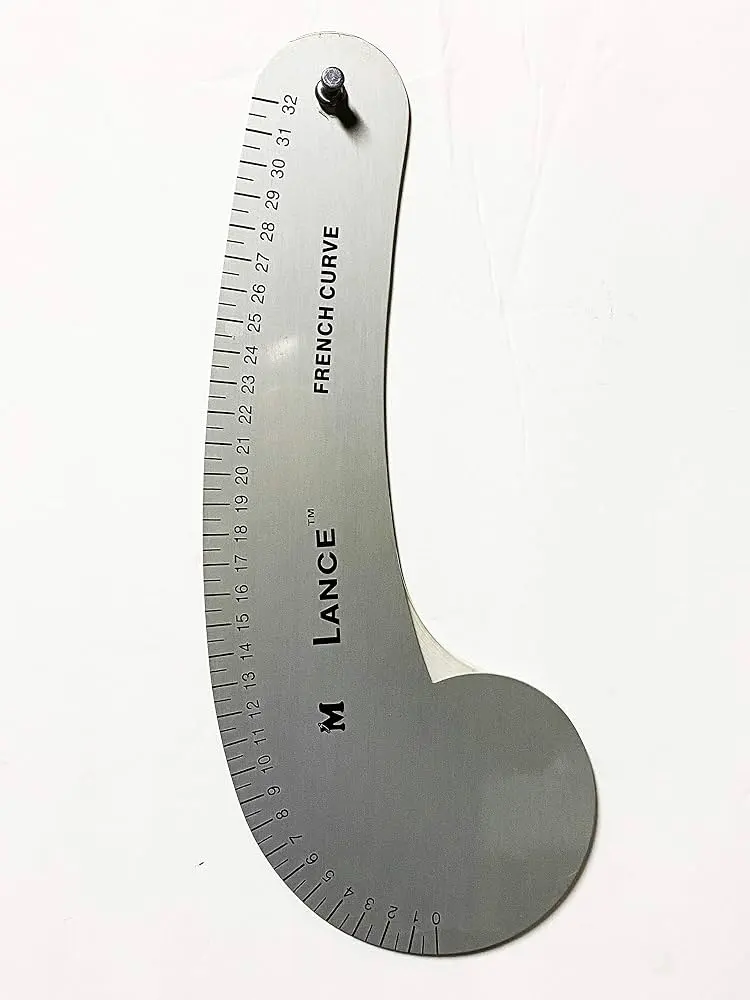
Transparent acrylic or plastic is preferred because it allows you to see the lines underneath the tool, which improves accuracy. Metal versions are more durable but lack visibility, making them less popular for precise drafting.
Should I draw the entire curve at once?
It is best to draw only the portion of the curve that matches your points, then move the tool to continue the line. Trying to force a single edge to fit too many points often results in an unnatural, jagged appearance.
This answer was created with the help of AI research tools and reference sources. Spotted an error? Let us know — we correct mistakes quickly. See our editorial policy.