How many hours does it take to learn to draw?
Short answer
Learning to draw is a lifelong pursuit rather than a fixed destination. Achieving basic proficiency typically requires 500 to 1,000 hours of deliberate practice. Mastery, however, often demands 10,000 hours or more. Progress depends entirely on the quality of your study, your consistency, and your specific artistic goals rather than mere time.
On this page
How long does it take to learn to draw?
The timeline for learning to draw is subjective because "proficiency" is not a standardized metric. For a hobbyist aiming to sketch recognizable objects or people, 500 hours of focused practice over a year is often sufficient to see significant improvement. This timeframe assumes you are practicing for roughly 1.5 hours every day. If you approach drawing as a professional career, the journey extends into thousands of hours of rigorous study in anatomy, perspective, and composition.
It is helpful to view this process in stages rather than a single block of time. The first 100 hours are usually spent overcoming the fear of the blank page and learning basic hand-eye coordination. By the 500-hour mark, most students have developed a personal style and can render complex subjects with reasonable accuracy. Beyond 1,000 hours, you move from learning "how" to draw toward "what" to draw, focusing on creative expression and complex storytelling through visual media.
Best drawing exercises for beginners
To optimize your learning time, you must engage in deliberate practice rather than mindless doodling. Structured exercises force your brain to analyze shapes, light, and edges, which are the fundamental building blocks of all visual art. Consistency is more important than duration; a focused 30-minute session is far more effective than a sporadic four-hour marathon once a week.
- Contour drawing: Trace the outline of an object without looking at your paper to improve hand-eye coordination.
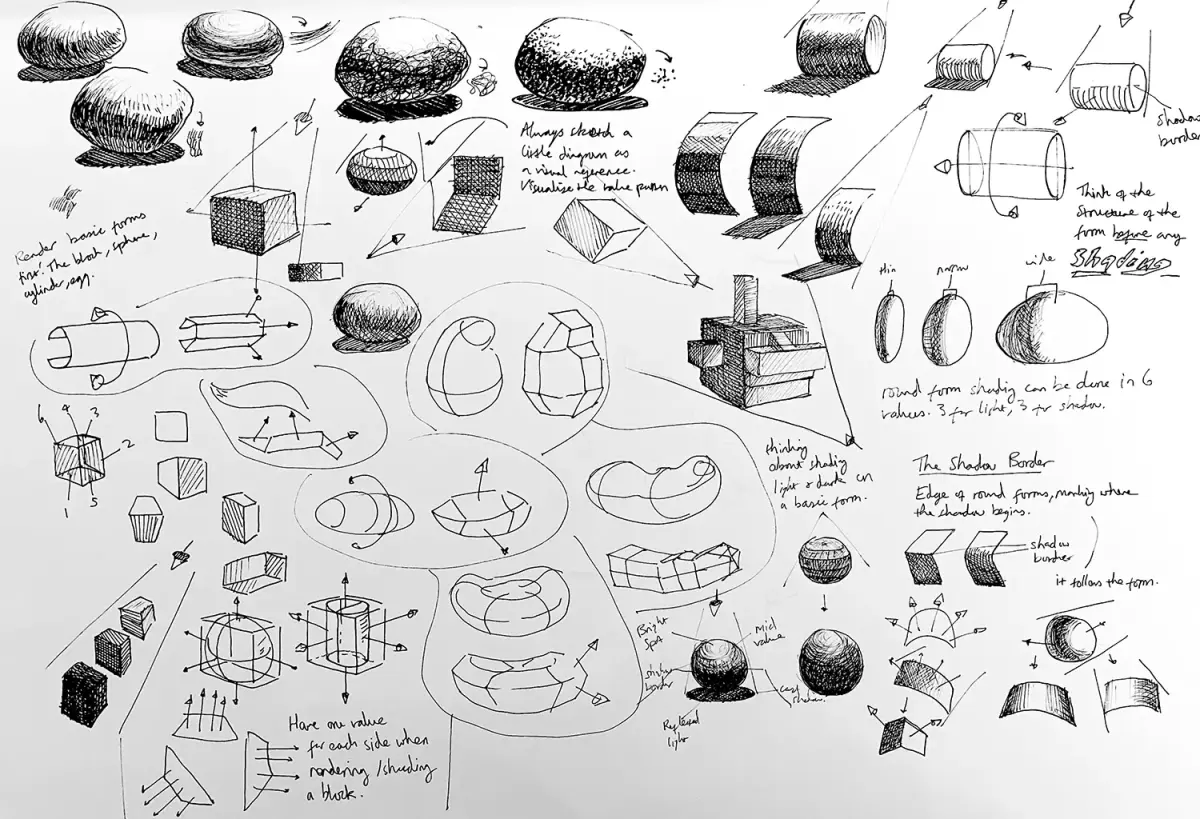
- Value studies: Use a single pencil to create a scale of five to seven shades between pure white and solid black.
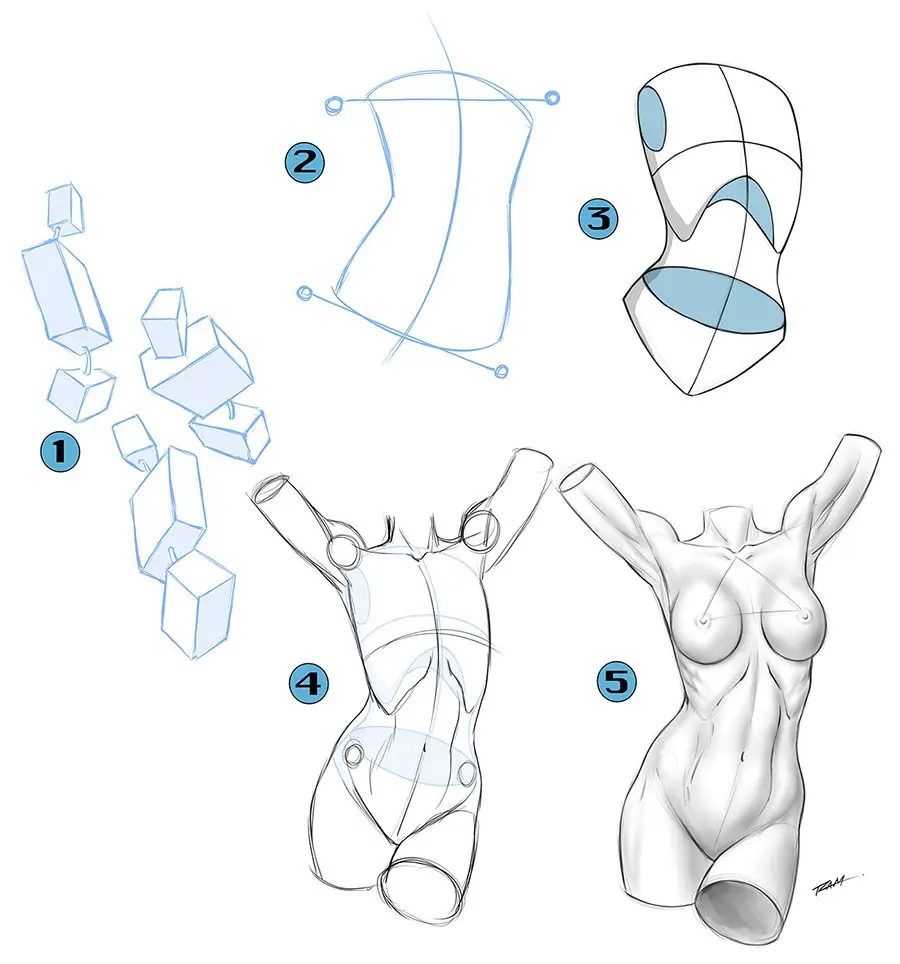
- Shape breakdown: Look at complex objects and practice drawing them using only basic geometric shapes like spheres, cubes, and cylinders.
- Gesture drawing: Spend 30 to 60 seconds sketching the movement and energy of a subject rather than focusing on fine details.
Why drawing progress feels slow
Many students experience a "plateau" where their skills seem to stagnate despite consistent effort. This phenomenon is often a sign that your eye for quality is developing faster than your technical ability to execute it. You are becoming a better critic of your own work, which is a necessary step in artistic growth, even if it feels discouraging in the moment.
Another reason for slow progress is the lack of variety in your study materials. If you only draw from your imagination, you will eventually reach a limit based on your current knowledge of reality. To break through these barriers, you must return to observational drawing. By studying real life, you feed your visual library with accurate data regarding how light hits surfaces, how fabric folds, and how human anatomy functions under tension.
Common mistakes when learning to draw
A frequent error is the tendency to draw what you "think" you see rather than what is actually there. For example, when drawing an eye, beginners often draw a symbolic almond shape instead of observing the actual folds and shadows of the eyelid. This reliance on mental symbols prevents you from capturing the unique nuances of your subject.
- Focusing on details too early: Always establish the large, overall shapes before adding textures or shading.
- Using the wrong tools: Avoid starting with complex media like charcoal or oil paint; a simple graphite pencil and standard paper are sufficient.
- Ignoring perspective: Failing to establish a horizon line or vanishing points will make your drawings look flat or distorted.
- Comparing yourself to professionals: Remember that social media often highlights the final result while hiding the years of discarded sketches and failed attempts.
How to stay motivated while practicing
Maintaining interest over hundreds of hours requires a balance between technical drills and creative play. If you spend every session practicing boring geometric forms, you will eventually burn out. Dedicate 70 percent of your time to structured learning and 30 percent to drawing subjects that you personally find exciting, such as characters, landscapes, or architectural designs.
Keep a physical sketchbook to track your progress over months and years. Looking back at drawings from six months ago is the most effective way to validate your growth, as daily improvements are often too subtle to notice. Celebrate small wins, such as finally getting the proportions of a hand correct or successfully capturing a specific light source. By focusing on these incremental victories, you ensure that the long journey toward artistic mastery remains a rewarding and sustainable endeavor for your creative life.
Key facts
- Mastery of fundamental drawing skills generally requires 500 to 1,000 hours of deliberate practice.
- The "10,000-hour rule" is a popular myth; meaningful proficiency is often achievable within 100 hours of focused study.
- Drawing is a motor skill similar to playing an instrument, requiring consistent repetition rather than sporadic marathon sessions.
- Beginners should prioritize "gesture drawing," which involves capturing the essence of a subject in 30 to 60 seconds.
- Using a sketchbook daily for 20 minutes is more effective for long-term retention than a single five-hour weekly session.
- Success depends on observational accuracy, which is the ability to translate three-dimensional objects onto a two-dimensional plane.
The bottom line
Learning to draw is a marathon, not a sprint. By dedicating at least 20 minutes daily to deliberate practice, you can see significant growth within a few months. Focus on fundamental shapes and observational skills rather than perfection. Consistency is the primary driver of success; if you prioritize regular, structured sessions over sporadic intensity, you will build the technical competence necessary to create art with confidence.
People also ask
Is drawing a talent you are born with or a skill you can learn?
Drawing is a technical skill that relies on hand-eye coordination and observational habits rather than innate talent. While some individuals may have a natural inclination, anyone can achieve high levels of proficiency through structured practice and patience.
What are the most important tools for a beginner to start with?
You only need a few basic supplies: a set of graphite pencils (HB, 2B, and 4B), a white vinyl eraser, and a sketchbook with smooth paper. Avoid expensive professional kits initially, as mastering the basics requires only simple, reliable materials.
How do I know if I am actually improving?
Keep all your early drawings in a dated portfolio to track your progress over time. You will notice improvements in your line quality, shading techniques, and perspective accuracy when comparing work from different months.
Should I copy other artists' work to learn?
Copying the work of masters is a traditional and effective method for understanding composition, line weight, and shading. However, ensure you use these copies for study purposes rather than claiming them as your own original creations.
What is the biggest mistake beginners make?
The most common error is focusing on details like eyes or hair before establishing the basic proportions and structure of the subject. Always start with light construction lines to ensure the overall shape is correct before adding shading or texture.
How much time should I spend on theory versus practice?
Aim for a ratio of 20 percent theory and 80 percent active drawing. Reading about anatomy or perspective is helpful, but your brain and hands only truly learn through the physical act of putting pencil to paper.
This answer was created with the help of AI research tools and reference sources. Spotted an error? Let us know — we correct mistakes quickly. See our editorial policy.