How do you draw with your non-dominant hand?
Short answer
Drawing with your non-dominant hand requires consistent practice to build new neural pathways between your brain and your less-dexterous side. By focusing on slow, deliberate movements and simple geometric shapes, you can gradually improve your motor control. Expect a period of awkwardness as your muscles adjust to these unfamiliar, fine-tuned motor tasks.
On this page
How to start drawing with your non-dominant hand
Developing motor skills in your non-dominant hand relies on neuroplasticity, the brain's ability to reorganize itself by forming new neural connections. When you switch hands, you are essentially asking your brain to map motor commands to a side that has historically received less practice. Begin by treating yourself like a complete beginner, as if you are learning to hold a pencil for the first time. The goal is not immediate artistic mastery, but rather the gradual refinement of hand-eye coordination.
Start with very basic exercises to acclimate your muscles to the weight and balance of the drawing tool. Focus on consistency rather than duration; fifteen minutes of daily practice is significantly more effective than a single two-hour session once a week. Keep your grip relaxed to prevent cramping, which often occurs when beginners tense up while trying to force precision.
- Hold the pencil with a loose, comfortable grip, allowing your fingers to remain flexible.
- Practice drawing straight horizontal and vertical lines across a page without using a ruler.
- Draw circles and squares repeatedly to develop control over curves and corners.
- Focus on maintaining a steady, even pressure throughout each stroke to ensure consistency.
How long does it take to see progress
The timeline for proficiency varies significantly depending on your consistency and the complexity of the tasks you undertake. Most people notice a marked improvement in basic line quality within two to four weeks of daily practice. However, achieving the same level of fluidity and speed as your dominant hand can take several months or even years of dedicated effort. It is important to view this process as a marathon rather than a sprint, as progress is often incremental and sometimes difficult to perceive day-to-day.
Tracking your progress is essential for maintaining motivation during the initial, frustrating stages. Keep a dedicated sketchbook where you date every page, allowing you to look back at your early marks after a month. You will likely find that your lines become straighter and your shapes more symmetrical over time. Do not be discouraged by periods of plateaus, as these are natural parts of the learning curve where the brain is consolidating new motor patterns.
Best exercises for beginners
To build dexterity effectively, you should move from simple repetitive motions to more complex shapes. Start by tracing simple geometric patterns or coloring within lines to train your hand to stop at specific boundaries. This helps bridge the gap between visual intent and physical execution, which is often the biggest hurdle for the non-dominant hand. Once you feel comfortable with basic shapes, begin sketching simple objects from your environment, such as a coffee mug or a piece of fruit.
- Use a soft graphite pencil, such as a 2B, which requires less pressure to leave a mark.
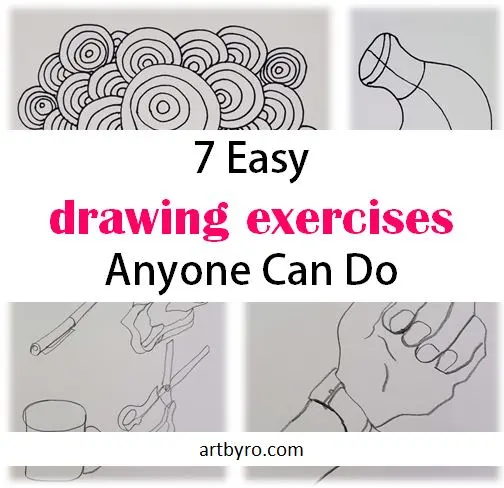
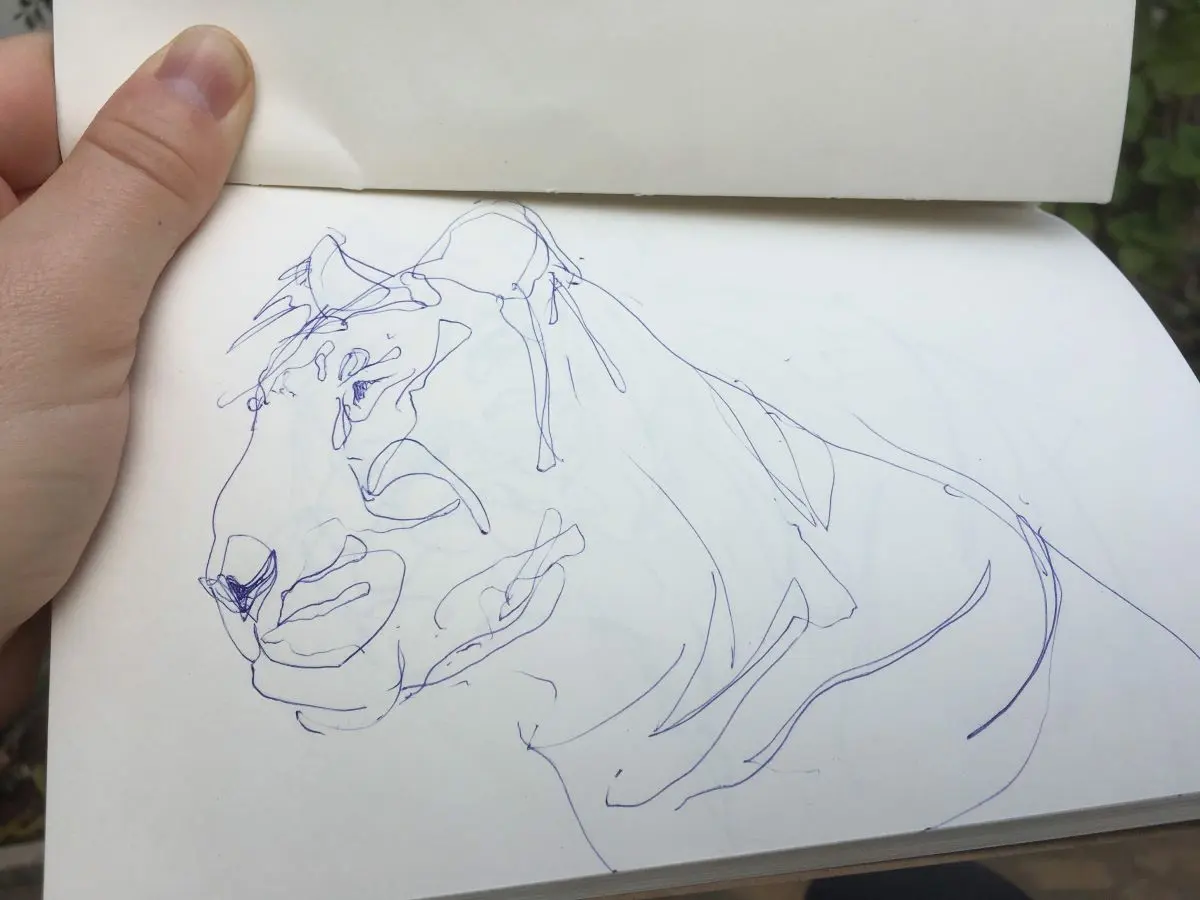
- Practice "blind contour drawing," where you draw an object without looking down at your paper.
- Try writing the alphabet in both uppercase and lowercase to improve fine motor control.
- Experiment with different pencil angles to see how they affect the thickness and texture of your lines.
By varying your exercises, you engage different muscle groups and prevent the repetitive strain that can lead to fatigue. Always prioritize accuracy over speed, as building muscle memory requires clean, intentional movements rather than rushed, sloppy ones.
Why hand fatigue happens
Hand fatigue is a common issue for beginners because the non-dominant hand lacks the refined muscle memory of the dominant one. When you struggle to control the pencil, your natural instinct is to grip the tool tighter, which causes the muscles in your hand and forearm to tense up unnecessarily. This tension restricts fluid movement and makes drawing feel like a chore rather than a creative exercise. Furthermore, because your non-dominant hand is not used to these specific demands, the muscles tire much faster than those in your dominant hand.
To mitigate this, incorporate frequent breaks into your practice routine. Every ten minutes, stop to stretch your fingers, wrists, and shoulders to release accumulated tension. Avoid "death gripping" the pencil; if your knuckles are turning white, you are holding it too tightly. Maintaining a relaxed posture throughout your body, including your neck and back, also helps reduce the strain that travels down into your hand. Over time, as your muscles become more efficient, you will find that you can draw for longer periods without experiencing significant discomfort.
Common mistakes when switching hands
One of the most frequent mistakes beginners make is trying to draw complex subjects too early. Attempting a detailed portrait or a complicated landscape before you have mastered basic lines will only lead to frustration and discouragement. Instead, focus on mastering the fundamentals of mark-making. Another common error is failing to maintain a consistent practice schedule. If you only practice sporadically, your brain does not receive the consistent feedback loop required to solidify new motor pathways.
- Comparing your non-dominant work to your dominant work too early in the process.
- Ignoring the importance of posture and arm positioning while drawing.
- Using poor-quality paper or pencils that make the learning process more difficult.
- Forgetting to stretch, which leads to long-term muscle stiffness and potential injury.
By avoiding these pitfalls and maintaining a patient, disciplined approach, you can successfully train your non-dominant hand. Remember that every mark you make, no matter how shaky or imprecise it may seem at the time, is a necessary step in the development of your new skill.
Key facts
- The brain’s motor cortex controls the non-dominant hand, but it requires significant neuroplasticity to improve fine motor skills.
- Start by practicing basic shapes like circles and lines to build muscle memory before attempting complex drawings.
- Use a thicker grip or a weighted pen to provide more sensory feedback to your non-dominant hand.
- Position your paper at a slight angle to accommodate the natural arc of your arm movement.
- Dedicate at least 15 minutes of daily practice to see measurable improvement in line control within a few weeks.
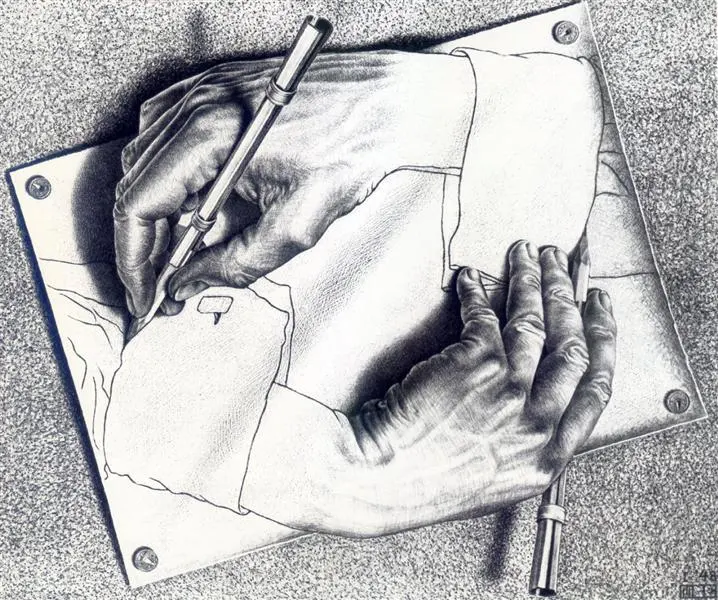
- Mirror drawing, where you draw the same shape with both hands simultaneously, can accelerate coordination.
The bottom line
Drawing with your non-dominant hand is a rewarding exercise in patience and neuroplasticity. By focusing on consistent, low-pressure practice and utilizing techniques like mirror drawing, you can bridge the gap between your hands. While the initial results may feel clumsy, the process strengthens brain connectivity and improves motor control. Embrace the learning curve, as every stroke helps build the muscle memory required for eventual artistic fluidity.
People also ask
Will learning to draw with my non-dominant hand make me smarter?
While it does not increase intelligence, the process stimulates the growth of new neural pathways. This cross-lateral training enhances brain connectivity and improves overall hand-eye coordination.
How long does it take to become proficient?
Achieving basic competency typically takes three to six months of consistent daily practice. True mastery, however, requires years of dedication similar to learning any other complex physical skill.
Should I use my dominant hand to guide my non-dominant one?
Using your dominant hand as a guide can help your non-dominant hand learn the correct movement patterns. This technique, known as "hand-over-hand" training, provides a physical template for your muscles to follow.
Is it harder to draw with the non-dominant hand than to write?
Drawing is generally considered easier because it relies on broad motor movements rather than the precise, small-scale strokes required for calligraphy. You have more creative freedom to adjust your technique to your hand's limitations.
Can I use the same tools I use with my dominant hand?
Yes, but you may find that softer pencils or markers are easier to control initially. These tools require less pressure, reducing the fatigue and tension that often plague beginners.
Why does my non-dominant hand shake when I try to draw?
This is caused by a lack of established motor pathways and muscle fatigue. As you continue to practice, your muscles will develop the necessary stamina and stability to produce smoother, more controlled lines.
This answer was created with the help of AI research tools and reference sources. Spotted an error? Let us know — we correct mistakes quickly. See our editorial policy.