How long do seagulls live?
Short answer
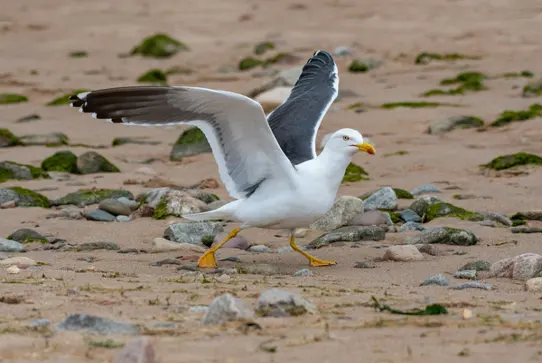
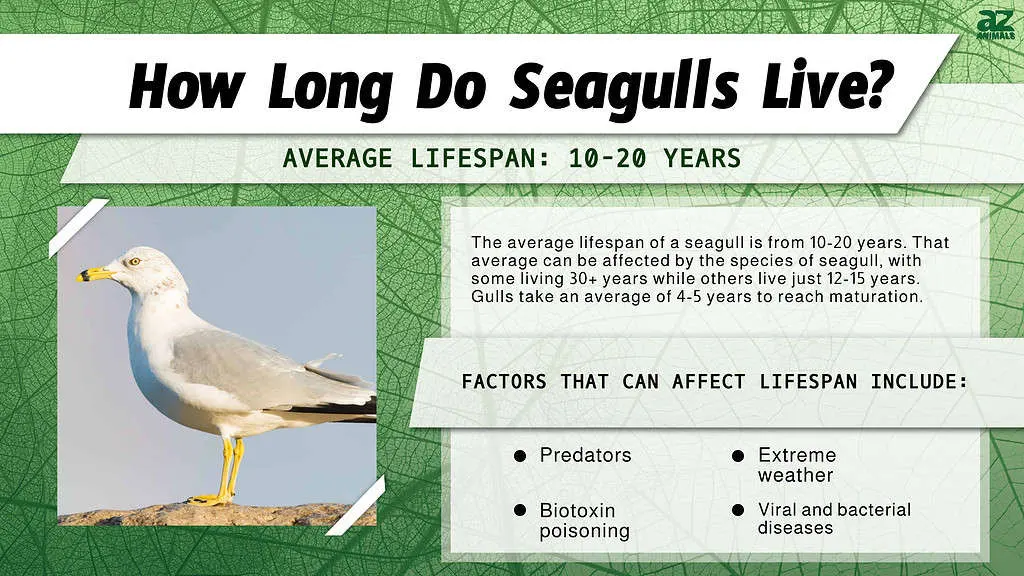
Most seagulls, or gulls, typically live between 10 and 15 years in the wild. While many individuals succumb to predators or disease during their first year, those that survive to adulthood often reach their late teens. Exceptional cases have documented some larger species, such as the herring gull, living into their thirties.
On this page
How long do seagulls live in the wild?
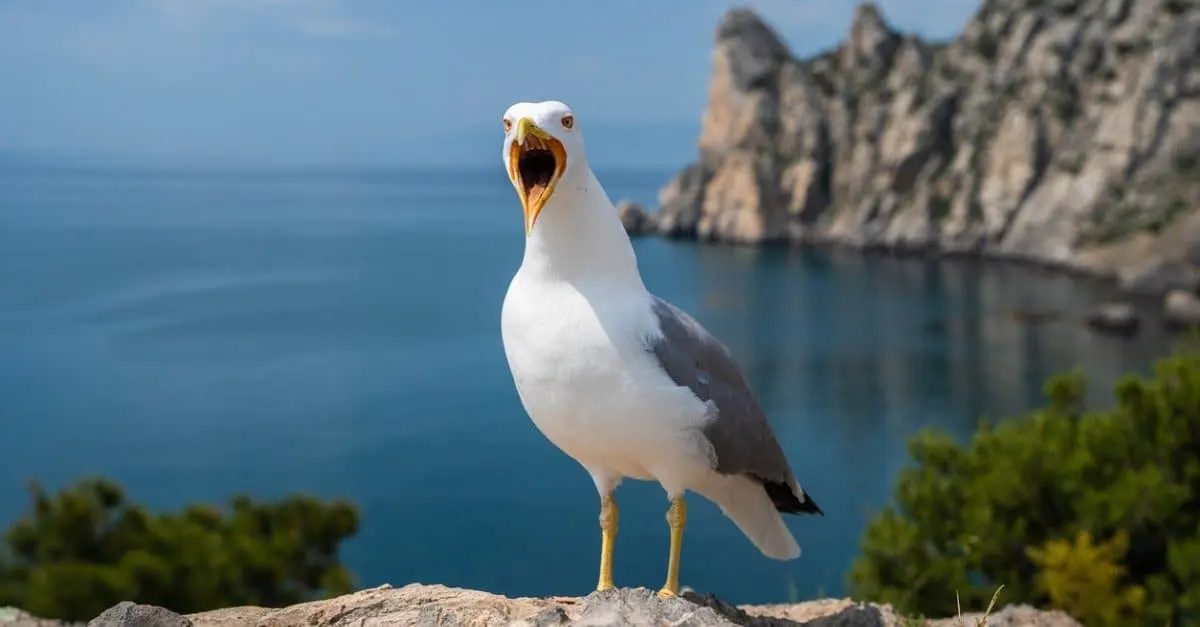
The lifespan of a seagull is heavily influenced by its species and environmental conditions. Smaller species, such as the Bonaparte’s gull, generally have shorter lifespans, often averaging around 10 years. Larger species like the great black-backed gull are more robust and frequently live 15 to 20 years. These birds face significant mortality risks during their first year of life, as they must learn to forage and navigate complex coastal environments while avoiding predators.
Once a gull reaches maturity, which typically occurs between three and five years of age, its chances of survival increase significantly. Adult gulls are highly intelligent and adaptable, allowing them to exploit diverse food sources ranging from marine life to human refuse. Environmental factors such as habitat loss, pollution, and climate change play a major role in determining if a bird reaches its maximum potential age. In protected areas with abundant food, some gulls have been recorded living significantly longer than the average.
What factors affect a seagull's lifespan?
Several biological and external variables dictate how long a gull survives. The primary threat to young gulls is predation from larger birds, such as eagles or hawks, and terrestrial mammals like foxes or rats. Furthermore, the availability of high-quality food sources is critical during the breeding season. Gulls that rely solely on natural prey often face greater challenges than those that have adapted to urban environments, though urban diets can sometimes lead to nutritional deficiencies.
Human activity presents both benefits and dangers to gull populations. While human waste provides a consistent caloric intake for many urban-dwelling gulls, it also exposes them to hazards:
- Ingestion of plastic waste and fishing gear, which causes internal injuries or starvation.
- Exposure to environmental toxins, including oil spills and heavy metals found in coastal runoff.
- Increased risk of vehicle collisions near busy ports and tourist beaches.
- Entanglement in discarded fishing lines and nets, which often leads to fatal injuries or restricted movement.
How do researchers track seagull age?
Ornithologists use a method called bird banding or ringing to study the longevity of gulls. A small, lightweight metal or plastic band is placed on the bird’s leg, featuring a unique identification number. When the bird is recaptured or observed later, scientists can determine its age and track its movements across continents. This data has been essential in establishing that many gulls are migratory, often traveling thousands of miles between breeding and wintering grounds.
The process of tracking involves careful cooperation between researchers and the public. If you find a banded bird, you can report the number to national bird banding laboratories. This collaborative effort helps build a comprehensive database of longevity records. Some of the most notable findings from these programs include:
- The identification of specific migratory routes that minimize energy expenditure.
- The discovery that some gulls return to the exact same nesting sites for over a decade.
- The documentation of survival rates for different age cohorts within a colony.
- The recording of extreme longevity cases, such as herring gulls surviving past age 30.
How can you help protect local seagull populations?
Protecting gulls involves minimizing the threats they face in their daily lives. One of the most effective ways to help is by keeping beaches and coastal areas clean of debris. Plastic waste is a leading cause of premature death for many seabirds, as they often mistake small pieces of plastic for food. By participating in local beach cleanups, you reduce the amount of hazardous material available for gulls to ingest or become entangled in.
Responsible disposal of fishing gear is equally vital for the health of seabird colonies. If you are a recreational angler, ensure that all lines, hooks, and nets are secured and disposed of in designated bins. Common mistakes to avoid include:
- Leaving bait or food scraps on the beach, which attracts predators and encourages "begging" behavior that can lead to human-wildlife conflict.
- Feeding gulls processed human food, which lacks the essential nutrients they require for long-term health.
- Approaching nesting sites, as this causes stress and may lead parents to abandon their eggs or chicks.
Why do some seagulls live longer than others?
Individual variation in health and behavior accounts for the wide range of lifespans observed within a single species. Gulls that exhibit higher levels of behavioral plasticity—the ability to adapt quickly to new or changing environments—tend to survive longer. Those that successfully manage to balance natural foraging with opportunistic feeding in urban areas often maintain better body condition. Genetic factors also play a role, as some individuals are naturally more resistant to common avian diseases or parasites.
Furthermore, the stability of a gull’s nesting colony is a strong predictor of longevity. Colonies that are well-protected from predators and have stable access to fish stocks provide a safer environment for raising offspring and maintaining adult health. When these conditions are met, the survival rate of the entire population increases. By understanding the specific needs of these birds, humans can help ensure that these resilient and fascinating creatures continue to thrive in our coastal ecosystems for many years to come.
Key facts
- Most gull species live between 10 and 20 years in the wild.
- The Herring Gull, a common coastal species, can live up to 30 years in protected environments.
- Survival rates are lowest during the first year of life, with many juveniles failing to reach adulthood.
- Larger gull species generally live longer than smaller species due to fewer natural predators.
- Factors like urban food sources, habitat loss, and pollution significantly impact individual life spans.
- To help local bird populations, avoid feeding them processed human food, which causes nutritional deficiencies.
The bottom line
While the lifespan of a seagull typically ranges from 10 to 20 years, individual survival depends heavily on environmental conditions and access to natural food sources. Although some individuals reach three decades, the majority face significant challenges during their first year. Understanding that these birds are long-lived, complex creatures helps us appreciate their role in coastal ecosystems and encourages responsible interaction with their urban habitats.
People also ask
Do seagulls live longer in cities than in the wild?
Urban gulls often have access to more food, but they face higher risks from vehicle collisions and toxic waste. While they may survive longer due to consistent calories, their overall health is frequently lower than gulls in natural habitats.
What is the oldest recorded age for a seagull?
A Herring Gull in the United States was once recorded living to be 32 years and 9 months old. This is an exceptional case, as most wild gulls succumb to disease or predation well before reaching their third decade.
Do seagulls mate for life?
Many gull species are monogamous and will return to the same nesting site with the same partner for many years. This long-term pair bonding helps them coordinate the intensive labor required to raise chicks successfully.
Why do seagulls die young?
The primary causes of early mortality include starvation, severe weather, and predation by larger animals like foxes or eagles. Young birds often struggle to find consistent food sources before they have mastered efficient foraging techniques.
How can you tell how old a seagull is?
You can estimate age by observing their plumage, as most gulls take three to four years to develop adult coloring. Juveniles are typically mottled brown, while mature adults display the classic white and gray feathers.
Do gulls have natural predators?
Eggs and chicks are frequently targeted by crows, rats, and other gulls, while adult birds are hunted by raptors and large mammals. These threats keep gull populations in check and contribute to the average life expectancy of the species.
This answer was created with the help of AI research tools and reference sources. Spotted an error? Let us know — we correct mistakes quickly. See our editorial policy.