How do you draw a pirate?
Short answer
Drawing a pirate involves constructing a character through iconic accessories and rugged features. Start with a basic anatomical sketch, then layer on elements like tricorn hats, eye patches, and tattered clothing. Focus on expressive facial features and dynamic poses to convey the adventurous, seafaring personality typical of historical and fictional buccaneers.
On this page
How to sketch the basic pirate anatomy
Begin by establishing the character's core structure using simple geometric shapes. Map out the head as an oval, the torso as a trapezoid, and the limbs as lines with circles at the joints. This framework ensures your pirate has realistic proportions before you add the complex details of their clothing or weaponry.
Once the skeleton is set, add volume to the limbs to represent muscle or layers of fabric. Pirates are often depicted as rugged, so consider giving them a broad-shouldered stance or a slightly hunched posture to suggest years spent navigating rough seas. Avoid making the limbs too thin, as a pirate should look capable of physical labor on a ship.
- Draw a light vertical line to act as the center axis for the body.
- Place an oval for the head and a larger rectangle for the chest.
- Attach cylinders for the arms and legs, noting where the elbows and knees bend.
- Refine the outline to create a silhouette that feels solid and grounded.
Best drawing tools for beginners
For those starting out, a standard HB graphite pencil is ideal for the initial sketch because it is easy to erase. You should also have a set of fine-liner pens or markers for adding permanent outlines once the structure is finalized. Using high-quality, smooth-surfaced paper prevents the graphite from smudging and allows for cleaner lines during the detailing phase.
If you prefer adding color, watercolor pencils or alcohol-based markers work exceptionally well for pirate themes. These mediums allow you to create the weathered, earthy tones associated with wooden ships and sea-worn leather. Keep a kneaded eraser nearby to lift away excess graphite without damaging the paper fibers, which helps keep your workspace clean while you work.
- HB pencil for the preliminary layout.
- 2B pencil for shading and adding depth.
- Fine-tip black ink pen for finalizing the silhouette.
- Kneaded eraser for precise corrections.
- Smooth bristol board or heavy sketchbook paper.
How to add iconic pirate accessories
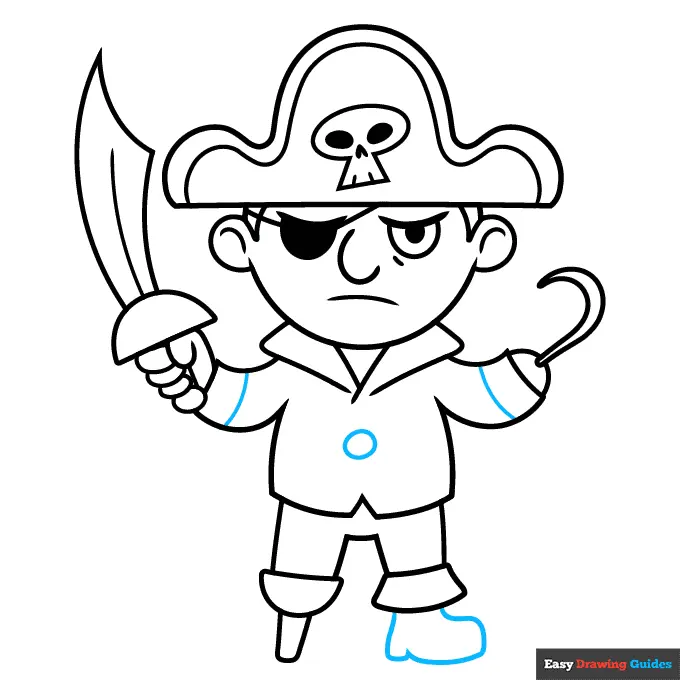
Accessories are what transform a generic character into a recognizable pirate. Start with the headgear; a tricorn hat is the most iconic choice, characterized by its three-cornered brim. Add an eye patch over one eye to create a sense of mystery or injury, and perhaps include a thick, unkempt beard to emphasize the character's rugged, long-voyage lifestyle.
Clothing should look worn and practical rather than pristine. Draw a loose-fitting shirt with billowing sleeves, a heavy vest, and high leather boots. You can add small details like a sash tied around the waist, a heavy belt with a large buckle, or a gold hoop earring. These small additions provide visual interest and tell a story about the pirate's rank or history.
- Tricorn hat or a simple bandana tied at the back.
- Eye patch, often held by a thin string around the head.
- Loose, ruffled shirt with a cravat or open collar.
- Wide leather belt with a prominent buckle for a cutlass.
- High, rugged boots that look suitable for climbing ship rigging.
Common mistakes when drawing pirates
A frequent error is making the pirate look too clean or modern. Pirates spent months at sea, so their clothes should be tattered, stained, or patched. Avoid drawing perfectly straight lines or pristine fabrics; instead, use jagged lines for frayed edges and cross-hatching to suggest dirt or wear. The character should look like they have actually lived on a ship.
Another common mistake is ignoring the weight of the accessories. If a pirate is wearing a heavy sword, the belt should sag slightly under the weight, and the character’s posture should reflect that burden. Ensure that props like pistols or cutlasses are held in a way that feels natural, rather than just floating in the hand. Always consider how the gear interacts with the body's gravity.
- Forgetting to add texture to leather and wood items.
- Drawing the character standing perfectly upright, which lacks personality.
- Making the pirate's face too symmetrical, losing the "rough" look.
- Neglecting the shadows that heavy hats cast over the eyes.
Why pirates look best with dynamic poses
Static poses can make a pirate look like a mannequin rather than a swashbuckler. To make your drawing more engaging, tilt the shoulders or hips to create a sense of movement, such as leaning into the wind or bracing against the deck of a rolling ship. An active pose, like reaching for a weapon or pointing toward the horizon, adds immediate narrative tension.
Consider the line of action, which is an imaginary line that runs through the spine and dictates the flow of the character's movement. By curving this line, you create a more fluid and energetic composition. A pirate who is mid-stride or mid-swing is far more interesting than one standing still. Experiment with these angles to bring your seafaring character to life on the page.
Key facts
- Start with a simple stick figure or basic shapes like an oval for the head and a rectangle for the torso to establish proportions.
- The classic pirate look relies on iconic accessories: an eye patch, a tricorne hat, and a sash around the waist.
- Use jagged, uneven lines for clothing to suggest wear and tear from life at sea.
- A wooden peg leg or a metal hook hand adds immediate character and historical context to the figure.
- Draw a parrot perched on the shoulder to provide a focal point and reinforce the pirate archetype.
- Avoid making the character too symmetrical; pirates are often depicted in dynamic, asymmetrical poses to show movement.
The bottom line
Drawing a pirate is an exercise in layering iconic visual tropes to build a recognizable character. By focusing on essential accessories like the tricorne hat, eye patch, and cutlass, you create an immediate narrative. Remember to emphasize weathered textures and asymmetrical details to reflect the rugged lifestyle of a sailor. With these foundational elements, you can easily craft a compelling figure that embodies the spirit of piracy.
People also ask
What is the most important feature to include when drawing a pirate?
The most recognizable feature is the headgear, specifically the tricorne hat. Adding this hat instantly signals to the viewer that the character is a pirate.
Should I use bright or dark colors for a pirate illustration?
Pirates are traditionally associated with dark, earthy tones like deep browns, blacks, and grays. Using these colors helps convey the gritty, weathered nature of a life spent on the ocean.
How do I make a pirate look menacing?
Give the character a heavy brow, a thick beard, and a jagged scar across the cheek. These aggressive facial features create a sense of danger and experience.
What common mistake should I avoid when drawing a pirate's weapon?
Avoid drawing a modern firearm; stick to period-accurate weapons like a flintlock pistol or a curved cutlass. These tools are essential for maintaining the historical aesthetic of the Golden Age of Piracy.
How can I show that a pirate has been at sea for a long time?
Add details like patches on their clothing, salt-crusted boots, and messy, windblown hair. These small visual cues suggest the character has endured harsh weather and long voyages.
Is it necessary to draw a ship in the background?
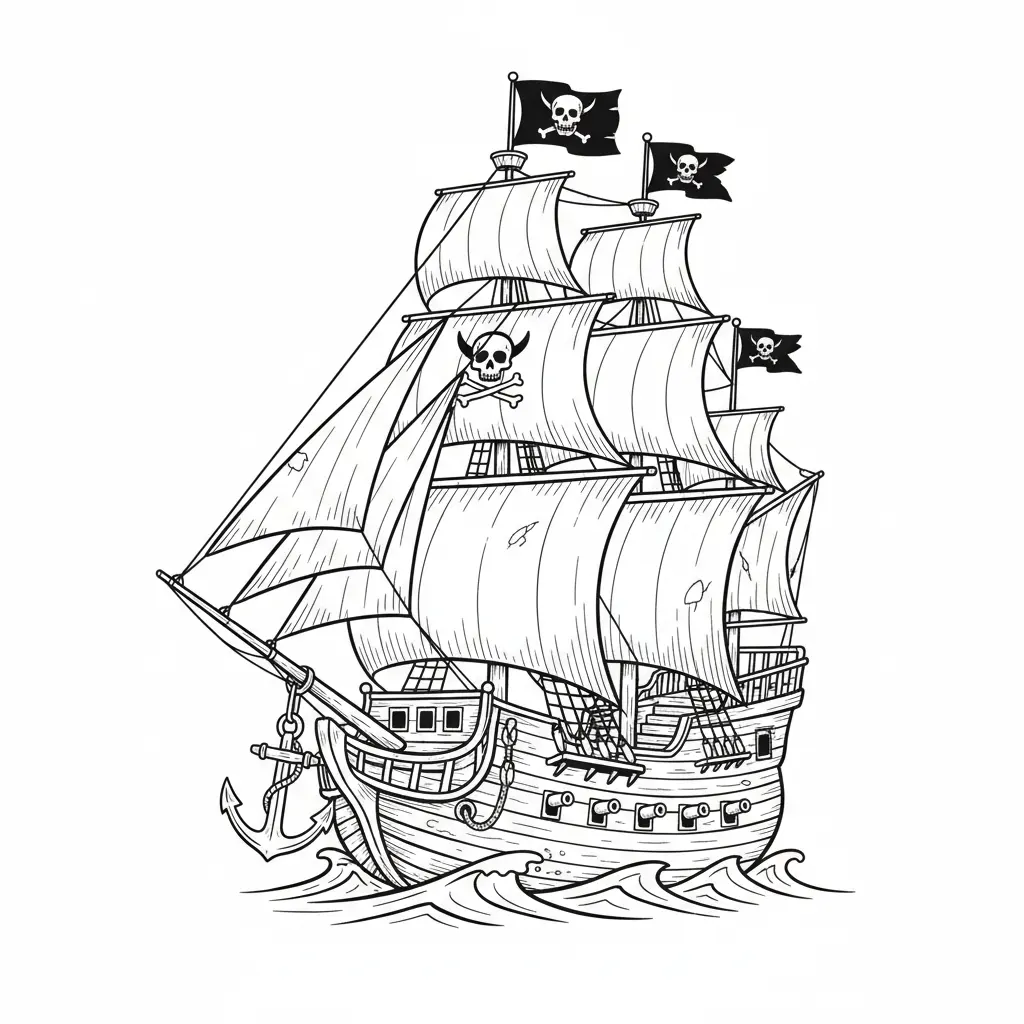
While not mandatory, a ship's rigging or a wooden deck provides essential context. Including these elements helps ground the character in their environment and tells a clearer story.
This answer was created with the help of AI research tools and reference sources. Spotted an error? Let us know — we correct mistakes quickly. See our editorial policy.