How do you draw a lion for beginners?
Short answer
Drawing a lion for beginners involves breaking the complex animal down into simple geometric shapes like circles and ovals. By sketching a circular head, an oval torso, and basic limb cylinders, you create a structural foundation. Refine these shapes with anatomical details, fur texture, and facial features to achieve a realistic result.
On this page
How to start drawing a lion with basic shapes
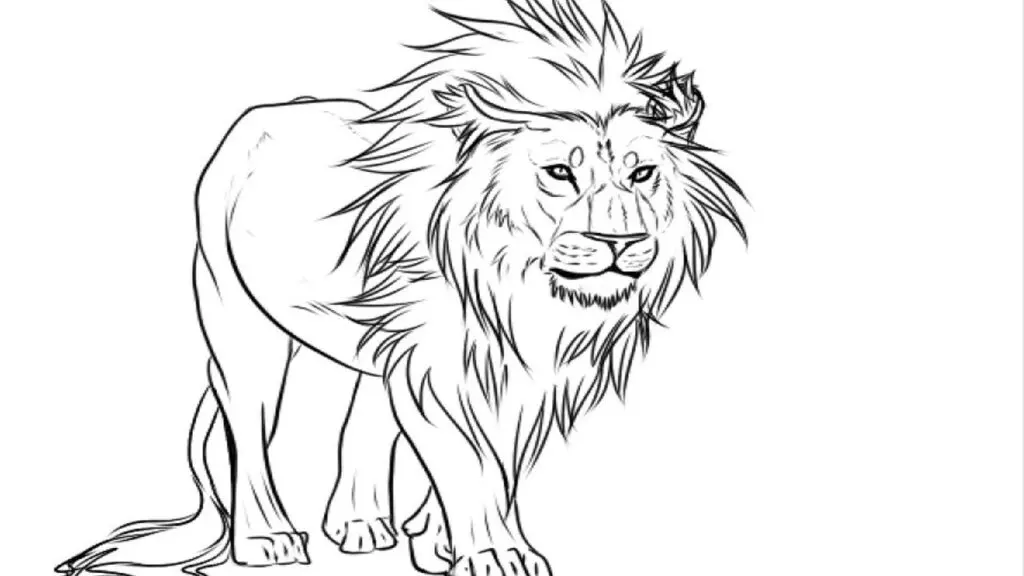
The most effective way to approach a lion drawing is by using the "mannequin" method. Start by drawing a medium-sized circle for the head and a larger, elongated oval for the rib cage. Connect these with two curved lines to represent the neck, which is thick and muscular in lions. Adding a smaller, slightly tilted oval for the hindquarters helps establish the animal's powerful posture.
Once these primary volumes are placed, use simple lines to map out the limbs. Remember that a lion’s front legs are sturdy and straight, while the back legs have a distinct "Z" shape due to the hock joint. Keeping your initial lines light is essential, as these are merely guides to be erased later. Focus on the proportions rather than the details, ensuring the head size is roughly one-fourth of the total body length.
Best tools for beginner lion sketches
For those new to animal illustration, a standard HB graphite pencil is the most versatile choice. It allows for both light construction lines and darker shading without smudging excessively. Using a kneaded eraser is highly recommended because it can be molded into precise points to lift graphite off the paper without damaging the surface texture.
When choosing paper, select a medium-weight drawing pad with a slight tooth or texture. This surface helps the graphite adhere better, making it easier to create the illusion of fur. Beginners should also have a sharpener nearby, as a dull pencil will make it difficult to render the fine details of the lion’s eyes and whiskers. Avoid using pens or markers until you have fully mastered the underlying structure with pencil.
- Gather an HB pencil, a kneaded eraser, and a sketchbook.
- Use a light touch to prevent indentations in the paper.
- Keep your pencil sharp to maintain control over line weight.
- Use a reference photo to understand the lion's natural anatomy.
How to draw a lion face and mane
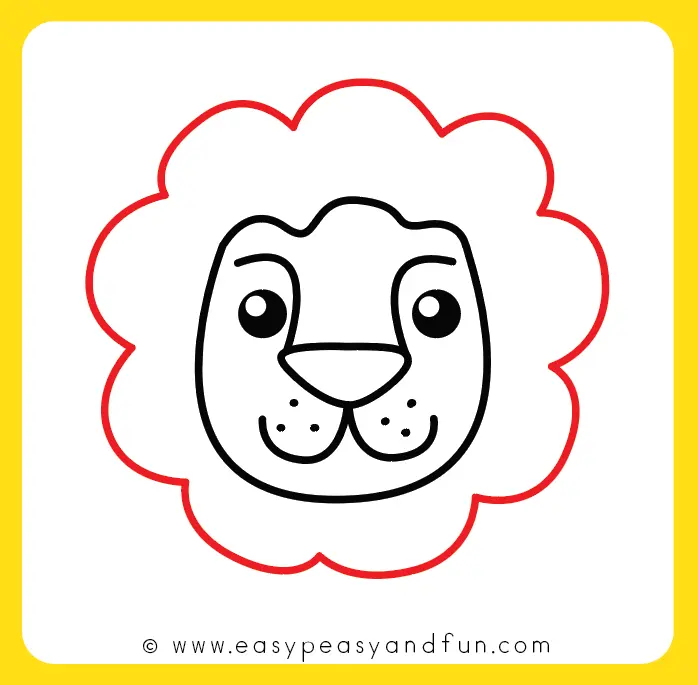
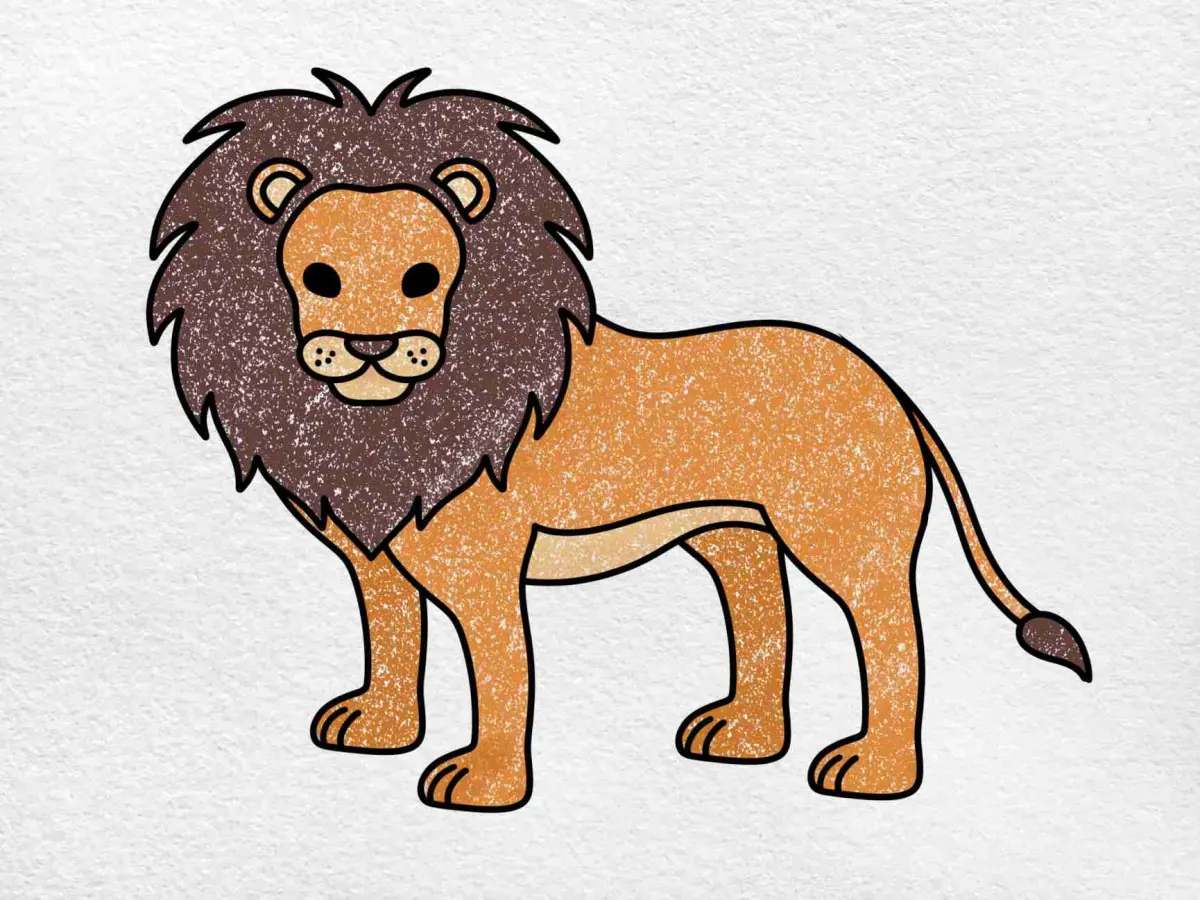
The lion's face is defined by its strong muzzle and intense eyes. Draw a horizontal line across the center of the head circle to place the eyes, then add a small triangle for the nose positioned slightly below the center. The mouth should curve downward from the nose, forming a "W" shape that connects to the chin.
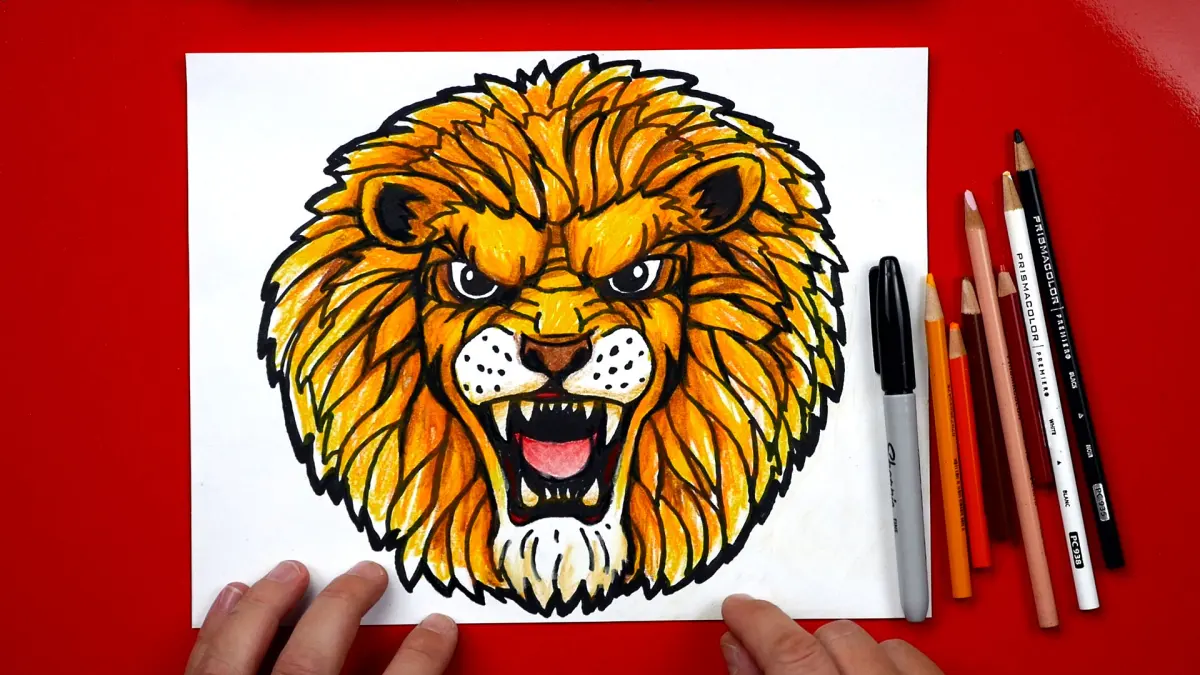
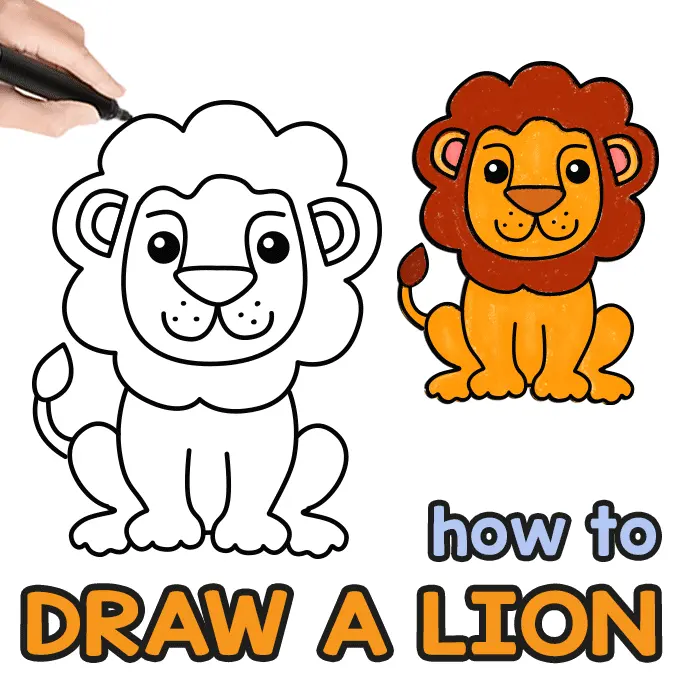
The mane is the lion’s most iconic feature, but beginners often make it look like a flat frame. Instead, treat the mane as a series of overlapping clumps of fur that radiate outward from the head. Start by sketching the general silhouette of the mane around the head and neck, then add individual strokes of varying lengths to suggest volume.
- Outline the mane as a large, fluffy cloud shape first.
- Add "S" curves to indicate the direction of hair growth.
- Keep the mane denser at the top and sides to frame the face.
- Use shorter, tighter strokes near the ears and longer, flowing strokes near the chest.
Common mistakes when drawing lions
A frequent error is neglecting the lion's shoulder blades. In a standing lion, the shoulder blades often protrude slightly above the spine line, creating a distinct hump. Failing to include this makes the lion look like a generic cat rather than a powerful predator. Additionally, beginners often draw the legs too thin; remember that a lion’s limbs must support a heavy, muscular frame.
Another common mistake is placing the eyes too high or too far apart. Lion eyes are relatively small and set deep within the skull, often appearing squinted or focused. Avoid drawing perfectly round pupils, as feline pupils are vertical slits that widen in low light. Finally, ensure the tail has a visible tuft at the end, which acts as a visual anchor for the back of the drawing.
How to add texture and shading to a lion
Shading is what transforms a flat outline into a three-dimensional creature. Begin by identifying the light source, then apply shadows to the underside of the belly, the inner legs, and the side of the mane furthest from the light. Use cross-hatching or soft blending to create smooth transitions between light and dark areas, which mimics the depth of the fur.
To make the fur look realistic, use short, flicking pencil strokes in the direction of hair growth. Do not try to draw every individual hair, as this will result in a cluttered, unnatural appearance. Focus instead on the clusters of fur, leaving some areas lighter to represent highlights where the sun hits the coat. By varying the pressure of your pencil, you can create a range of tones that give the lion a lifelike, majestic presence on the page.
Key facts
- Start by sketching a large circle for the head and a larger oval for the body to establish proportions.
- Connect the head to the body with two curved lines to form a thick, muscular neck.
- Use simple triangles for the ears and place them on the upper sides of the head circle.
- Draw the muzzle as a smaller, rounded shape overlapping the lower half of the head circle.
- Sketch the legs as sturdy cylinders, ensuring the front legs are slightly straighter than the back legs.
- Add the mane by drawing jagged, radiating strokes around the neck rather than a solid outline.
The bottom line
Drawing a lion requires mastering basic shapes before adding complex details like fur or facial expressions. By beginning with circles and ovals to establish the animal's powerful frame, you ensure anatomical accuracy. Focus on the unique proportions of the muzzle and mane to distinguish your work from other felines. Practice these fundamental steps consistently to build the confidence needed to refine your artistic style and capture the lion's majesty.
People also ask
Should I start with the eyes or the outline?
Always start with the basic geometric outline of the head and body. Focusing on details like eyes too early often leads to incorrect proportions that are difficult to fix later.
How do I make the lion look fierce?
To create a fierce expression, angle the eyebrows downward toward the nose and show the upper teeth. Keeping the mouth slightly open adds a sense of movement and aggression.
What is the best way to draw a lion's mane?
Use short, flicking pencil strokes that vary in length and direction. Avoid drawing a perfect circle around the head, as natural manes are uneven and clumped.
How do I draw lion paws correctly?
Draw paws as large, rounded shapes with three visible toe pads. Remember that a lion's front paws are significantly larger and more muscular than the back paws.
Why does my lion drawing look like a dog?
This usually happens because the muzzle is too long or the ears are too pointed. Lions have shorter, broader muzzles and rounded ears compared to most canine species.
Do I need to shade the entire body?
You do not need full shading, but adding shadows under the belly and behind the legs creates depth. Focus on light sources to give the lion a three-dimensional appearance.
This answer was created with the help of AI research tools and reference sources. Spotted an error? Let us know — we correct mistakes quickly. See our editorial policy.