How do you draw a black cat?
Short answer
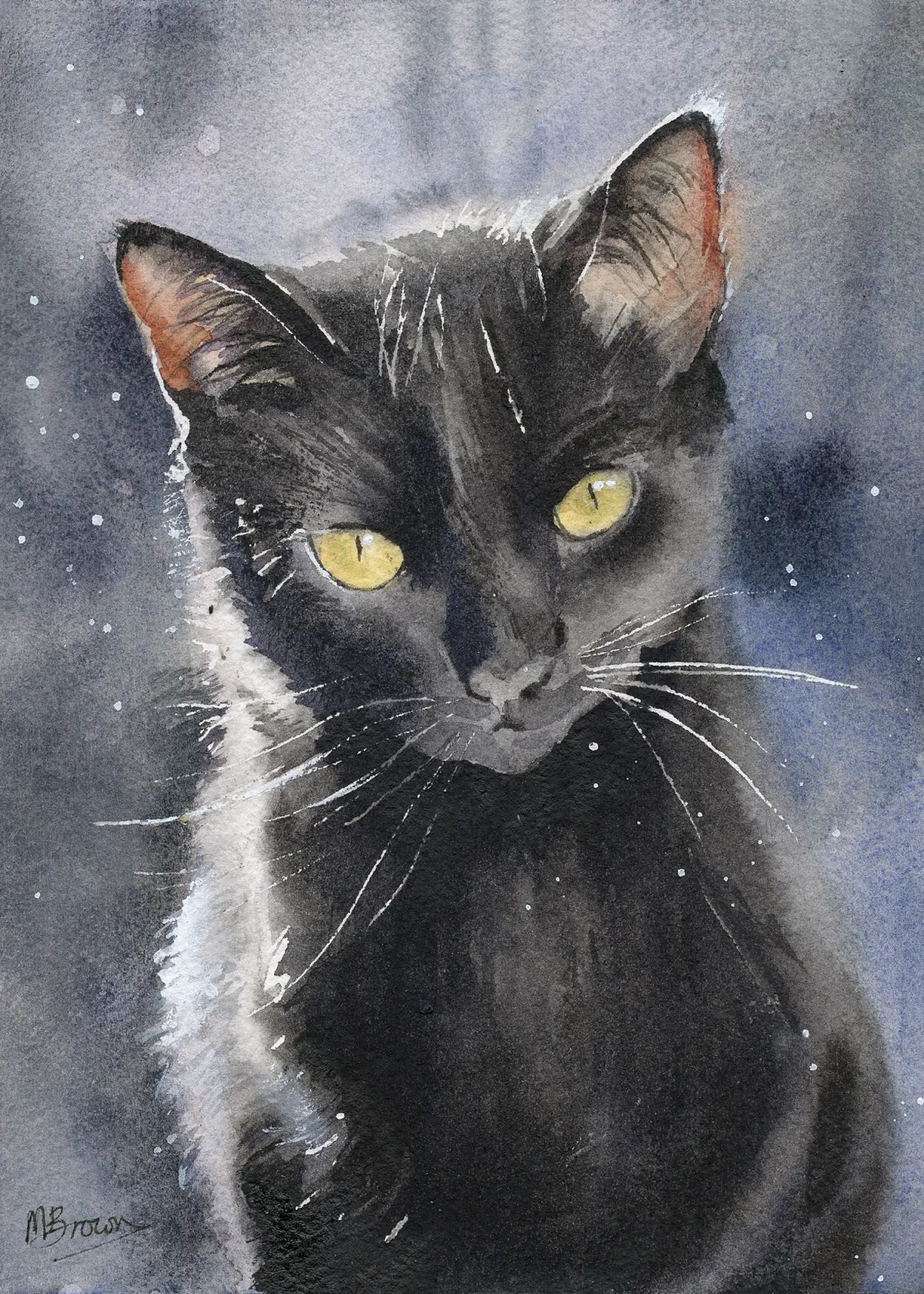
Drawing a black cat requires focusing on silhouette, texture, and subtle lighting rather than line work. Start by sketching a rounded feline shape, then layer dark values to build depth. Use highlights—such as reflected light on the fur or a sharp glint in the eyes—to define the cat’s form against the background.
On this page
How to sketch the basic feline silhouette
The key to capturing a black cat is prioritizing its outline. Because black fur absorbs most light, the animal’s body often appears as a solid mass. Begin by drawing a large, soft oval for the body and a smaller circle for the head. Connect these with a curved neck line, ensuring the posture feels natural, such as a seated position or a prowling arch.
Focus on the ears and tail to distinguish the cat from a generic blob. Cat ears are triangular and sit high on the skull, while the tail length should be roughly equal to the body length. Use light pencil strokes initially so you can adjust the proportions before committing to the dark shading. Avoid overly rigid lines; instead, use soft, broken edges to suggest the presence of fur along the silhouette.
Best shading techniques for black fur
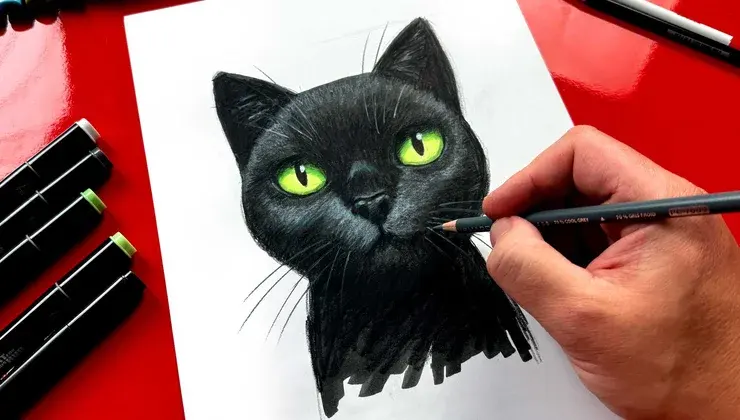
Once your outline is set, you must move beyond flat black. A common mistake is filling the entire shape with a single, dark tone, which makes the drawing look like a silhouette cutout rather than a living creature. Instead, use a layering approach to build up the richness of the coat. Start with a medium gray base and gradually add darker tones using a soft-lead pencil or charcoal.
To create the illusion of texture, follow these steps:
- Apply a base layer of dark gray across the entire body.
- Use short, flicking motions with your pencil to mimic the direction of hair growth.
- Leave small, irregular gaps in the shading to represent highlights where light hits the fur.
- Deepen the shadows in areas like the underbelly, the inside of the ears, and beneath the chin.
How to add realistic eyes and highlights
The eyes are the most important focal point of a black cat, as they provide the necessary contrast to the dark fur. Most black cats have striking yellow, green, or copper eyes. Use a sharp pencil or colored medium to define the pupil and iris, ensuring the pupil is a vertical slit if the cat is in bright light. Adding a tiny white dot for the reflection creates a sense of life.
Beyond the eyes, you must include reflected light to give the cat three-dimensional volume. Even in a dark coat, light will bounce off the edges of the fur, especially along the spine, the top of the head, and the tips of the ears. Use a kneaded eraser to lift small amounts of pigment, creating thin, shimmering lines that suggest the sheen of healthy fur. This technique prevents the cat from looking flat.
Common mistakes when drawing black animals
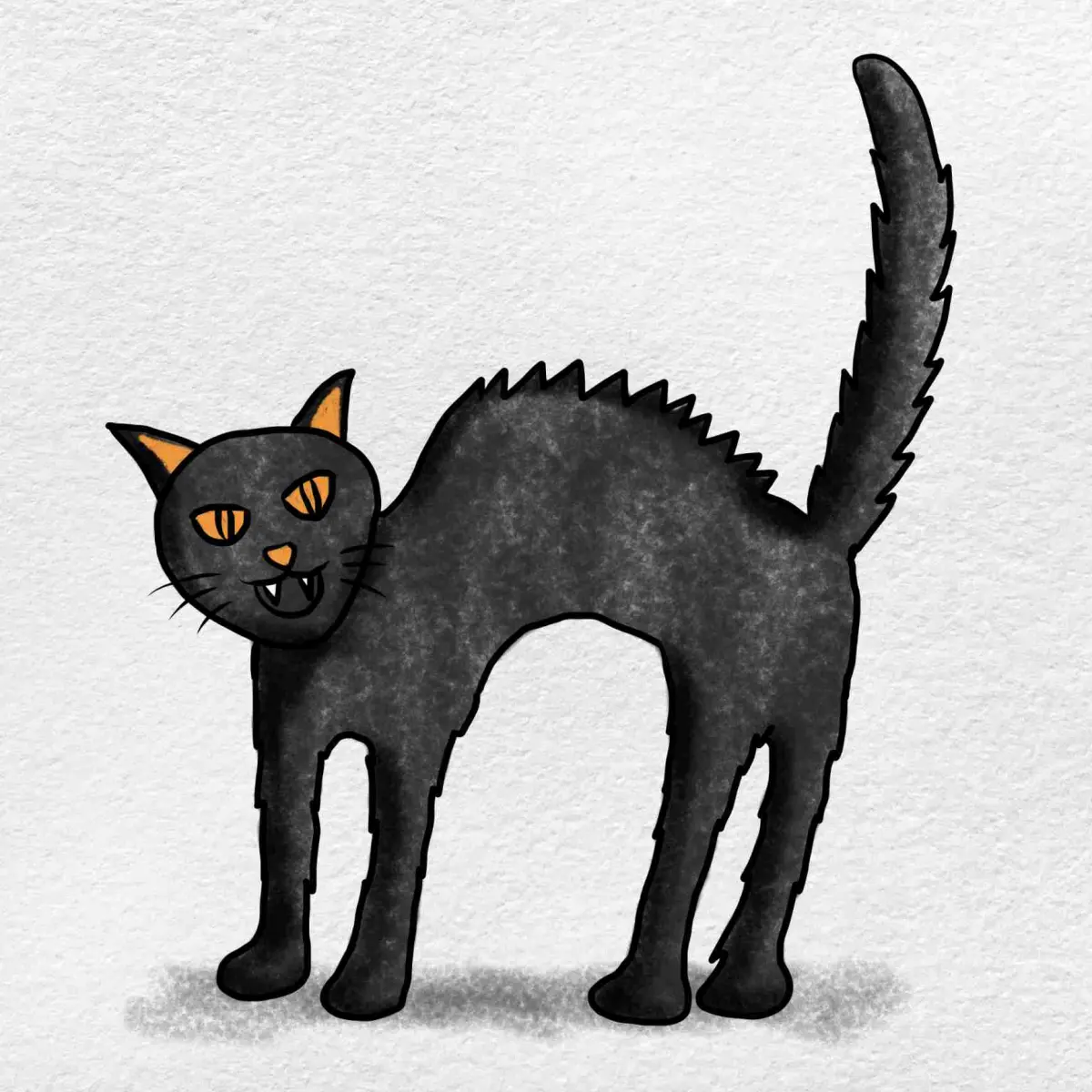
One frequent error is using a pure, uniform black for the entire subject. This obscures the cat’s anatomy and makes it difficult for the viewer to distinguish limbs from the torso. Always aim for a range of tones, from deep charcoal to lighter, smoky grays. If you use a single black marker or pencil, you lose the ability to show depth, muscle structure, and the soft texture of the coat.
Another mistake involves neglecting the background. If you draw a black cat against a dark background, the subject will blend in and disappear. To fix this, place the cat against a lighter surface or add a subtle halo of light around the edges of the silhouette. This is known as rim lighting, and it is an essential tool for artists who want to make a dark subject pop from the page.
How to refine the final details
The final stage of your drawing involves adding the whiskers and refining the texture. Whiskers are not just straight lines; they are long, tapering, and sprout from specific points on the muzzle and above the eyes. Use a very sharp white gel pen or a fine-tipped eraser to pull out thin, bright lines against the dark fur. This adds a level of detail that signifies high-quality work.
Finally, step back and evaluate the overall flow of the drawing. Ensure the fur texture looks consistent across the body and that the shadows feel grounded. If the cat looks like it is floating, add a small, dark shadow directly beneath the paws to anchor it to the ground. By balancing the deep, dark values with carefully placed highlights, you create a realistic and compelling representation of a black cat that feels both tactile and alive.
Key facts
- Start by sketching a large circle for the head and a slightly larger oval for the body to establish basic proportions.
- Use a soft graphite pencil for the initial outline, as dark fur can be difficult to erase if you press too hard.
- Focus on the eyes first, using bright yellow or green, as these provide the most striking contrast against black fur.
- Layer your colors, starting with deep blues or purples before adding pure black to create depth and texture.
- Leave small, uncolored gaps in the fur to represent highlights, which prevents the cat from looking like a flat silhouette.
- Use a sharp white gel pen or a fine-point white paint marker to add individual whiskers and sharp glints in the eyes.
The bottom line
Drawing a convincing black cat requires a shift in perspective, moving away from pure black toward a complex palette of dark tones. By layering deep blues and purples, you create the illusion of volume and texture. Always prioritize the eyes, as their vibrant color provides the necessary contrast to bring the portrait to life. With patience, highlights and subtle shadows will transform a simple silhouette into art.
People also ask
Why does my black cat drawing look like a flat black blob?
You are likely missing highlights and midtones. Even black fur reflects light, so you must include shades of grey, blue, or brown to define the cat's muscles and body shape.
What is the best medium for drawing black fur?
Colored pencils on toned paper are excellent for beginners because they allow for easy layering. Charcoal is also effective for achieving deep, velvety blacks but requires a fixative spray to prevent smudging.
How do I make the eyes look realistic?
Draw a thin, vertical slit for the pupil and add a small, bright white dot to represent the light reflection. This "catchlight" is essential for making the eyes appear moist and alive.
Should I draw every individual hair?
Avoid drawing every single hair, as this often looks messy. Instead, focus on the general direction of the fur clumps and use fine strokes only around the edges to suggest texture.
What common mistakes should I avoid?
A common error is using only pure black, which hides all detail. Another mistake is drawing the ears too small or too far apart, which can make the cat look like a different animal.
How can I make the cat look like it is in a specific environment?
Add a simple background, such as a soft-focus moon or a textured rug, to provide context. Keep the background colors muted so the cat remains the focal point of the image.
This answer was created with the help of AI research tools and reference sources. Spotted an error? Let us know — we correct mistakes quickly. See our editorial policy.