How can I draw a sheep easily?
Short answer
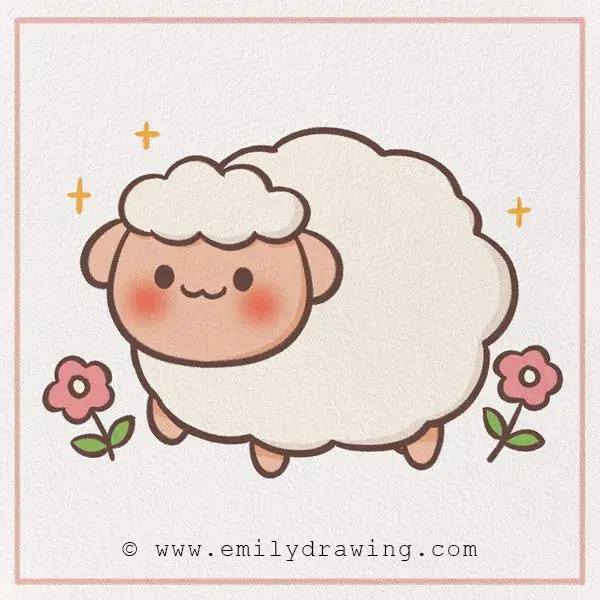
Drawing a sheep is easily achieved by starting with basic geometric shapes. Begin by sketching an oval for the body and a smaller circle for the head. Add four simple lines for legs and a cloud-like outline for the wool. By layering these simple forms, you create a recognizable, charming character quickly.
On this page
How to draw a sheep step by step
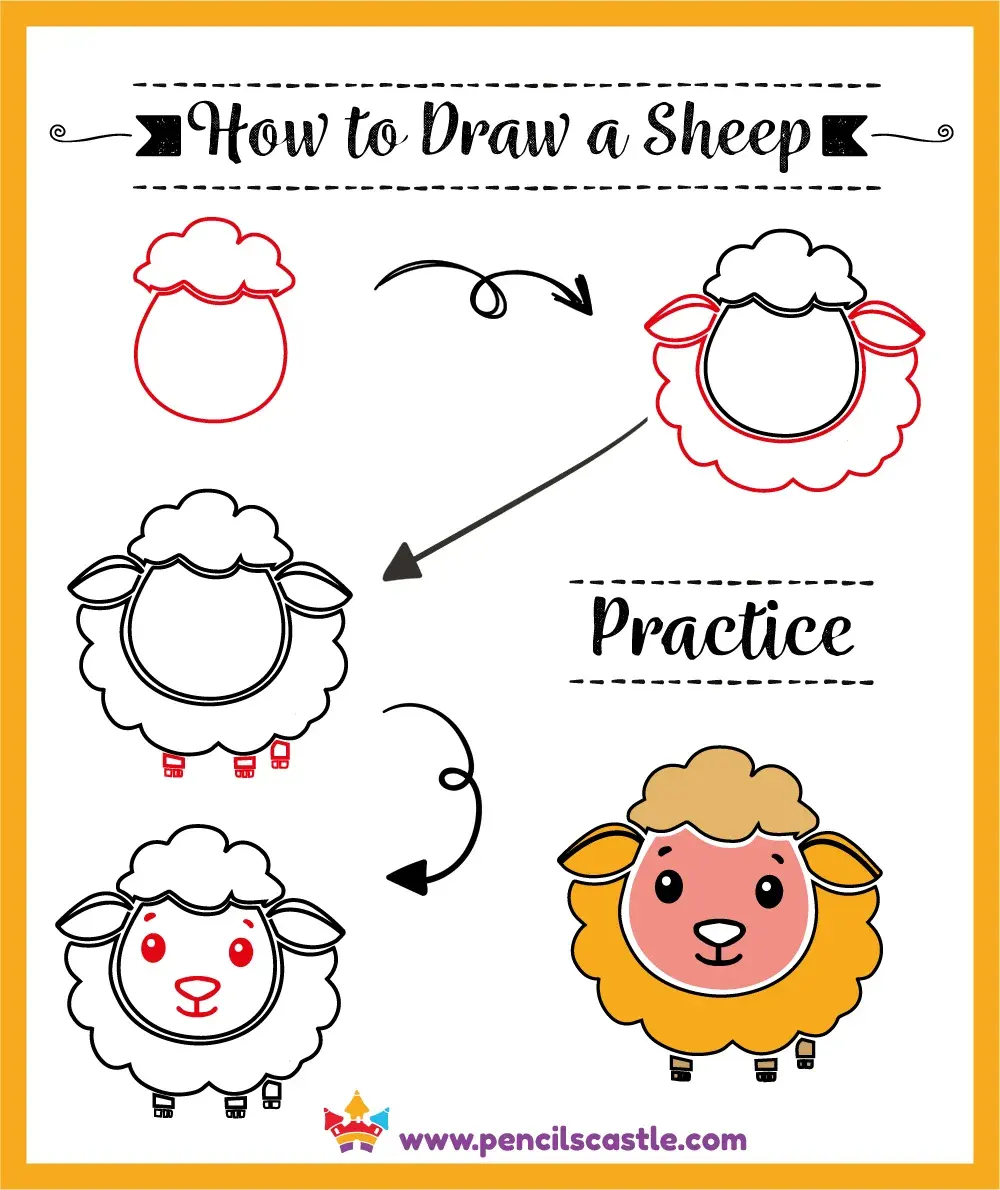
To draw a sheep, start by focusing on the underlying structure rather than the complex texture of the wool. Use a light pencil to sketch these foundational shapes so they can be easily erased or covered later. This method ensures your proportions remain balanced before you commit to the final details.
- Draw a large, horizontal oval to serve as the main body of the sheep.
- Place a smaller, slightly flattened circle above one end of the oval to create the head.
- Connect the head to the body with two short, parallel lines to form the neck.
- Draw four rectangles extending from the bottom of the oval to represent the legs.
- Sketch a small, curved line at the back of the body to indicate a tail.
Once the skeleton is complete, you can begin refining the silhouette. Focus on creating a soft, rounded outline that encompasses the body, giving the sheep its characteristic fluffy appearance.
Best drawing tools for beginners
For those new to drawing, using the right materials can significantly improve your results and confidence. Graphite pencils are the standard choice because they allow for varying line weights and easy corrections. A 2B pencil is ideal for sketching, as it is soft enough to produce dark lines but firm enough to maintain a point for details.
- HB pencil for initial light layouts and rough sketches.
- 2B or 4B pencil for adding depth and shading to the wool.
- A kneaded eraser, which lifts graphite without damaging the paper surface.
- Smooth, medium-weight drawing paper to prevent smudging and allow for clean lines.
Avoid using pens or permanent markers during the initial stages of your drawing. Starting with a pencil allows you to adjust the size of the head or the length of the legs without ruining the entire piece. Once you are satisfied with the proportions, you can go over your lines with a fine-liner or ink pen.
How to draw realistic wool texture
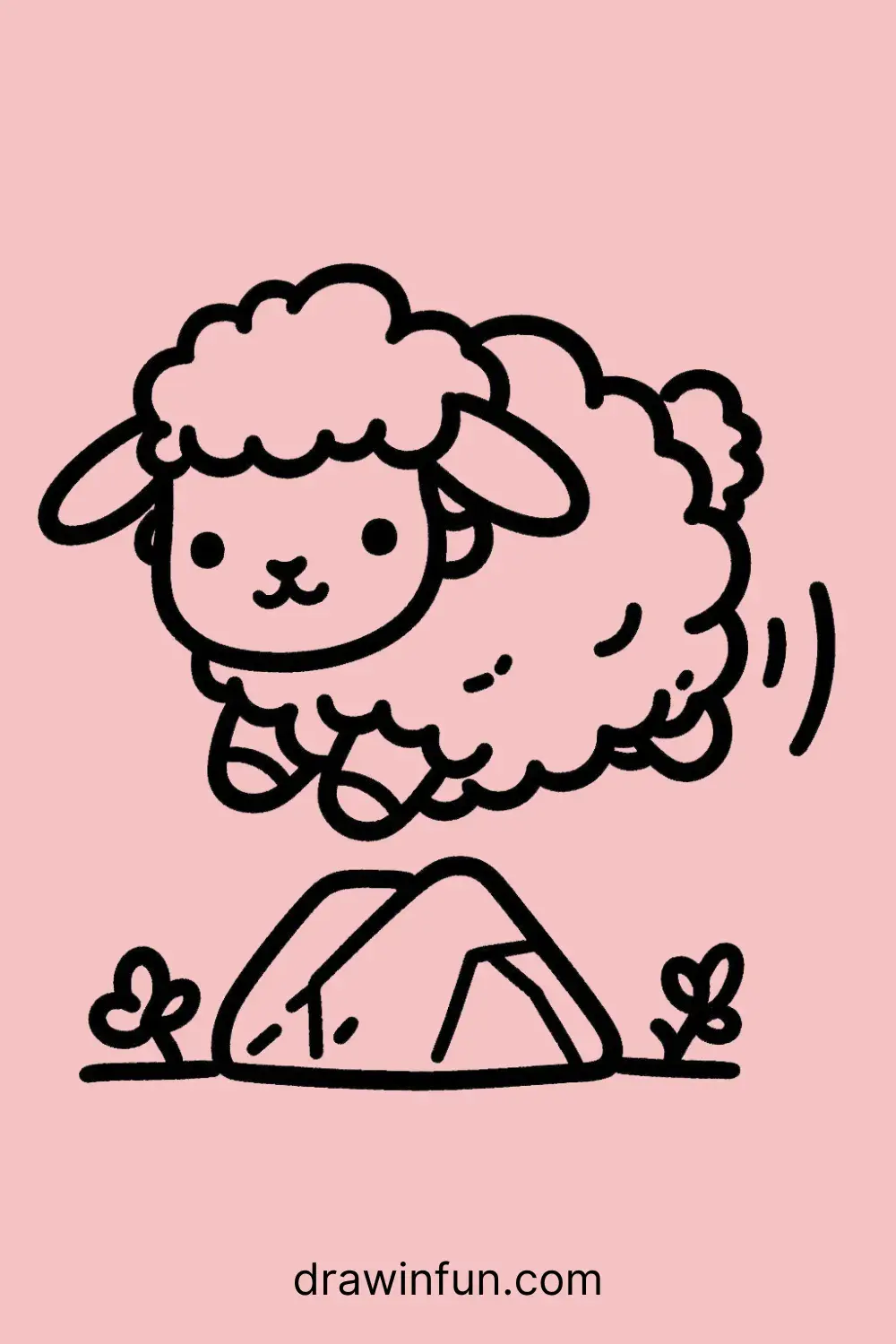
The most iconic feature of a sheep is its wool, which can be challenging to render without making the drawing look cluttered. Instead of drawing every individual strand of hair, focus on creating a repeating pattern of small, scalloped "U" shapes or loose, interconnected circles. This suggests the density of the fleece without overwhelming the viewer's eye.
When shading the wool, focus on the areas where the light does not reach, such as the underside of the body and the spaces between the legs. Apply darker pressure in these crevices to create a sense of volume and depth. Keep the top of the sheep relatively light to imply a primary light source coming from above.
Consistency is key when drawing the wool pattern. If you start with small, tight loops, maintain that scale across the entire body. A sudden change in the size of the loops can make the sheep appear lumpy or anatomically incorrect. Practice drawing these small, cloud-like shapes on a separate piece of paper to build muscle memory before applying them to your main sketch.
Common mistakes when drawing sheep
One frequent error is making the legs too thin or too long, which makes the sheep look fragile or unstable. Remember that sheep are sturdy animals with thick, muscular legs that support a heavy frame. Ensure the legs are proportional to the body oval; they should generally be about one-third the height of the main body mass.
Another common mistake is neglecting the facial features. Beginners often draw the head as a featureless blob, but adding simple details makes the sheep come alive. Place the eyes on the sides of the head rather than the front, as sheep have laterally placed eyes for a wider field of vision. A simple "Y" shape works well for the nose and mouth area.
Finally, avoid drawing the wool in a perfectly straight line around the body. The silhouette of a sheep should be irregular and bumpy. If the outline is too smooth, the animal will look like a balloon rather than a living creature. Embrace the imperfection of the curves to capture the natural, organic look of fleece.
How to add character to your sheep
Once you have mastered the basic anatomy, you can add personality to your drawing through subtle adjustments. Changing the tilt of the head can make the sheep look curious, alert, or shy. You can also experiment with the expression by slightly altering the curve of the mouth or the position of the ears.
- Add a tuft of wool on top of the head to create a "bangs" effect.
- Draw the ears pointing in different directions to show the sheep is listening.
- Vary the size of the sheep to create a flock, which adds depth to your composition.
- Use simple background elements like grass or a fence to ground the character in a setting.
Adding these small details helps transform a technical exercise into a creative piece of art. Whether you are aiming for a realistic depiction or a stylized cartoon, the principles of layering shapes and observing proportions remain the same. Continue practicing these steps, and you will find that drawing a sheep becomes an intuitive and rewarding process that you can complete in just a few minutes.
Key facts
- Start by drawing a simple oval for the body and a smaller, slightly elongated oval for the head.
- Use a series of connected "U" shapes or small loops along the edges of the body to represent the sheep’s woolly texture.
- Draw four simple stick-like rectangles beneath the body to serve as the legs, adding small horizontal lines at the bottom for hooves.
- Place two small ovals on the head for ears and two dots for eyes to give the sheep personality.
- Keep the facial features simple, as sheep have minimal definition in their expressions compared to human or canine faces.
- Avoid drawing perfectly straight lines for the wool; organic, irregular curves make the drawing look more natural and fluffy.
The bottom line
Drawing a sheep is an excellent exercise in using basic geometric shapes to create complex textures. By starting with simple ovals and layering scalloped lines for wool, you can quickly build a recognizable figure. Focus on maintaining proper proportions for the legs and head to ensure the drawing looks balanced. With practice, these fundamental techniques will help you confidently sketch a variety of other farm animals.
People also ask
What is the best medium for beginners to practice drawing animals?
Graphite pencils are ideal because they allow for easy erasing and shading. Start with an HB pencil for light outlines before moving to a darker 2B pencil for final details.
How do I make the wool look realistic?
Instead of drawing individual strands, focus on the overall silhouette by using scalloped lines. Adding light shading underneath the body helps create a sense of volume and depth.
Should I draw the sheep standing or grazing?
A standing sheep is easier for beginners because the anatomy is straightforward. Grazing sheep require more complex neck and head positioning that can be challenging to proportion correctly.
How can I draw a sheep face from the front?
Draw a wide, rounded triangle for the nose area and place the eyes on the sides of the head. Sheep have wide-set eyes, which is a defining feature of their anatomy.
What common mistake should I avoid when drawing legs?
Many beginners draw legs that are too thin or placed too far toward the center of the body. Ensure the legs are sturdy and positioned near the corners of the torso for stability.
Can I use geometric shapes for other animals?
Yes, most animals can be broken down into basic shapes like circles, ovals, and triangles. Mastering this technique allows you to draw almost any creature by building up from a simple skeleton.
This answer was created with the help of AI research tools and reference sources. Spotted an error? Let us know — we correct mistakes quickly. See our editorial policy.