How big do peacocks get?
Short answer
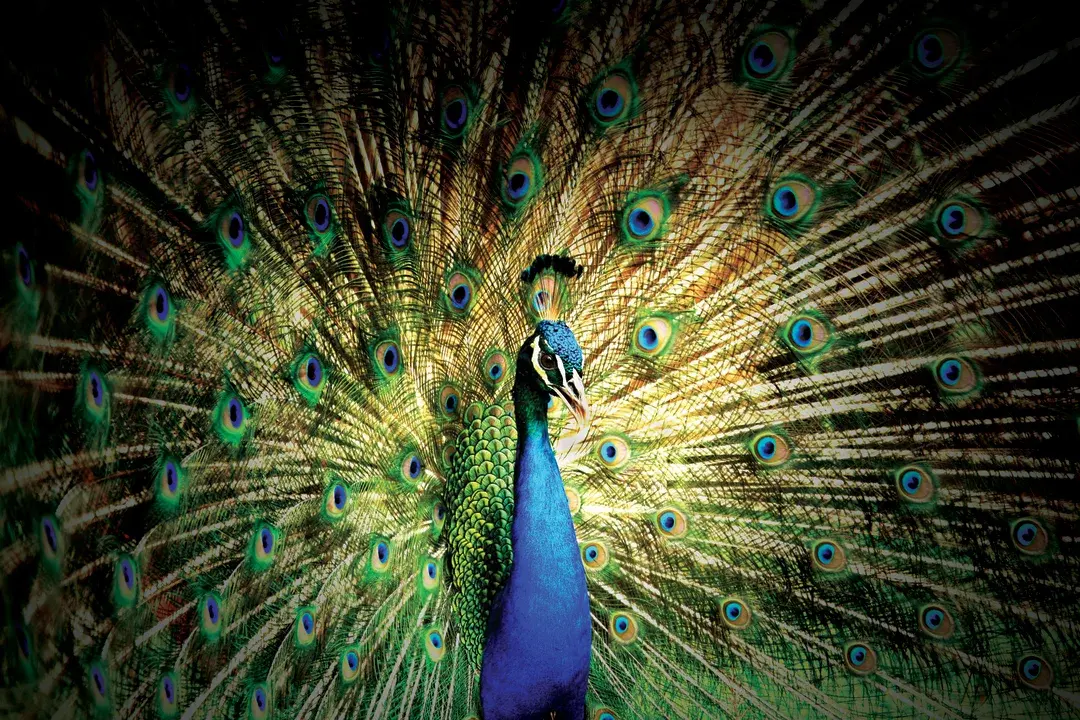
Peacocks, more accurately called peafowl, vary significantly in size based on their species and gender. Males of the common Indian blue peafowl reach total lengths of up to 7 feet, with their ornamental trains accounting for most of that length. They typically weigh between 8 and 13 pounds when fully mature.
On this page
How big do peacocks get in total length?
The total length of a male peafowl is deceptive because it includes the massive, iridescent tail coverts, often called the train. A mature male Indian blue peafowl (Pavo cristatus) can measure between 6 and 7 feet from the tip of the beak to the end of the longest tail feather. Without the train, the bird’s actual body length is much smaller, usually measuring about 3 feet.
Females, known as peahens, are significantly smaller and lack the elongated tail feathers that define the male's appearance. A peahen typically reaches a total length of about 3 feet. Because they do not grow the ornamental train, their size remains consistent throughout the year, whereas the male’s silhouette changes dramatically depending on whether he is molting or displaying his full plumage during the breeding season.
How much do peacocks weigh?
Weight serves as a more reliable indicator of a peacock's physical mass than length. An adult male Indian peafowl generally weighs between 8 and 13 pounds. The weight of the bird fluctuates based on its diet, activity level, and the time of year, particularly during the molting period when they lose their heavy tail feathers.
Peahens are lighter than the males, typically weighing between 6 and 9 pounds. While they are smaller in stature, they are incredibly agile and capable of short bursts of flight to escape predators or reach high roosting spots. Owners or enthusiasts should monitor these weight ranges to ensure the birds remain healthy, as obesity can lead to significant mobility issues, especially in heavier males carrying long, cumbersome trains.
What are the differences between peafowl species?
While the Indian blue peafowl is the most recognizable, there are three distinct species of peafowl, each with unique size characteristics. The Green peafowl (Pavo muticus) of Southeast Asia is generally larger and more slender than the Indian variety. Males of this species can reach total lengths of up to 10 feet, though much of this is attributed to their exceptionally long tail feathers.
The Congo peafowl (Afropavo congensis) is the smallest of the three species and is unique to the African continent. Unlike the Asian species, the Congo peafowl does not possess a long, fan-like train. Both males and females are roughly the same size, typically measuring about 2 to 2.5 feet in length.
- Indian Blue: 6–7 feet long, 8–13 pounds.
- Green Peafowl: Up to 10 feet long, 10–15 pounds.
- Congo Peafowl: 2–2.5 feet long, 3–6 pounds.
How to care for peafowl of different sizes?
Providing adequate space is the most critical aspect of peafowl husbandry. Because males can reach such impressive lengths, they require large, open enclosures that allow them to turn around and display their trains without damaging the feathers. A cramped environment will lead to broken plumage and increased stress for the birds.
- Ensure the enclosure is at least 10 feet high to accommodate their need to roost in high places.
- Provide at least 100 square feet of ground space per bird to allow for natural foraging behavior.
- Install sturdy, wide perches that can support the weight of a heavy male without causing foot strain.
- Keep the area free of debris that could snag the long feathers of the males during their daily movements.
Common mistakes when measuring or housing peacocks?
A frequent mistake people make is underestimating the wingspan and territorial needs of these birds. Even though they spend much of their time on the ground, peafowl are strong flyers and require high, secure fencing to prevent them from wandering into dangerous areas. Many beginners assume that because the birds are large, they are slow, but they are actually quite fast and can jump over low fences with ease.
Another common error is failing to account for the seasonal growth of the male's train. During the spring, the train grows rapidly, and the bird becomes more sensitive to its surroundings. Owners often mistake the bird's sudden caution for illness, when in reality, the bird is simply protecting its new, delicate feathers from damage. Always provide enough clearance in doorways and shelters to prevent the train from being crushed or pulled, as these feathers are vital for the bird’s social signaling and mating success.
Key facts
- The Indian peafowl is the most common species, with males reaching a total length of up to 7 feet (2.1 meters) including their long tail feathers.
- A male’s tail, known as a train, accounts for roughly 60 percent of its total body length.
- Adult males typically weigh between 8 and 13 pounds (3.6 to 6 kilograms).
- Female peafowl, called peahens, are significantly smaller, usually reaching about 3 feet (0.9 meters) in length and weighing 6 to 9 pounds.
- When measuring a peacock, always distinguish between the body length and the train length, as the train is composed of elongated upper tail coverts rather than true tail feathers.
- Avoid confusing the bird's total length with its wingspan, which typically measures about 4.5 to 5 feet (1.4 to 1.5 meters) across.
The bottom line
While the male Indian peafowl is an impressive bird, its size is largely defined by its elongated train rather than its physical bulk. Reaching up to seven feet in total length, these birds require substantial space and a high-protein diet to thrive. Understanding that only males grow these massive feathers helps clarify why their appearance changes so dramatically as they mature from juveniles into adulthood.
People also ask
Do all peacocks have long, colorful tail feathers?
Only the males, known as peacocks, possess the elaborate, iridescent train used for courtship displays. Females lack these long feathers and have more muted, brown-toned plumage to help them camouflage while nesting.
How much space does a peacock need to live comfortably?
Peacocks require a large outdoor enclosure or a free-roaming area with at least 80 to 100 square feet per bird. They need significant vertical space to roost on high branches and room to spread their tails without obstruction.
What do peacocks eat to maintain their size?
These birds are omnivorous and require a balanced diet of high-protein game bird feed, insects, seeds, fruits, and small reptiles. Providing a varied diet is essential for maintaining their health and the vibrancy of their plumage.
Are peacocks aggressive toward humans or other pets?
Peacocks can become territorial, especially during the breeding season when males are highly protective of their display areas. It is best to keep a respectful distance and avoid cornering them to prevent defensive behavior.
How long does it take for a peacock to reach its full size?
A male peacock does not grow its full, spectacular train until it is about three years old. While they reach near-adult body weight sooner, the iconic display feathers develop gradually over the first few years of life.
Can peacocks fly despite their large size?
Yes, despite their heavy appearance and long trains, peacocks are capable of flight. They often fly up into trees to roost at night to escape ground-dwelling predators.
This answer was created with the help of AI research tools and reference sources. Spotted an error? Let us know — we correct mistakes quickly. See our editorial policy.