What is wet felting?
Short answer
Wet felting is a traditional textile craft that transforms loose wool fibers into a dense, durable fabric using only water, soap, and physical agitation. By rubbing and pressing layers of wool together, the microscopic scales on the fibers lock into place, creating a non-woven material suitable for clothing, accessories, and art.
On this page
What is the process of wet felting?
Wet felting relies on the unique physical structure of animal fibers, primarily sheep’s wool. Each strand of wool is covered in tiny, directional scales. When these fibers are exposed to moisture, heat, and friction, the scales open and interlock, a process known as felting or fulling. This creates a permanent bond that cannot be unraveled once the material has dried.
The process begins by laying out thin, overlapping layers of wool roving or batting on a flat surface. A soapy water solution is sprinkled over the fibers to lubricate them and facilitate movement. Through a combination of gentle pressing and vigorous rolling, the artisan encourages the fibers to migrate and tangle. As the wool shrinks and thickens, it transforms from a loose pile into a cohesive, sturdy sheet of fabric.
How do you wet felt for beginners?
Starting your first project requires only a few basic supplies: wool roving, a bamboo mat or bubble wrap, hot water, dish soap, and a towel. For a beginner, it is best to start with a flat, simple item like a coaster or a small pouch to understand how the wool behaves under pressure.
- Lay out three thin layers of wool roving on your bubble wrap, alternating the direction of the fibers in each layer to ensure strength.
- Carefully wet the wool with warm, soapy water, pressing down with your hands to ensure the moisture penetrates the entire stack.
- Cover the wool with a piece of plastic or netting and gently rub the surface in circular motions for several minutes.
- Once the fibers begin to hold together, roll the piece tightly inside the bubble wrap and roll it back and forth on the table to accelerate the felting process.
- Rinse the finished piece in cold water to remove excess soap and lay it flat to dry.
What materials are needed for wet felting?
Choosing the right wool is the most critical factor for success. Merino wool is the industry standard for beginners because its fine, soft fibers felt quickly and result in a smooth finish. Coarser wools, such as those from Lincoln or Border Leicester sheep, are better suited for structural items like rugs or heavy bags where durability is prioritized over softness.
Beyond the wool, the soap choice matters significantly. Standard liquid dish soap is ideal because it creates a consistent lather and is easy to rinse out. You should avoid conditioning shampoos or heavy detergents, as these can leave a residue that prevents the fibers from locking together properly. Additionally, having a sturdy, textured surface like a bamboo sushi mat provides the necessary friction to speed up the felting process without damaging the delicate fibers.
Common mistakes when wet felting
One of the most frequent errors beginners make is using too much water. If the wool is swimming in a pool of liquid, the fibers will float rather than tangle, which prevents them from bonding securely. You want the wool to be damp and saturated, not submerged. Another common issue is failing to account for shrinkage. Wet felting causes the wool to shrink by 20 to 40 percent, so you must always lay out your project significantly larger than the desired final size.
- Using water that is too cold, which prevents the wool scales from opening and locking.
- Applying too much pressure too early, which can cause the fibers to shift and create thin, uneven spots in the fabric.
- Rinsing the piece too early before the fibers have fully migrated, leading to a weak structure that may fall apart.
- Neglecting to roll the piece from different directions, which results in a fabric that is strong in one orientation but weak in another.
How long does it take to wet felt?
The time required to complete a project depends heavily on the thickness of the wool and the complexity of the design. A simple, flat coaster might take as little as 30 to 45 minutes, while a complex, multi-layered garment or a three-dimensional vessel could take several hours of consistent physical effort. The labor is divided between the initial layout, the "pre-felt" stage where fibers begin to connect, and the final fulling stage where the piece is shrunk to its final density.
Patience is essential, as the transformation is gradual. If you rush the rolling process, the resulting fabric may be loose and prone to pilling. Experienced felters often take breaks to check the progress of the wool, ensuring that the edges are neat and the thickness is uniform. By dedicating enough time to the fulling stage, you ensure the final product is professional, resilient, and capable of lasting for many years of regular use.
Key facts
- Wet felting is the process of combining wool fibers using only hot water, soap, and physical agitation.
- The scales on wool fibers open when exposed to heat and moisture, allowing them to interlock and tangle.
- Olive oil soap or dish soap is typically used to reduce friction and help the fibers glide into a dense mat.
- Shrinkage is a natural part of the process, with most projects shrinking by 20 to 30 percent during construction.
- The technique relies on friction; consistent, gentle pressure is more effective than aggressive rubbing.
- Always use high-quality, unspun wool roving or batting, as synthetic fibers will not felt together.
The bottom line
Wet felting is a rewarding, ancient craft that transforms loose wool into a durable, seamless textile through the simple application of heat, soap, and mechanical action. By mastering the balance of moisture and friction, you can create everything from delicate ornaments to sturdy garments. With patience and attention to fiber layout, anyone can produce unique, handmade pieces that demonstrate the remarkable natural properties of wool.
People also ask
What is the difference between wet felting and needle felting?
Wet felting uses moisture and friction to bond fibers into a flat or structural fabric, while needle felting uses barbed needles to punch fibers into a shape. Wet felting is ideal for garments and accessories, whereas needle felting is preferred for detailed 3D sculptures.
Can I use any type of wool for wet felting?
You should use wool that has not been superwash treated, as the treatment prevents fibers from interlocking. Merino wool is the most popular choice for beginners because it is soft, easy to manipulate, and felts relatively quickly.
How do I prevent my project from becoming too thin in some areas?
Lay your wool out in thin, overlapping layers, alternating the direction of the fibers between each layer. This cross-hatching technique ensures that the finished fabric is strong and uniform without weak spots or holes.
Why did my project fail to hold its shape after drying?
The project was likely not agitated long enough to achieve a full felt. If the fibers are still loose or easily pulled apart, you must continue the rolling and rubbing process to tighten the structure.
Is it possible to felt items in a washing machine?
Yes, this is called "fulling." By placing a knitted wool item in a hot wash cycle with agitation, you can shrink and felt it into a dense, durable fabric, though you have less control over the final dimensions.
How long does the wet felting process take?
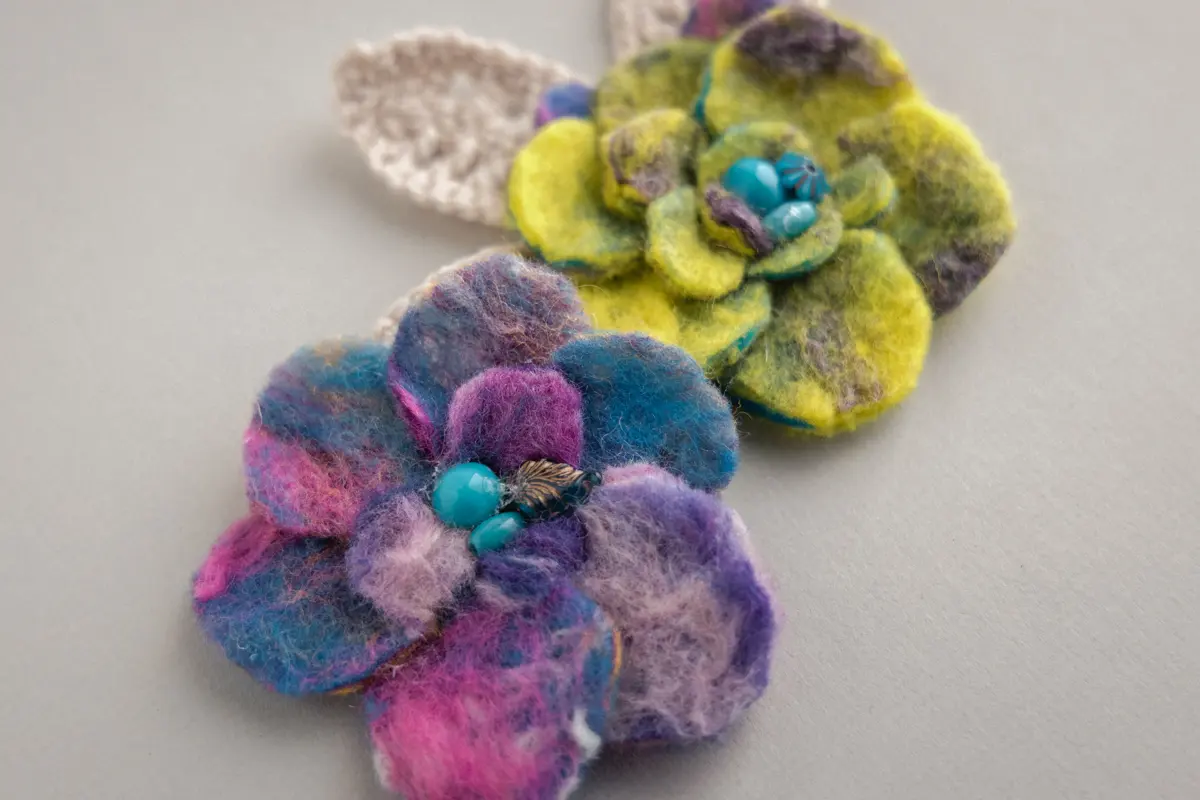
A small project like a flower or coaster can be completed in under an hour. Larger items, such as hats or vests, may take several hours of consistent rolling and checking to ensure the fibers are fully locked.
This answer was created with the help of AI research tools and reference sources. Spotted an error? Let us know — we correct mistakes quickly. See our editorial policy.