What is Siwash Rock?
Short answer
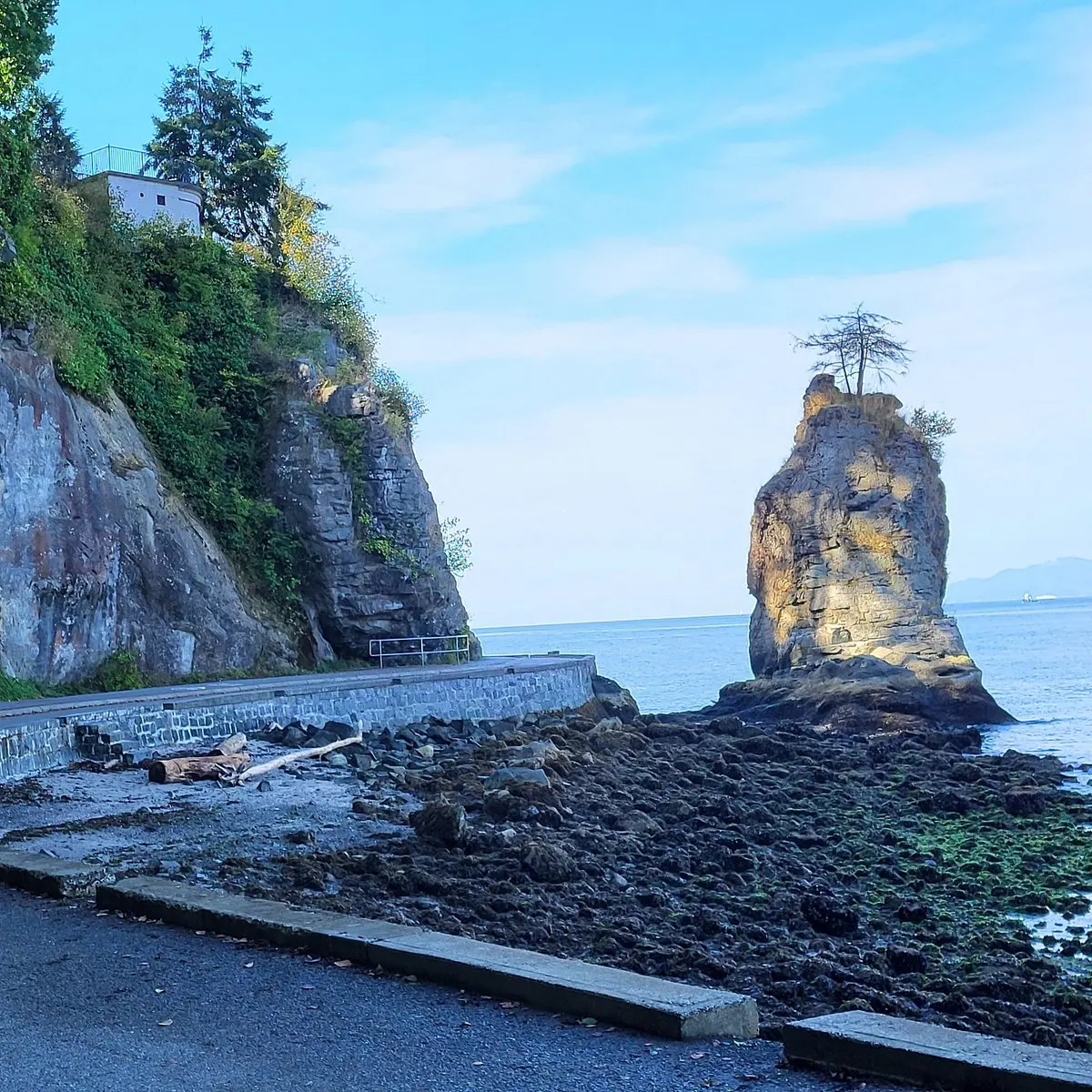
Siwash Rock is a prominent 18-meter-tall sea stack located off the southwestern shore of Stanley Park in Vancouver, British Columbia. Composed of rare volcanic rock, this geological landmark is estimated to be 32 million years old. It holds significant cultural importance for the Squamish First Nation and remains a popular scenic attraction.
On this page
Where is Siwash Rock located?
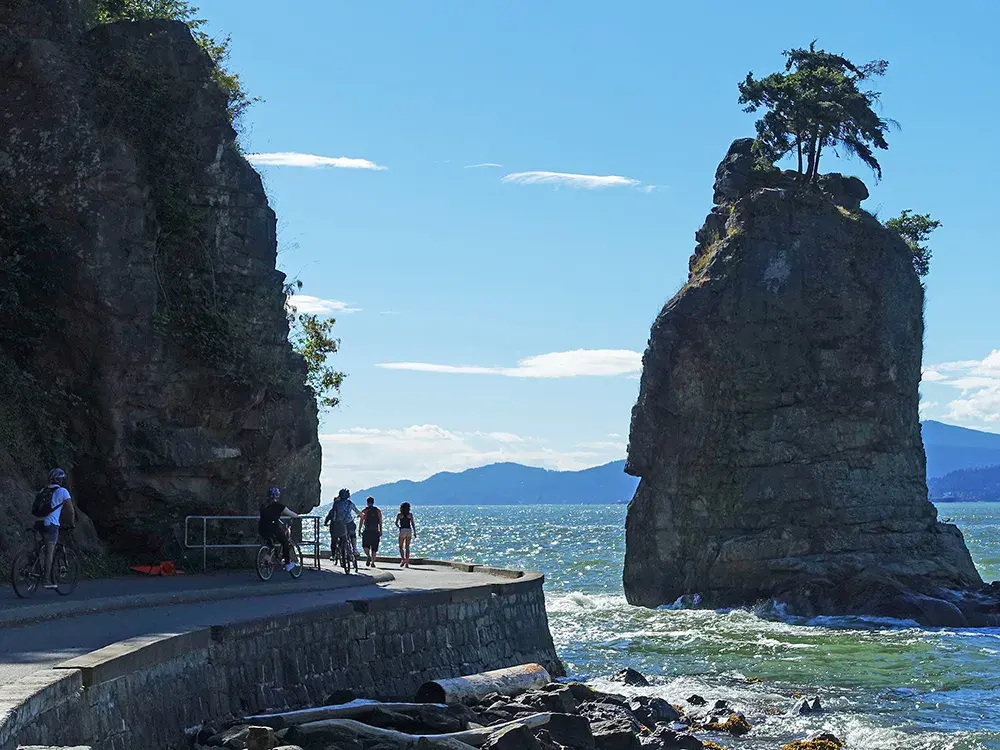
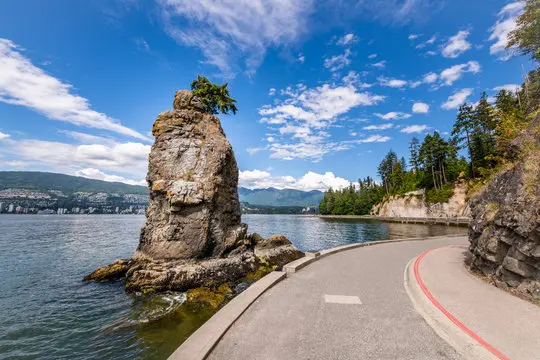
Siwash Rock is situated in the waters of Burrard Inlet, just off the seawall that circles Stanley Park in Vancouver. It stands as a solitary monolith near the Third Beach area, providing a stark contrast to the surrounding dense temperate rainforest and the deep blue waters of the Pacific Ocean. Visitors can easily spot the rock while walking, cycling, or jogging along the Stanley Park Seawall, one of the city's most famous recreational paths.
The landmark is accessible from several points within the park. The most direct route involves starting from the Second Beach parking area or the Third Beach concession stand. From these locations, the seawall path leads directly past the rock, offering unobstructed views from the shore. Because it is positioned just offshore, it is impossible to walk to the rock itself, though it remains a focal point for photographers and tourists visiting the park throughout the year.
What is the history of Siwash Rock?
Geologically, Siwash Rock is a rare example of a volcanic sea stack. It was formed approximately 32 million years ago when molten rock was forced through sedimentary rock layers, eventually hardening into a resistant column. As the surrounding softer rock eroded over millions of years due to wind and wave action, this durable volcanic core remained standing, creating the distinct tower seen today. It is a unique geological feature that predates the human history of the region by millions of years.
For the Squamish First Nation, the rock is known as Slhx̱í7lsh. According to oral tradition, the rock represents a man who was transformed into stone as a reward for his selflessness and adherence to the law of the "Great Spirit." This legend is a cornerstone of local Indigenous history and serves as a reminder of the deep connection between the land and the Squamish people. The site is considered sacred and is protected by both municipal and cultural regulations.
How to visit Siwash Rock
To experience the rock, you should plan a trip along the Stanley Park Seawall. The most common way to reach the site is by bike, as the full loop of the park is approximately 9 kilometers long. If you are walking, be prepared for a moderate trek, as the distance from the park entrance to the rock is significant.
- Rent a bicycle from one of the many shops located near the Denman Street entrance to the park.
- Follow the seawall path in a counter-clockwise direction, which is the standard flow for cyclists.
- Look for the designated viewing platform located along the seawall, which offers the best perspective of the rock.
- Stop at the nearby Third Beach to rest and enjoy the coastal scenery before continuing your journey.
Best times to see Siwash Rock
The best time to visit depends on your preference for weather and crowd sizes. During the summer months, the seawall is bustling with activity, offering a vibrant atmosphere but also higher pedestrian traffic. If you prefer a quieter experience, visiting during the early morning hours on a weekday is highly recommended. The light during the "golden hour" shortly after sunrise or before sunset provides the most dramatic photography opportunities, as the sun illuminates the face of the rock.
- Spring: Ideal for mild temperatures and blooming rhododendrons in the park.
- Summer: Best for warm weather and clear views of the North Shore Mountains.
- Autumn: Offers stunning foliage colors along the seawall path.
- Winter: Often moody and atmospheric, though you should dress for rain.
Regardless of the season, check the local weather forecast before heading out. Vancouver is known for its frequent rain, and the seawall can become slippery or wind-swept during storm events.
Common mistakes when visiting Siwash Rock
One of the most frequent errors visitors make is underestimating the length of the seawall. Many tourists attempt to walk the entire perimeter of Stanley Park without realizing it takes several hours to complete the full loop. If you have limited time, focus your visit specifically on the section between Second Beach and Third Beach to ensure you see the rock without exhausting yourself. Another mistake is ignoring the rules regarding the seawall. Always stay within the designated lanes for your mode of transport, as the path is shared by fast-moving cyclists and pedestrians.
Avoid these common pitfalls to ensure a smooth visit:
- Do not attempt to swim out to the rock, as the currents in this part of the Burrard Inlet can be extremely dangerous and unpredictable.
- Do not climb on the protected rock formations or bypass safety railings, as the cliffs are unstable.
- Do not leave valuables inside your vehicle if you park at the nearby lots, as break-ins can occur in high-traffic tourist areas.
- Do not forget to bring water and snacks, as there are limited food options once you are deep within the park's forested trails.
Key facts
- Siwash Rock is a 18-meter (60-foot) tall sea stack located in the waters off the coast of Stanley Park in Vancouver, British Columbia.
- It is a geological formation composed of volcanic rock that was formed approximately 32 million years ago during the Eocene Epoch.
- The rock is officially named Slhx̱í7lsh, a Squamish name that honors a man transformed into stone as a reward for his selflessness.
- Visitors can view the rock from the seawall, which is a 10-kilometer paved path that circles the perimeter of Stanley Park.
- The site is protected under the Stanley Park Management Plan to preserve its cultural significance and natural integrity.
- Avoid climbing or attempting to swim to the rock, as the surrounding currents are dangerous and the formation is culturally sacred to the Squamish Nation.
The bottom line
Siwash Rock is a prominent volcanic sea stack standing in the waters of Vancouver’s Stanley Park. Beyond its geological origins, the site serves as a vital cultural monument for the Squamish Nation. Whether you are cycling the seawall or walking the trails, the rock remains one of the city's most recognizable natural landmarks, offering visitors a unique intersection of ancient history, natural beauty, and Indigenous heritage.
People also ask
How can I reach the best viewpoint for Siwash Rock?
You can access the viewpoint by walking or cycling along the Stanley Park Seawall. The most popular observation point is located near the Third Beach area, which offers an unobstructed view of the stack.
Is it possible to hike out to the base of the rock at low tide?
No, you should not attempt to reach the base of the rock. The surrounding area is restricted to protect the fragile ecosystem and respect the spiritual significance held by the Squamish people.
What is the legend behind the name of the rock?
According to Squamish oral tradition, a man who lived a life of extreme cleanliness and selflessness was transformed into the rock by the Transformers. This act served as an eternal monument to his integrity and his role as a devoted father.
Are there any guided tours that visit Siwash Rock?
Many Vancouver city tours and bike rental companies include the Siwash Rock viewpoint on their standard itineraries. These tours often provide historical context regarding both the geological formation and the Indigenous history of the region.
What is the best time of day to photograph the rock?
Sunset is widely considered the best time for photography because the sun sets behind the rock, creating a dramatic silhouette against the horizon. Arriving early ensures you can secure a spot along the seawall railing.
Does the rock have any other names besides Siwash Rock?
Yes, it is formally recognized as Slhx̱í7lsh. While "Siwash Rock" remains the common name used by locals and tourists, the Squamish name is increasingly used to acknowledge the site's original cultural heritage.
This answer was created with the help of AI research tools and reference sources. Spotted an error? Let us know — we correct mistakes quickly. See our editorial policy.