What is Regionalism in art?
Short answer
Regionalism is an American realist art movement that flourished during the 1930s, primarily depicting rural life and small-town scenes in the Midwest and South. It emerged as a rejection of European abstraction, focusing instead on local subject matter, traditional values, and representational techniques to capture the distinct character of American life.
On this page
What is the history of Regionalism?
Regionalism emerged during the Great Depression as a reaction against the growing influence of European modernism, which many American artists felt was disconnected from the realities of the country. As the economic crisis devastated the nation, artists sought to reconnect with the American spirit by focusing on themes of resilience, hard work, and the familiar landscapes of the heartland. This movement was deeply rooted in a desire for cultural nationalism, encouraging artists to paint what they knew best rather than imitating foreign styles.
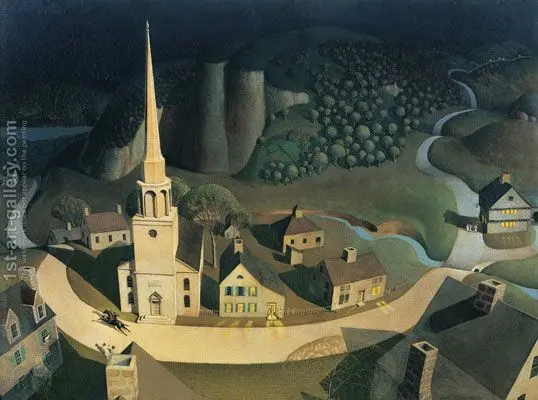
The movement gained significant momentum through the work of the "Regionalist Triumvirate," which included Grant Wood, Thomas Hart Benton, and John Steuart Curry. These artists were supported by the federal government’s New Deal art projects, which commissioned murals for public buildings across the United States. By celebrating the dignity of agricultural labor and the stability of rural communities, Regionalism provided a sense of comfort and identity to a public struggling with the uncertainty of the 1930s economic collapse.
Who are the most famous Regionalist artists?
The movement is defined by its core group of painters who championed the American scene. Their works often utilized bold lines, rhythmic compositions, and a grounded, earthy color palette to emphasize the strength and endurance of their subjects. While their styles varied slightly, they shared a commitment to narrative art that told stories of local history and daily existence.
- Grant Wood: Best known for American Gothic (1930), which became an iconic symbol of American rural life.
- Thomas Hart Benton: Famous for his dynamic, swirling murals that depicted the social and industrial history of the United States.
- John Steuart Curry: Focused on the dramatic, often turbulent relationship between humans and the natural environment in the Midwest.
- Alexandre Hogue: Recognized for his poignant series of paintings depicting the environmental catastrophe of the Dust Bowl.
How to identify Regionalist art?
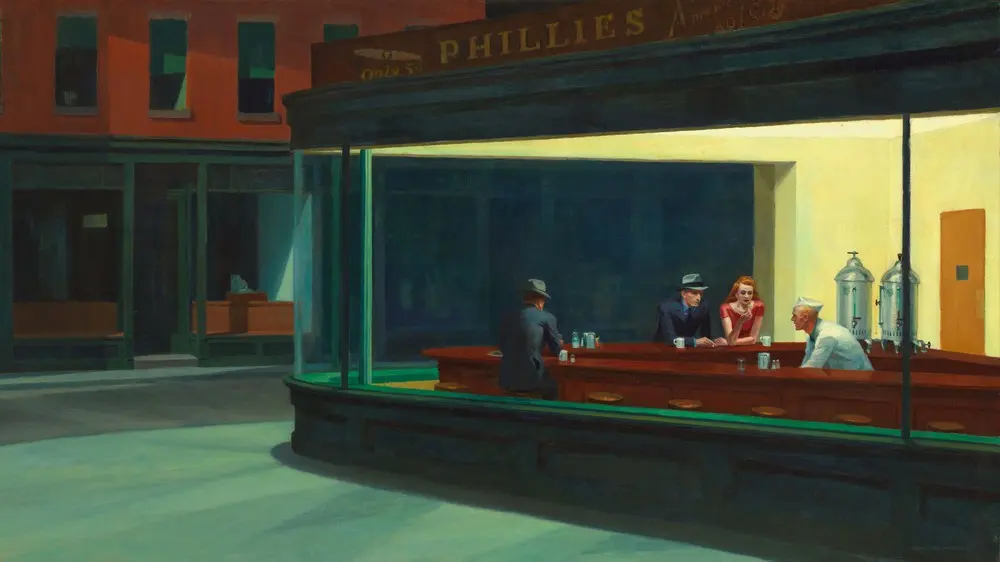
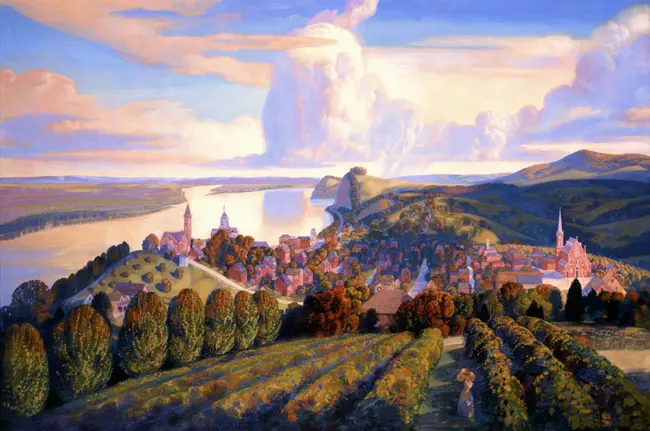
Identifying Regionalist works requires looking for specific thematic and stylistic markers that distinguish the movement from other forms of 20th-century American realism. The primary focus is almost always on the rural experience, featuring farmers, laborers, and small-town inhabitants. You will rarely find urban settings or abstract shapes; instead, the art is characterized by clear, readable narratives that invite the viewer to understand the context of the scene immediately.
Key visual elements often include:
- High-contrast lighting that highlights the physical labor of the subjects.
- Stylized, elongated figures that emphasize the grace or grit of rural life.
- Detailed depictions of local architecture, such as barns, silos, and frame houses.
- An emphasis on the seasons and the cycle of agricultural production.
- A lack of irony, replaced by a sincere, sometimes nostalgic, reverence for the land.
Why did Regionalism decline in popularity?
Regionalism began to lose its dominance following the end of World War II, as the center of the art world shifted from the Midwest to New York City. The rise of Abstract Expressionism, characterized by emotional intensity and non-representational forms, made the literal, narrative style of Regionalism seem outdated or overly provincial to critics. Many younger artists viewed the movement’s focus on rural life as a form of isolationism that failed to address the complexities of a rapidly modernizing, post-war global society.
Furthermore, some critics accused the movement of being politically conservative or even xenophobic due to its rejection of international artistic trends. While the movement faded from the forefront of the avant-garde, its impact on American visual culture remained significant. It established a precedent for using art to document social conditions and helped foster a broader appreciation for regional identity within the national consciousness, leaving a lasting legacy in the American artistic canon.
Common mistakes when studying Regionalism
A frequent error is assuming that all American art from the 1930s belongs to the Regionalist movement. While Regionalism was prominent, it coexisted with Social Realism, which focused on urban poverty, labor unions, and political protest. Confusing these two movements is a common mistake; Regionalists typically celebrated the stability of rural life, whereas Social Realists often critiqued the systemic injustices of the capitalist system. Recognizing this distinction is essential for understanding the diverse political landscape of the era.
Another mistake is dismissing the movement as merely "folksy" or simple. While the imagery appears straightforward, the technical execution often involved sophisticated compositional strategies and a deliberate choice of color to evoke specific moods. To appreciate the movement, one must look beyond the surface-level subject matter and consider the intentionality behind the artists' efforts to craft a national identity. Avoiding these pitfalls allows for a much deeper engagement with the historical context and artistic skill that defined this uniquely American chapter in the history of art.
Key facts
- Regionalism was a major American art movement that flourished during the 1930s, primarily as a reaction against the abstraction of European modernism.
- The movement focused on realistic depictions of rural life, small-town landscapes, and the experiences of everyday working-class Americans.
- Grant Wood, Thomas Hart Benton, and John Steuart Curry are considered the "Big Three" artists who defined the Regionalist aesthetic.
- Regionalism gained significant popularity during the Great Depression because it offered a comforting, nostalgic vision of American identity and stability.
- To identify Regionalist art, look for clear, narrative scenes, earthy color palettes, and a distinct lack of experimental or non-representational forms.
- Avoid confusing Regionalism with Social Realism; while both are representational, Social Realism typically critiques political and economic injustice, whereas Regionalism celebrates local tradition.
The bottom line
Regionalism was a distinctly American art movement that prioritized realistic, narrative depictions of rural life and local identity during the turbulent 1930s. By celebrating the heartland, artists like Grant Wood provided a sense of stability during the Great Depression. While later overshadowed by abstract trends, Regionalism remains a vital subject for understanding how art can be used to define national character and preserve local heritage.
People also ask
How did the Great Depression influence Regionalist art?
The economic hardship of the 1930s led many Americans to reject foreign influences and embrace domestic subjects. Artists sought to provide a sense of national pride and continuity by highlighting the resilience of the American heartland.
Is Regionalism only associated with American art?
While the term is most famously applied to the American movement of the 1930s, the concept of regionalism exists in art history globally. It generally refers to any art movement that emphasizes the unique cultural, geographical, or social characteristics of a specific local area over universal styles.
Why did Regionalism eventually fall out of favor?
Following World War II, the art world shifted its focus toward Abstract Expressionism, which was seen as more forward-looking and cosmopolitan. Critics eventually labeled Regionalism as provincial, isolationist, and overly sentimental, leading to a decline in its critical standing.
What is the most famous example of a Regionalist painting?
Grant Wood’s "American Gothic," painted in 1930, is the definitive icon of the movement. It depicts a stern farmer and his daughter standing before a white house with a Gothic window, symbolizing the stoic, traditional values of the Midwest.
Can I practice Regionalist art techniques today?
Yes, you can practice this style by focusing on observational drawing of your local environment and community. Prioritize clear storytelling, realistic proportions, and themes that reflect the specific cultural or physical identity of the region where you live.
What is a common mistake when studying Regionalist art?
A common error is assuming that all Regionalist art was purely celebratory or naive. Many artists included subtle, darker undertones regarding the isolation and physical toll of rural labor, even if the overall composition appeared traditional or idealized.
This answer was created with the help of AI research tools and reference sources. Spotted an error? Let us know — we correct mistakes quickly. See our editorial policy.