What is granulation in watercolor?
Short answer
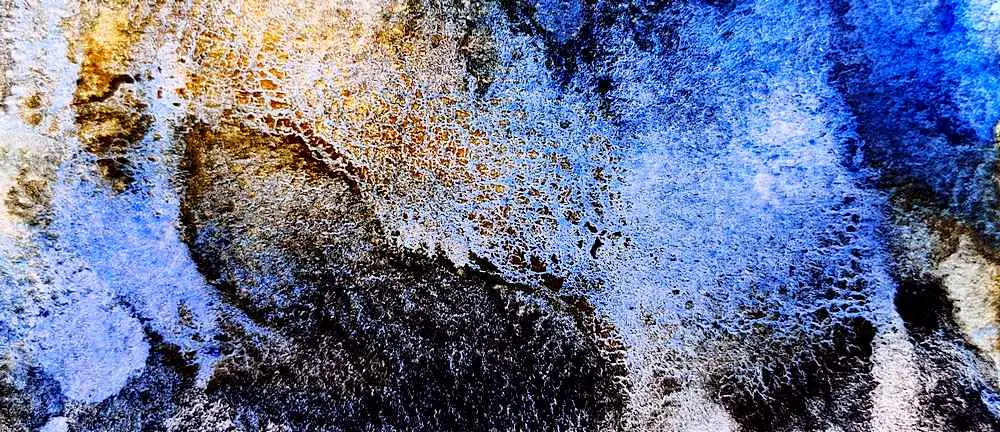
Granulation is a textural effect in watercolor where pigment particles settle into the hollows of the paper’s surface rather than spreading evenly. This creates a mottled, sandy, or grainy appearance, adding visual depth and organic character to a painting. It occurs primarily with heavier, larger pigment particles on rough or cold-press paper.
On this page
Why does granulation happen in watercolor?
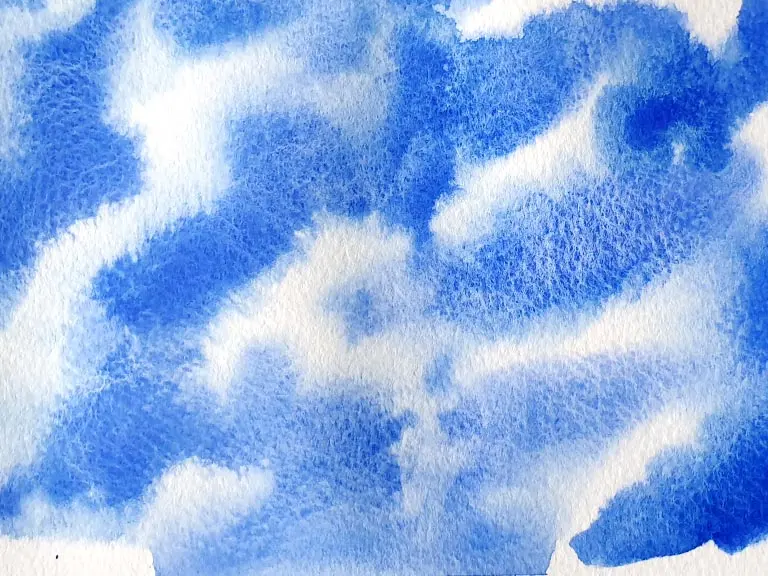
Granulation is a physical phenomenon dictated by the size and weight of pigment particles suspended in a watercolor binder. Unlike dyes, which dissolve completely into water, many traditional pigments are finely ground minerals or synthetic compounds that remain as microscopic solids. When you apply a wash to paper, these heavier particles are carried by the water flow but eventually settle into the tiny depressions, or "tooth," of the paper as the water evaporates.
The texture of the paper plays a critical role in the intensity of this effect. Cold-press and rough papers have deep, irregular textures that act as traps for these settling particles. In contrast, hot-press paper is smooth and dense, leaving little room for pigment to congregate, which results in a flatter, more uniform wash. Artists often choose specific paper surfaces to either encourage or suppress this natural behavior to achieve desired atmospheric effects.
Which watercolor pigments granulate?
Not all pigments behave the same way, and manufacturers often label their paints to indicate their granulating properties. Generally, earth tones and mineral-based pigments are the most prone to granulation. These pigments are often heavier and less finely milled than modern organic dyes, which tend to be transparent and smooth.
Commonly known granulating pigments include:
- Ultramarine Blue (PB29)
- Burnt Sienna (PBr7)
- Cobalt Blue (PB28)
- Viridian (PG18)
- Manganese Blue Hue (PB15)
When mixing these paints, you can create unique textures by combining a granulating pigment with a staining or smooth-flowing pigment. For instance, mixing Ultramarine Blue with a smooth synthetic yellow can result in a wash where the blue settles into the paper's texture while the yellow remains vibrant and flat, creating a striking contrast that adds life to landscapes or skies.
How to control granulation in your painting
Achieving the perfect amount of granulation requires careful manipulation of your water-to-pigment ratio and application technique. If you want to maximize the effect, you must use plenty of water, as the particles need a fluid medium to travel and settle into the paper's texture. If the paint is too thick or "dry," the particles will not have the mobility required to create that mottled look.
Follow these steps to manage the texture effectively:
- Choose a paper with a cold-press or rough finish to provide enough tooth for the pigment.
- Dilute your paint with a generous amount of water to allow the particles to flow freely across the surface.
- Apply the wash in a single, confident stroke rather than overworking the area, which can muddy the separation of particles.
- Allow the painting to dry completely flat, as tilting the board will cause the pigment to pool unevenly in one direction.
Common mistakes when using granulating paints
One frequent error is over-brushing the paper while the wash is still wet. When you repeatedly move your brush over the same area, you disrupt the natural settling process of the pigments, often resulting in a muddy or streaky appearance rather than a beautiful, granular texture. It is vital to let the water do the work and resist the urge to "fix" the distribution of the paint once it is laid down.
Another mistake is using too little water, which prevents the pigment particles from moving into the paper's texture. If your mixture is too concentrated, the paint will sit on the surface like a film, masking the paper's tooth and resulting in a flat, opaque look. Additionally, beginners often choose the wrong paper surface; using hot-press paper when you desire a rustic, granulating effect will almost always lead to disappointment because the paper lacks the necessary physical structure to hold the pigment in place.
Best ways to showcase granulation in art
Granulation is an exceptional tool for artists who want to move away from the clinical, flat look of digital illustrations. It is particularly effective for depicting natural subjects such as weathered stone, distant mountain ranges, sandy beaches, or the texture of tree bark. By layering granulating washes, you can build up a complex, multi-dimensional surface that suggests age and organic variation without needing to paint every individual detail by hand.
To best feature this effect in your work, consider these practical applications:
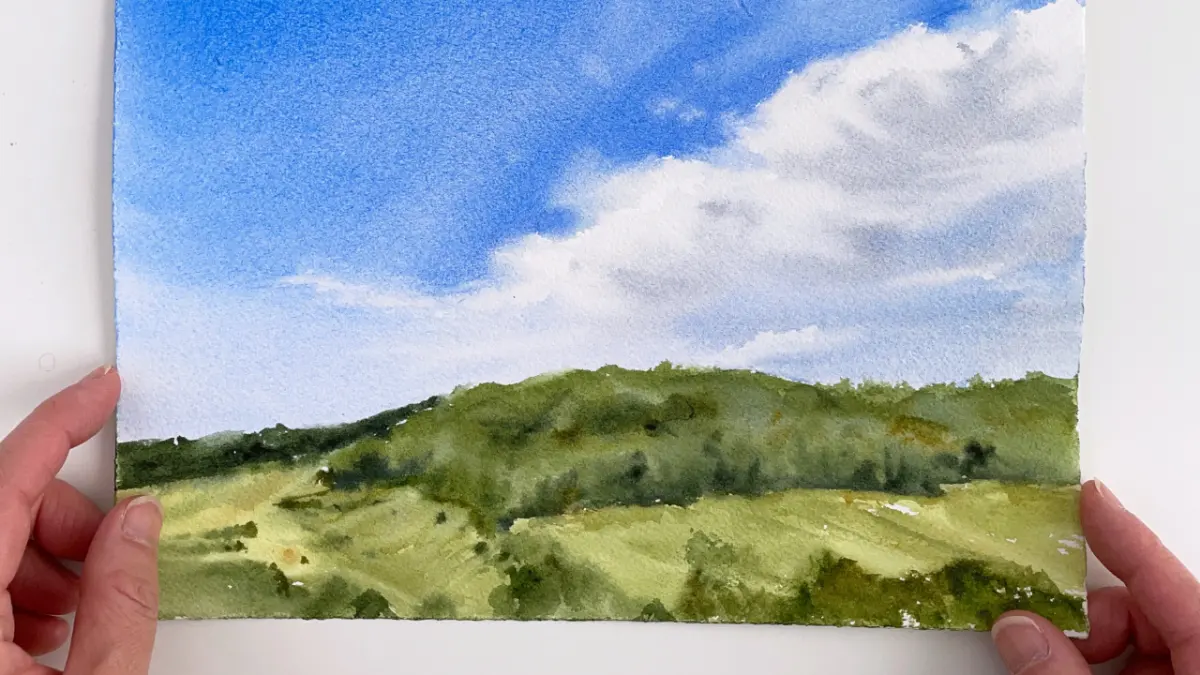
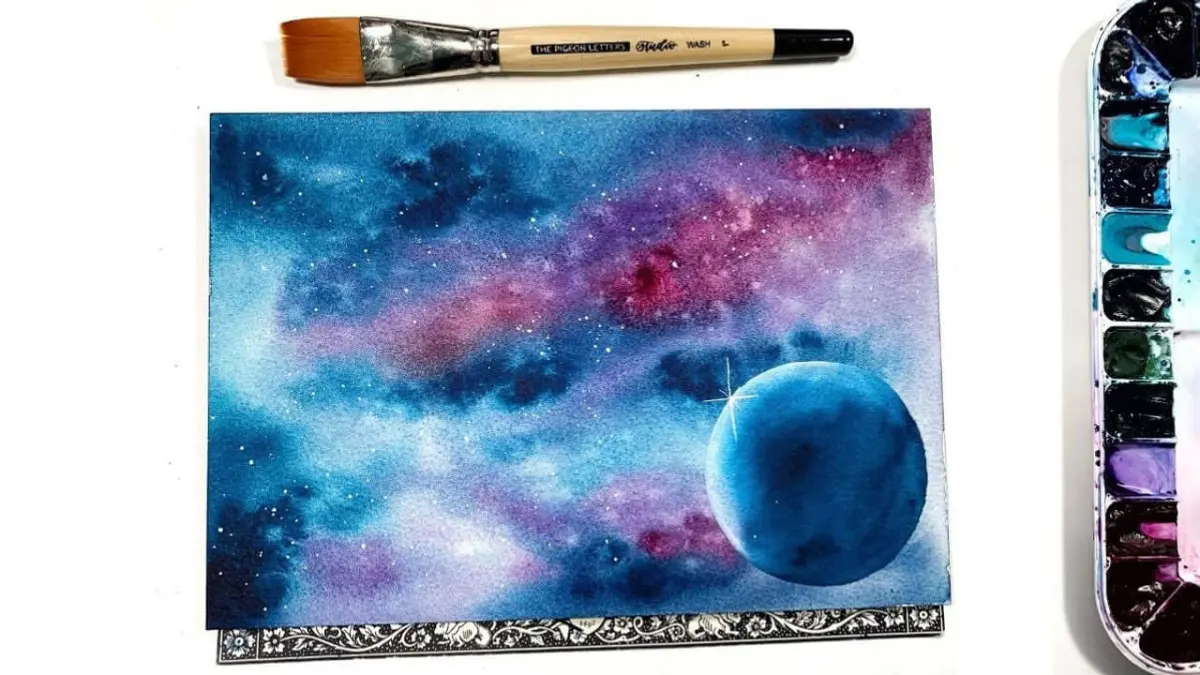
- Use large, juicy washes for skies or water to allow the pigment to settle naturally over a wide area.
- Combine granulating colors with smooth, transparent glazes to create a sense of depth and atmospheric perspective.
- Experiment with different brands of paint, as the milling process varies by manufacturer, meaning one company’s Ultramarine may granulate significantly more than another's.
By embracing the unpredictable nature of granulation, you allow the medium to contribute its own unique character to your finished piece, resulting in a more dynamic and professional appearance.
Key facts
- Granulation occurs when heavy pigment particles settle into the hollows of textured paper, creating a speckled or mottled appearance.
- This effect is most pronounced on cold-press or rough watercolor papers, which have significant surface "tooth."
- Pigments like Ultramarine Blue, Cobalt Blue, and Burnt Sienna are naturally granulating due to their larger, heavier particle size.
- To enhance granulation, use a high water-to-paint ratio, allowing the pigment to flow freely across the paper surface.
- Avoid overworking the paint; brushing back and forth disrupts the settling process and results in a muddy, flat finish.
- You can test for granulation by applying a wet-on-wet wash and observing the paper as it dries, as the effect intensifies during evaporation.
The bottom line
Granulation is a unique physical characteristic of specific watercolor pigments that creates a textured, speckled effect as paint dries on rough paper. By choosing sedimentary pigments and using generous amounts of water, artists can achieve this beautiful, organic look. Mastering granulation adds professional depth to your work, transforming flat washes into dynamic surfaces that capture light and shadow in ways that smooth, synthetic pigments cannot replicate.
People also ask
Does hot-press paper support granulation?
Hot-press paper is smooth and lacks the deep texture required for pigment particles to settle effectively. Consequently, granulation is minimal or entirely absent on this surface.
Can I force a non-granulating paint to granulate?
You can add a granulation medium to your paint, which contains additives that encourage pigments to clump together. This creates a textured look even with pigments that are normally smooth.
Why does my watercolor wash look flat instead of granulating?
Using too much binder or over-mixing the paint can prevent particles from separating. Ensure your paint is sufficiently diluted and use a light touch when applying the wash to the paper.
Are staining pigments more likely to granulate?
No, staining pigments usually have very fine particles that penetrate the paper fibers deeply and evenly. Granulation is typically associated with sedimentary pigments that sit on the surface.
How does the angle of the paper affect the result?
Tilting your paper allows gravity to pull the pigment particles down, which can create interesting streaks and accumulation patterns. A steeper angle increases the speed of flow and the intensity of the settling.
Is granulation considered a defect in professional painting?
Granulation is a highly sought-after artistic quality that adds visual depth and organic character to a painting. It is considered a desirable feature rather than a flaw in professional watercolor work.
This answer was created with the help of AI research tools and reference sources. Spotted an error? Let us know — we correct mistakes quickly. See our editorial policy.