What is glass blowing?
Short answer
Glass blowing is a specialized craft involving the inflation of molten glass into various shapes using a blowpipe. Artisans gather viscous glass from a furnace, then manipulate its form through breath, gravity, and specialized tools. This ancient technique, dating back to the first century BCE, remains essential for creating artistic and functional glassware.
On this page
How does glass blowing work?
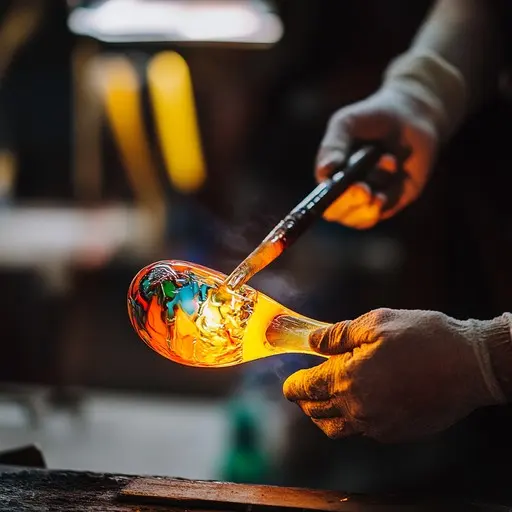
Glass blowing relies on the unique physical property of glass to remain workable over a wide temperature range. Artisans start by gathering a "gather" of molten glass, heated to approximately 2,100°F (1,150°C), onto the end of a long metal tube known as a blowpipe. By blowing air through the pipe, the glassblower creates a bubble inside the molten mass, which can then be expanded and shaped.
The process requires constant rotation of the blowpipe to prevent the molten glass from drooping due to gravity. As the glass cools, it becomes stiffer and harder to shape, necessitating frequent reheating in a secondary furnace called a "glory hole." This cycle of heating, shaping, and cooling continues until the desired form is achieved. The final piece is then placed in an annealing oven, or lehr, to cool slowly, preventing internal stresses that could cause the glass to shatter.
What tools are used in glass blowing?
A professional glass shop, or hot shop, is equipped with a specific set of tools designed to handle extreme heat and molten material. These implements are typically made of stainless steel, brass, or wood, each serving a distinct purpose in the manipulation of the glass. The most essential tools include:
- Blowpipe: A hollow steel tube used to gather and inflate the glass.
- Punty: A solid iron rod used to hold the glass after it is removed from the blowpipe.
- Jacks: Large, tweezer-like tools used to shape the neck and body of the piece.
- Blocks: Concave, water-soaked wooden bowls used to round and smooth the gather.
- Shears: Heavy-duty scissors used to trim excess glass while it is still hot.
- Marver: A flat, polished steel or graphite table used for rolling and shaping the glass.
How long does it take to learn glass blowing?
Mastering glass blowing is a lifelong pursuit that requires significant dedication and physical endurance. Beginners typically start with introductory workshops that last a few hours, focusing on basic safety and the creation of simple ornaments or paperweights. Achieving proficiency in complex forms, such as vases or sculptural vessels, often takes several years of consistent practice under the guidance of master glassblowers.
The learning curve is steep because the material is unforgiving and moves quickly. Students must develop "muscle memory" to anticipate how the glass will react to gravity and temperature changes. Most professional glassblowers spend at least five to ten years refining their technique before they can consistently produce high-quality, symmetrical work. Patience is the most critical asset for any student, as the material demands total focus and precise timing during every stage of the creation process.
Common mistakes when glass blowing
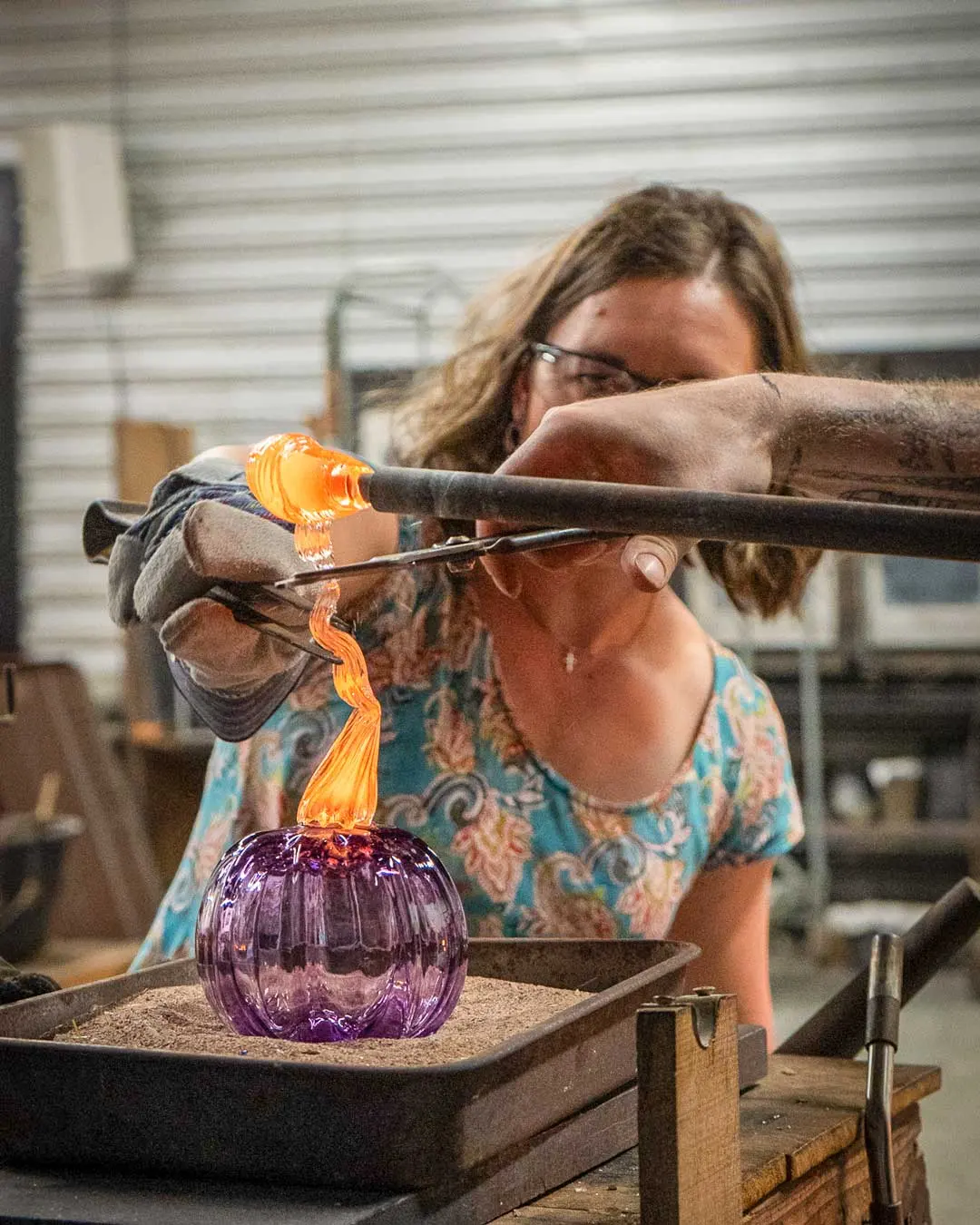
Even experienced artists encounter challenges when working with molten glass. One of the most frequent errors is failing to maintain the correct temperature, which leads to "cold cracking" or uneven wall thickness. If the glass becomes too cool during the shaping process, it will become brittle and difficult to manipulate, often resulting in a lopsided or structurally weak final product.
Another common mistake involves improper alignment during the transfer of the glass from the blowpipe to the punty. If the piece is not perfectly centered on the rod, it will wobble during rotation, making it impossible to achieve a symmetrical shape. Beginners often struggle with the following issues:
- Over-inflating the bubble, which creates thin, fragile walls.
- Forgetting to rotate the pipe, causing the glass to sag unevenly.
- Using tools that are not properly lubricated or cooled, which can mar the surface of the glass.
- Rushing the annealing process, which leads to catastrophic breakage as the glass cools.
Why is glass blowing dangerous?
Glass blowing is inherently hazardous due to the extreme temperatures and the nature of the materials involved. The furnaces operate at temperatures high enough to cause severe burns instantly, and the glass itself remains hot enough to cause deep thermal injuries long after it appears to have cooled. Proper protective gear, including heat-resistant gloves, specialized eyewear, and cotton clothing, is mandatory in every hot shop to mitigate these risks.
Beyond the heat, there is the risk of handling sharp, broken glass, known as "cullet," and the potential for inhaling toxic fumes if the glass contains certain metallic additives. Professional shops prioritize ventilation and strict safety protocols to keep the environment secure. By respecting the intensity of the furnace and following established safety procedures, glassblowers can minimize these dangers while focusing on the creative potential of the molten medium. Maintaining a clean workspace and clear communication with teammates is essential for preventing accidents during the collaborative process of glass blowing.
Key facts
- Glass blowing is a technique that involves inflating molten glass into a bubble with the aid of a blowpipe.
- The process typically requires a furnace heated to approximately 2,000 degrees Fahrenheit (1,093 degrees Celsius).
- The "gather" is the initial step where the artist collects a blob of molten glass onto the end of a metal pipe.
- Glass blowers use tools like jacks, paddles, and blocks made of wet fruitwood or graphite to shape the glass.
- Annealing is the critical final step where glass cools slowly in an oven called a lehr to prevent it from shattering.
- Common mistakes include working the glass when it is too cold, which causes thermal shock and cracking, or overheating it until it loses its structural integrity.
The bottom line
Glass blowing is a precise, physically demanding art form that transforms molten silica into functional or decorative objects through controlled inflation and manipulation. By mastering the delicate balance of heat and movement, artists create everything from intricate vases to industrial glassware. Success in this craft requires patience, strict adherence to safety protocols, and a deep understanding of how glass behaves under extreme thermal conditions.
People also ask
What is the difference between glass blowing and glass casting?
Glass blowing uses air pressure to shape molten glass into hollow forms, while casting involves pouring molten glass into a mold to create a solid shape. Blowing allows for thinner, more delicate walls compared to the heavier, denser results of casting.
How long does it take to learn glass blowing?
While basic techniques can be learned in a few intensive workshops, mastering the craft often takes years of consistent practice. Most professional glass artists spend a decade or more honing their control over the material's temperature and viscosity.
Is glass blowing dangerous?
Yes, the process involves extreme heat, heavy equipment, and sharp materials, posing risks of severe burns and cuts. Practitioners must wear protective gear, including specialized eyewear and heat-resistant clothing, to mitigate these significant safety hazards.
What kind of glass is used for blowing?
Most artists use soda-lime glass, which has a workable temperature range that allows for sufficient time to shape the piece. Borosilicate glass is also used for scientific or lampworking applications due to its high resistance to thermal shock.
Can you blow glass at home?
It is generally not practical to blow glass at home due to the need for industrial-grade furnaces, ventilation systems, and significant power requirements. Most hobbyists rent studio space that is specifically equipped to handle the intense heat and safety protocols required.
Why must glass be cooled slowly?
If glass cools too quickly, the outer surface hardens while the interior remains hot, creating internal stress that leads to spontaneous breakage. The annealing process ensures the entire piece cools at a uniform rate to stabilize the molecular structure.
This answer was created with the help of AI research tools and reference sources. Spotted an error? Let us know — we correct mistakes quickly. See our editorial policy.