What is a shooting star?
Short answer
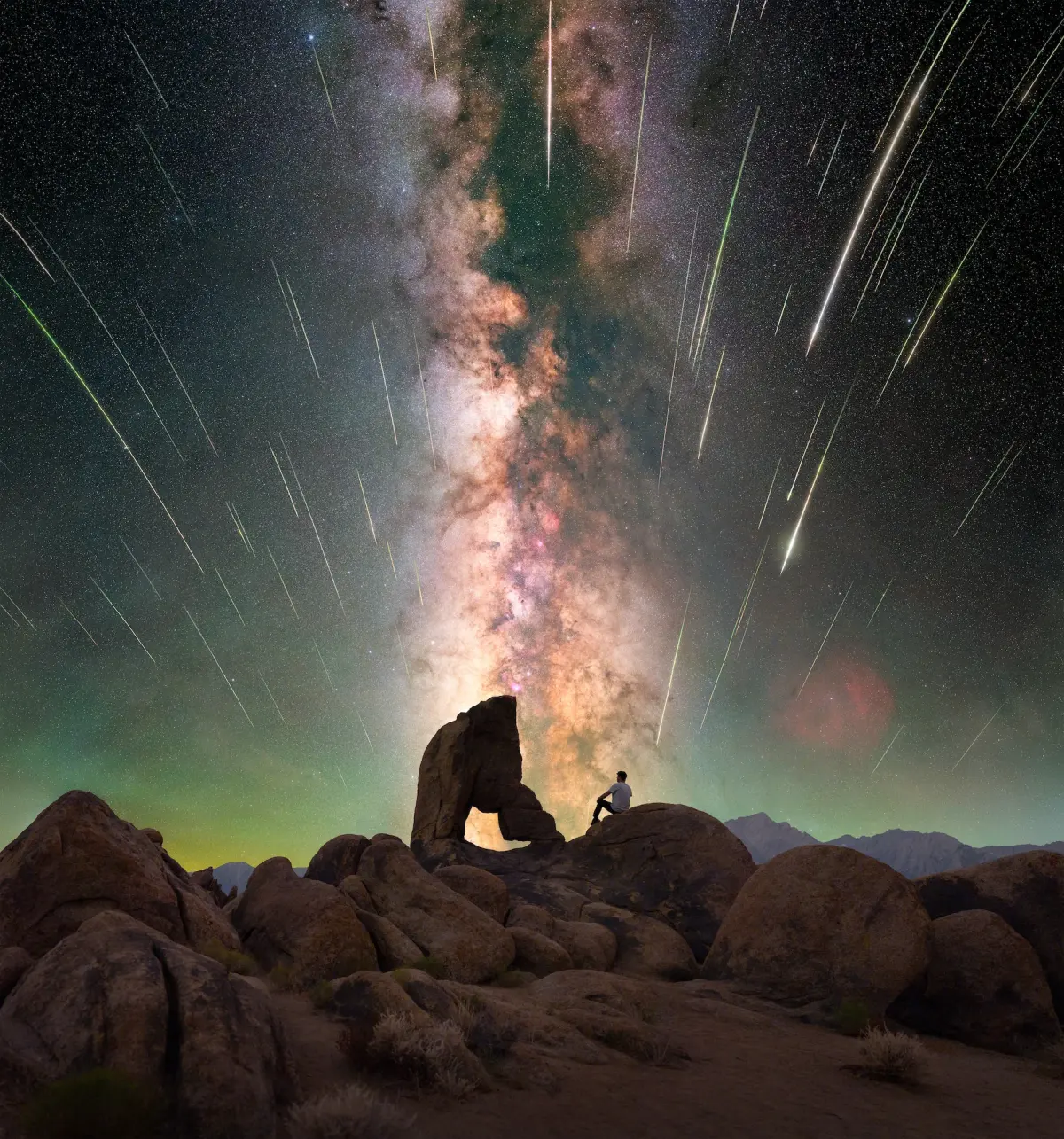
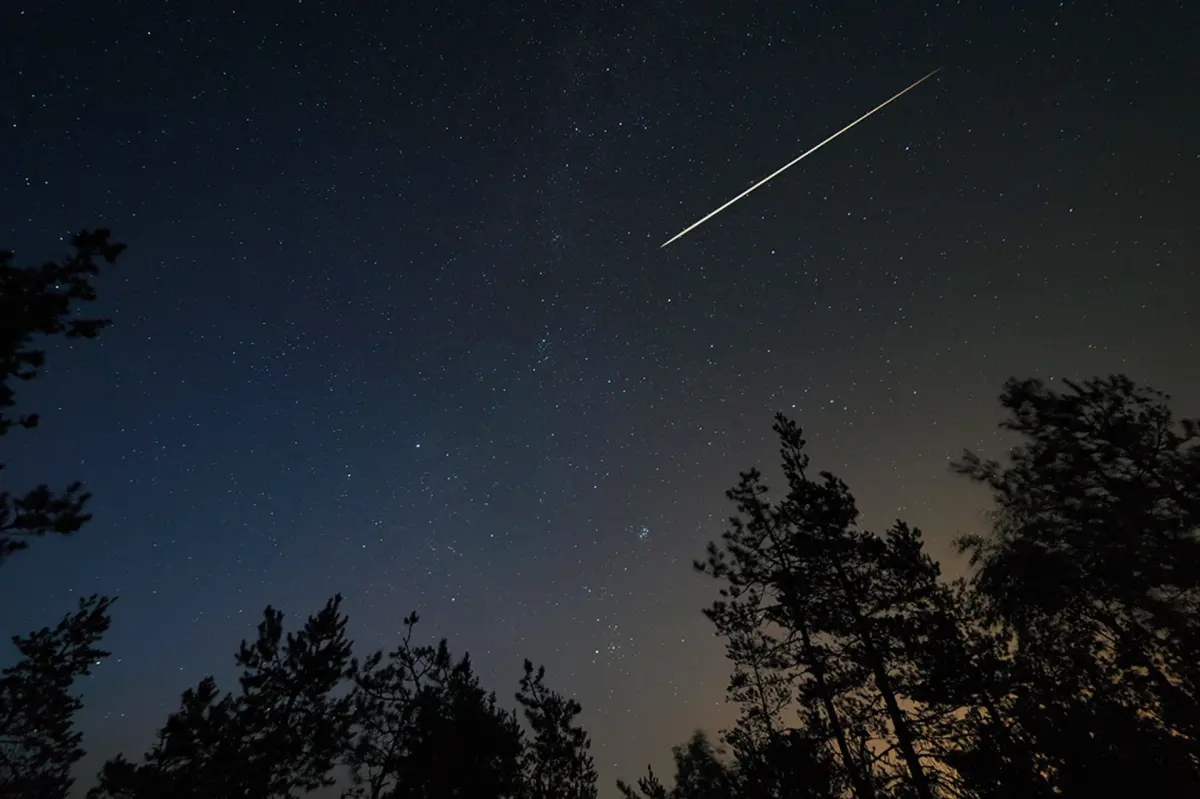
A shooting star is not a star at all, but a meteor—a small piece of space debris, often the size of a grain of sand, burning up as it enters Earth’s atmosphere. Friction with air molecules creates a brilliant streak of light, lasting only a fraction of a second in the night sky.
On this page
Why a shooting star happens
A shooting star occurs when a meteoroid, a small rocky or metallic object orbiting the Sun, enters Earth's atmosphere at high speeds. As the object plunges into the denser layers of the atmosphere, it experiences intense pressure and friction. This process compresses the air in front of the object, generating extreme heat that vaporizes the outer layers of the meteoroid.
The glowing streak of light we observe from the ground is the result of the air around the object being ionized. The intense heat strips electrons from gas atoms, creating a trail of glowing plasma that lingers briefly behind the moving object. Most of these particles are no larger than a pebble, yet they can produce a flash bright enough to be seen from hundreds of miles away.
When to see shooting stars
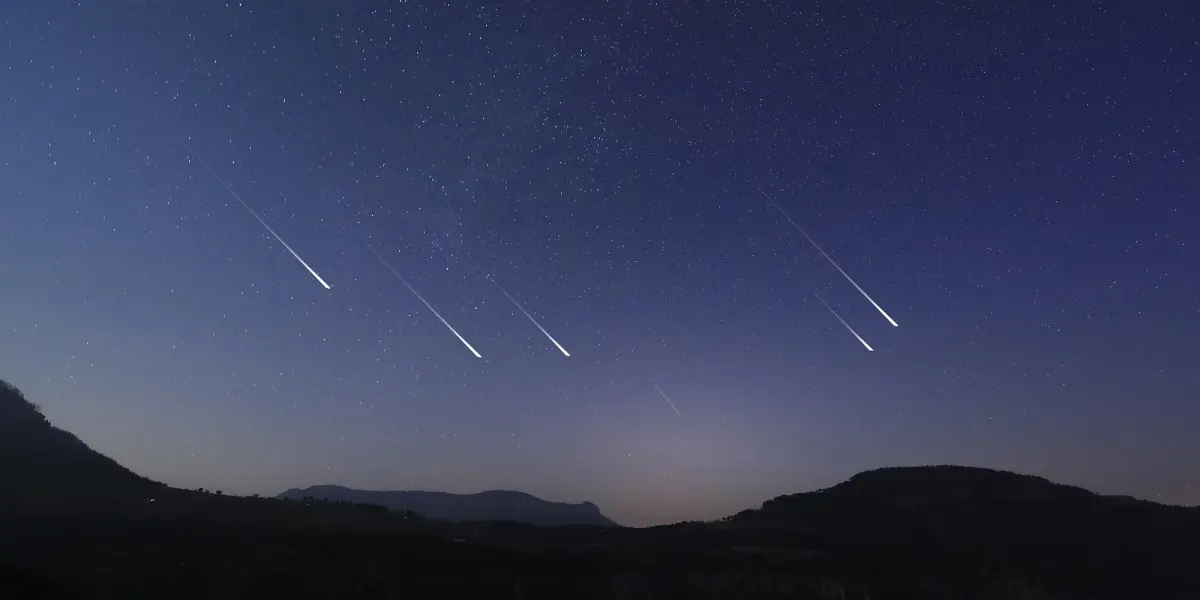
While individual meteors can appear on any clear night, the best times to observe them are during annual meteor showers. These events occur when Earth passes through a trail of debris left behind by a comet or asteroid as it orbits the Sun. Because these trails are consistent in space, the showers happen at predictable times every year.
Key annual meteor showers include:
- The Perseids: Peaking around August 12-13, known for high rates and bright fireballs.
- The Geminids: Peaking near December 13-14, often considered the most reliable and prolific shower.
- The Leonids: Peaking around November 17-18, famous for occasional intense "meteor storms."
- The Quadrantids: Peaking in early January, offering a brief but sharp spike in activity.
How to watch for meteors
Observing shooting stars requires minimal equipment, making it one of the most accessible forms of astronomy. You do not need a telescope or binoculars; in fact, these tools are counterproductive because they restrict your field of view. The best approach is to use your naked eyes to scan the widest possible expanse of the sky.
To maximize your chances of success, follow these steps:
- Find a location far from city lights and artificial glare, as light pollution hides fainter meteors.
- Allow your eyes at least 20 to 30 minutes to fully adjust to the darkness.
- Lie back on a reclining chair or a blanket to keep your neck comfortable while looking upward.
- Dress in layers, as temperatures can drop significantly at night, even during summer months.
Common mistakes when viewing
One of the most frequent errors beginners make is focusing too intently on the "radiant," the point in the sky from which meteors appear to originate. While the radiant is useful for identifying which shower you are viewing, meteors often appear in all parts of the sky. By staring only at the radiant, you may miss the longer, more spectacular streaks that occur further away.
Another common mistake is checking a smartphone or bright flashlight during the observation session. Even a brief look at a bright screen will reset your night vision, forcing your eyes to spend another 20 minutes readjusting to the dark. If you must use light, cover your flashlight with red cellophane or use a dedicated red-light headlamp, which preserves your ability to see in low-light conditions.
What happens if a meteor hits the ground
Most shooting stars disintegrate completely long before they reach the surface of the Earth. The intense heat generated by atmospheric entry is usually sufficient to vaporize the entire mass of a typical meteoroid. However, if an object is large enough and composed of dense materials like iron or nickel, a portion of it may survive the descent.
When a piece of a meteoroid survives its fiery journey and lands on Earth, it is officially classified as a meteorite. Scientists study these recovered fragments to learn about the composition of the early solar system and the origins of planets. While finding a meteorite is rare, they are occasionally discovered in open fields or deserts where the dark, fusion-crusted rocks stand out against the natural terrain. If you believe you have found a meteorite, look for a heavy, magnetic rock with a smooth, burnt-looking exterior, as these are common characteristics of space-borne debris that has successfully reached the ground.
Key facts
- A shooting star is not a star at all, but a small piece of space debris known as a meteoroid entering Earth's atmosphere.
- As the object travels at speeds up to 160,000 miles per hour, friction with the air causes it to heat up and glow.
- Most meteors are no larger than a grain of sand or a small pebble, yet they appear bright due to their immense velocity.
- If a meteoroid survives its fiery descent and hits the ground, the remaining rock is called a meteorite.
- You can best view shooting stars by finding a location far from city lights and allowing your eyes 20 minutes to adjust to the dark.
- Meteor showers occur when Earth passes through the trail of dust and debris left behind by a comet or asteroid.
The bottom line
A shooting star is a fleeting atmospheric phenomenon caused by space debris entering Earth’s atmosphere at high speeds. These glowing streaks provide a spectacular window into our solar system's history. By finding a dark location during a scheduled meteor shower, you can witness these cosmic visitors firsthand. Remember that these objects are natural space rocks, offering a fascinating glimpse into the mechanics of our vast universe.
People also ask
Can a shooting star hit me?
It is extremely rare for a meteorite to cause injury or damage. The vast majority of meteoroids burn up completely in the upper atmosphere long before they reach the surface.
Why do some shooting stars change color?
The color depends on the chemical composition of the meteoroid and the gases it interacts with in the atmosphere. For example, magnesium can produce a blue-green glow, while iron may appear yellow.
What is the difference between a meteor and a meteorite?
A meteor is the streak of light seen in the sky as the object burns up. A meteorite is the physical piece of space rock that successfully reaches the ground.
Read the full answer →When is the best time to see a meteor shower?
Meteor showers are best observed during the pre-dawn hours when the side of Earth you are on is facing into the direction of the debris stream. Check an astronomy calendar for peak dates like the Perseids in August.
Do shooting stars make a sound?
While they are silent to the naked eye, some observers report hearing "electrophonic" sounds like hissing or crackling. Scientists believe this is caused by low-frequency radio waves interacting with nearby objects.
Are shooting stars visible during the day?
Most are too faint to be seen against the brightness of the Sun. Only exceptionally bright meteors, known as fireballs, can occasionally be spotted during daylight hours.
This answer was created with the help of AI research tools and reference sources. Spotted an error? Let us know — we correct mistakes quickly. See our editorial policy.