What is a haiku?
Short answer
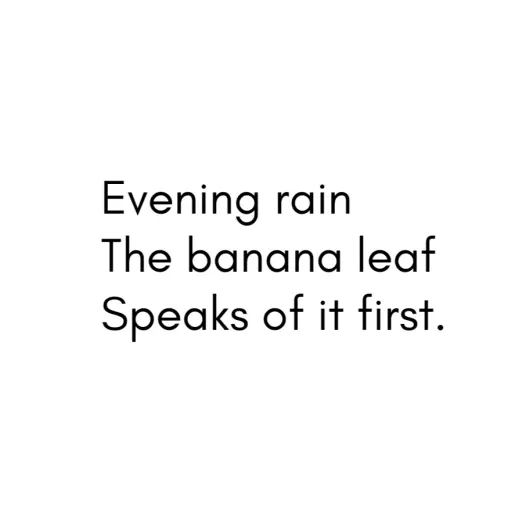
A haiku is a traditional form of Japanese poetry consisting of three phrases with a 5, 7, 5 syllable structure. It typically focuses on a specific moment in time, often referencing nature or the changing seasons. By using concise imagery, haiku aims to evoke a sudden emotional insight or spiritual awareness.
On this page
What are the rules of a haiku?
The defining characteristic of a haiku is its brevity and strict syllable count. In English, this is traditionally structured as three lines containing 5, 7, and 5 syllables respectively. While the Japanese original counts on (sound units) rather than English syllables, the 5-7-5 pattern remains the standard pedagogical approach for beginners. The poem does not require rhyme, and in fact, rhyming is often discouraged as it can detract from the poem's natural, unforced aesthetic.
Beyond the syllable count, a haiku usually incorporates two essential elements: the kigo and the kireji. The kigo is a seasonal word that anchors the poem in a specific time of year, such as "cherry blossoms" for spring or "first frost" for autumn. The kireji, or "cutting word," acts as a punctuation mark that creates a pause or a shift in focus between the two parts of the poem. This structure encourages the reader to contemplate the relationship between two distinct images.
How to write a haiku for beginners
Writing a haiku is an exercise in distillation. You should aim to capture a fleeting sensory experience—the sound of a bird, the feeling of cold air, or the color of a leaf—rather than telling a complex story. Because you have so few syllables to work with, every word must carry weight. Avoid abstract concepts like "happiness" or "sadness"; instead, describe the physical details that represent those feelings.
Follow these steps to compose your first poem:
- Observe your surroundings and choose one specific, concrete image to focus on.
- Write down three lines, counting the syllables as you go to ensure a 5-7-5 pattern.
- Identify a seasonal reference to include, ensuring it fits naturally into the imagery.
- Add a "cut" or a shift in the second or third line to create a sense of contrast or surprise.
- Read the poem aloud to check the rhythm and ensure the imagery remains focused and sharp.
Why is the 5-7-5 structure important?
The 5-7-5 structure is more than just a mathematical constraint; it is a tool for discipline. By limiting the poet to seventeen syllables, the format forces the writer to strip away unnecessary adjectives, adverbs, and filler words. This economy of language is central to the haiku’s ability to deliver a powerful, singular impression. When every syllable is accounted for, the poet must choose the most evocative nouns and verbs available.
This structure also dictates the pacing of the poem. The first line sets the scene, the second line expands upon that scene, and the third line provides a conclusion or a "turn" that reframes the initial image. This rhythmic progression mimics the way the human mind observes a scene: initial perception, deeper exploration, and final synthesis. By adhering to this pattern, you ensure that your poem maintains the balance and tension required to make the imagery resonate with the reader.
Common mistakes when writing haiku
One of the most frequent errors is prioritizing the syllable count over the actual content of the poem. Beginners often force words into the 5-7-5 structure that feel unnatural or overly complex, which ruins the simplicity that defines the genre. It is better to have a slightly imperfect syllable count that captures a beautiful, clear image than to have a perfect 5-7-5 poem that feels forced, clunky, or nonsensical.
Another common mistake is attempting to include too many ideas. A haiku is a snapshot, not a movie. If you try to describe an entire day or a long narrative, the poem will lose its impact. Focus on these pitfalls to improve your writing:
- Using too many adjectives: Let the nouns do the heavy lifting.
- Forgetting the seasonal reference: Without the kigo, the poem loses its traditional connection to nature.
- Over-explaining: Trust the reader to interpret the imagery without needing a summary sentence.
- Using forced rhymes: This often makes a haiku sound like a nursery rhyme rather than a serious observation.
How to read and appreciate haiku
Reading haiku requires a different mindset than reading traditional narrative poetry. Instead of looking for a plot or a moral lesson, look for the "aha" moment—the realization or connection that occurs when the two images in the poem collide. Because haiku are so short, they are meant to be read slowly, perhaps even multiple times, to allow the imagery to fully settle in your mind.
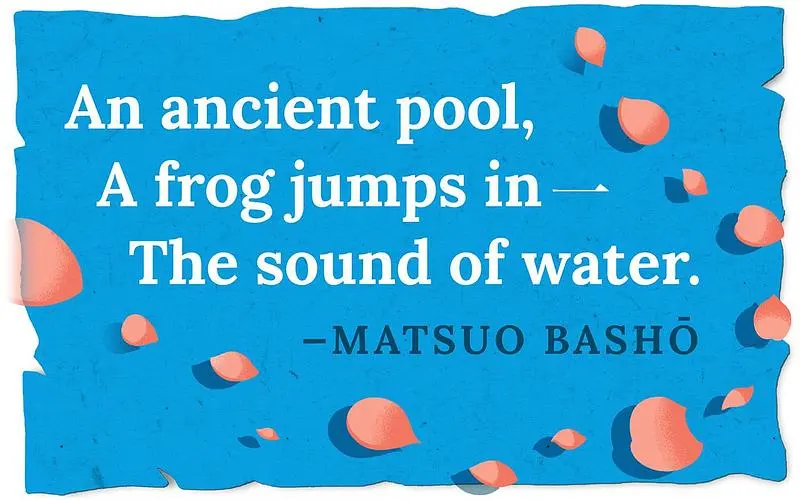
When you encounter a haiku, ask yourself what the poet is trying to show you rather than tell you. Notice the seasonal cues and the shift created by the "cut." By engaging with the poem as a meditation on a single moment, you can appreciate the depth hidden within the seventeen syllables. Whether you are reading the works of masters like Matsuo Bashō or writing your own, the goal remains the same: to find the extraordinary within the ordinary details of the world around us.
Key facts
- A traditional Japanese haiku consists of 17 phonetic units, or on, generally arranged in a 5-7-5 pattern.
- The poem typically includes a kigo, a word or phrase that indicates the specific season in which the poem is set.
- A kireji, or "cutting word," acts as a grammatical break to create a pause or juxtaposition between two images.
- Modern English haiku often prioritize the "breath" of the poem over strict syllable counts, focusing on capturing a fleeting moment.
- Matsuo Bashō, who lived from 1644 to 1694, is widely considered the greatest master of the haiku form in history.
- To write an effective haiku, focus on sensory details and concrete imagery rather than abstract feelings or metaphors.
The bottom line
The haiku is a concise form of poetry that emphasizes the beauty of a single, fleeting moment. By utilizing a simple structure, a seasonal reference, and a distinct structural break, the poet invites the reader to observe the world with heightened clarity. Whether you strictly follow the 5-7-5 syllable count or prioritize the poem’s internal rhythm, the goal remains capturing the essence of a specific experience.
People also ask
Do haiku always have to rhyme?
No, traditional haiku do not use rhyme. The aesthetic value comes from the juxtaposition of images and the rhythmic structure rather than end sounds.
Is a haiku supposed to be a complete sentence?
A haiku rarely functions as a single, grammatically complete sentence. It usually consists of two distinct parts separated by a pause, allowing the reader to connect two separate observations.
What is the biggest mistake beginners make when writing haiku?
Beginners often try to force a complex philosophical message into 17 syllables. It is better to observe a simple, specific detail from nature to create a more impactful result.
Must a haiku be about nature
While nature is the traditional subject, contemporary poets often write haiku about urban life, technology, or human emotions. The core requirement remains the focus on a single, present-moment experience.
Are syllables and on the same thing?
In Japanese, on are sound units that are roughly equivalent to syllables, but they do not map perfectly to English. For this reason, many modern English poets prefer a shorter total word count than 17 syllables to capture the brevity of the original form.
Can I use a title for my haiku?
Haiku are traditionally presented without titles. The poem is intended to stand on its own as a self-contained snapshot of an experience.
This answer was created with the help of AI research tools and reference sources. Spotted an error? Let us know — we correct mistakes quickly. See our editorial policy.